Mixing Colours.
A little paint. A new discovery.
Choose an illustrated activity below. Start with a prediction, test it with paint, then use your new colours in a picture. The printable matching cards offer a dry activity too.
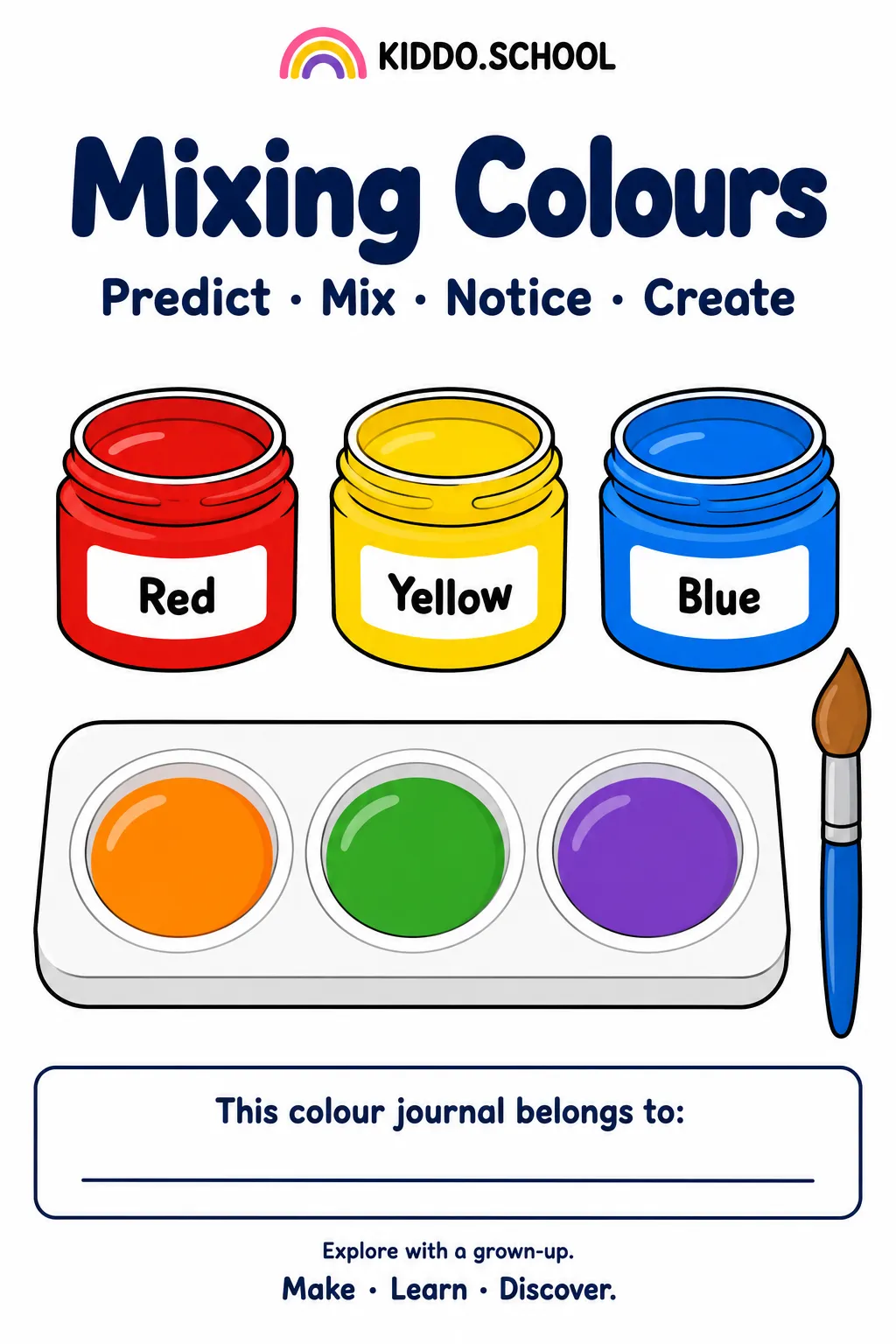
Choose a colour activity.
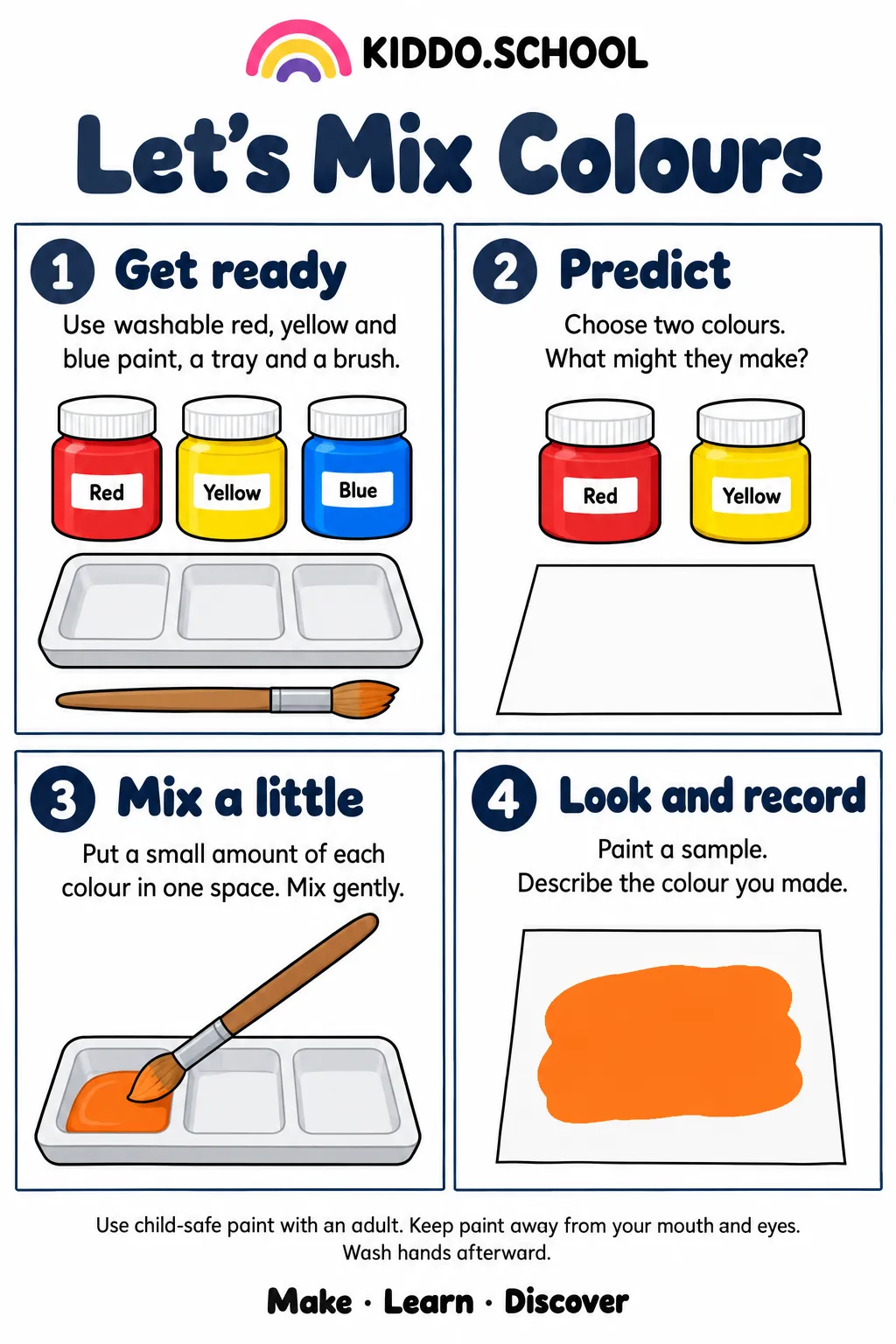 How to Mix Colours
Choose two paints, predict, mix gently and record the result.
Draw · Type · Save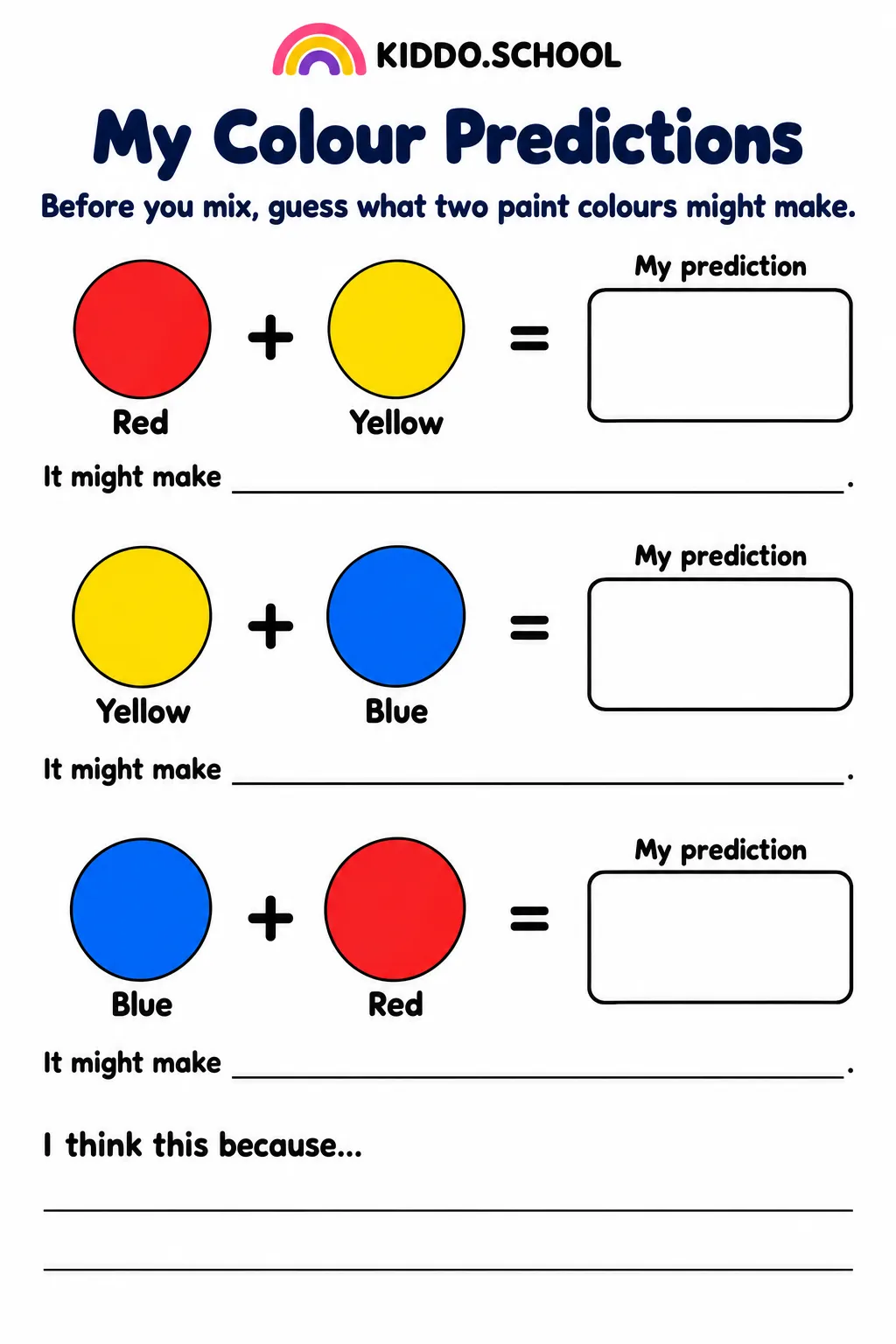 My Colour Predictions
Guess what two paint colours might make before trying them.
Draw · Type · Save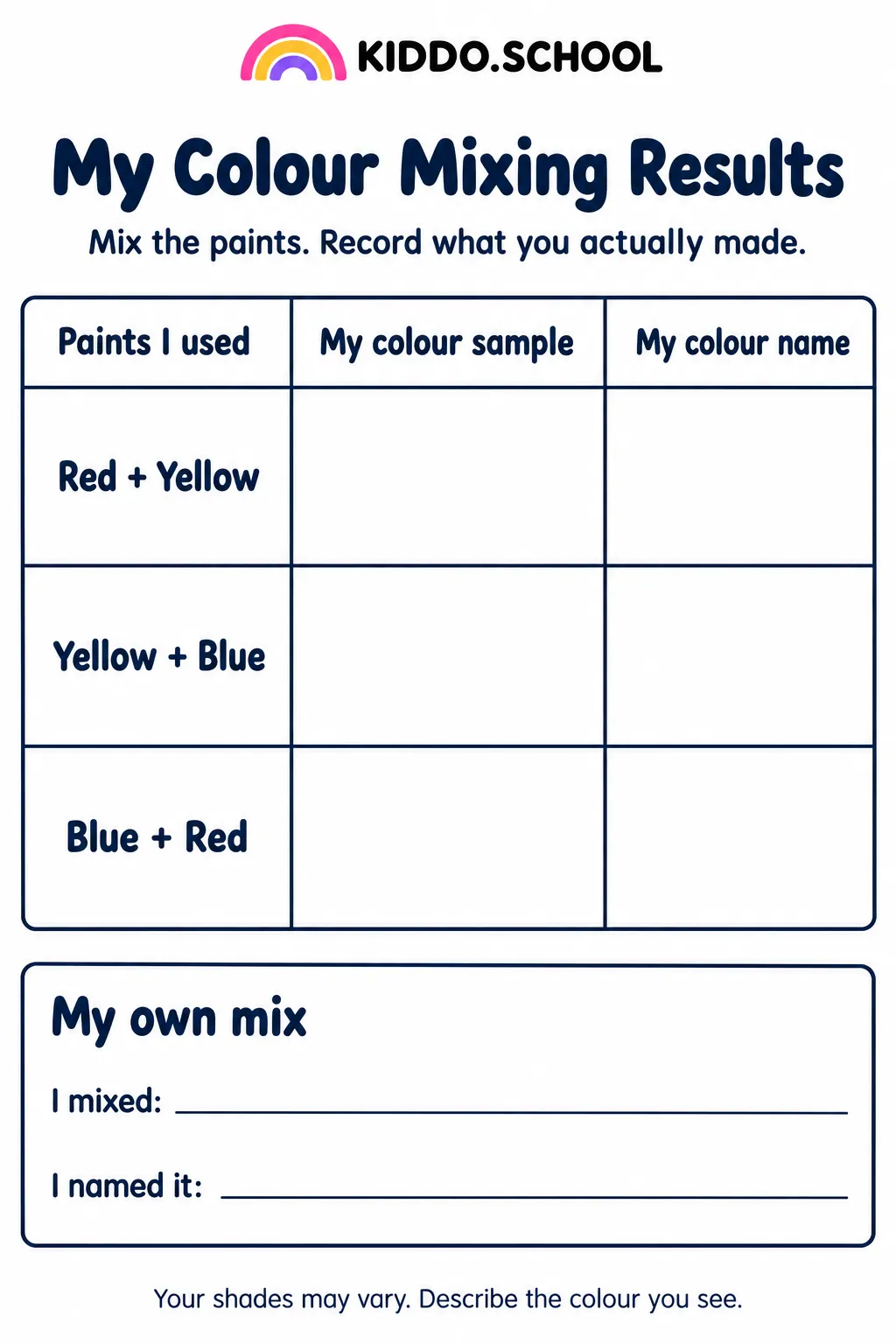 My Colour Mixing Results
Record the colours you really made with your paints.
Draw · Type · Save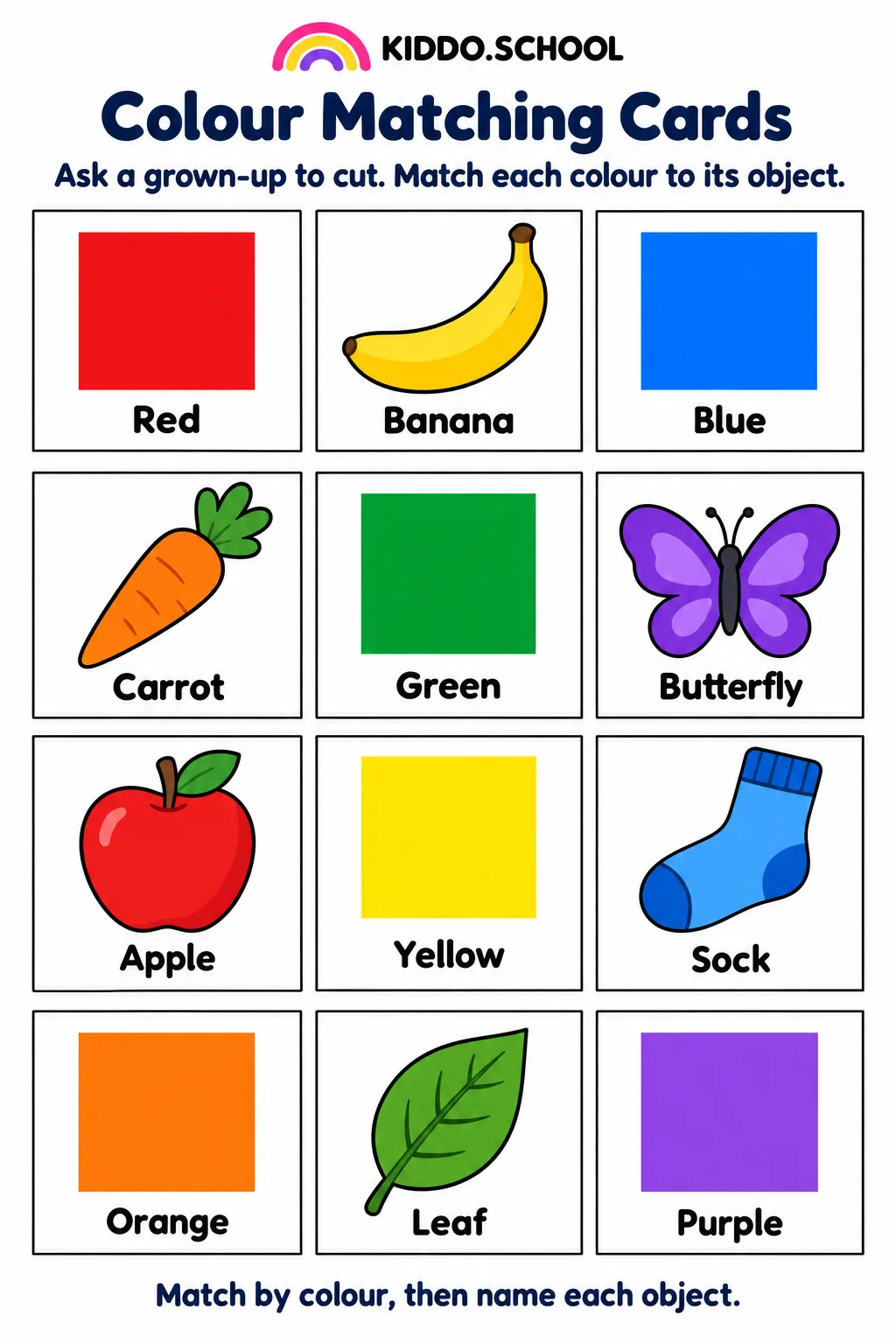 Colour Matching Cards
Match six colour cards with the objects shown in those colours.
Draw · Type · Save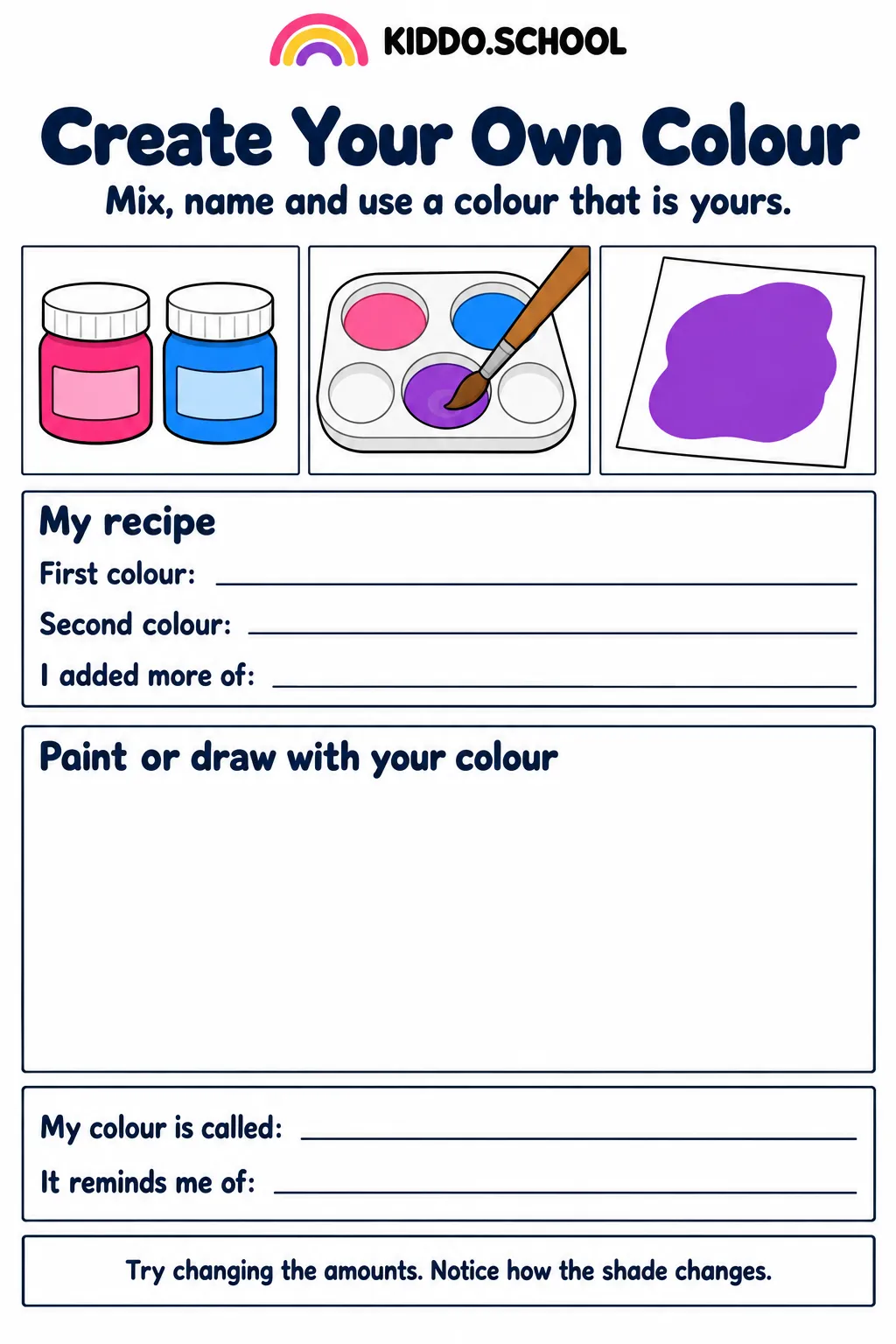 Create Your Own Colour
Mix a colour, give it a name and use it in your own picture.
Draw · Type · SaveLet's make it happen.
Prepare your space
Cover the table and choose washable paints with a grown-up. Keep your device away from the paint and water.
Predict a mixture
Choose two colours. Draw or name what you think they might make before mixing.
Mix small amounts
Put a little of each paint into one tray space and mix gently. Observe the actual colour.
Record the result
Paint a sample on paper. Describe or name it in the results sheet. Clean your brush before the next mixture.
Change and create
Add more of one paint to explore a different shade. Name your own mixture and use it in a picture. Wash hands and clean the table afterward.
What's happening here?
Paint mixtures depend on the pigments and their proportions. Common classroom red, yellow and blue mixtures can produce orange, green and purple, but real results vary. Watching and describing your own mixture is more useful than trying to match an exact screen colour.
Keep the wondering going.
- Which result surprised you?
- What changed when you added more of one paint?
- What name would you give your colour?
Make it work for you.
Keep it simple
Offer two paints at a time and let the child describe the result aloud. A grown-up can write their words.
Take it further
Compare mixtures made with different proportions. Record which paint you added more of and describe the change.
Not quite going to plan?
If a colour looks muddy, try a clean tray space and brush. Some pigments make duller mixtures; record that honestly rather than treating it as a failure.
How to mix colours
Open the illustrated guide or choose a prediction sheet, results diary, matching cards or creative challenge.
Image · prints on A4 or Letter using “fit to page”. Plain paper works just as well.
Download the sheet Open image to print ↗You may print and use this original activity sheet at home or in your classroom. Please link to the activity page when sharing it online.