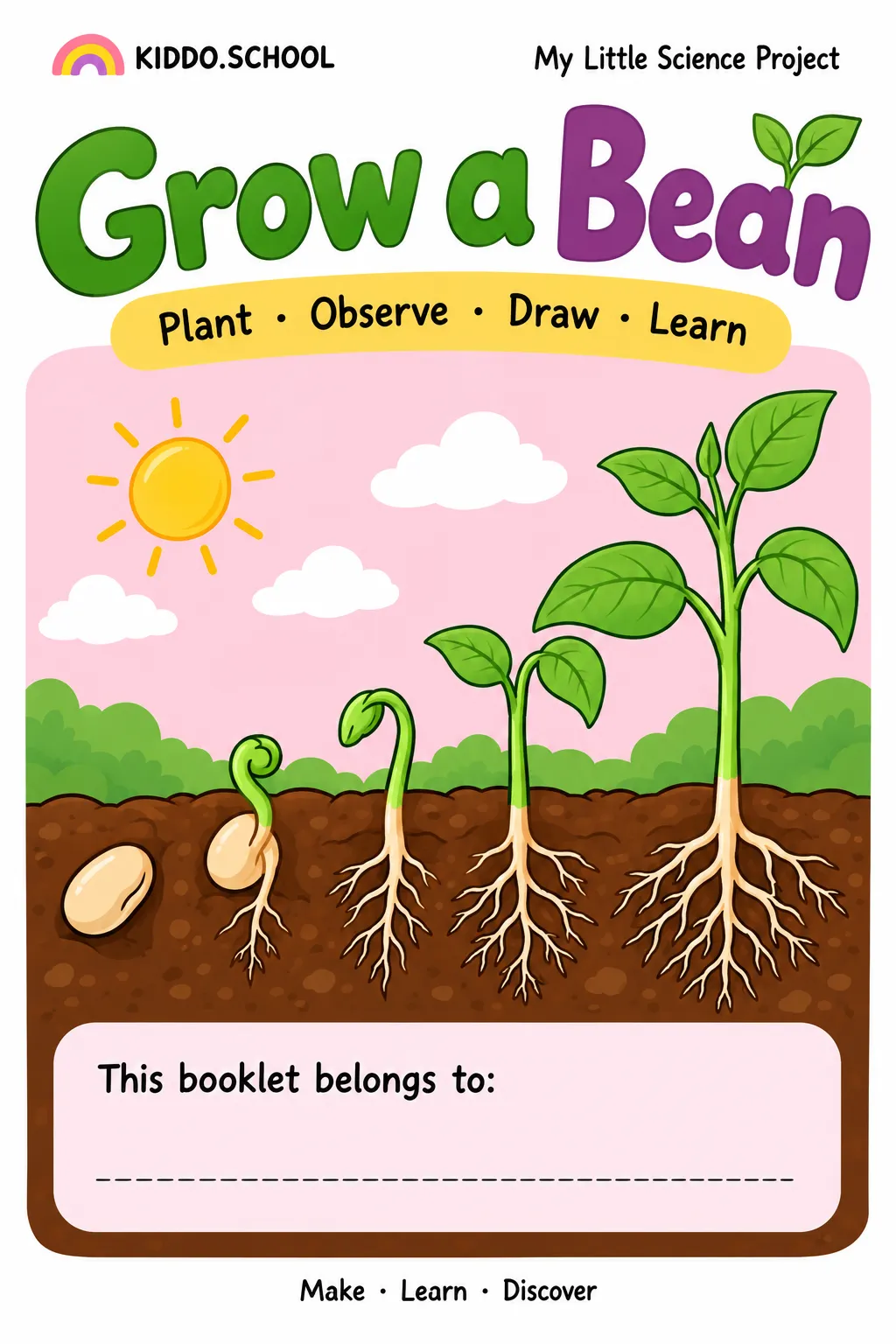
Grow a bean
Watch roots and shoots appear, then draw the changes in your own bean diary.
 KIDDO.SCHOOLMake · Learn · Discover.
Search every book, class, drawing lesson, flashcard set, worksheet and activity.
Try one of the ideas above, or a shorter word: “cat” finds more than “cats”. Everything is also one tap away on the Learning Path, in the Worksheet Library or on the Flashcards wall.
Twenty-six letters, five card kinds and three gentle games — built from the school’s own alphabet artwork.
Big, friendly drawing lessons for little artists: one step at a time, from a first circle to a finished picture. Ages 3–6.
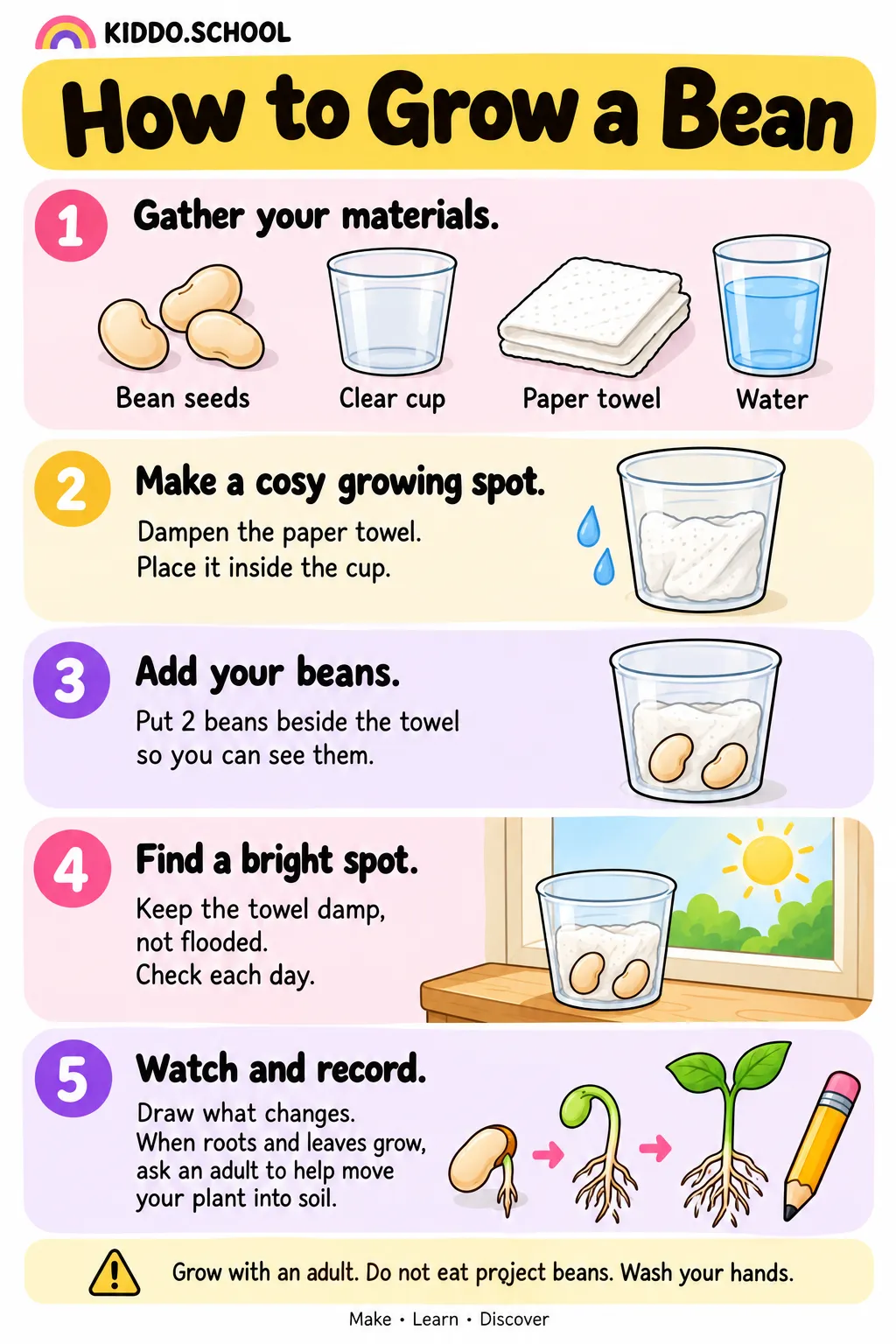 01How to Grow a Bean
Set up a tiny science project with a grown-up. Make a prediction, then check your bean each day.
Draw · Type · Save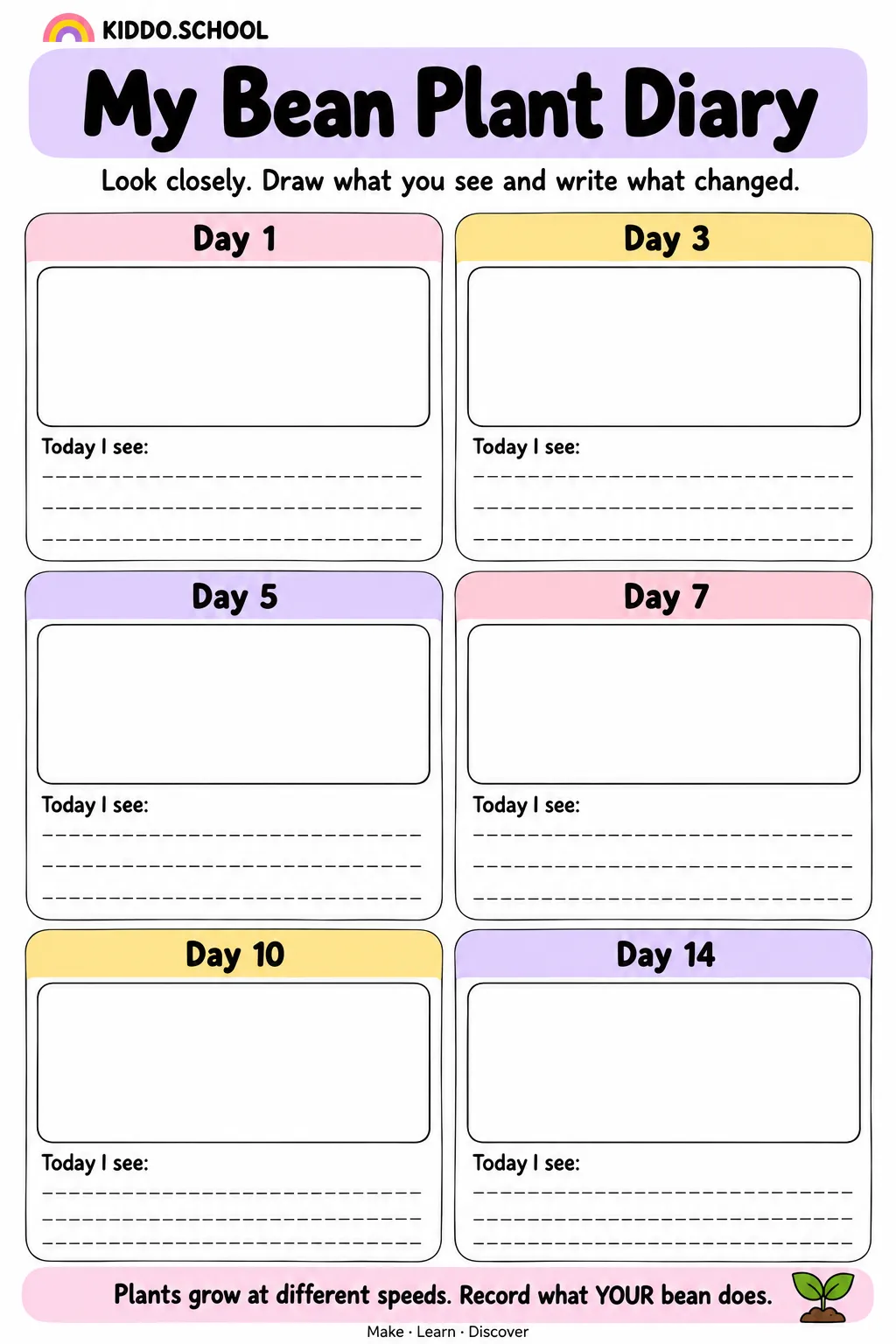 02My Plant Diary
Look at the same bean over several days. Record what you actually see—even if nothing has changed yet.
Draw · Type · Save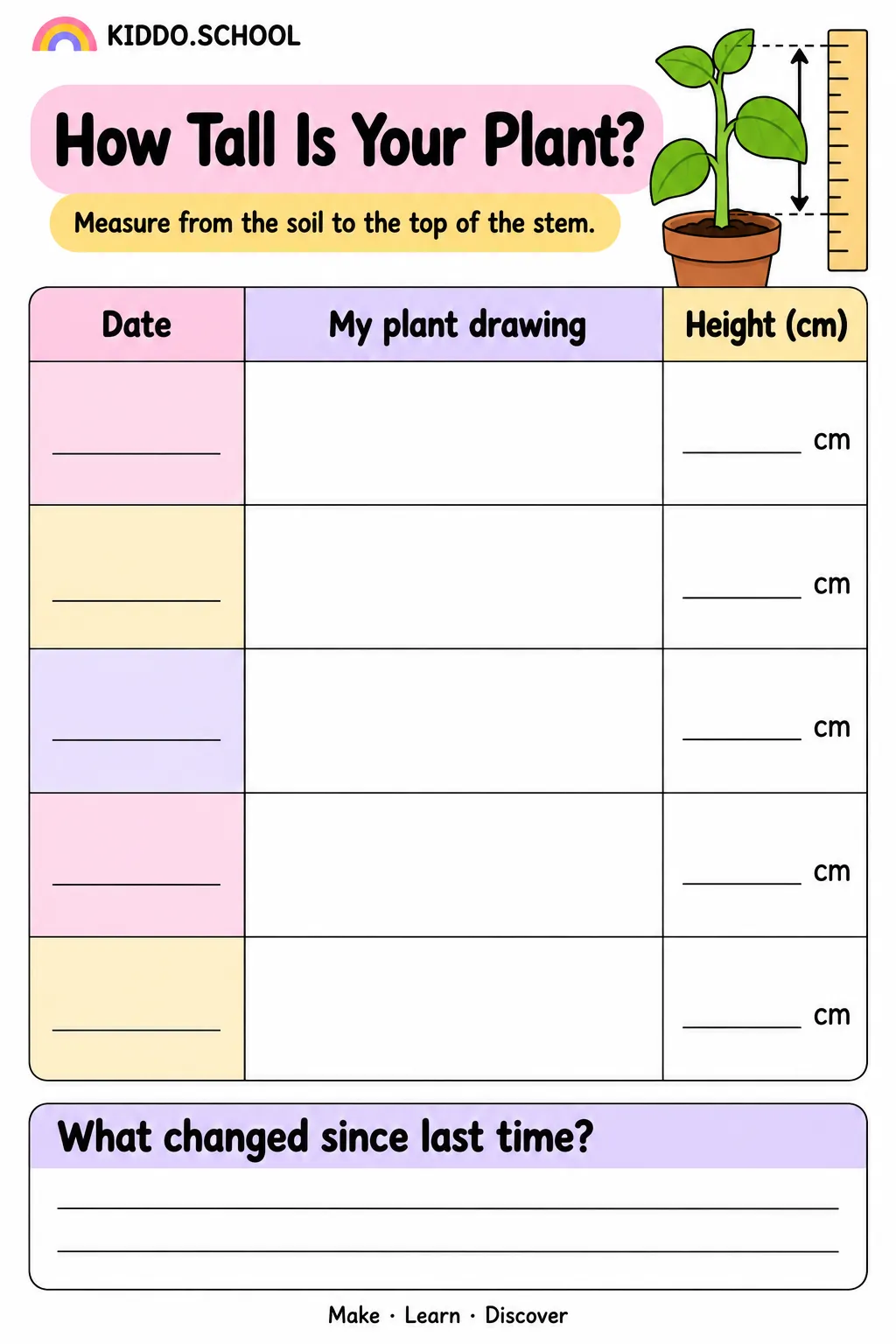 03How Tall Is Your Plant?
Once your seedling is planted in soil, measure its height and compare your records.
Draw · Type · Save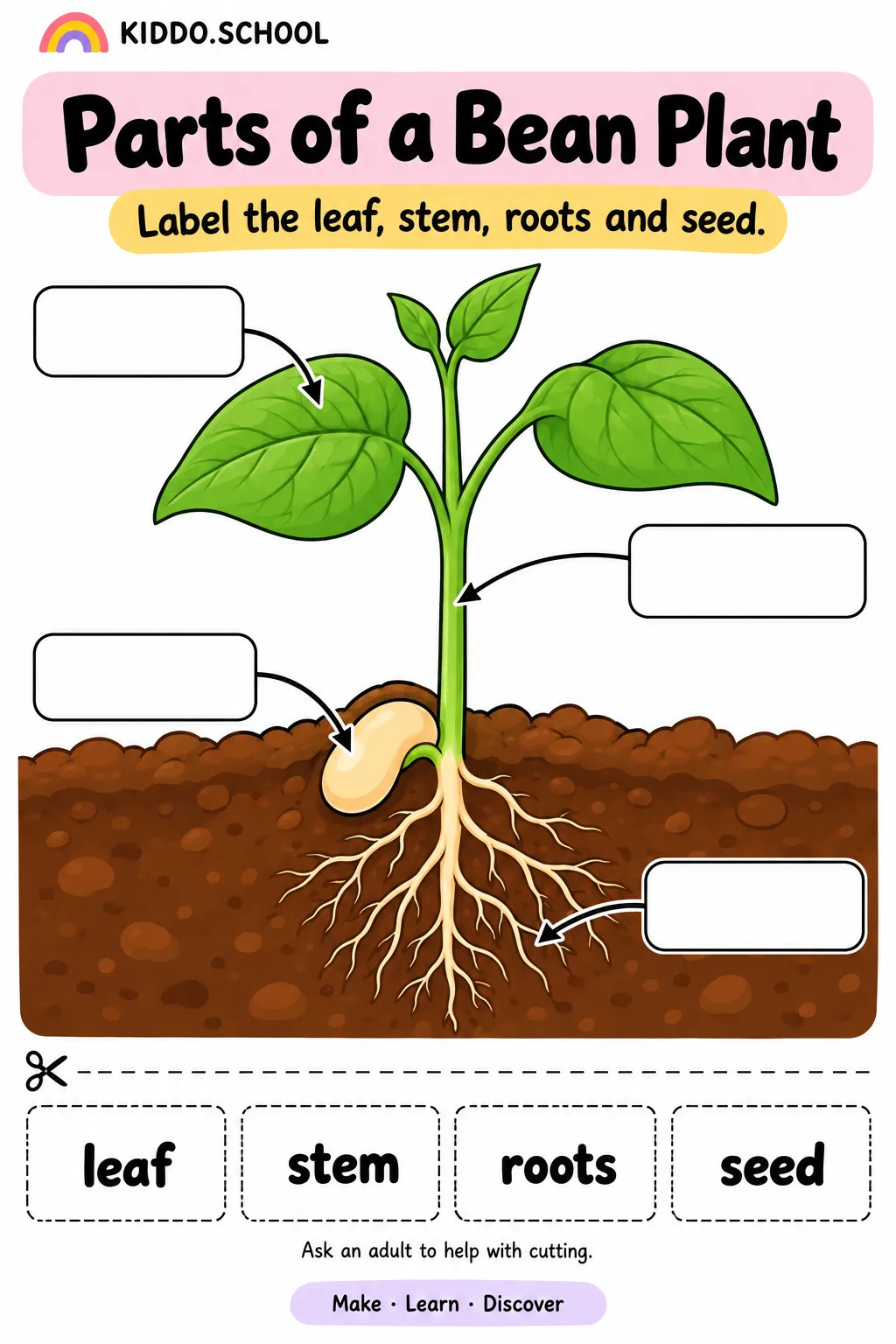 04Parts of My Plant
Look for a seed, root, stem and leaf. Draw each part, name it and describe what it does.
Draw · Type · Save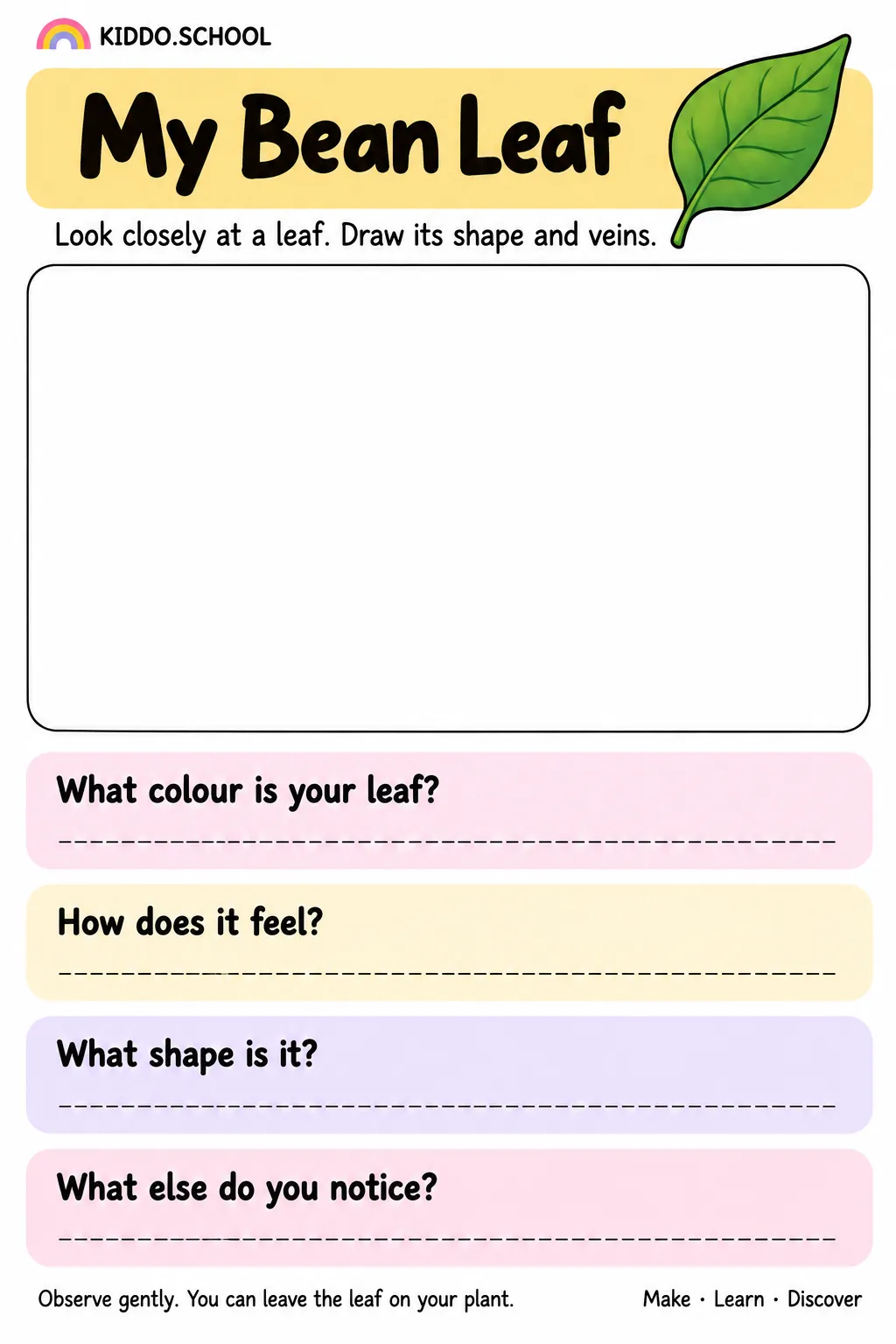 05My Bean Leaf
Become a leaf detective. Look gently and leave the leaf attached to the plant.
Draw · Type · Save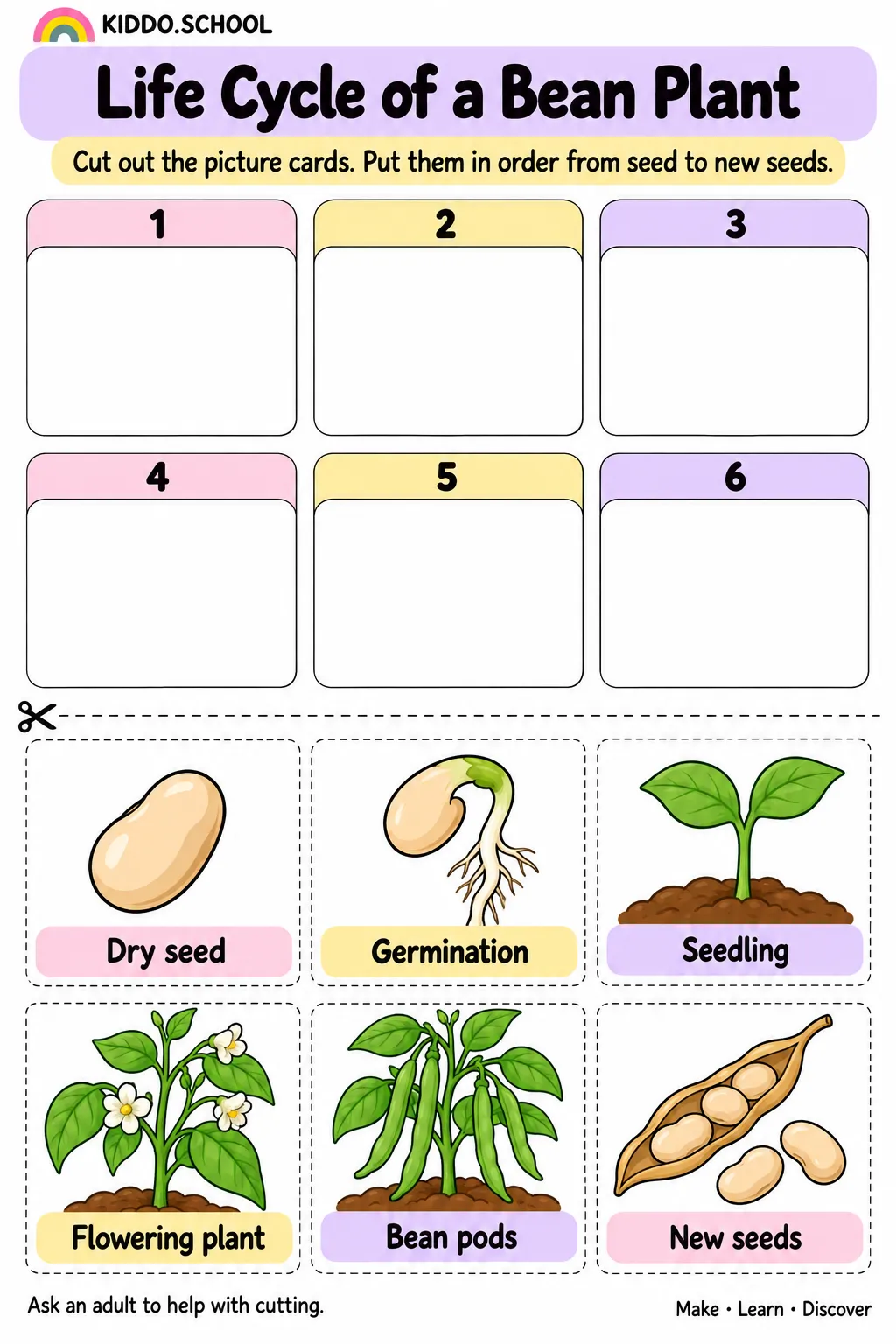 06Life Cycle of a Bean Plant
Follow a bean from seed to new seeds. Use the picture cards, then explain the changes in your own words.
Draw · Type · Save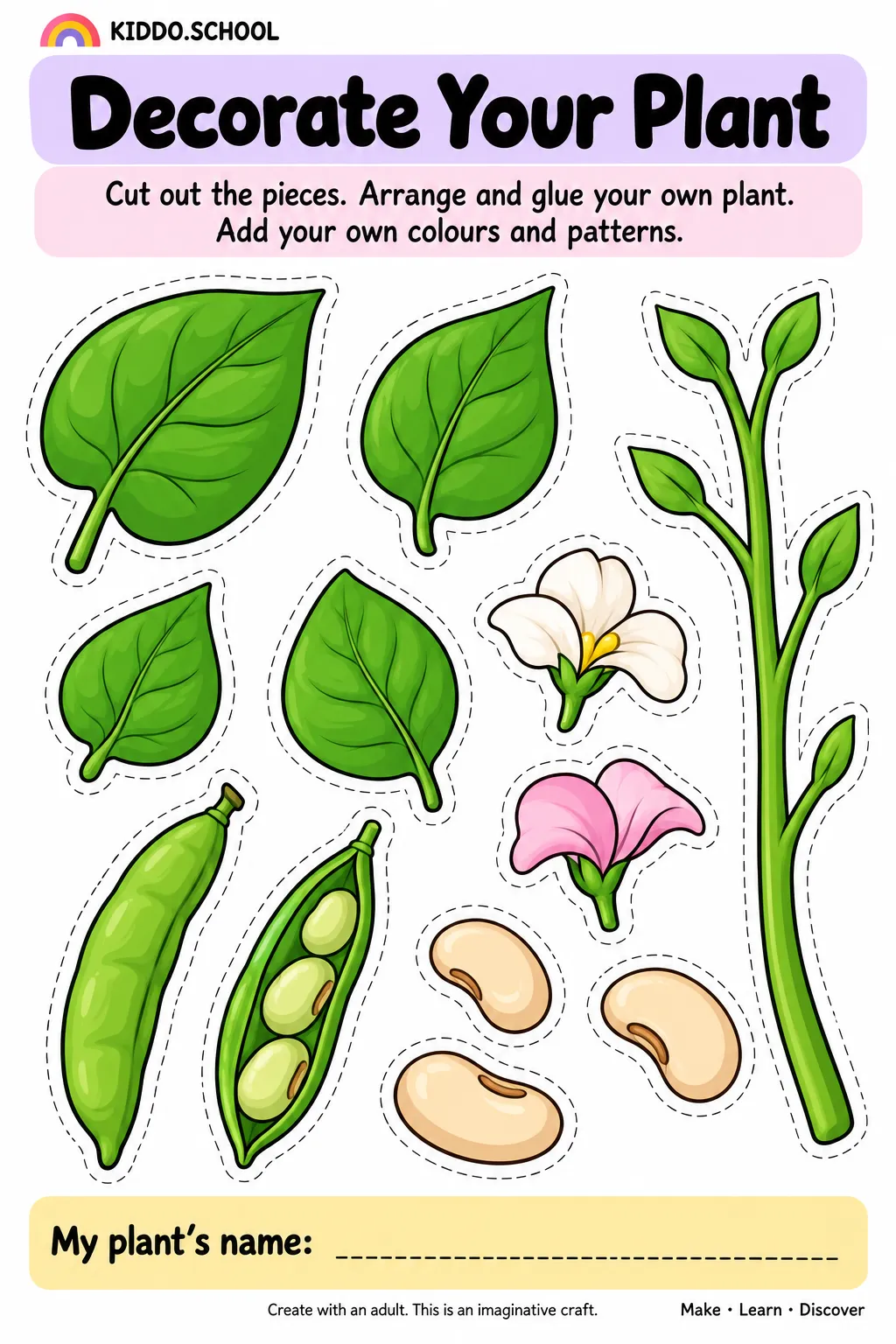 07Decorate Your Plant
Design an imaginary plant with leaves, flowers, pods and seeds. Draw on screen or use the printable cutouts.
Draw · Type · SaveA space to practise letters, numbers and your name with a finger, stylus or mouse.
10 activities to explore
Watch roots and shoots appear, then draw the changes in your own bean diary.
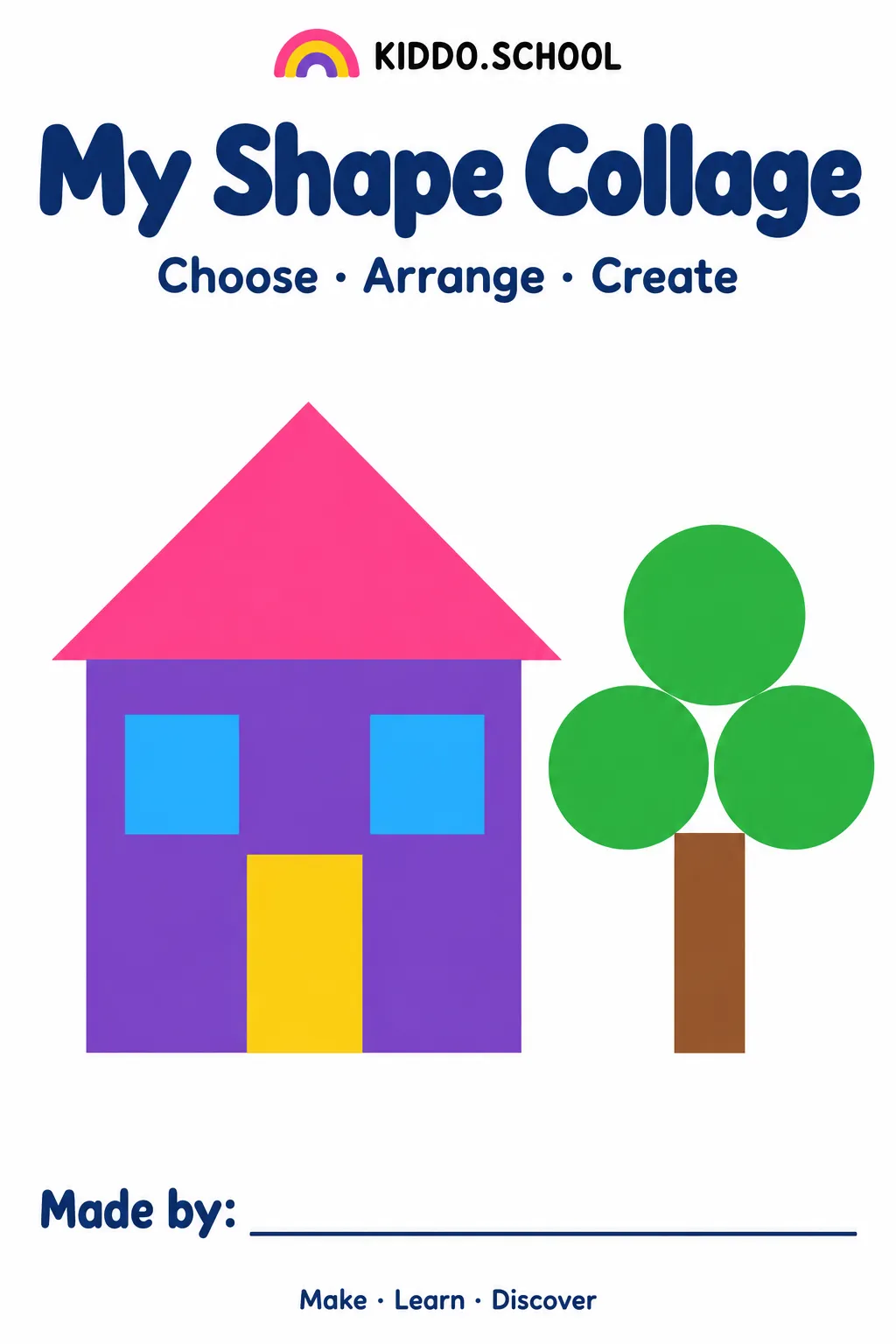
Tear, arrange and layer colourful paper to make a picture that is entirely your own.
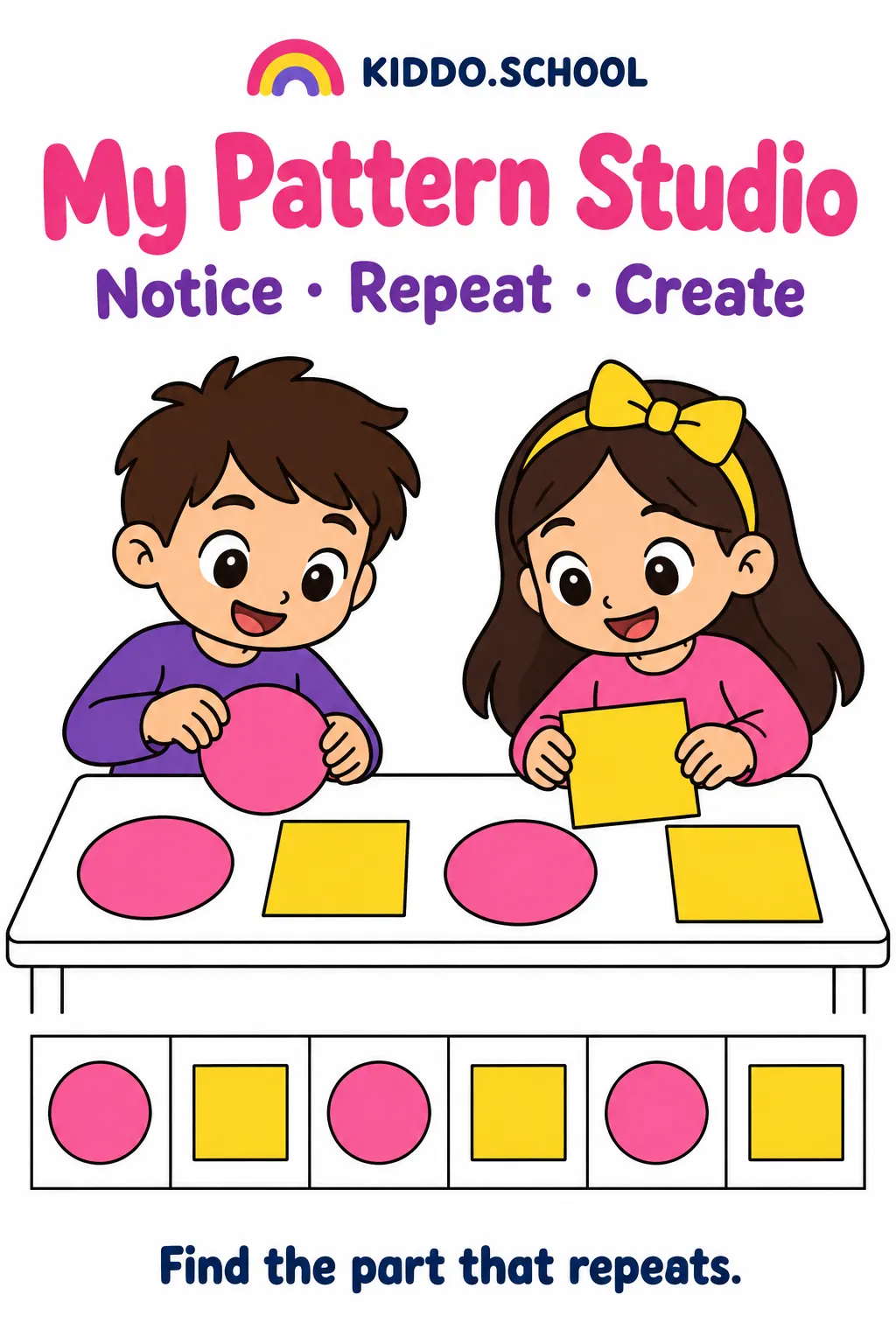
Turn big paper shapes into repeating patterns and challenge someone to find your rule.
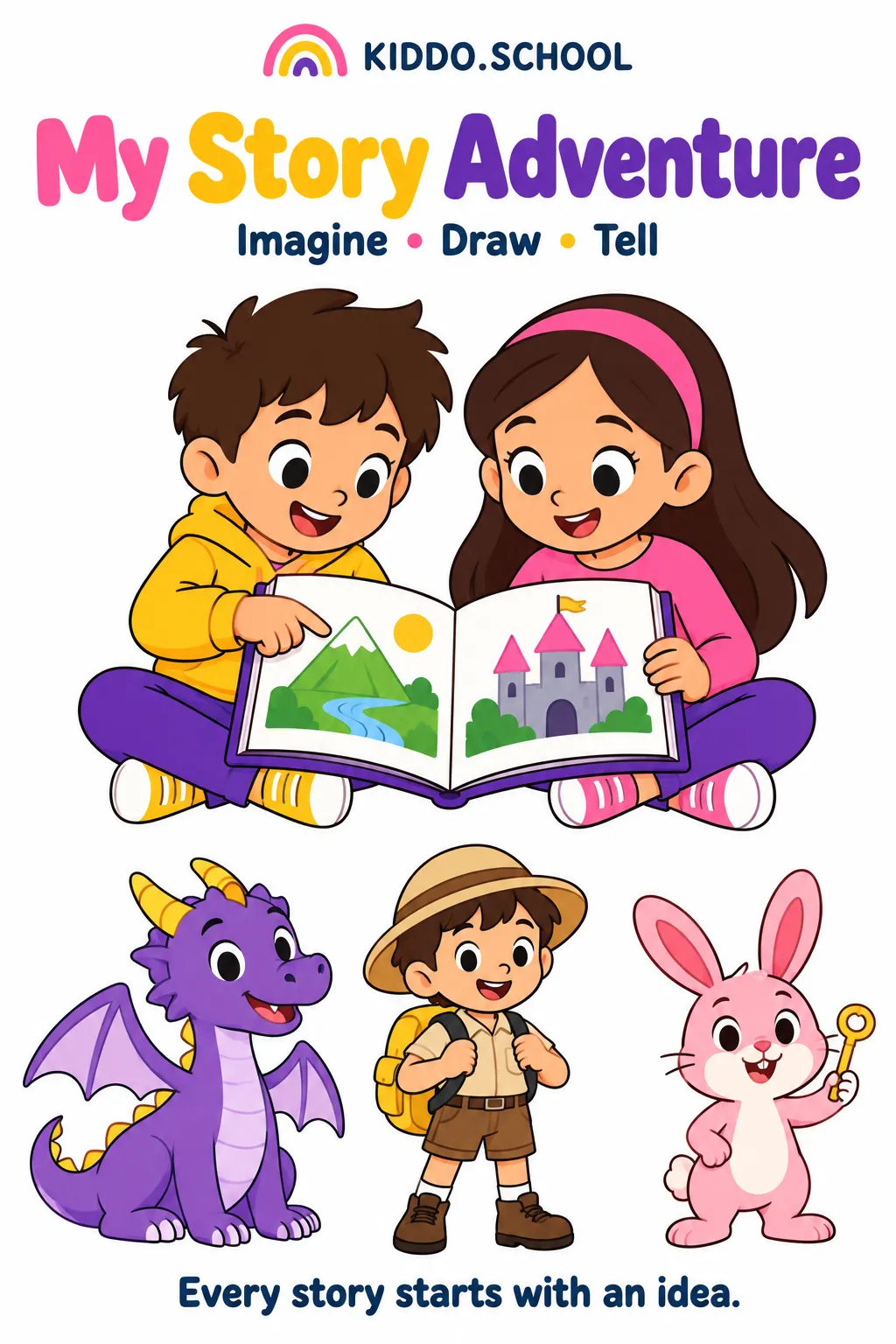
Invent a character, give them a problem and draw their way to an ending.
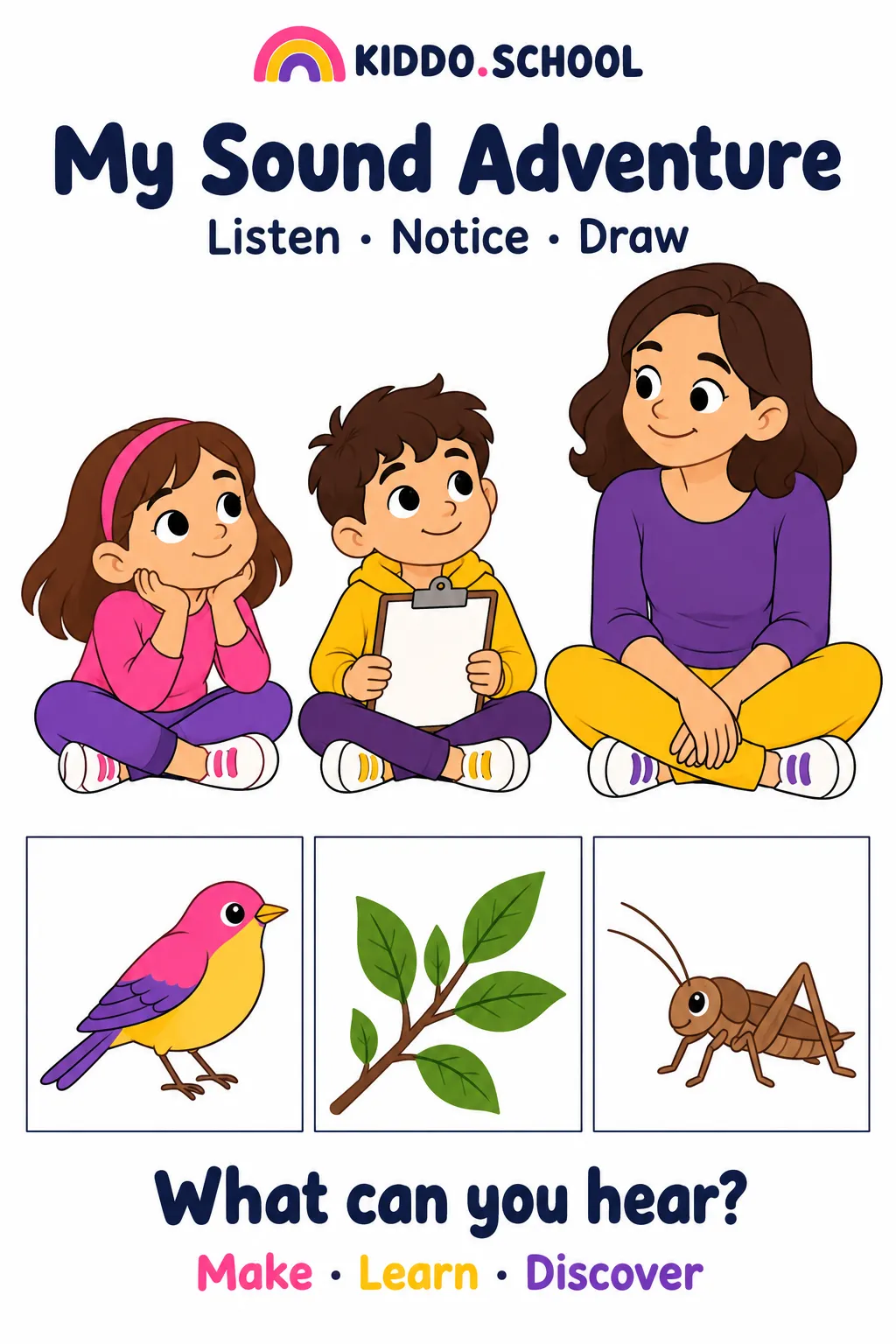
Listen from one safe spot and draw a map of the sounds around you.
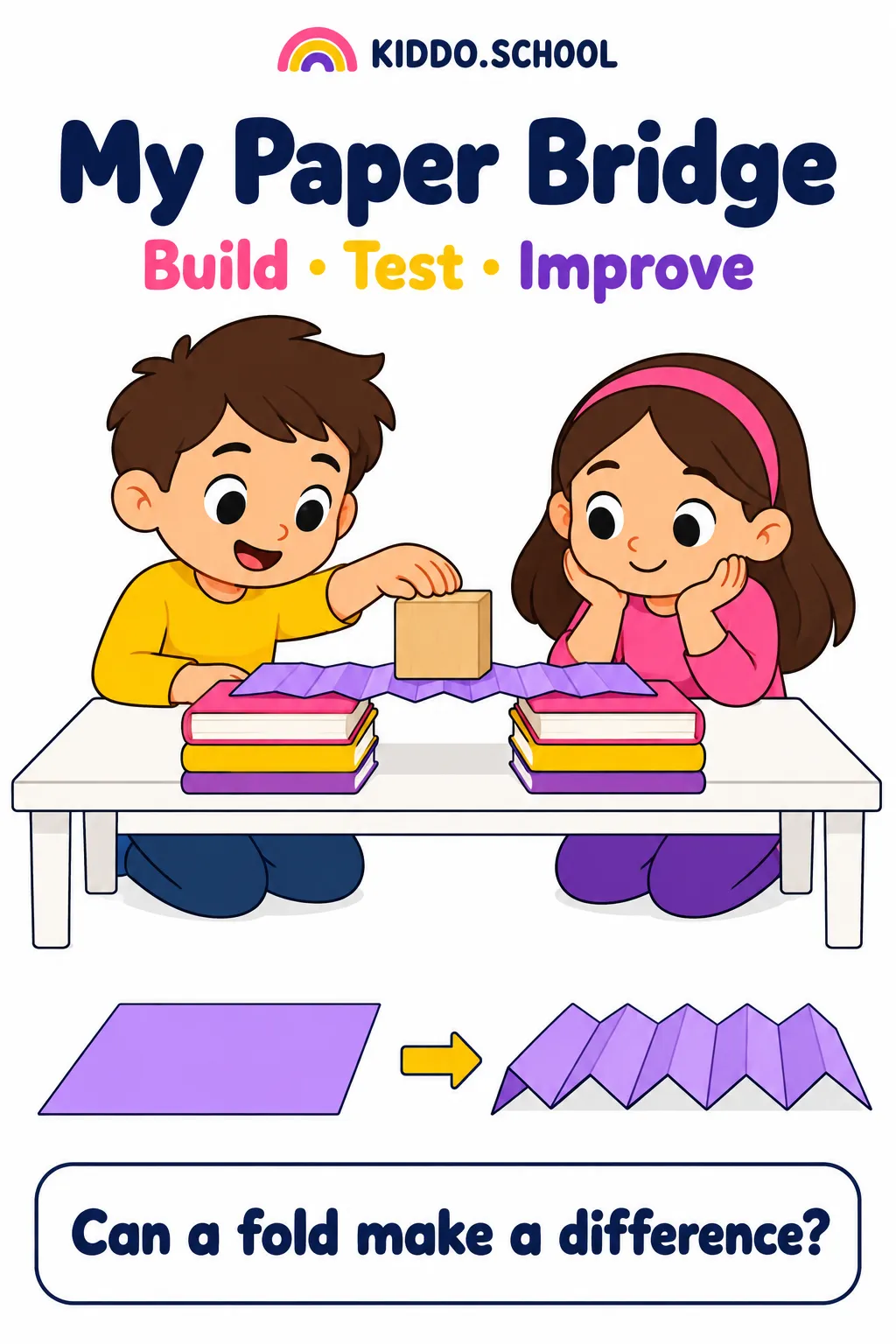
Test how folding changes a paper bridge, then improve your design with a fair comparison.
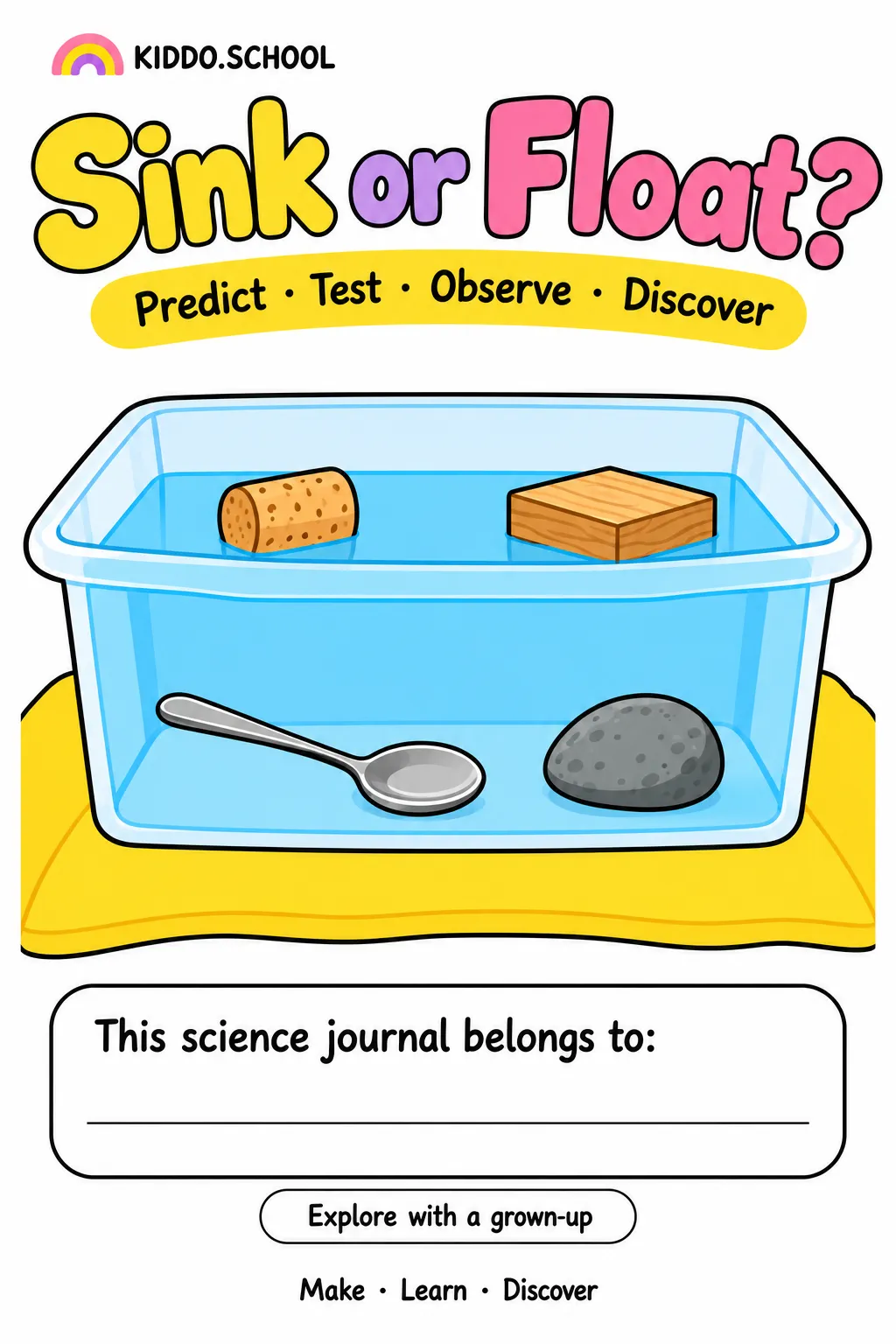
Test everyday objects in water, record what happens and redesign a foil boat.
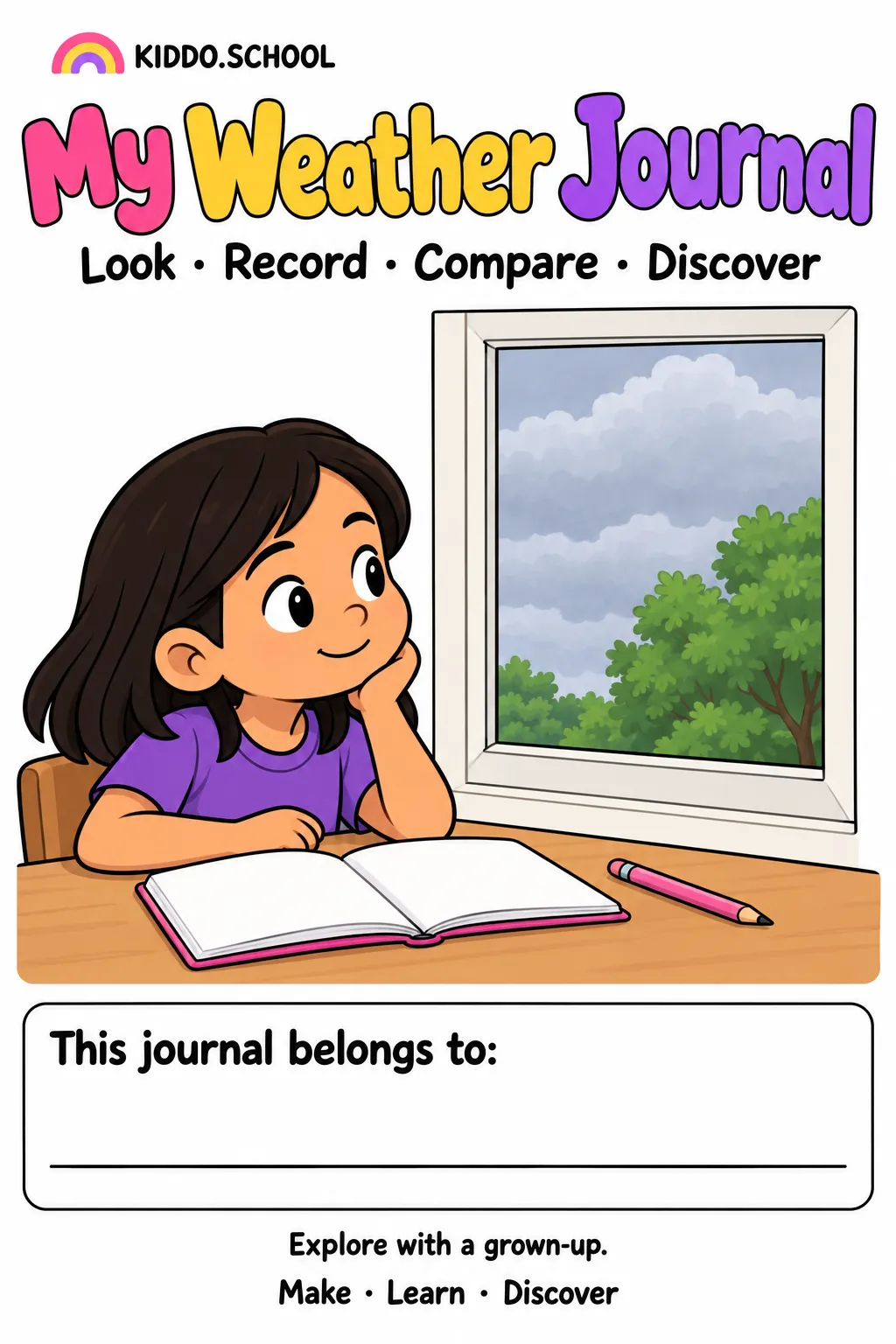
Observe the sky, keep a weather diary, choose an outfit and build a toy shelter.
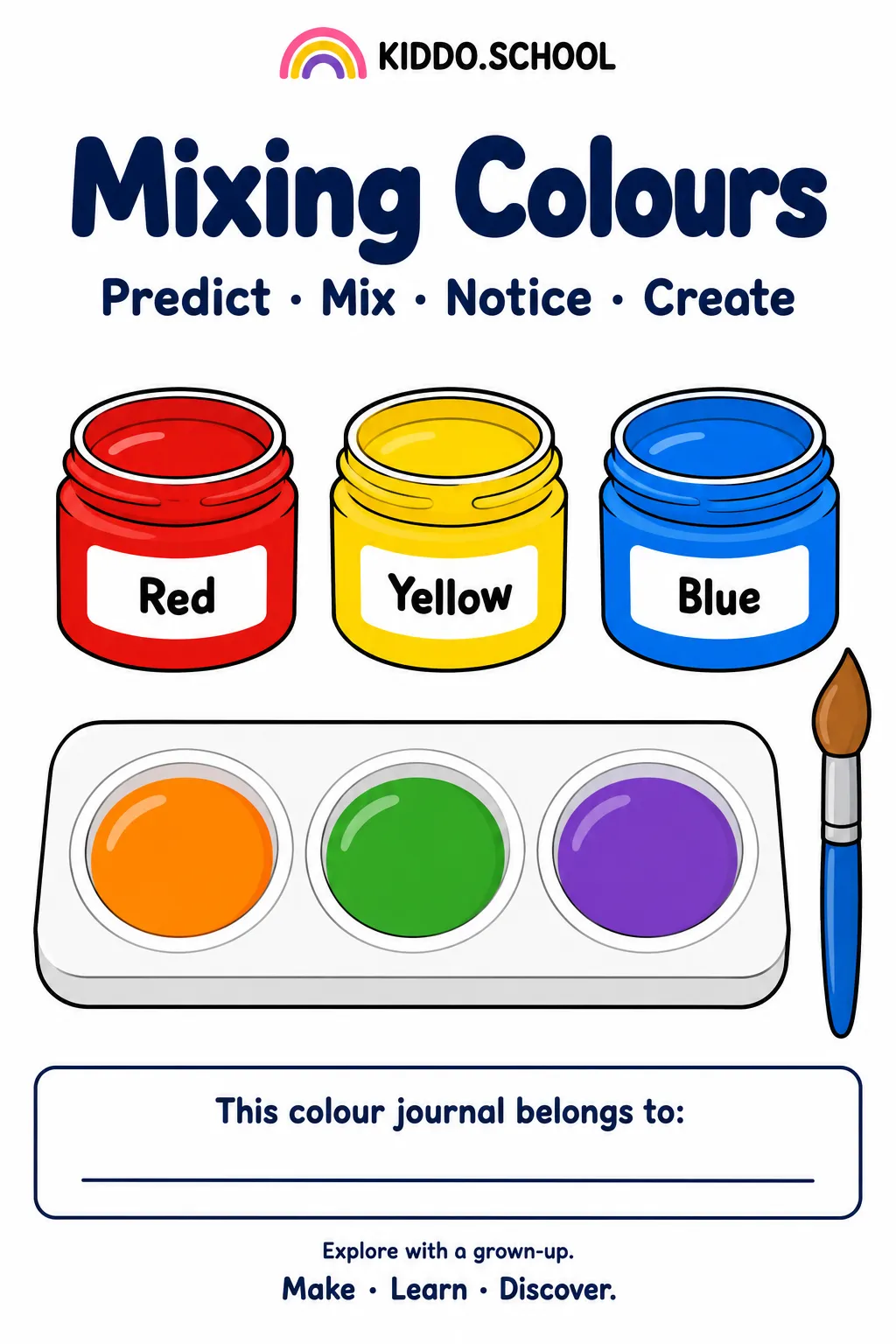
Predict paint mixtures, record your results, match colour cards and invent your own shade.
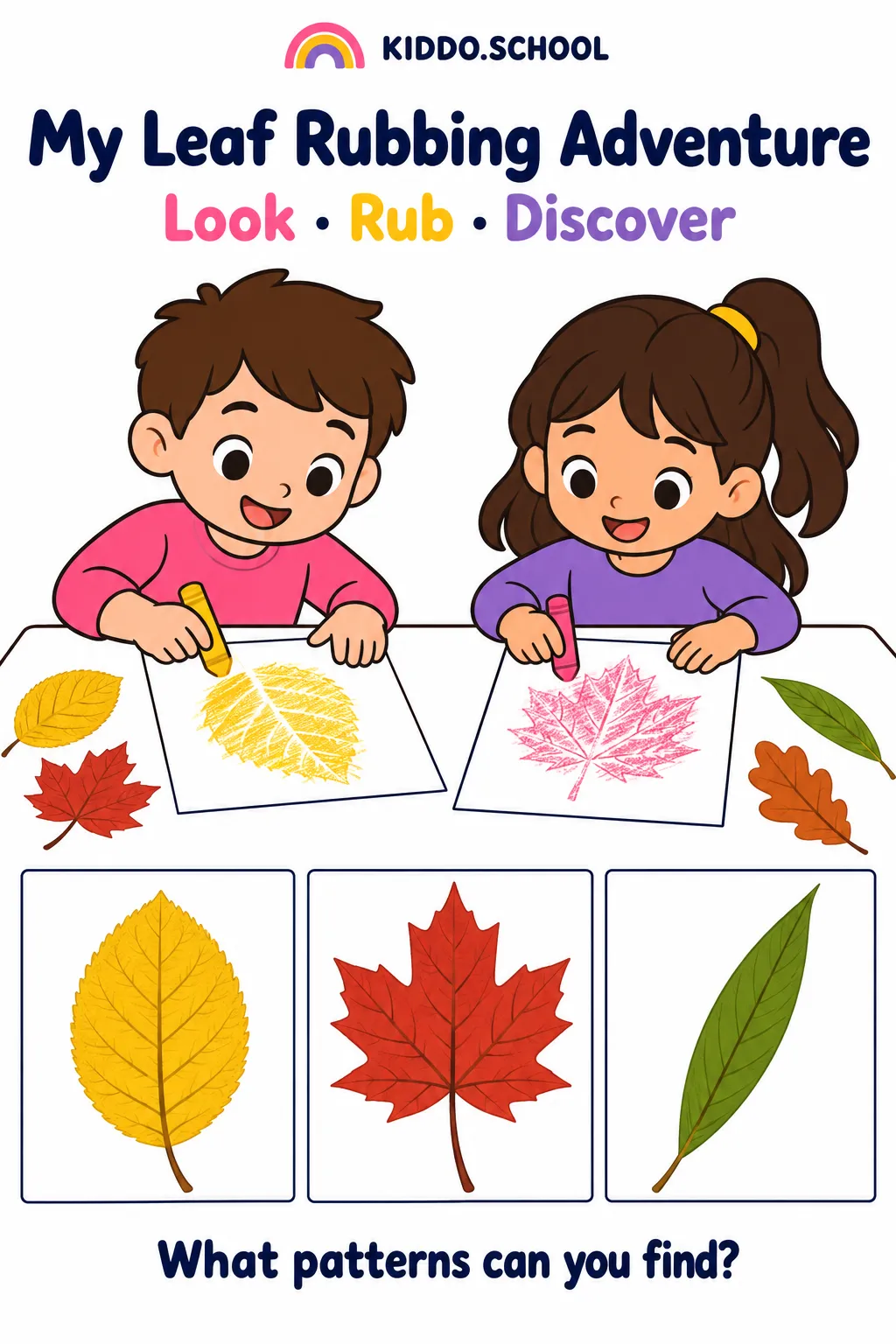
Turn fallen leaves into crayon rubbings, compare their textures and build leaf creatures from your own art.
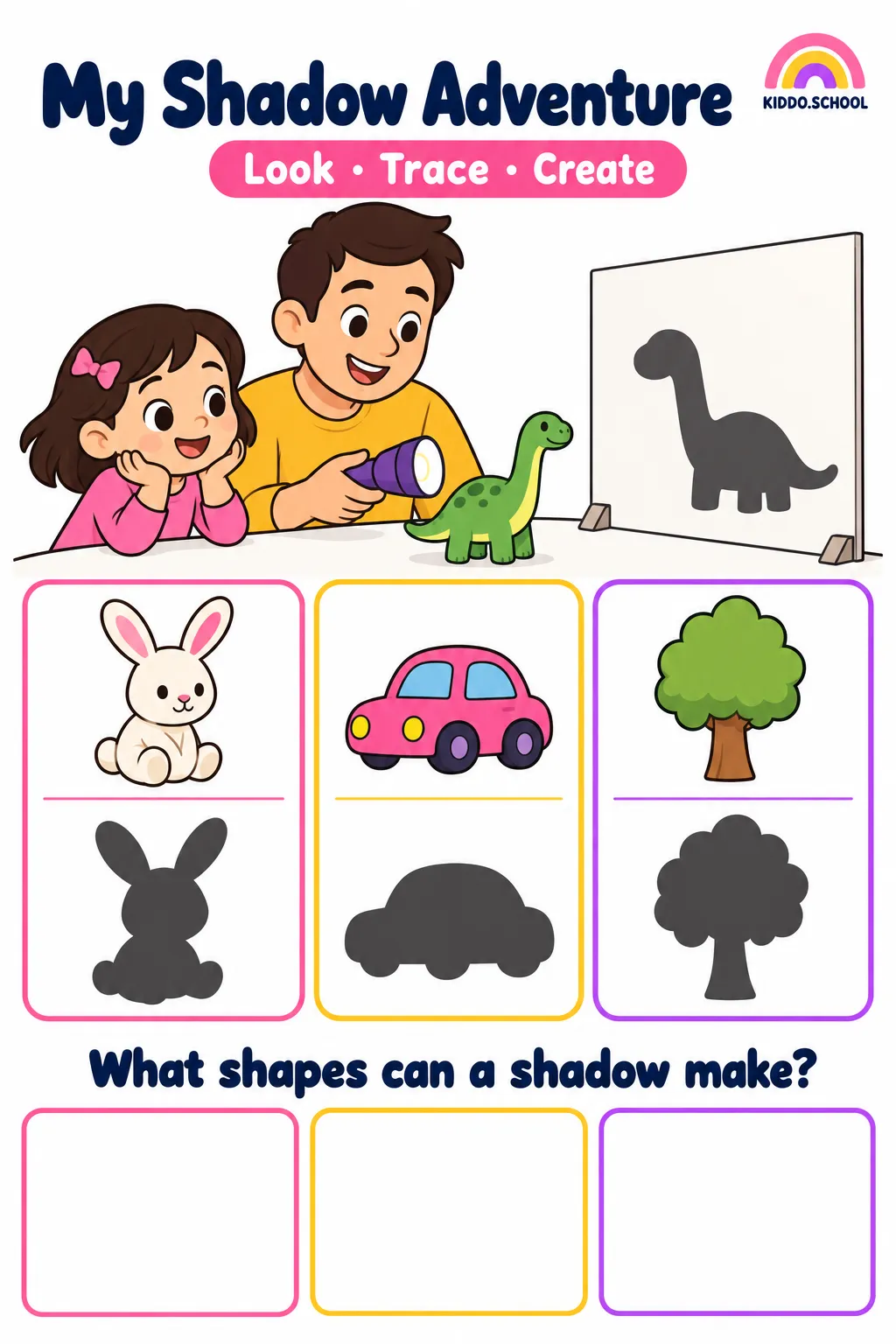
Torch in hand, children make shadows grow and shrink, turn them into creatures, predict their shapes and trace them like real evidence.
Try a broader word like “paper”, or clear a filter to see more ideas.