

Three colors — a step-by-step lesson for grown-up and child
One card holds all three colours at once. This lesson treats it the way it deserves: not a first card but a finale — the review that ties a colour week together.
What is this?
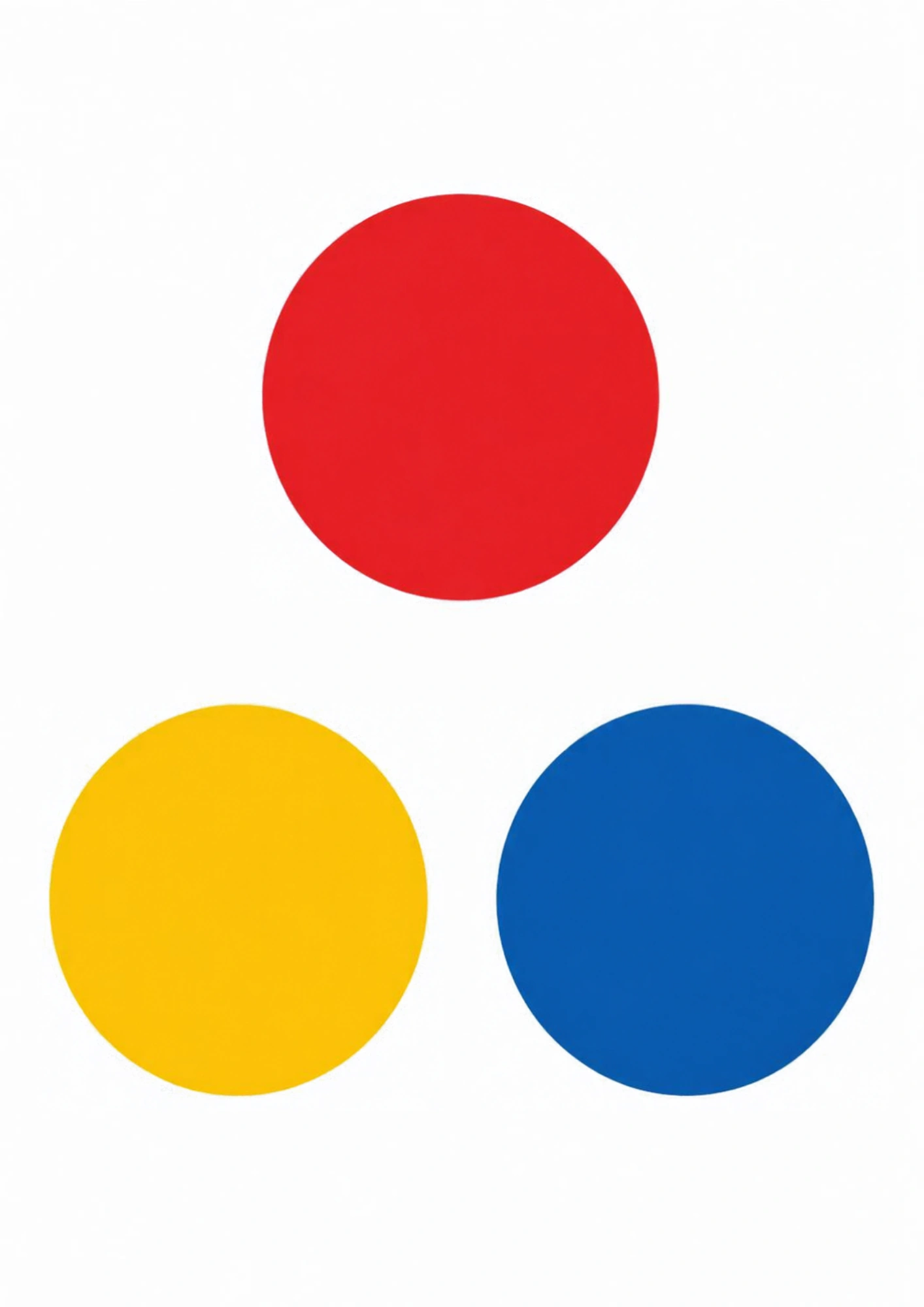
The three colours card puts red, yellow and blue together on a single bold page. After your baby has met each shade on its own, this card is the reunion — everything the week taught, in one view.
What does it mean?
Review works differently for babies than for children: there is nothing to recall, only to re-meet. Seeing the three colours together after days of single colours lets the brain notice both the togetherness and the differences, without any effort from anyone.
What does the child need to know?
The pointing rhythm is the heart of this lesson: one colour per slow breath, three breaths for the whole card. Slowness is not laziness here — it is what lets a 3–4-month gaze find each shade before the next one is named.
Why this matters
Ending a run of sessions on a summary image teaches the shape of learning itself: things get met one at a time, then seen together. That rhythm — parts, then whole — is how your child will one day meet letters, then words.
What it teaches
Visual consolidation of the colour trio, slow sequential pointing, breath-paced shared attention, and the comfort of a familiar finale card.
Words to learn
redyellowbluetogetherbreatheall done
Say this to your child
“"Red, yellow, blue — all three friends on one page. I will say hello to each one, slowly, slowly. Red... yellow... blue. There they are, all together. What a colourful card to finish with."”
Step by step
- Bring the card out at the end of a session, not the start, and announce it like a treat: "All three colours! Together."
- Hold it steady at close range and simply let your baby take the whole busy page in for a few seconds.
- Point at the red with one fingertip and say "red" as you breathe out; rest a full breath before the next colour.
- Point yellow the same way, then blue — three shades, three breaths, no rushing anywhere.
- Lower the card, say your closing word — "all done" — and let that be the end; this card should always finish things, never open them.
Look closer at the picture
The artwork shows the three bold colours sharing one page — say that much. What deserves noticing is your baby’s stamina: three named colours is a longer attention job than one. Did today’s run last longer than last week’s? That is your progress line.
Ask your child
Watch the pace: does your baby’s gaze keep up with a breath-slow pointing rhythm, or fall behind at the third colour? Wonder aloud: "I wonder if we should give blue its own extra breath next time."
What your child can say or do
Eyes trailing your finger from shade to shade, a settled body that matches your slow pace, a startle-blink when the busy card first arrives, or looking away before the trio finishes — all normal; the card will wait.
Out in the real world
Things that come in threes fill the house: the traffic lights on your walk, three mugs on the shelf, the trio of bath toys on the tub edge. Pointing out real threes keeps this card’s idea in circulation all week.
Try it together
Breath trio at bath time: name three coloured things in the water or on the tiles — one per breath, exactly like the card. The rhythm transfers, and bath becomes a gentle rehearsal room without a single card in sight.
Understanding check
Parent self-check: did you keep to one colour per breath, and did this card genuinely close the session rather than open it? Both are discipline points — the design only works if the finale stays a finale.
Parent tips
If your baby handles the trio easily, resist adding a fourth colour or a faster pace; the value is in the calm repetition, not the difficulty. Save this card for weeks when all three single colours have had their days.
Staying safe
A busier card holds attention longer, which can mean a drowsier baby by the end — finish before the yawns turn to fussing, and move the card well clear as sleep approaches. Pointing fingers stay gentle: taps on the card, never on the baby.
This lesson pairs with the Three colors flashcard in the library — print it, show it, keep it on the fridge. Back to Colors & First Objects (Infant 1).