

Banana — a step-by-step lesson for grown-up and child
Banana has real character as a first word goes: silly to say, strange to look at, and famous for the peel. This lesson lets the comedy do the teaching.
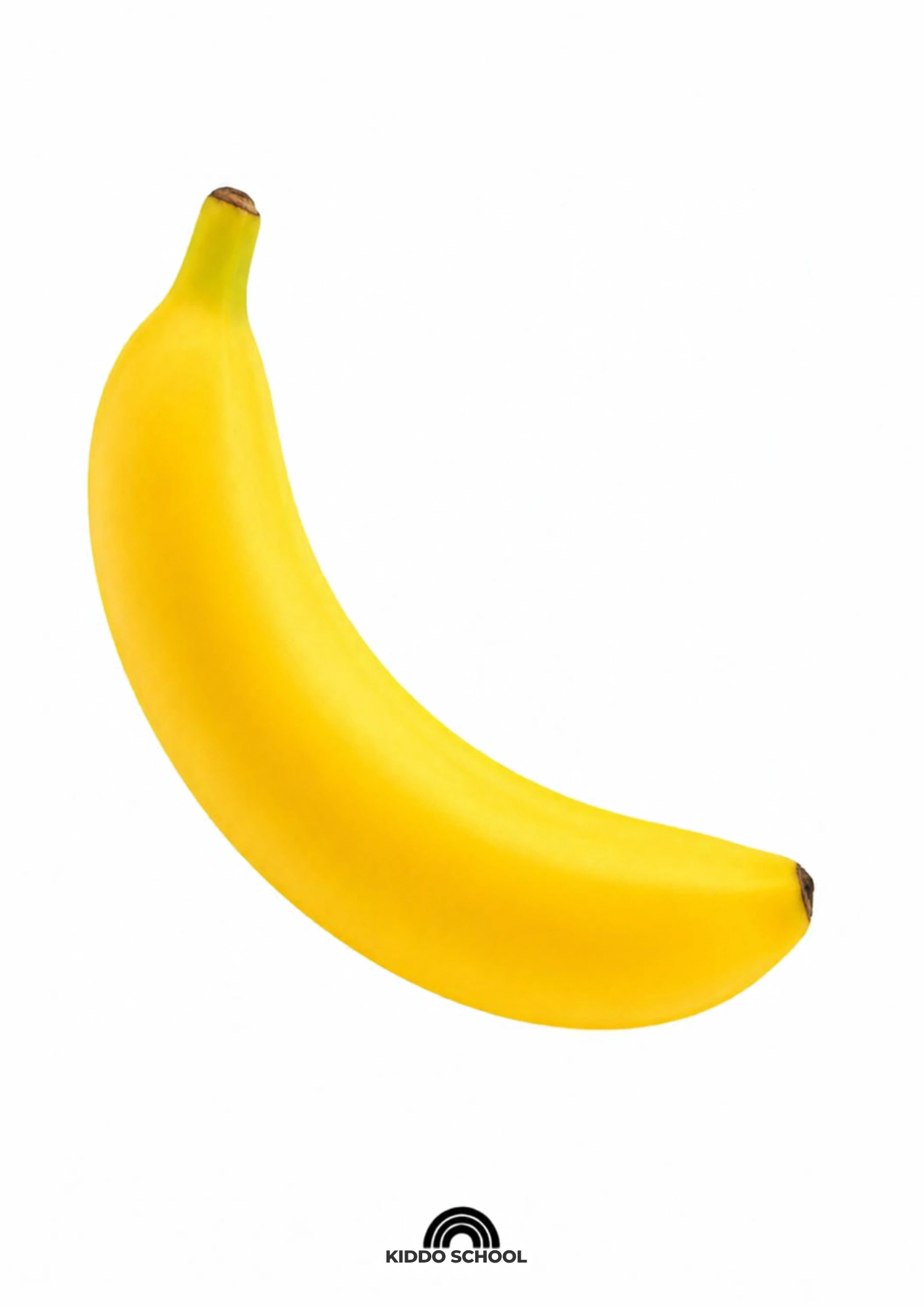
What is this?
A banana is a long, curved yellow fruit that arrives in its own wrapper. Your baby may know its smell from family breakfasts; the card gives the fruit a portrait, and the peel gives the lesson its show.
What does it mean?
Funny-sounding words get repeated by the grown-ups who enjoy them, and repetition is everything at this age. Words that make parents smile get said more warmly, more often, and with more melody — banana is a word babies hear loved.
What does the child need to know?
The ceremony is in the peel: unwrap a real banana strip by strip as you say the word, letting the reveal build. Your baby cannot eat it yet, and does not need to — the unfolding is fascinating all by itself, and the word rides along with the drama.
Why this matters
Words with personality survive. Banana has sound-play built in — ba-na-na — and babies soaked in its syllables for months often say some version of it astonishingly early. You are not teaching the word; you are marinating your baby in it.
What it teaches
Sound-play exposure (syllable rhythm), anticipation through slow reveal, smell and sight pairing, and the social joy of a word that makes both of you happy.
Words to learn
bananayellowpeelopensmellnana
Say this to your child
“"Banana! Ba-na-na — what a funny word. Here is the picture banana, curved like a smile. And here is a real one — watch it open, slowly, slowly... there! Yellow inside, yellow outside. Banana is the silliest, best word."”
Step by step
- Show the card at close range and give the word its full silly voice: "Banana! A long, yellow, funny banana."
- Trace the crescent shape on the card with one finger — there is no other fruit shaped quite like this.
- Fetch a real banana and peel it slowly, a strip at a time, saying "banana" as each fold comes down.
- Hold the opened fruit briefly near your baby — the smell is part of the lesson — then bring the card back for the final look.
- Put the banana away for the family’s breakfast and close the session with the picture; the fruit served its purpose.
Look closer at the picture
The artwork is a cheerful banana in its bold simple style — say that much. The live noticing: during the slow peel, where are your baby’s eyes — the unfolding fruit, the falling strip, your face? The peel pulls attention three ways, and all three are fine.
Ask your child
Watch the show: does the slow build hold attention longer than the finished fruit? Does the smell earn a lean or a wide-eyed still? Wonder aloud: "I wonder which part you like best — the word, the smell, or the unfolding."
What your child can say or do
Fixed staring at the peeling hands, a wriggle of anticipation as each strip falls, a sniff-and-lean at the opened fruit, or early babbles that echo the word’s rhythm — na-na noises during banana week are more than coincidence.
Out in the real world
Bananas live on countertops and in lunchboxes, and they will star in your baby’s own weaning months soon. Every family banana is a replay now — mash practice later, word practice today.
Try it together
Peek-a-peel: with the card hidden behind a real banana, reveal it bit by bit — a corner first, then the whole picture — saying the word when it appears. The peel’s logic, played with paper and fruit together.
Understanding check
Parent self-check: did you say the word slowly enough to enjoy it, and did the peel actually take its time? Speed is the enemy of this lesson; the whole method is a slow reveal in a warm voice.
Parent tips
If the word makes you grin, say it more — your enjoyment is the curriculum. Vary the voice across days: whisper banana, sing banana, stretch banana. The syllables are elastic and your baby is listening to all of it.
Staying safe
Real bananas stay with the grown-ups until weaning months — a whole banana is a binding hazard, and the peel goes straight to the bin, not the exploring hand. The session banana returns to the fruit bowl or the breakfast plate.
This lesson pairs with the Banana flashcard in the library — print it, show it, keep it on the fridge. Back to First Words & Familiar Things (Infant 2).