
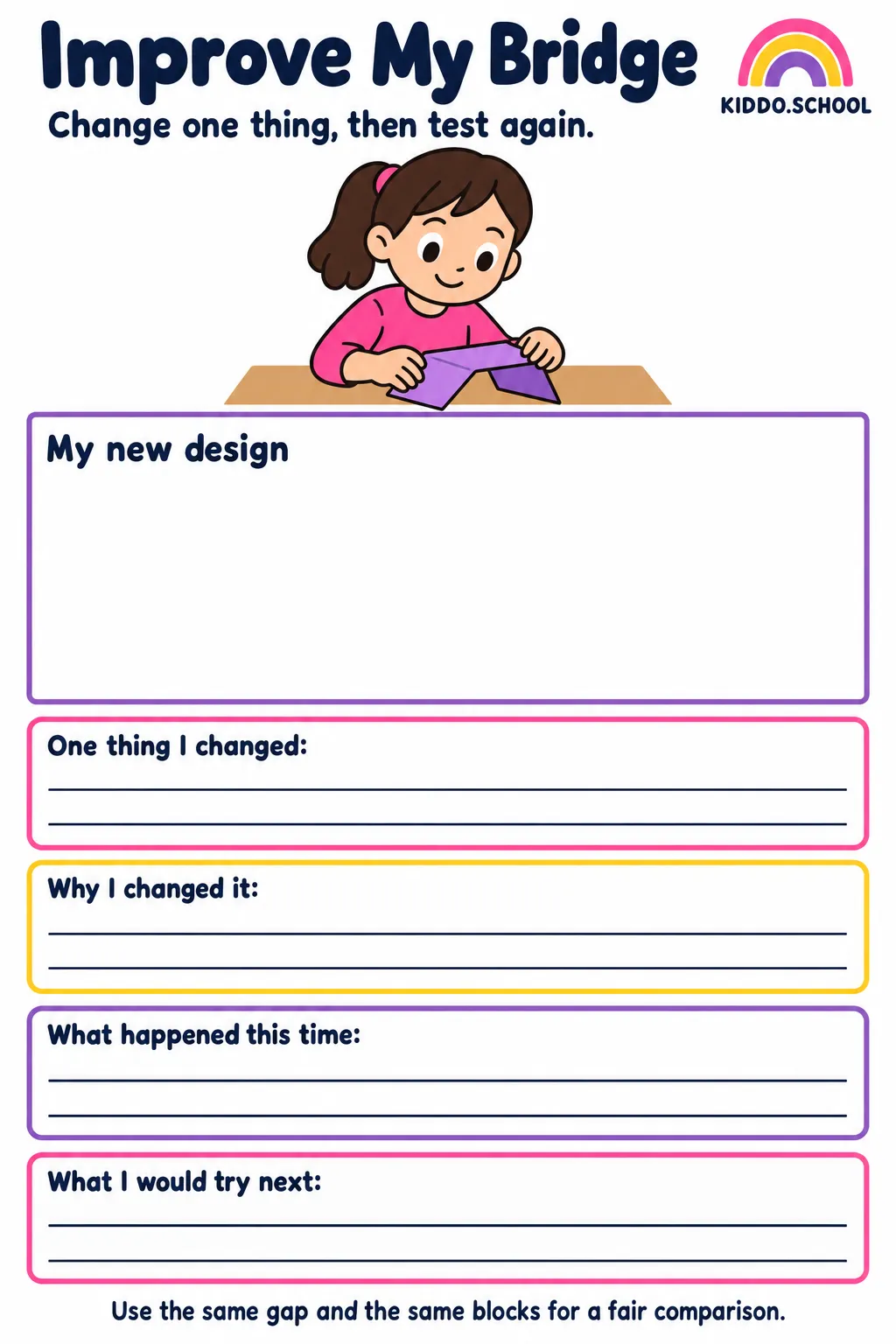
Look, then try.
Use your results to choose a change, such as fold width. Keep the paper type and size, support gap and blocks the same. Test using the same stopping rule. An unsuccessful change is useful evidence too; describe what happened before deciding what to try next.
Work with a grown-up on a low surface. Use large lightweight blocks and stable, low supports. Keep fingers clear if the bridge slips. Never stand on the model bridge.
Use a finger, stylus or mouse in each drawing box. Type below it, or ask a grown-up to write your words. Your work stays in this tab. Save before refreshing or leaving.
My new design
Draw the change you will test.
Test again
Draw the bridge after your new test.
Your ideas belong here. There is no score.
What are we learning?
Engineering involves testing ideas and revising them using evidence. An improvement needs a comparison, not just a different appearance.
Prefer a worksheet?
Open the individual cartoon activity sheet to print or save. Use portrait orientation and fit to page.
Open worksheet to save ↓Try another bridge activity.
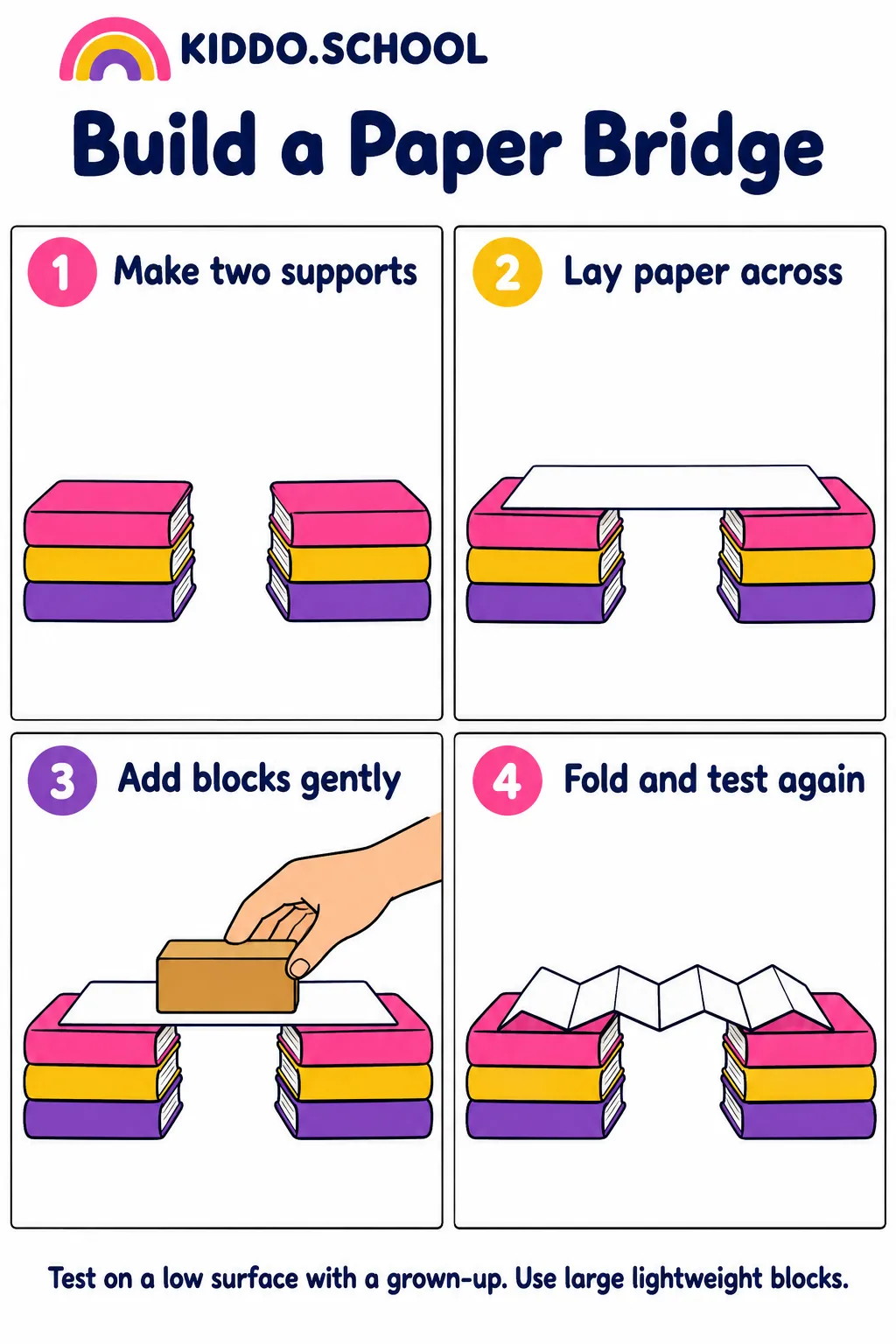 Build a Paper Bridge
Compare flat and folded paper across the same small gap.
Draw · Type · Save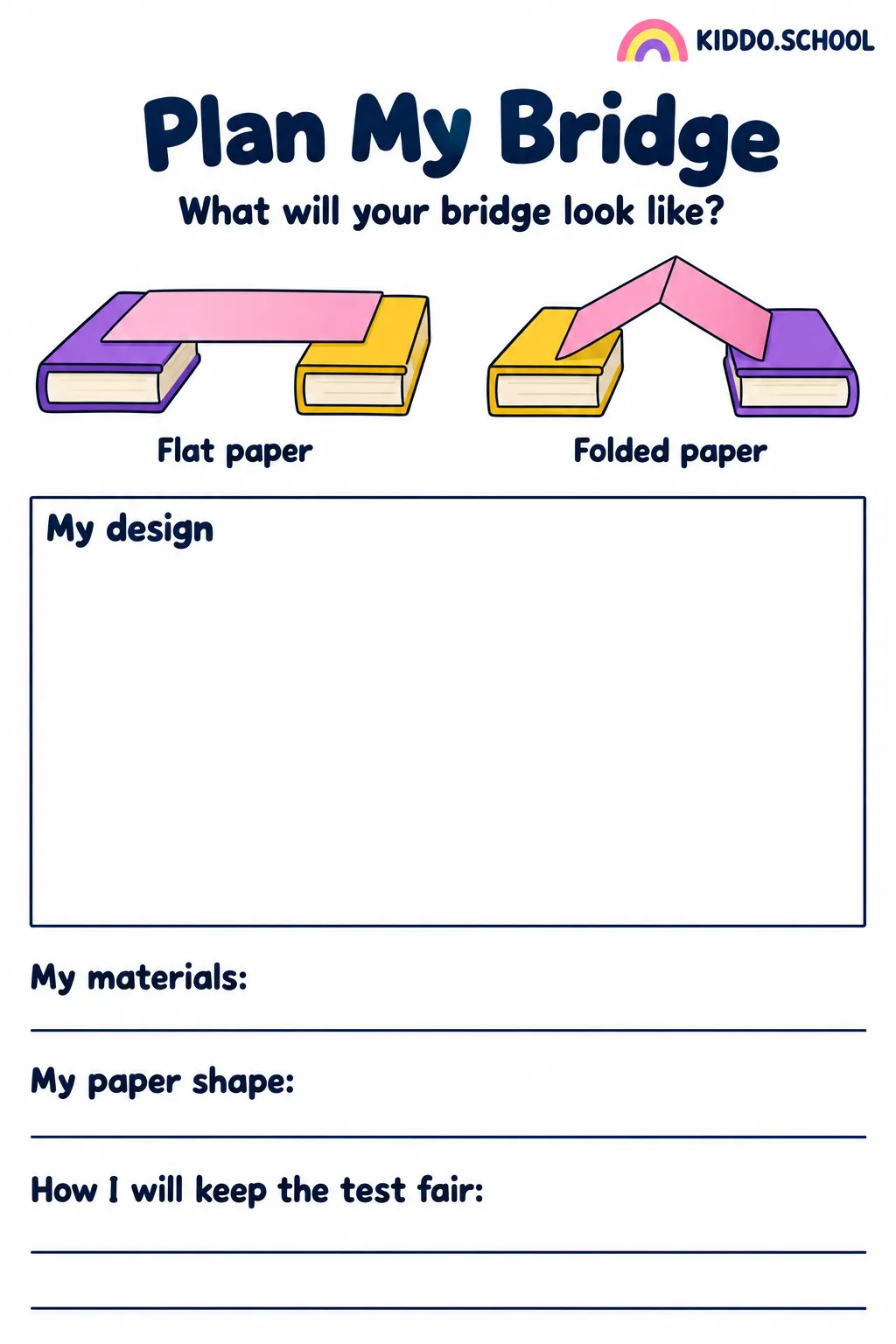 Plan My Paper Bridge
Sketch a bridge and decide how you will compare it fairly.
Draw · Type · Save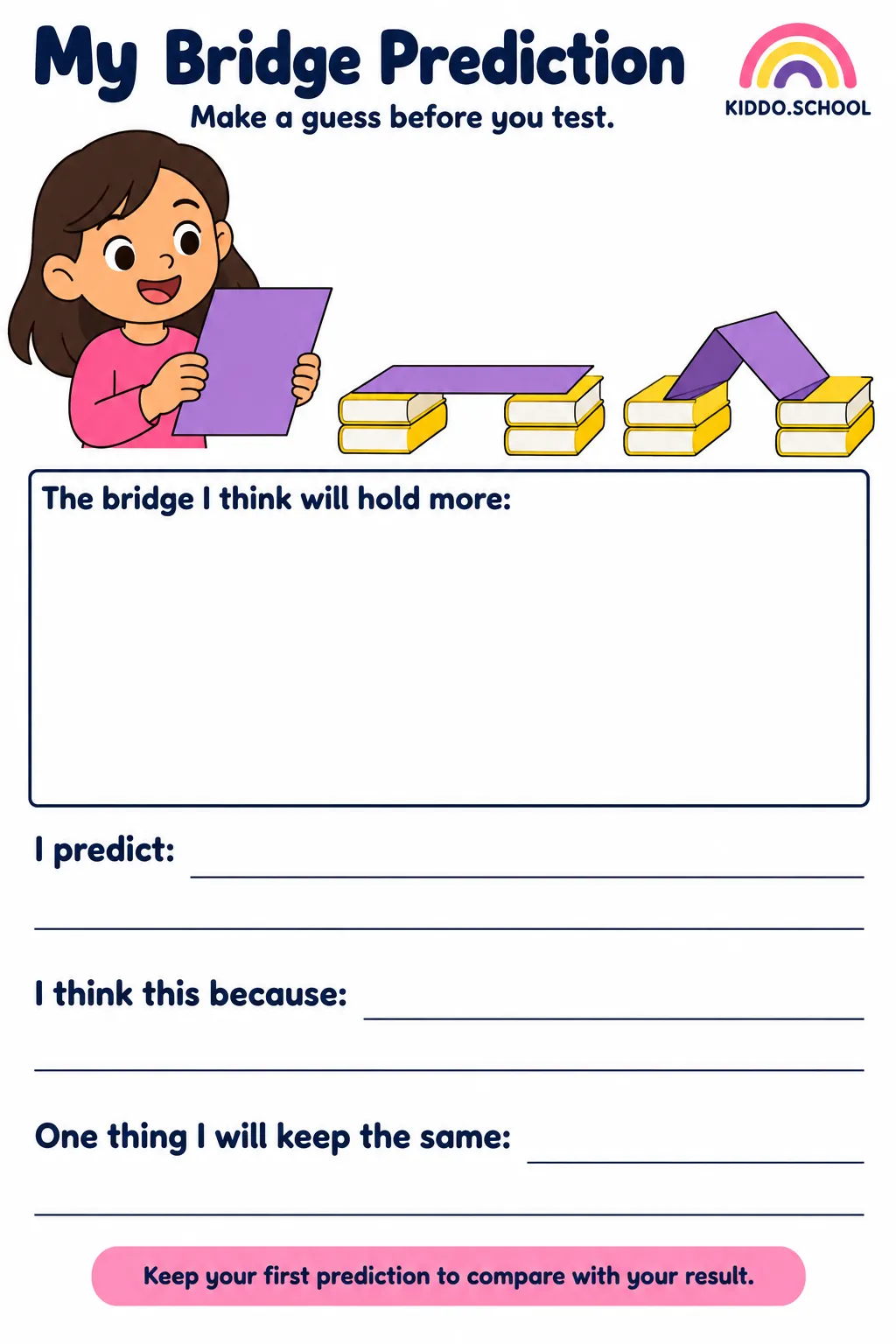 My Bridge Prediction
Predict what will happen before putting blocks on your bridge.
Draw · Type · Save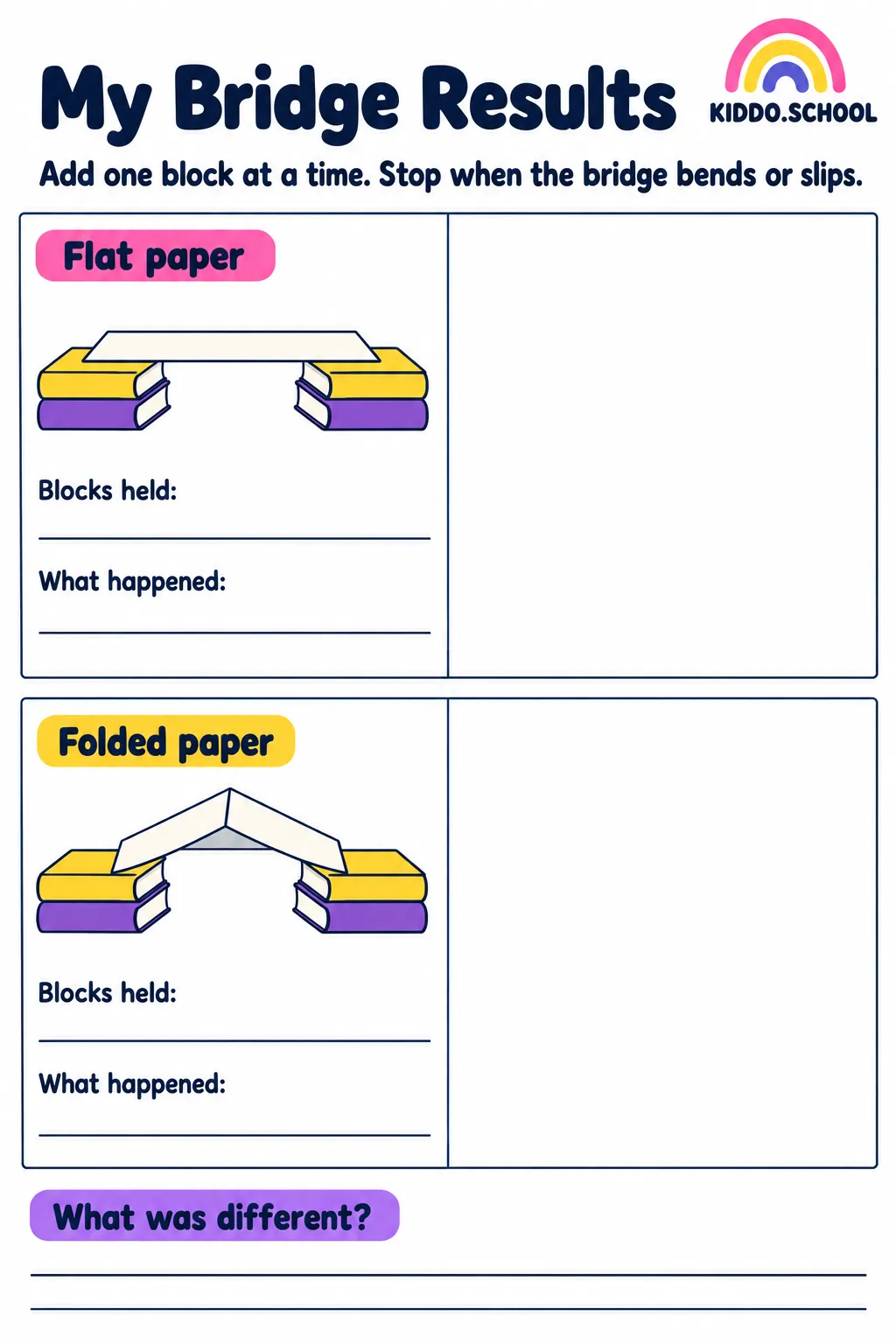 My Bridge Test Results
Record what your flat and folded bridges actually hold.
Draw · Type · Save