
Look, then try.
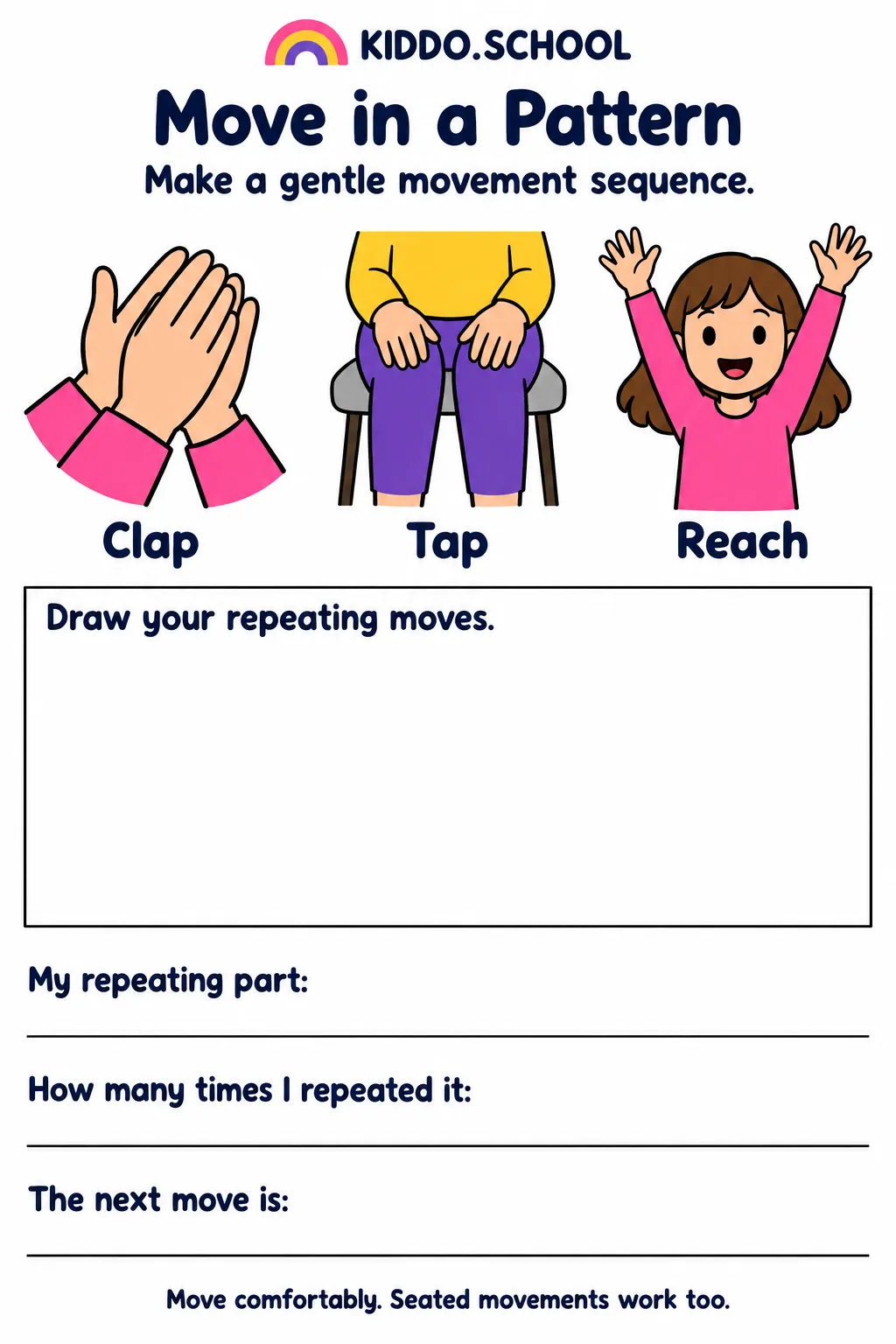
Patterns are not only for paper. Pick two or three moves, such as clap, tap knees and reach high. Make your repeating part with the moves, then repeat it again and again, slowly enough to stay comfortable. Draw your movement pattern in the big box, using small pictures or marks for each move. Seated movements work just as well as standing ones, and you can go as gently as you like. Ask someone to watch, then see whether they can join in and continue your sequence.
An adult helps with cutting the pattern cards. Keep paper scraps away from younger children. Move gently during movement patterns: seated movements work too, and no jumping is needed.
Use a finger, stylus or mouse in each drawing box. Type below it, or ask a grown-up to write your words. Your work stays in this tab. Save before refreshing or leaving.
Try my moves
Try two or three moves until they feel comfortable, then draw each move as a small picture.
Repeat and check
Draw or write how many times your repeat appeared, and what move would come next.
Your ideas belong here. There is no score.
What are we learning?
A rule can be seen, heard and felt. Moving through a pattern links rhythm, body awareness and sequencing to early maths.
Prefer a worksheet?
Open the individual cartoon activity sheet to print or save. Use portrait orientation and fit to page.
Open worksheet to save ↓Try another pattern activity.
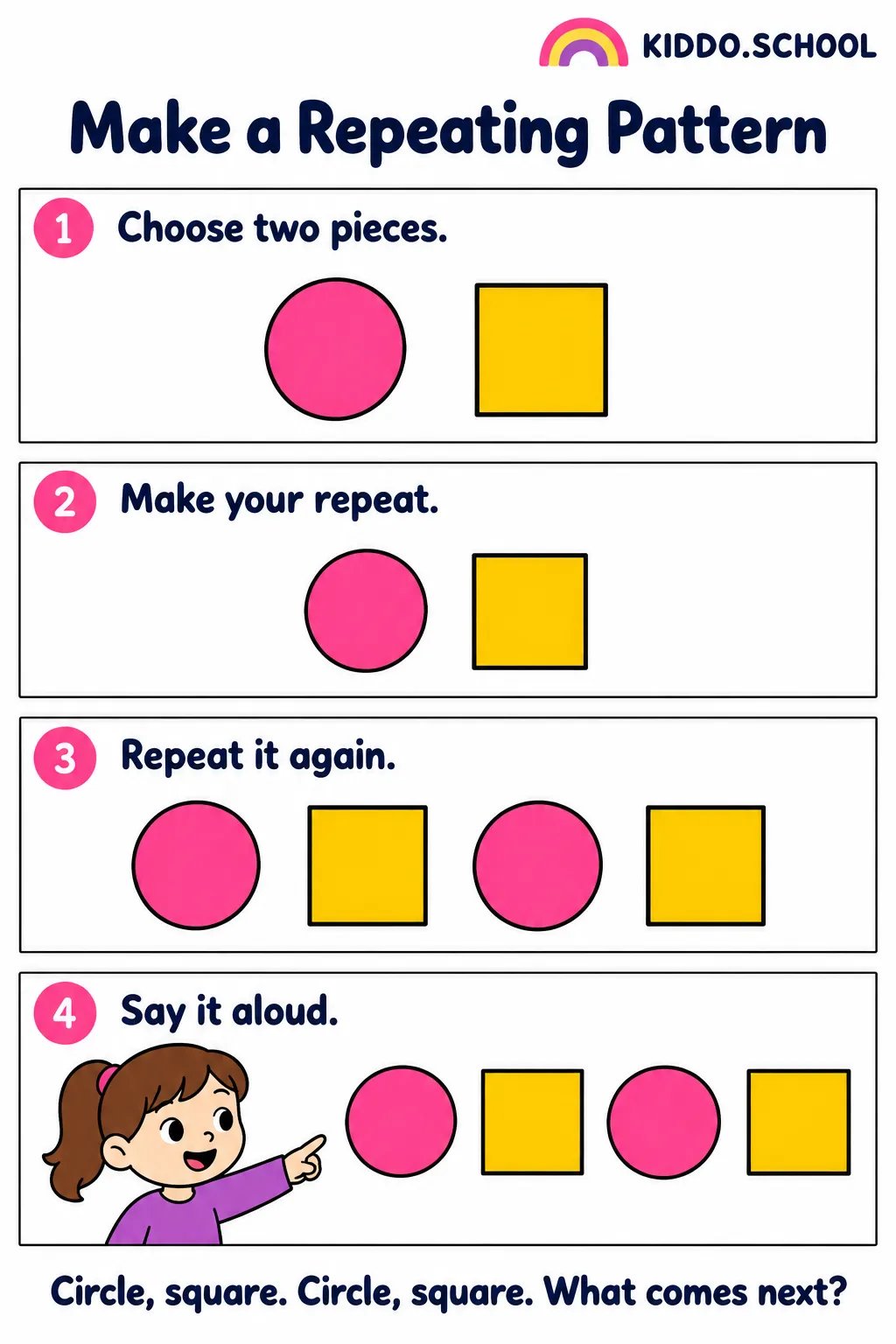 How to Make a Pattern
Choose two pieces, lay down your repeat and keep it going.
Draw · Type · Save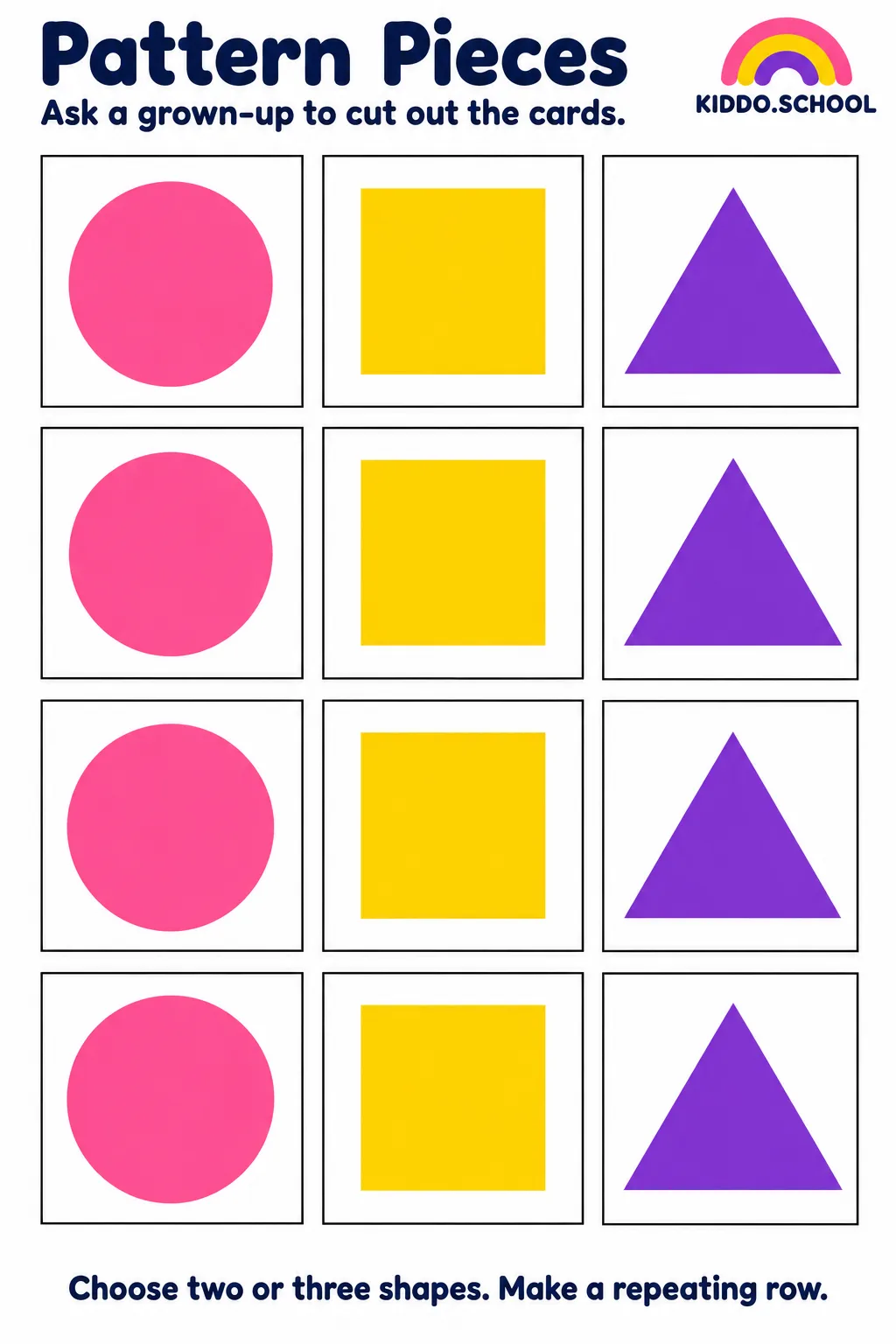 My Pattern Pieces
Sort your shape cards, build long rows and swap patterns to solve.
Draw · Type · Save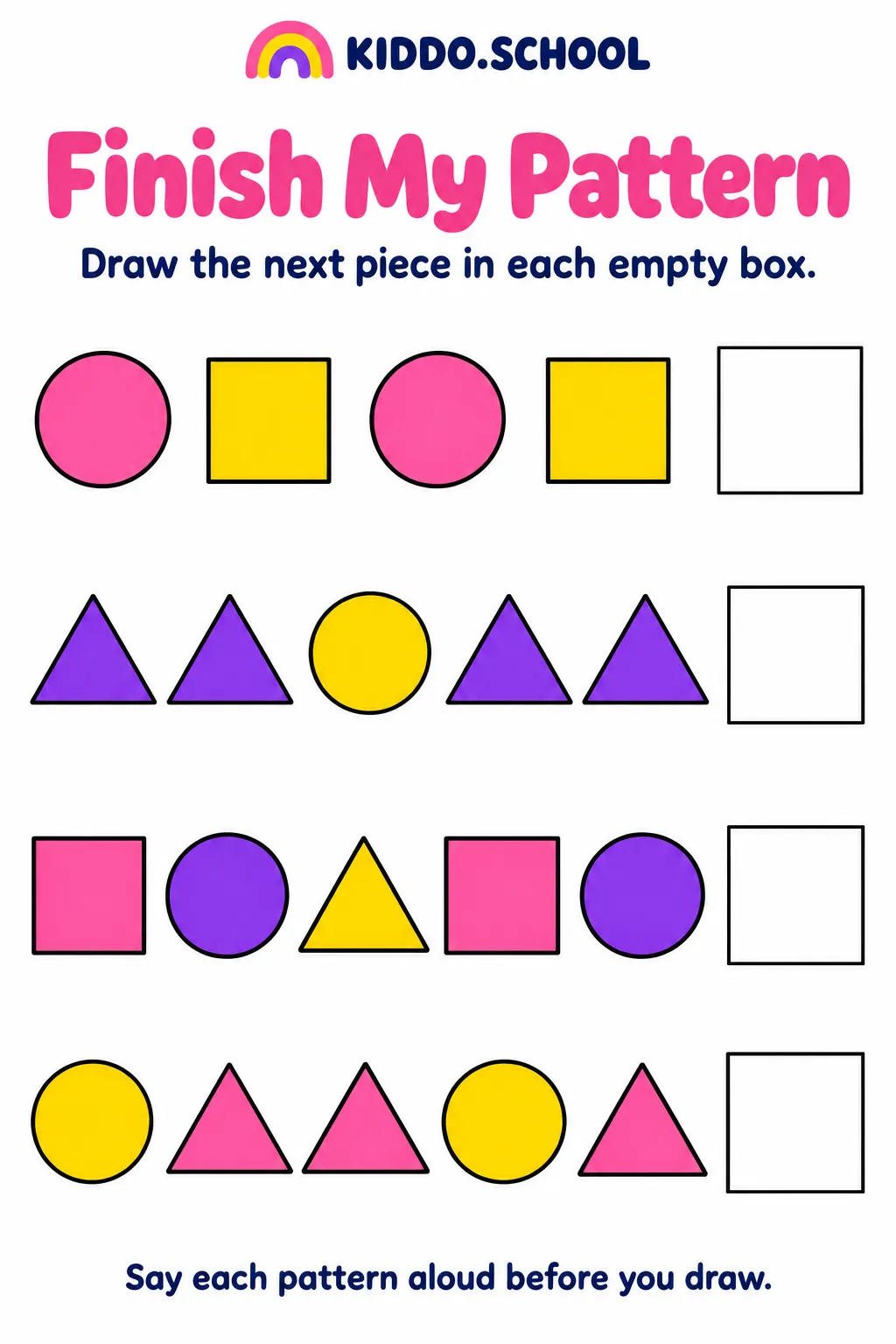 Finish My Pattern
Find the rule in each row, then draw the piece that comes next.
Draw · Type · Save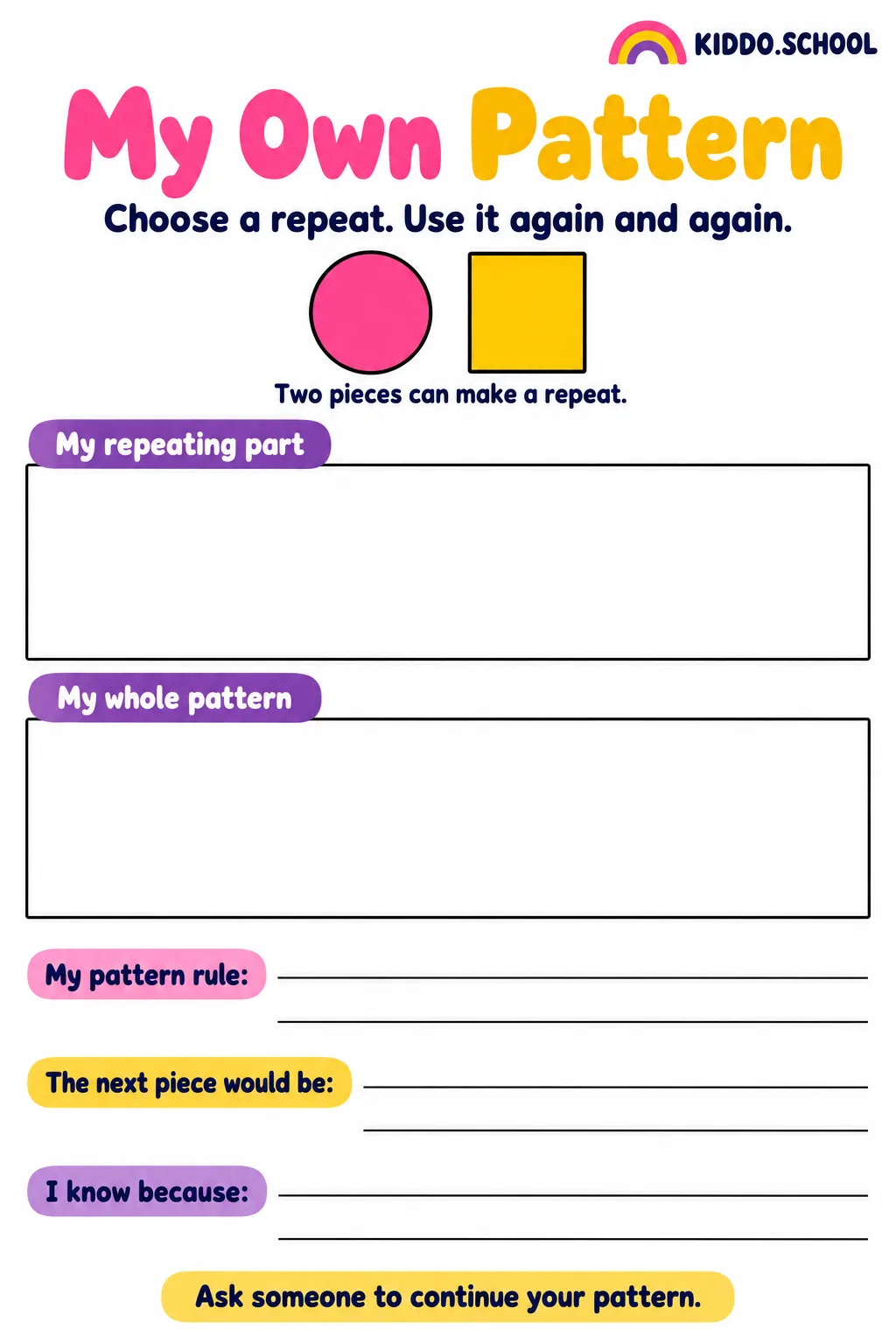 My Own Pattern
Invent a repeating part that is all yours, then challenge someone to continue it.
Draw · Type · Save