

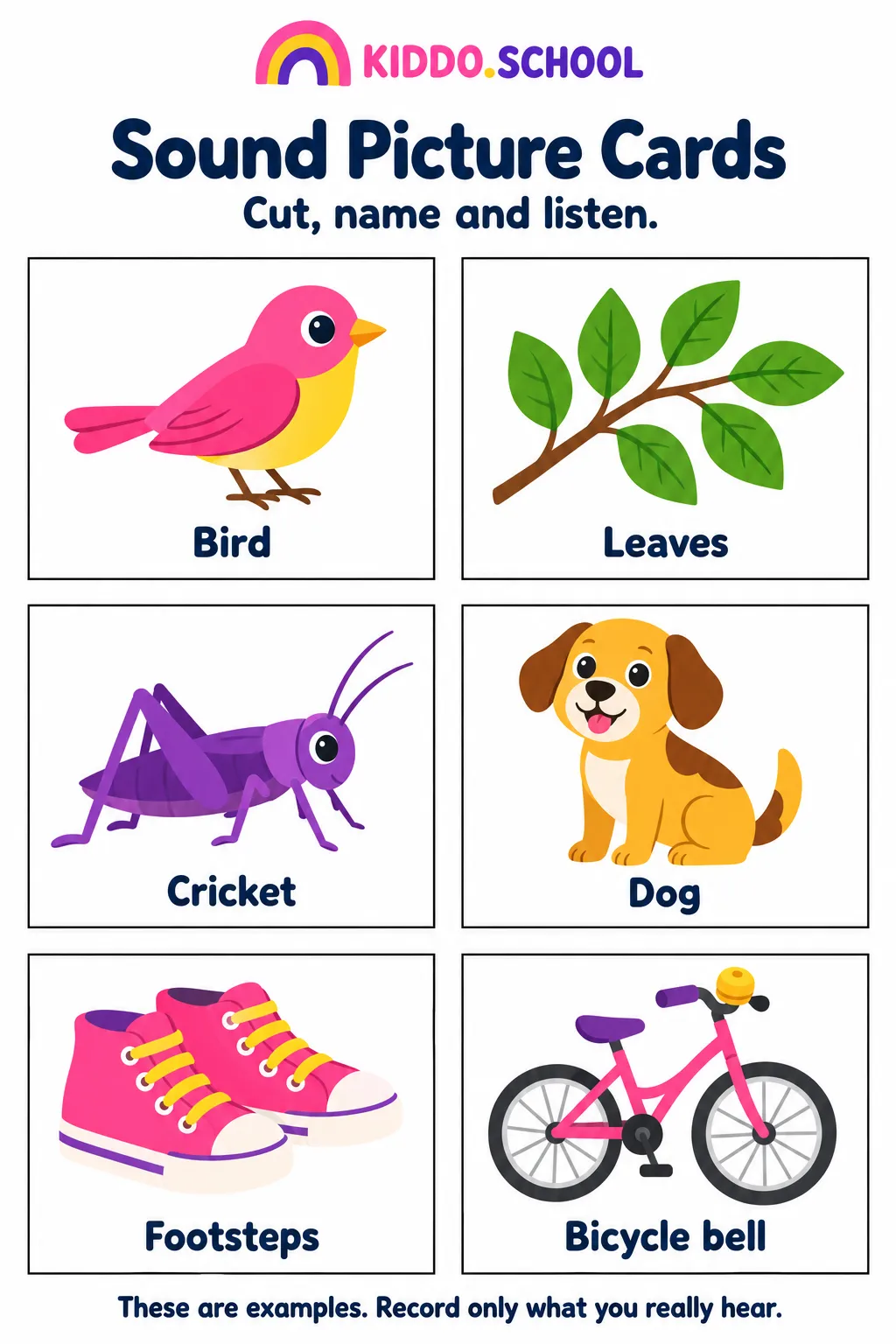
Look, then try.
A grown-up can cut along the straight card borders. Name the bird, leaves, cricket, dog, footsteps and bicycle bell. These are examples, not a list you must find. Leaves may rustle when they move. A picture alone cannot tell you how loud a sound will be.
Stay with a grown-up away from roads, water edges and unfamiliar animals. Never follow a sound into an unsafe place. Listen indoors if needed. An adult helps cut cards. Keep claps and taps comfortable.
Use a finger, stylus or mouse in each drawing box. Type below it, or ask a grown-up to write your words. Your work stays in this tab. Save before refreshing or leaving.
A sound I heard
Draw the matching source, or invent your own symbol for another sound.
Compare two sounds
Draw two sound sources you noticed.
Your ideas belong here. There is no score.
What are we learning?
Comparing sounds develops descriptive vocabulary. Use words such as rustling, tapping, chirping or ringing, and leave uncertain sources as guesses.
Prefer a worksheet?
Open the individual cartoon activity sheet to print or save. Use portrait orientation and fit to page.
Open worksheet to save ↓Try another listening activity.
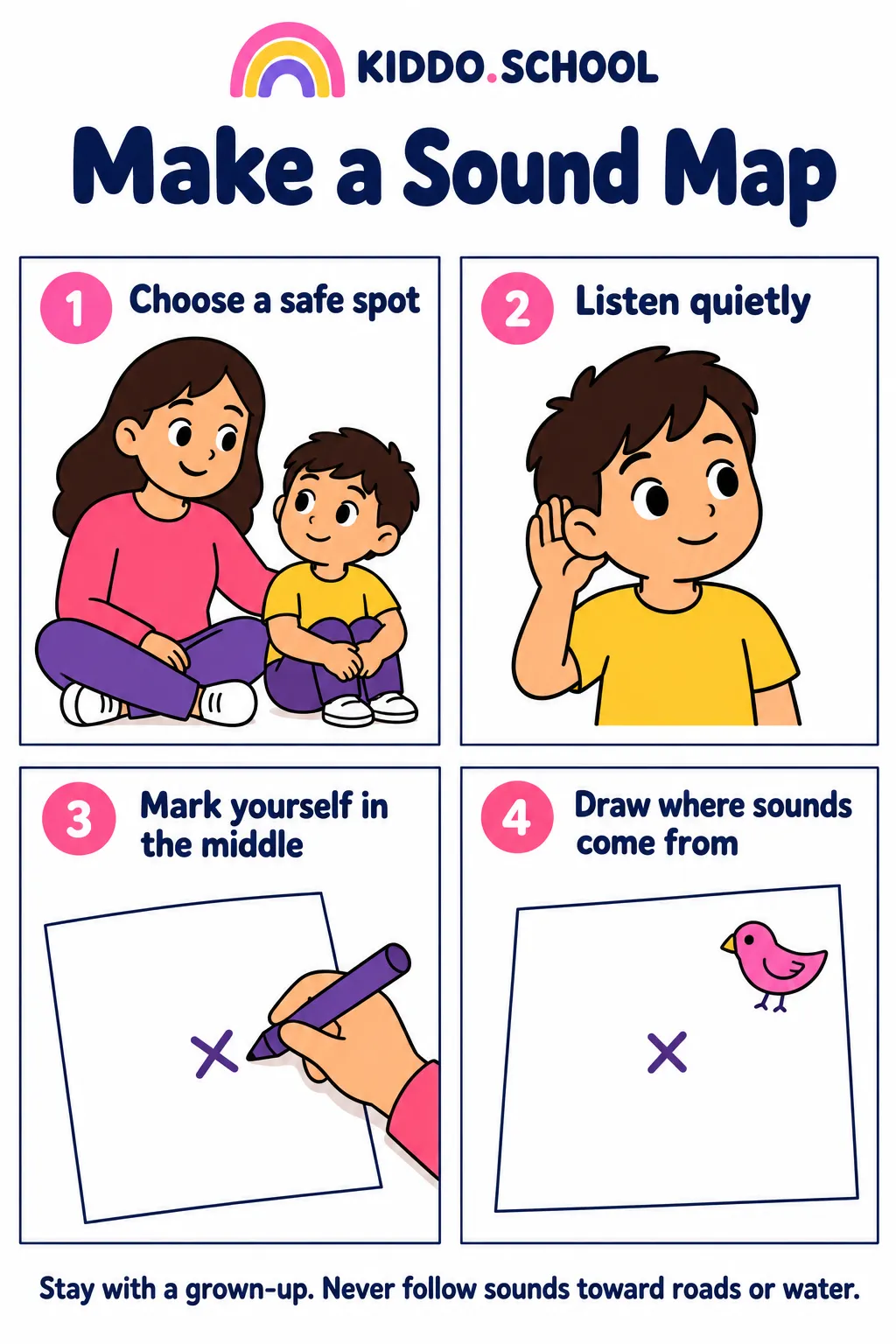 Make a Sound Map
Listen from one safe spot and record where the sounds seem to come from.
Draw · Type · Save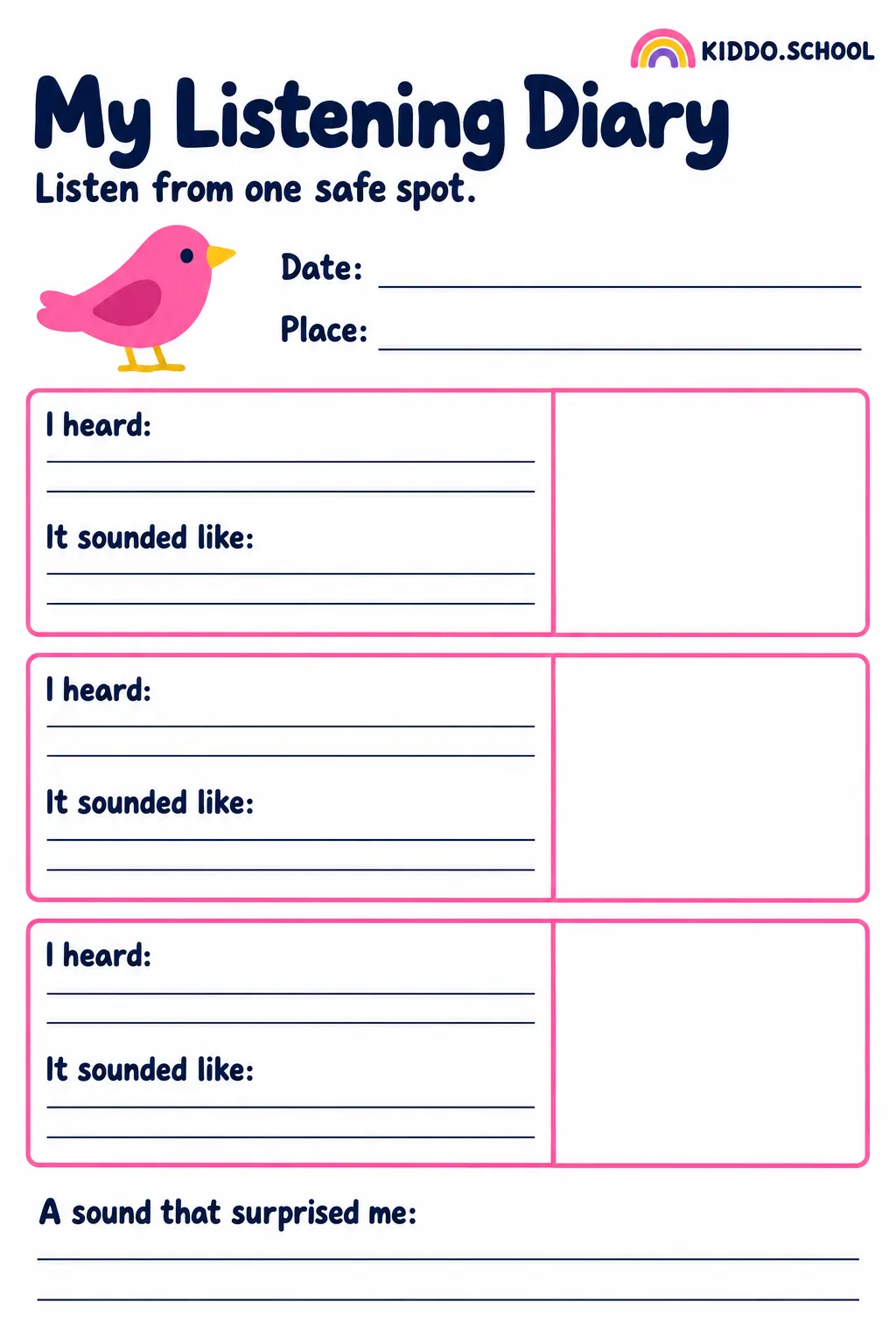 My Listening Diary
Keep a short record of sounds from your listening spot.
Draw · Type · Save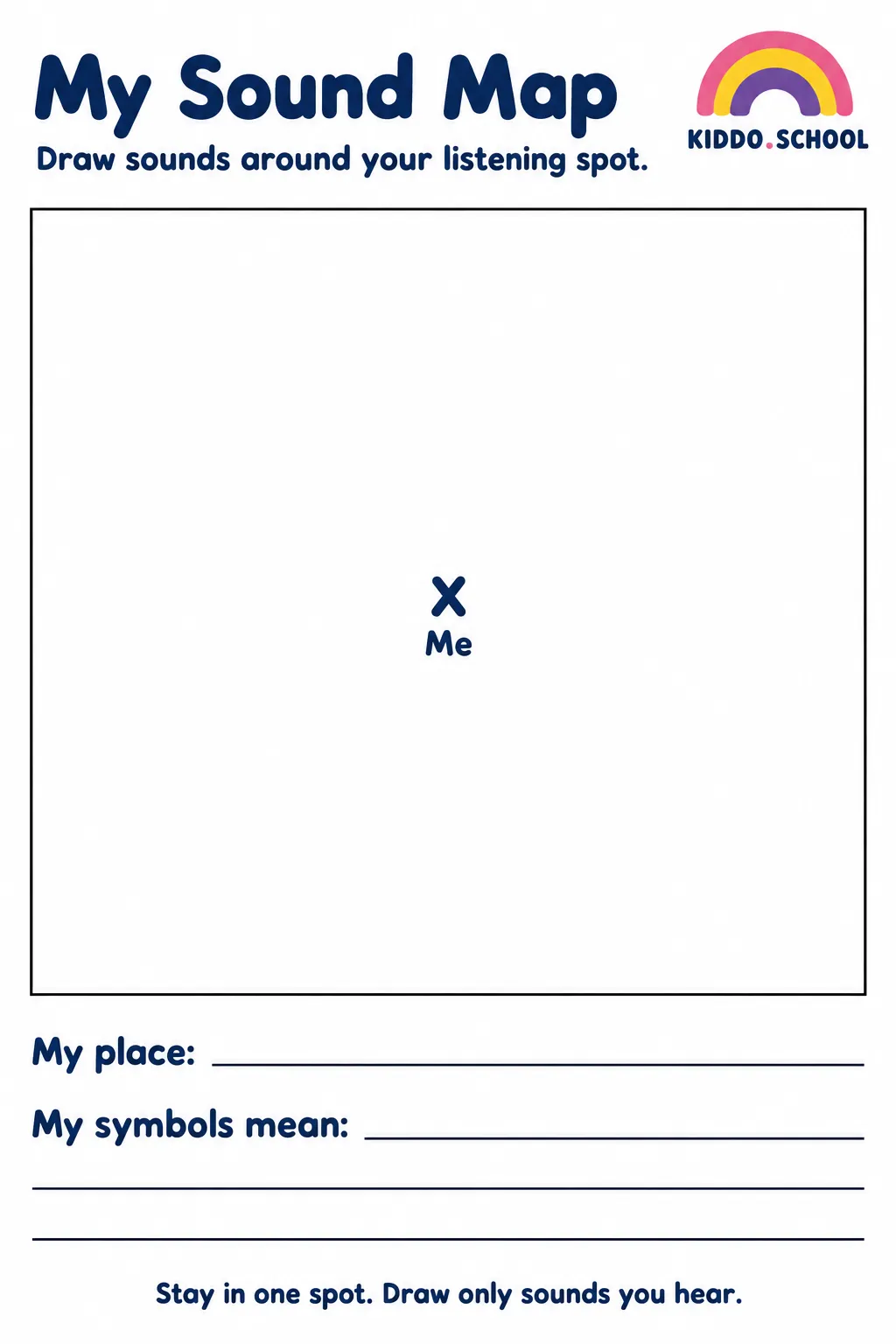 My Sound Map
Build your own picture of the sounds around you.
Draw · Type · Save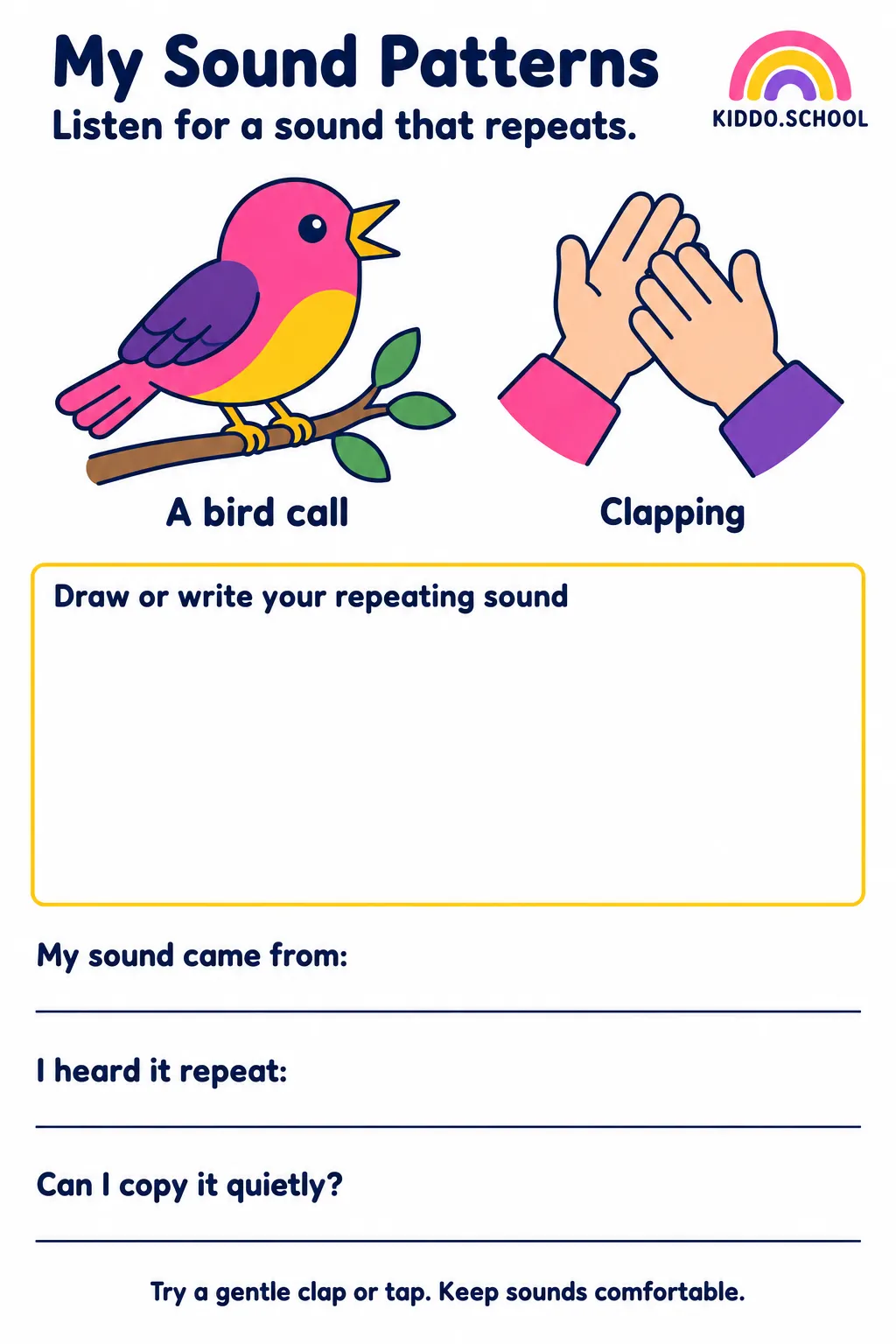 My Sound Patterns
Notice a repeating sound and describe its rhythm.
Draw · Type · Save