

Happy face — a step-by-step lesson for grown-up and child
Somewhere in these weeks many babies aim their first real smile at a face — this lesson shows you how to invite one with the happy face card, without ever demanding it.
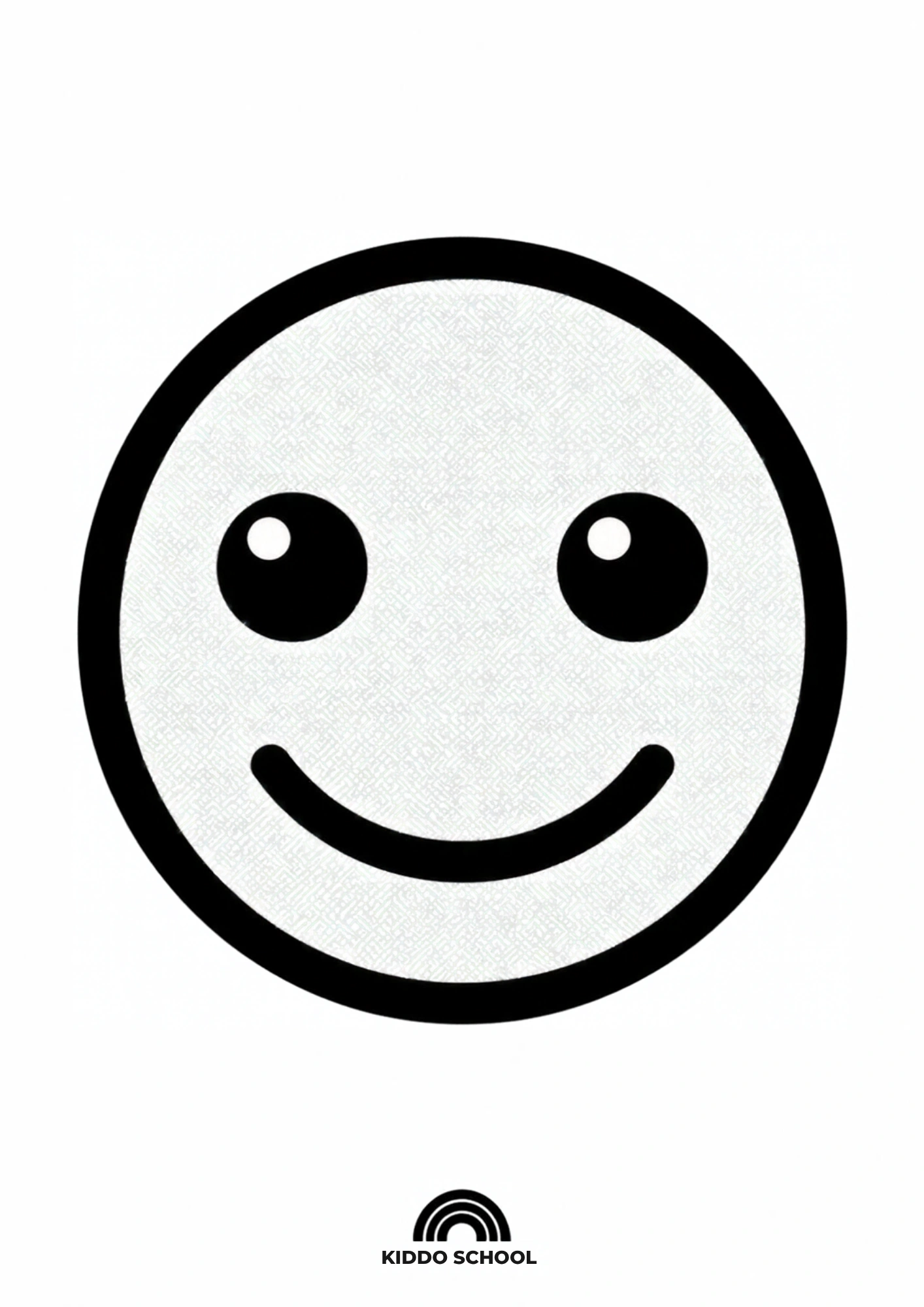
What is this?
A happy face is a face with the mouth turned up. Babies meet smiles three ways at this age: the drawn one on the card, the ones you wear, and the brand-new ones they make themselves — social smiles aimed at people, not at wind or sleep.
What does it mean?
Between six and twelve weeks smiling stops being reflex and starts being social: your baby sees a face, feels good, and the mouth joins in. A bold high-contrast smile is easy to find and easy to imitate, which is why face cards have a reputation for pulling grins out.
What does the child need to know?
The three smiles worth telling apart: reflex (arrives in sleep, gone in a flash), wind (mid-feed, grimace-shaped), social (aimed at you or the card, slower, with bright eyes). Only the third is conversation, and it cannot be commanded — only invited.
Why this matters
A social smile is your baby’s first tool for holding an adult’s attention, and it works both ways: smiling releases the good feeling that makes looking, cooing and turn-taking worth repeating. It is the opening move of friendship.
What it teaches
Social-emotional bonding, facial imitation (the forerunner of all copying), visual discrimination of expressions, and turn-taking — smile, reply, smile again.
Words to learn
smilehappyhellofaceagainmy turn
Say this to your child
“"Happy face! Look at that big smile. I have a smile too — see? Can you find my smile? There it is. Hello, happy baby. Smiles go back and forth, all day long."”
Step by step
- Pick an alert, fed, changed moment and show the card at focusing distance, smile-side up, where the light falls on it.
- Say its name slowly and warmly: "Happy face. What a big smile." Then simply let your baby look.
- Copy the card — hold the same wide smile on your own face and keep it there, so card and parent match.
- Watch the mouth corners. Any upward twitch, soft open-mouth look or full grin gets a delighted reply from you, out loud.
- End the moment while it is still sweet — one good smile, named and answered, is the whole class for the day.
Look closer at the picture
The artwork is a bold high-contrast smiley face — wide upturned mouth, simple open features, nothing busy behind it. Say what you see, then turn the noticing outward: which expression is your baby wearing right now?
Ask your child
Watch for the reply chain: does your smile earn one back? Does the card hold attention longer on some days than others? Wonder aloud: "I wonder if that smile was for me or for the card — I will try again after lunch."
What your child can say or do
You might get a full gummy grin aimed at the card, a slower sleepy smile for you, a kick of the legs, a coo, or a long studying stare with the smile arriving only when you copy the face — every version is a pass.
Out in the real world
Smiles travel through the whole day: the one that greets a sibling, the one that lands on grandma on a video call, the one your baby practises on the changing mat. Each one proves the card’s lesson — faces answer faces.
Try it together
Copy-cat faces: make three slow expressions — smile, wide-open surprise, tongue out — pausing ten seconds between each. You are not teaching expressions yet; you are showing your baby that faces are a game two people can play.
Understanding check
Quick parent self-check: did you spot one social smile today, and did you answer it out loud within a second or two? Answering promptly is the half of the skill that belongs to you.
Parent tips
Do not work for a smile — leaning in with a strained grin teaches effort, not warmth. A tired or overloaded baby may stare blankly; that is a no for now, not a no forever. Both parents, and any siblings, can run this lesson — more faces, more practice.
Staying safe
Hold the card yourself at all times and keep it out of the cot — a newborn cannot push a card off their face. If your baby turns away, arches or cries, end the session; fussing is how this age says the show is over.
This lesson pairs with the Happy face flashcard in the library — print it, show it, keep it on the fridge. Back to Faces & Visual Tracking (Newborn 2).