
Feet — a step-by-step lesson for grown-up and child
This lesson gets down to the ground floor. Feet carry your child across every day of their life — and they are the bounciest body part to name, because foot games are standing games, and standing games are loud ones.
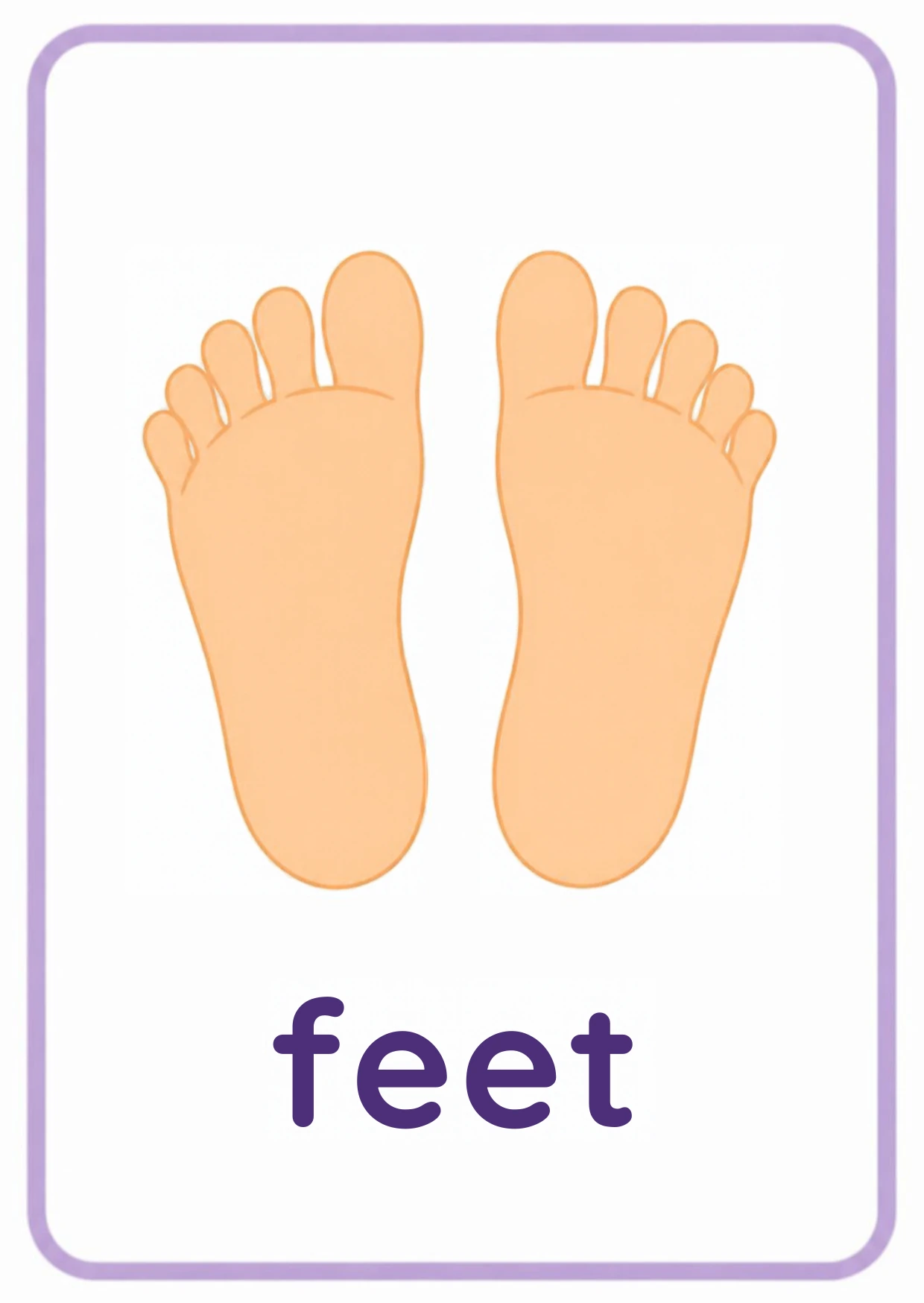
What is this?
Feet are the two walking parts at the bottom of the legs, each with a sole, a heel and five toes. They stand, walk, run, jump, kick, pedal and balance — every trip your child takes, the feet do the travelling.
What does it mean?
Feet are the body’s transport and its balance system: they tell the brain what the ground is like — soft rug, hard tiles, squishy grass — and adjust every step. That reporting is why barefoot play matters: feet learn the world best with nothing between them and it.
What does the child need to know?
Your child needs to know: feet walk, run, jump and balance, ten toes live on them — five each — they report the ground to the brain, and they get care: socks when cold, shoes for outside, washed at bath time after a barefoot day.
Why this matters
Foot vocabulary powers the movement words preschool runs on — stand, jump, kick, tiptoe, stomp — and the games that teach it build real gross-motor control. A child who can go from giant stomp to mouse tiptoe on command has balance, listening and impulse control all in one game.
What it teaches
Gross-motor control (stomping, tiptoeing, freezing), balance and body awareness, foot vocabulary, counting to ten on toes, and self-care habits — socks, shoes, washing — with reasons attached.
Words to learn
feettoesstomptiptoejumpbalance
Say this to your child
“"These are your feet — the walkers, the jumpers, the runners! Ten toes on board, five on each. They can stomp like giants — STOMP STOMP — or sneak like mice on tiptoe, not a sound. And after all that walking, feet get washed, socks and shoes included. Feet are the bosses of going places."”
Step by step
- Show the card: two bare feet, toes included. Count the toes on the card, then on your child’s real feet — five per foot, ten altogether.
- Name the jobs: stand, walk, run, jump, kick, tiptoe. Try each one on the spot — a jump, a kick in the air, a wobbly balance on one foot.
- Play stomp-and-tiptoe: stomp like a giant — loud, heavy, shaking the floor — then switch to tiptoe like a mouse, small and silent. Alternate on your call.
- Add the freeze: after any stomp or tiptoe round, call freeze! — both feet still, balancing. Freezing is the hard part and the funny one.
- Finish with feet care: socks when the floor is cold, shoes for outside, washed at bath time. Feet work all day; they get looked after at night.
Look closer at the picture
Look at the picture together: are these bare feet or do they have shoes on? How many toes can you count? What word sits above them? Are the feet side by side or one in front?
Ask your child
"What do your feet do all day?" "How many toes — on each foot, and altogether?" "Show me a giant stomp. Now a mouse tiptoe." "What do feet wear outside?"
What your child can say or do
Your child may stomp-tiptoe-freeze through the hallway on request, count all ten toes at bath time, or demand barefoot time as a grass-reporting mission — the transport department, fully staffed and proud.
Out in the real world
Feet mark every journey: the walk to the park, the pedal on the trike, the kick of the ball, the wobble across a stepping stone. Name the work — your feet climbed it, your feet pedalled it — and the bottom of the body gets the credit it earns.
Try it together
Stomp-and-freeze parade: music on, everyone marches; the music stops, you call a foot command — freeze, tiptoe, jump, stand on one foot — and everyone obeys until the next round. The switching is the training: big moves, small moves, stillness, all on one word.
Understanding check
Ask: "What do feet do? How many toes? Show me tiptoe — now freeze." The list, the ten and a wobbly balanced freeze — that is the lesson landed.
Parent tips
Give barefoot minutes on safe floors and real grass: the ground-reporting is the point, and children love naming what their soles found. And keep the stomp games off tiles with sleeping babies — feet lessons are best held on rugs and lawns.
Staying safe
Feet meet the world first: watch for hot pavement in summer, sharp things on lawns and slippery socks on wooden stairs — grip socks or bare feet for climbing, shoes for outside, and a grown-up for anything that stings.
This lesson pairs with the Feet flashcard in the library — print it, show it, keep it on the fridge. Back to Body Parts & Five Senses Flashcards.