
Smell — a step-by-step lesson for grown-up and child
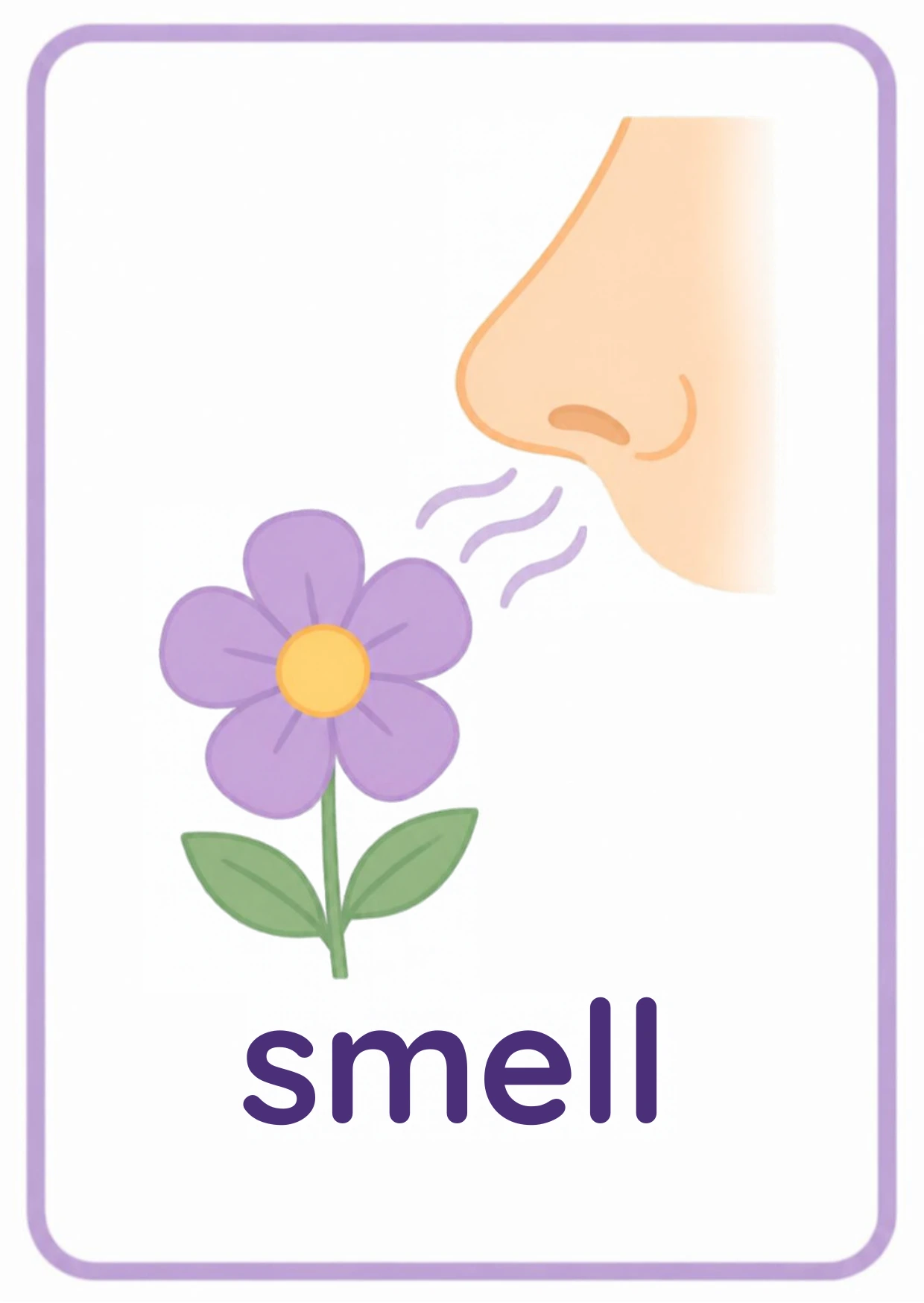
This lesson follows the nose into the five-senses collection. Smelling is the sneakiest sense — working all day without being asked — and this card gives it a worthy subject: a purple flower, sniffed up close, in full bloom.
What is this?
Smell is what your nose does: catch scents riding on the air and report them to the brain. It is the third of the five senses — the nose’s very own way of learning about the world — and the fastest one: a single sniff can announce dinner, rain or a flower before any word is spoken.
What does it mean?
Smells travel invisibly, like the sound waves did — tiny pieces of the world drifting through the air — and the nose pulls them up with a sniff. Smell is also the memory sense: a single whiff of a known smell can fetch a whole place back, which is why noses keep grandma’s kitchen better than cameras do.
What does the child need to know?
Your child needs to know: we smell with our noses, smelling is the third of the five senses, sniffing pulls smells up to be read, some smells are treats and some are warnings — smoke, spoiled food — and sniffing games use food and flowers only.
Why this matters
A named nose becomes a working nose, and smell is a safety sense as much as a pleasure one: burnt toast, gas, gone-off milk all announce themselves to whoever is listening. The sniff-and-guess game also builds vocabulary fast — every smell wants its word.
What it teaches
Olfactory attention and vocabulary, the five-senses framework (smelling as one of five), memory-through-scent connections, warning-smell associations, and the gentle sniff technique — small sips of air, not great gulps.
Words to learn
smellnosesniffscentfreshstinky
Say this to your child
“"Smell! Your nose catches scents in the air — sniff, sniff, gently, like a small sip. Smelling is one of your five senses, and it is the fastest: one sniff and you know dinner is ready. Some smells are treats — flowers, bananas, clean washing. Some are warnings — smoke means find a grown-up, fast. What does the air smell like right now?"”
Step by step
- Show the card and ask what the nose is doing — sniffing a flower! That is the sense called smell, number three of five.
- Demonstrate the gentle sniff: a small sip of air through the nose, not a great gulp. Practise on the air in the room — what does here smell like?
- Play sniff-and-guess: three covered cups hiding smells — orange peel, a mint leaf, a dab of jam. Eyes shut, sniff, guess, uncover, cheer.
- Sort the smells: which were treats and which would be warnings? Name the warning crew — smoke, rotten food, something burnt — smells that mean find a grown-up.
- Take the game outside or to the garden: flowers, wet grass after rain, the herb shelf. The world is a smell library, and the nose has a card.
Look closer at the picture
Look at the picture together: what is the nose sniffing — a purple flower? Is the flower close to the nose or far away? What word sits beside them? What color is the flower?
Ask your child
"What do we smell with?" "Which sense is the fastest — the one that knows dinner before anyone says so?" "What is the best smell in our house?" "What smells mean find a grown-up?"
What your child can say or do
Your child may smell every meal from the doorway and announce the menu, report the rain before it arrives, or patrol the flowers with slow deliberate sniffs — the nose, promoted from breathing equipment to chief investigator.
Out in the real world
Smell reports arrive all day: bread in the bakery aisle, the swimming pool, the rubbish bin, the baby’s head, rain on hot pavement. Name two or three a day — what does your nose say? — and a quiet sense becomes a loud part of the family vocabulary.
Try it together
The smell library: collect three or four safe smells in little cups — lemon peel, cinnamon, a pine needle, a coffee bean — sniff with eyes shut and guess. Swap in new smells weekly. Memory and vocabulary grow with every round, and the guessing stays funny forever.
Understanding check
Ask: "What do we smell with? How do we sniff — big gulp or small sip? What smells mean find a grown-up?" The nose, the sip and the warning list — that is the lesson landed.
Parent tips
Keep the smell library to food, herbs and flowers — the safe shelf — and let your child nominate one new smell a week: ownership keeps the game alive. And honour every wrong guess with a sniff-along: comparing notes is where the vocabulary actually gets built.
Staying safe
Sniffing games use food, herbs and flowers only — cleaning sprays, spices held close and anything from under the sink stay off the list, and unknown bottles are find-a-grown-up objects, never sniffed. Gentle sips of air, never deep gulps of anything strong.
This lesson pairs with the Smell flashcard in the library — print it, show it, keep it on the fridge. Back to Body Parts & Five Senses Flashcards.