Age 3 YearsClass Preschool 4Subjects Colors & color mixing
Twenty-four cards in twelve color pairs, a rainbow to explore and printable sheets to solve at the table — this class follows Shapes & Patterns on the preschool path. Red, blue and yellow are old friends by now; today they learn to mix.
These mixing results are paint colors — the kind you get with real paints at the craft table. Start with the two colors your child already names best, and let the rest of the set wait its turn.
Start Today’s Class ↓Grown-up nearby, little one on the lap or wandering the room — both work.
TODAY’S CLASS
How today’s class works.
Five little steps, in any order that suits you: a welcome from your teacher, the color cards, the rainbow, solving the color sheets together, an off-screen hunt, and a warm goodbye. Stop after any step — that is a complete class, and there is never a score at the end.
1 Teacher welcome
2 Learn colors
3 Rainbow activity
4 Solve the sheets
5 Take it off screen
6 Class complete
TEACHER WELCOME
“Hello, my friend — and hello to you, grown-up helper! Today we’re playing with colors. We’ll look at splashes and name what we see — red like a strawberry, blue like the sky. Start with the colors your child already loves.”
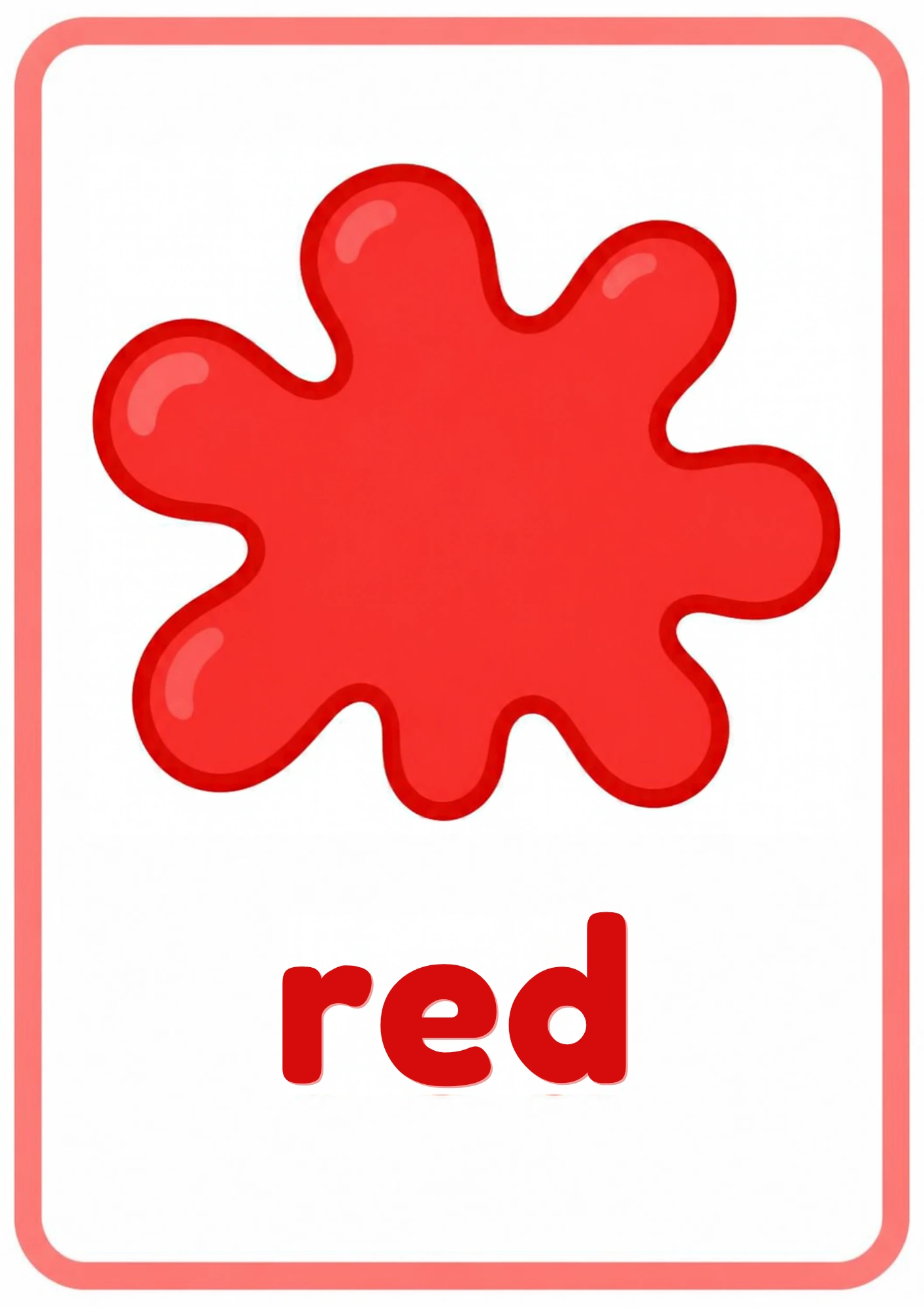
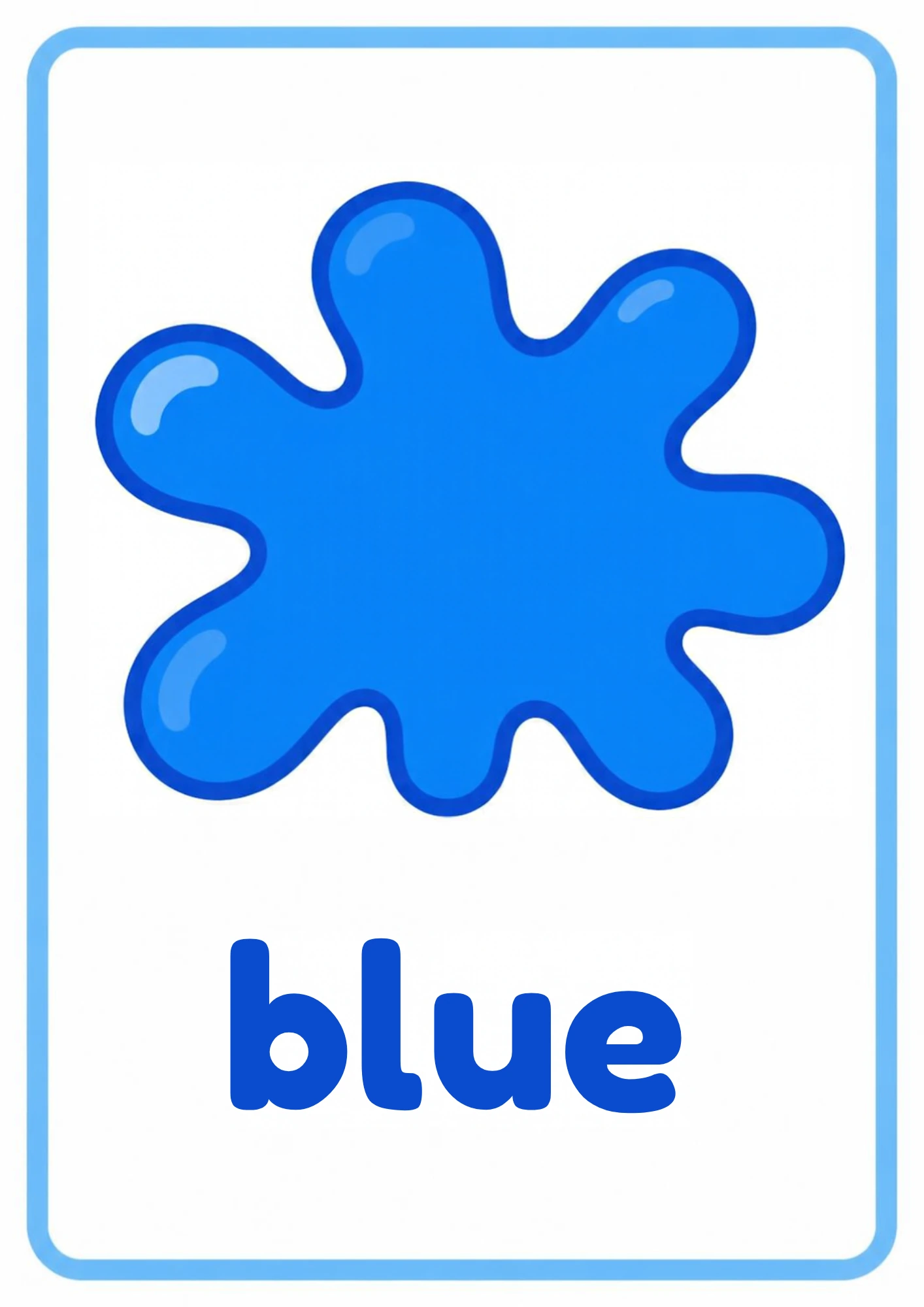
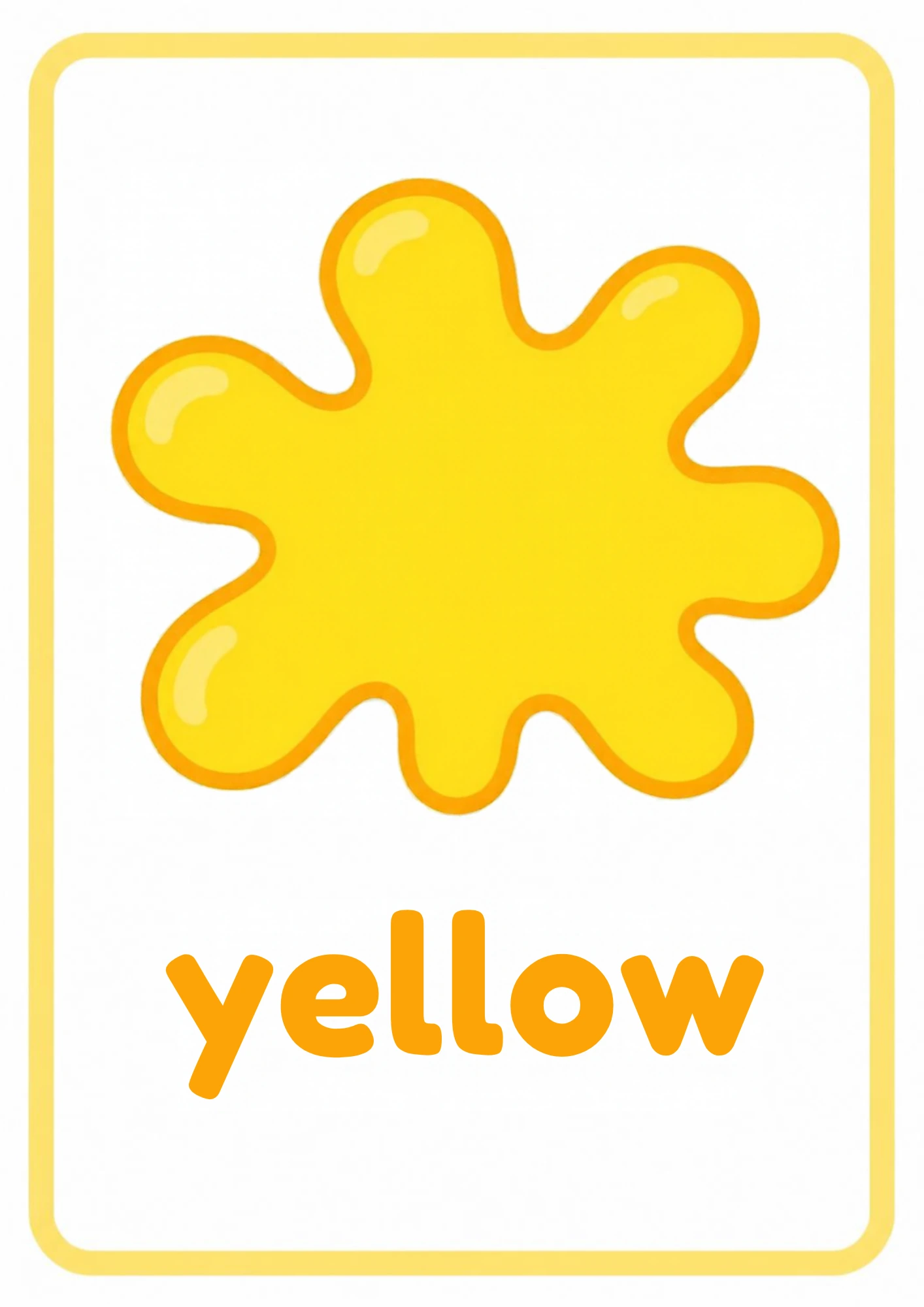
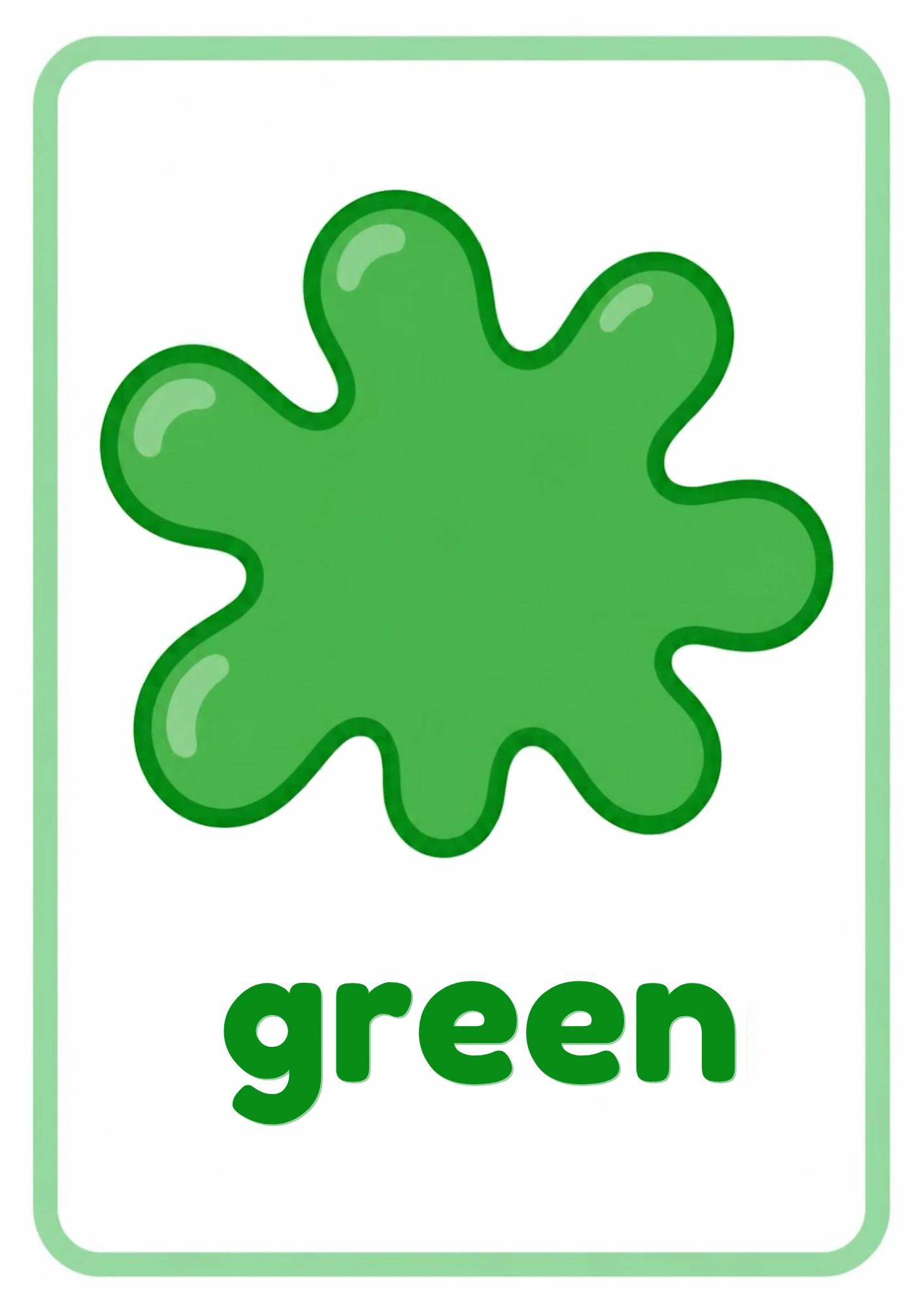
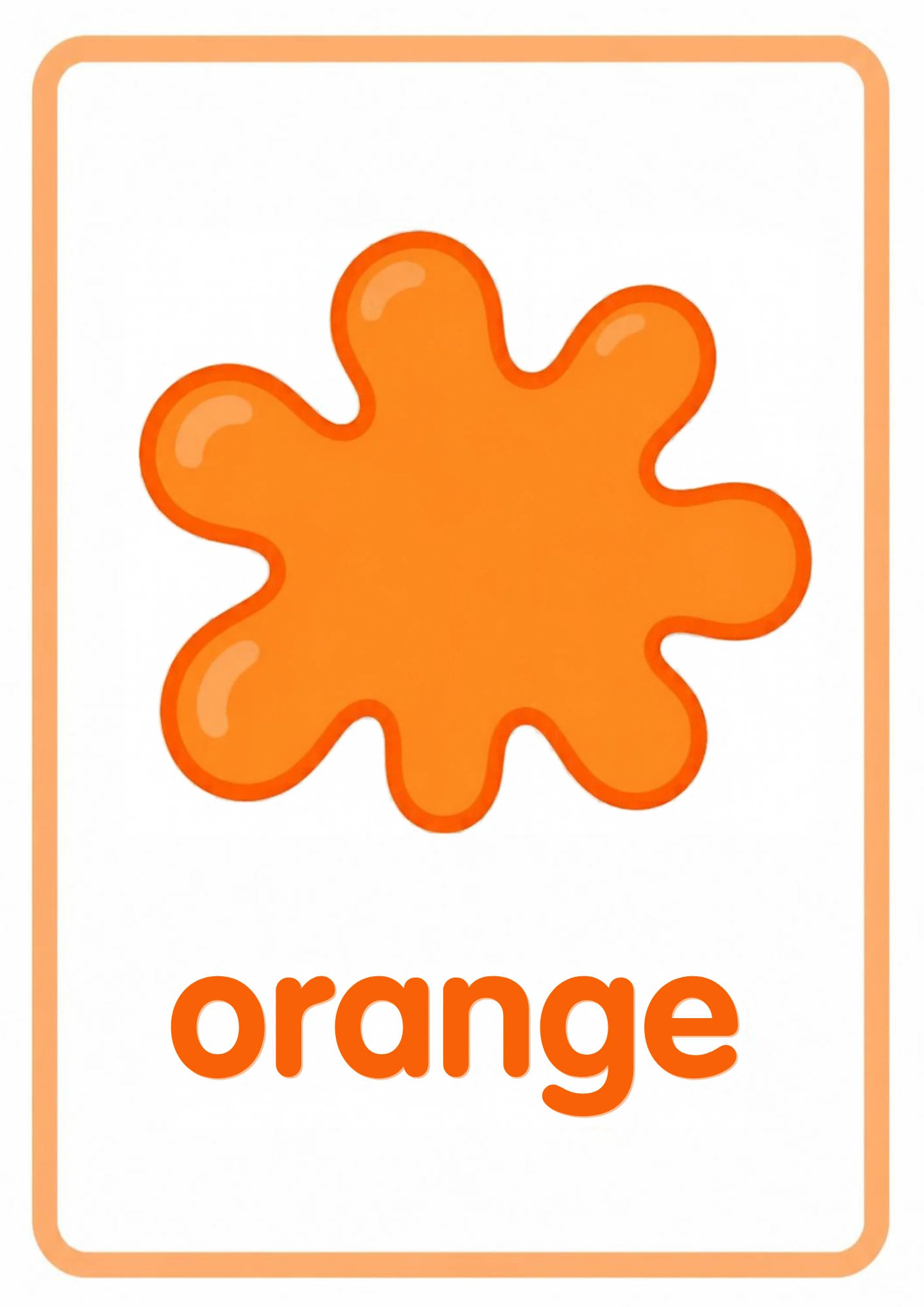
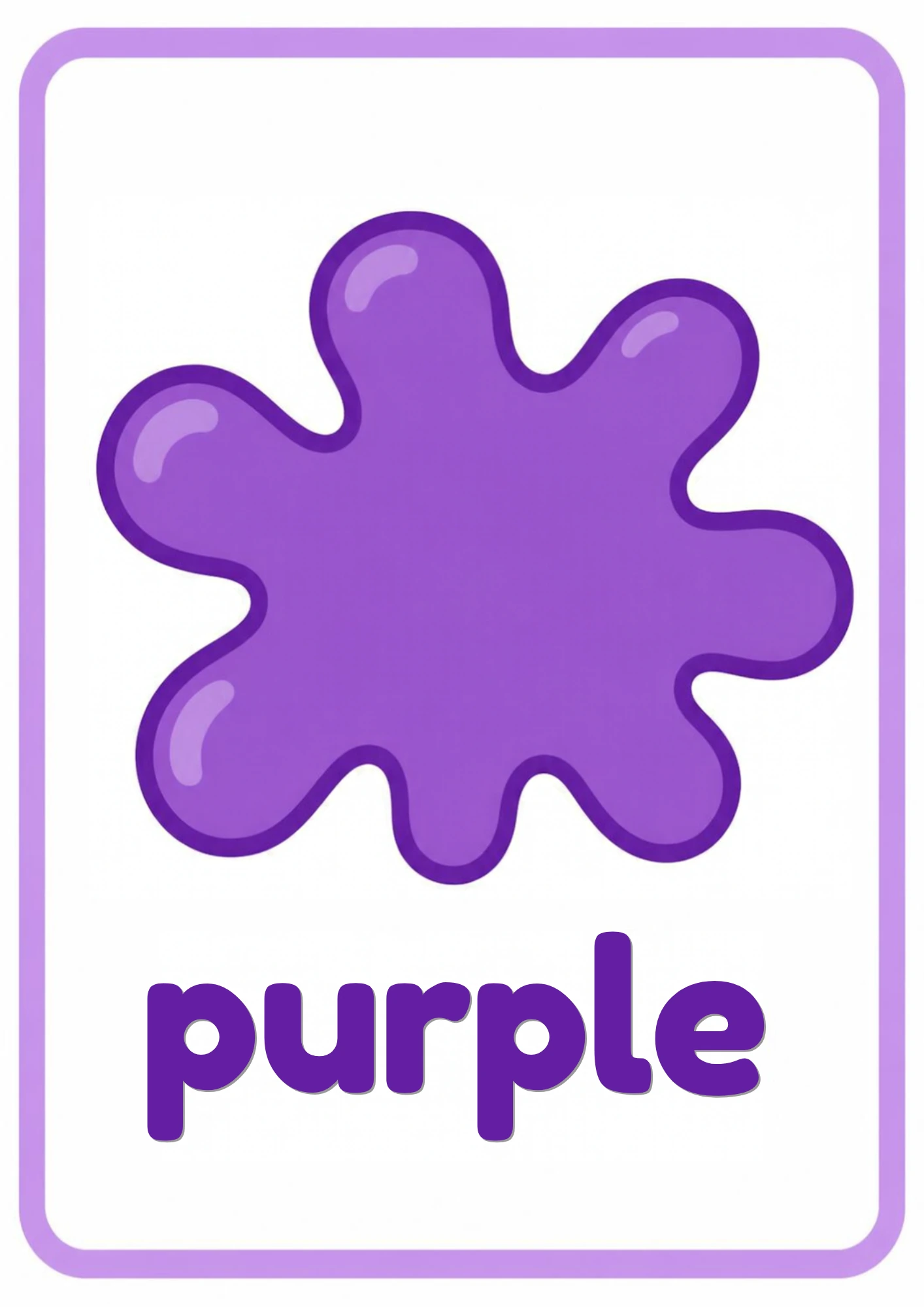
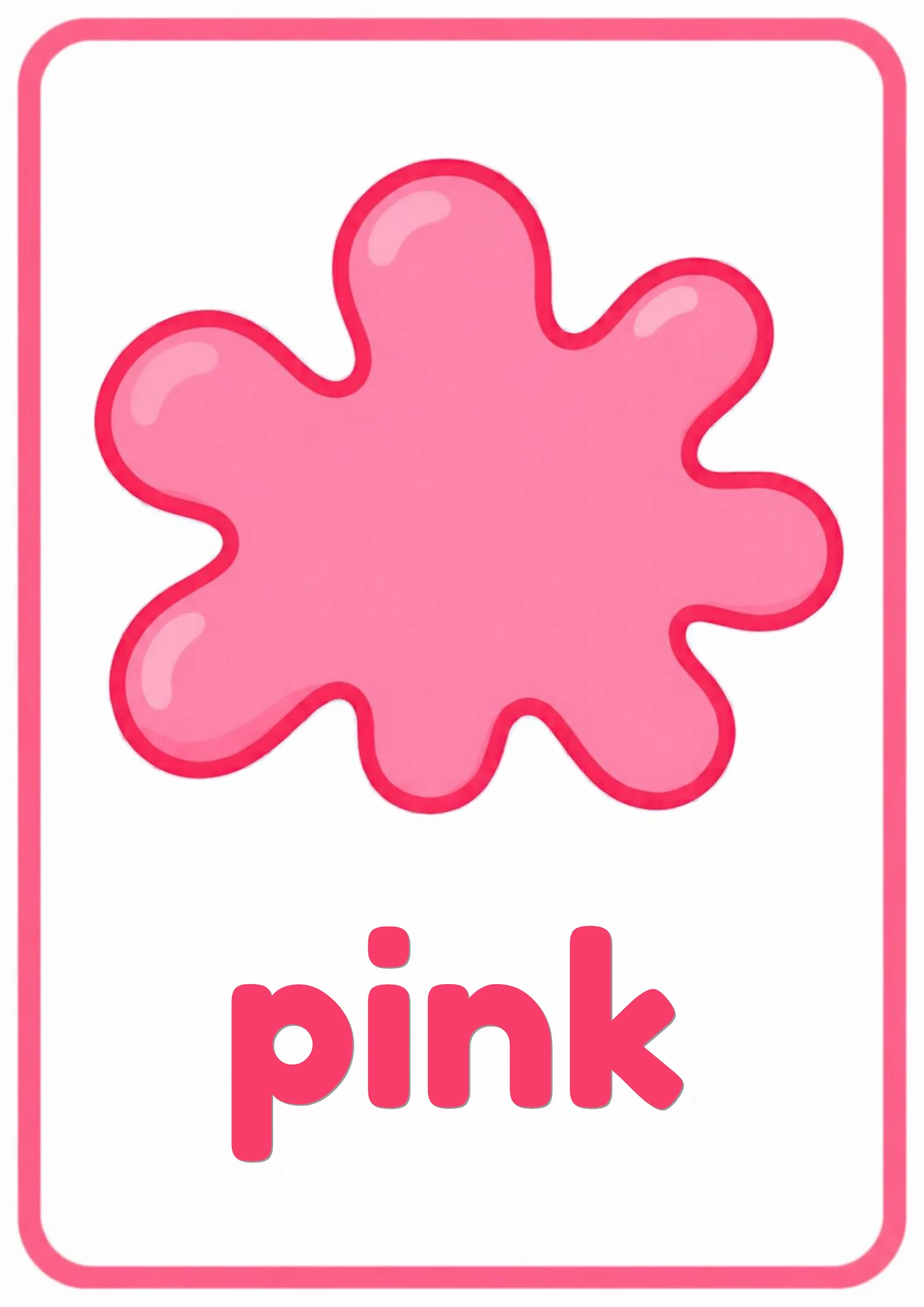
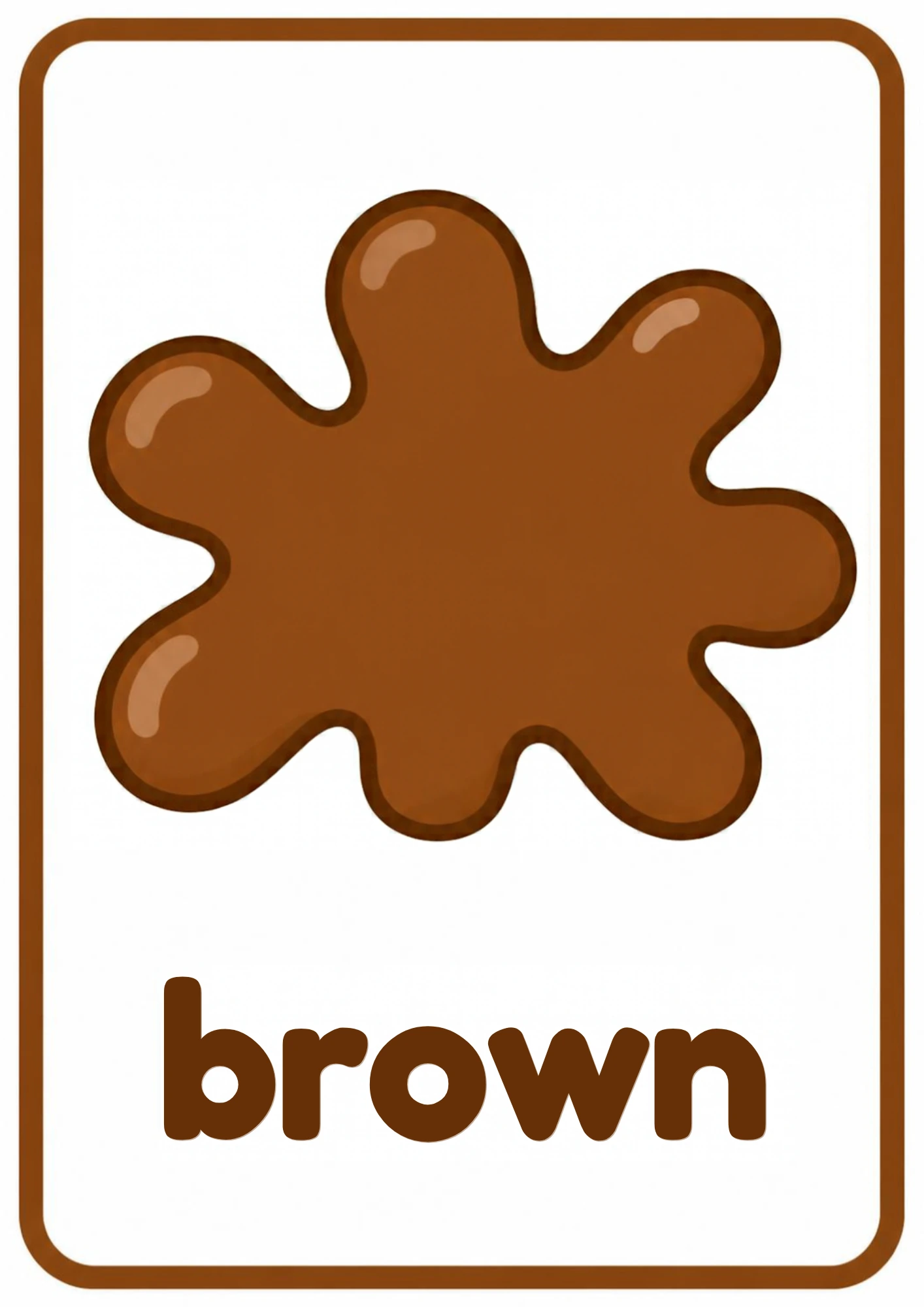
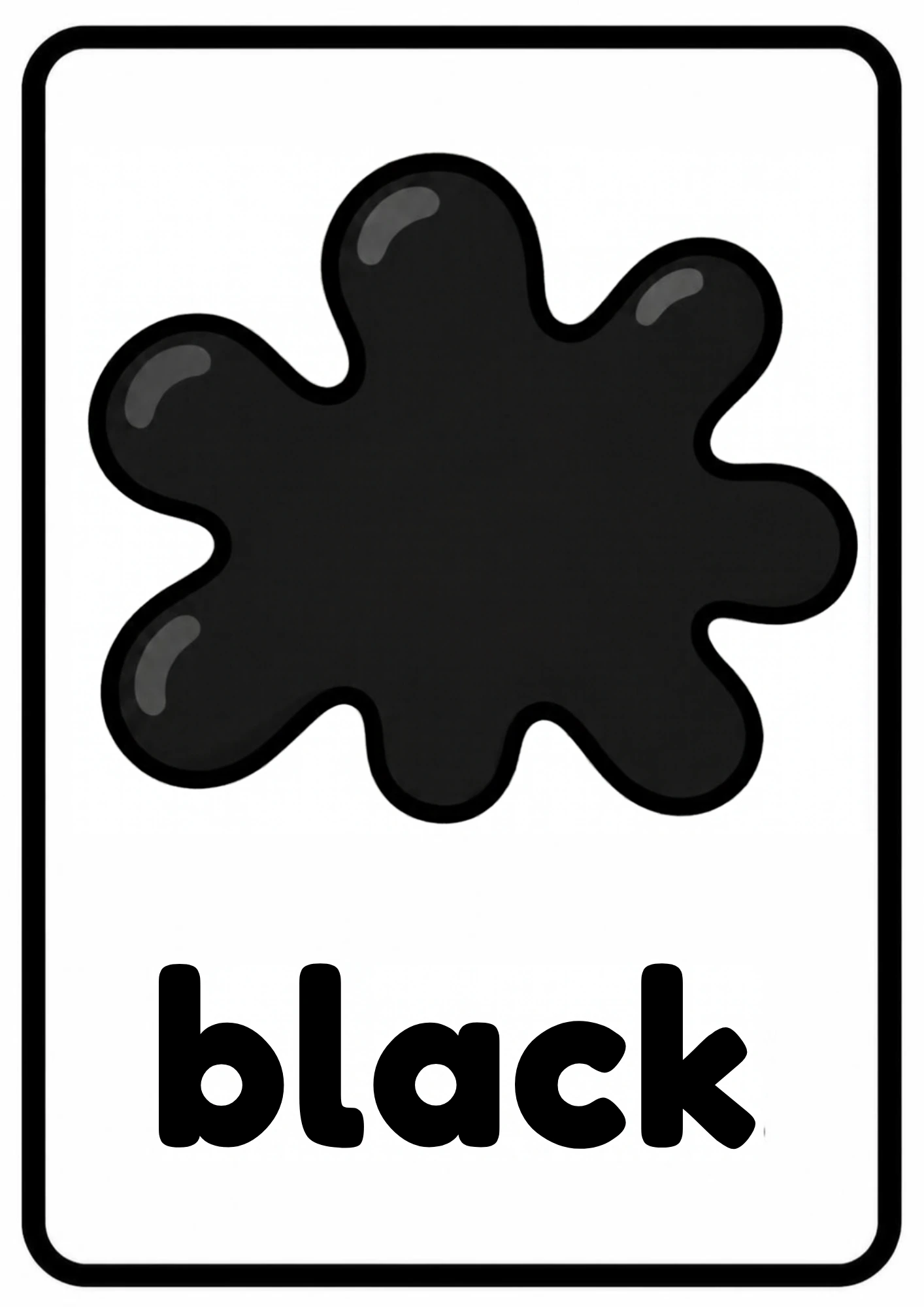
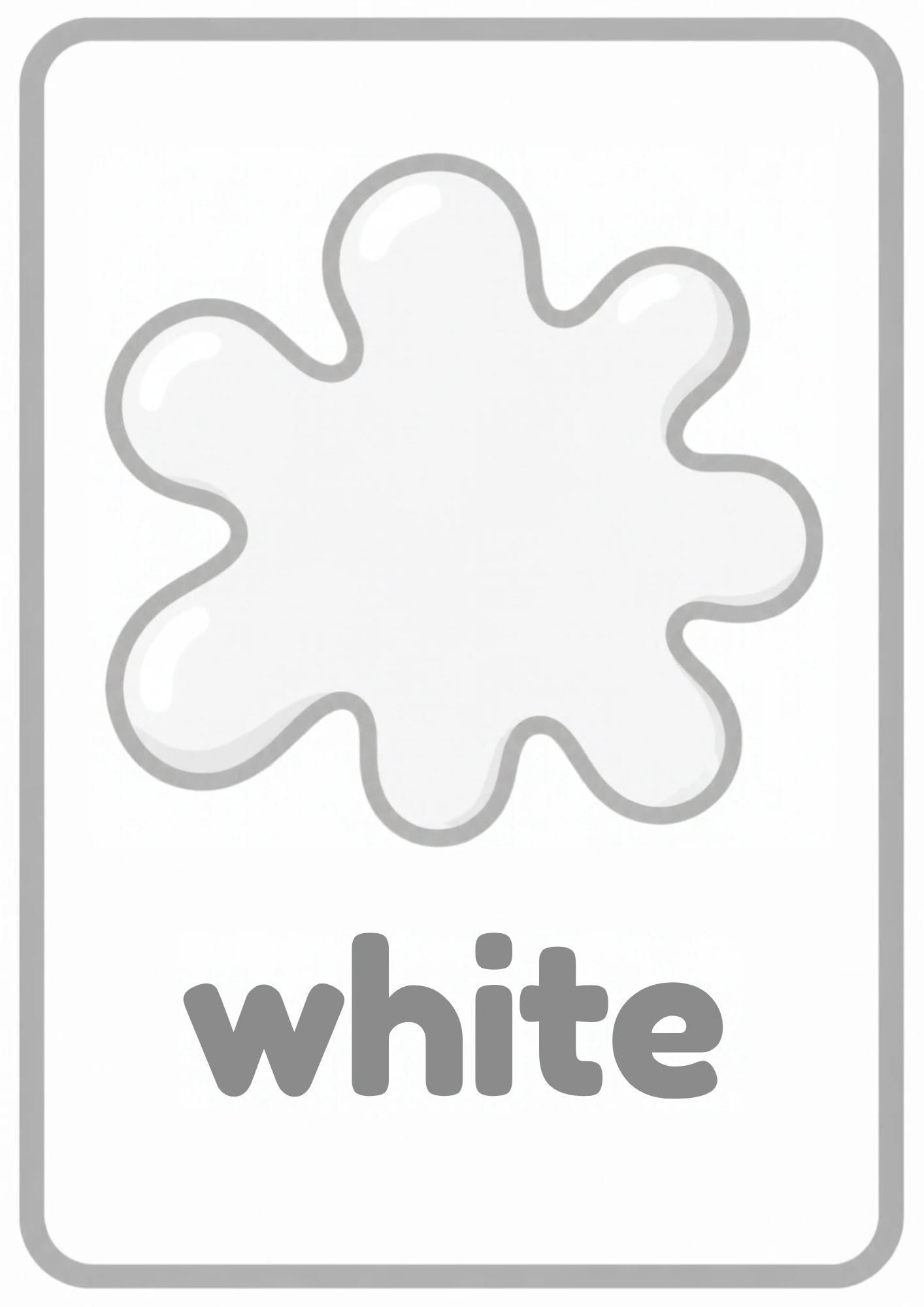
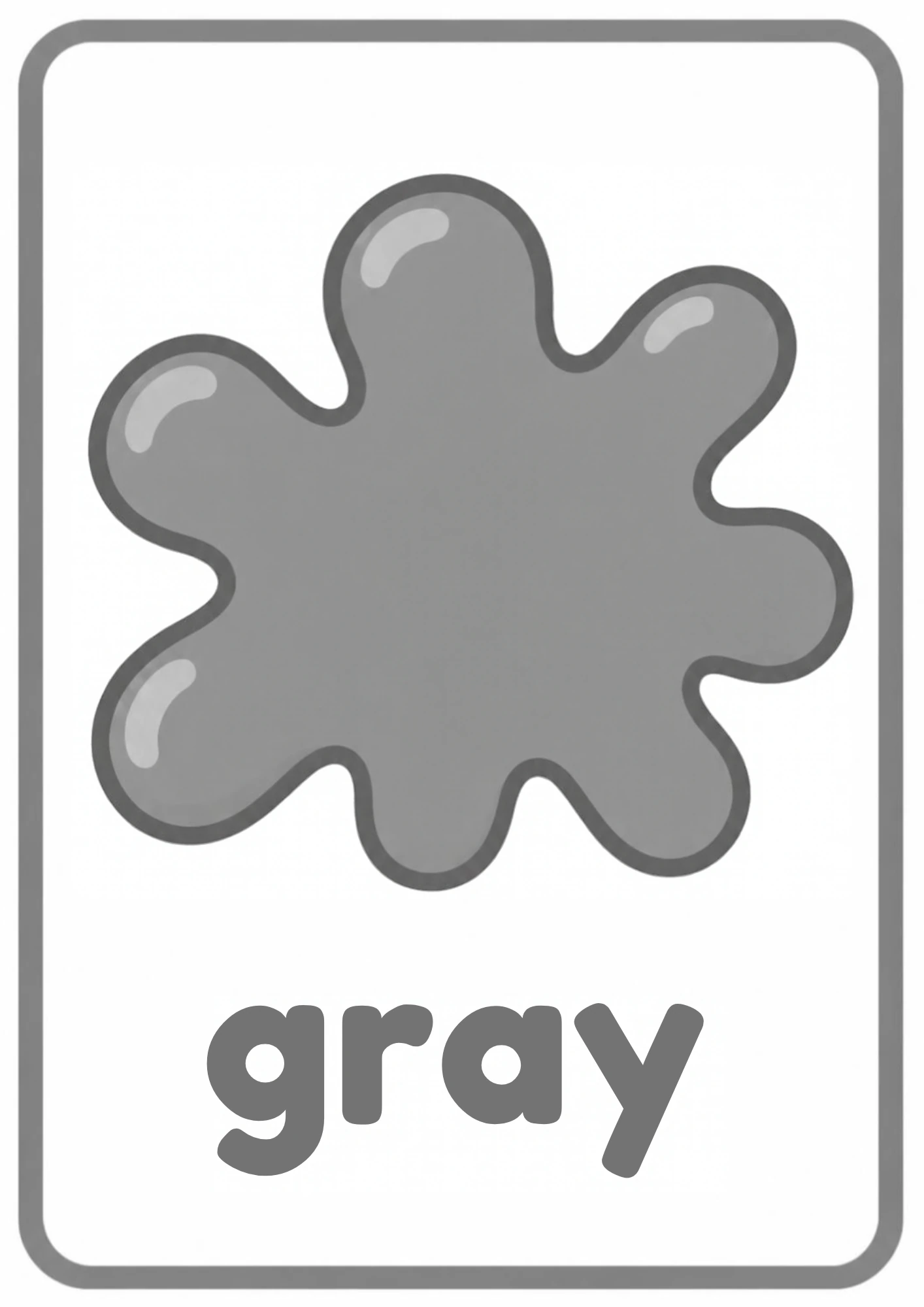
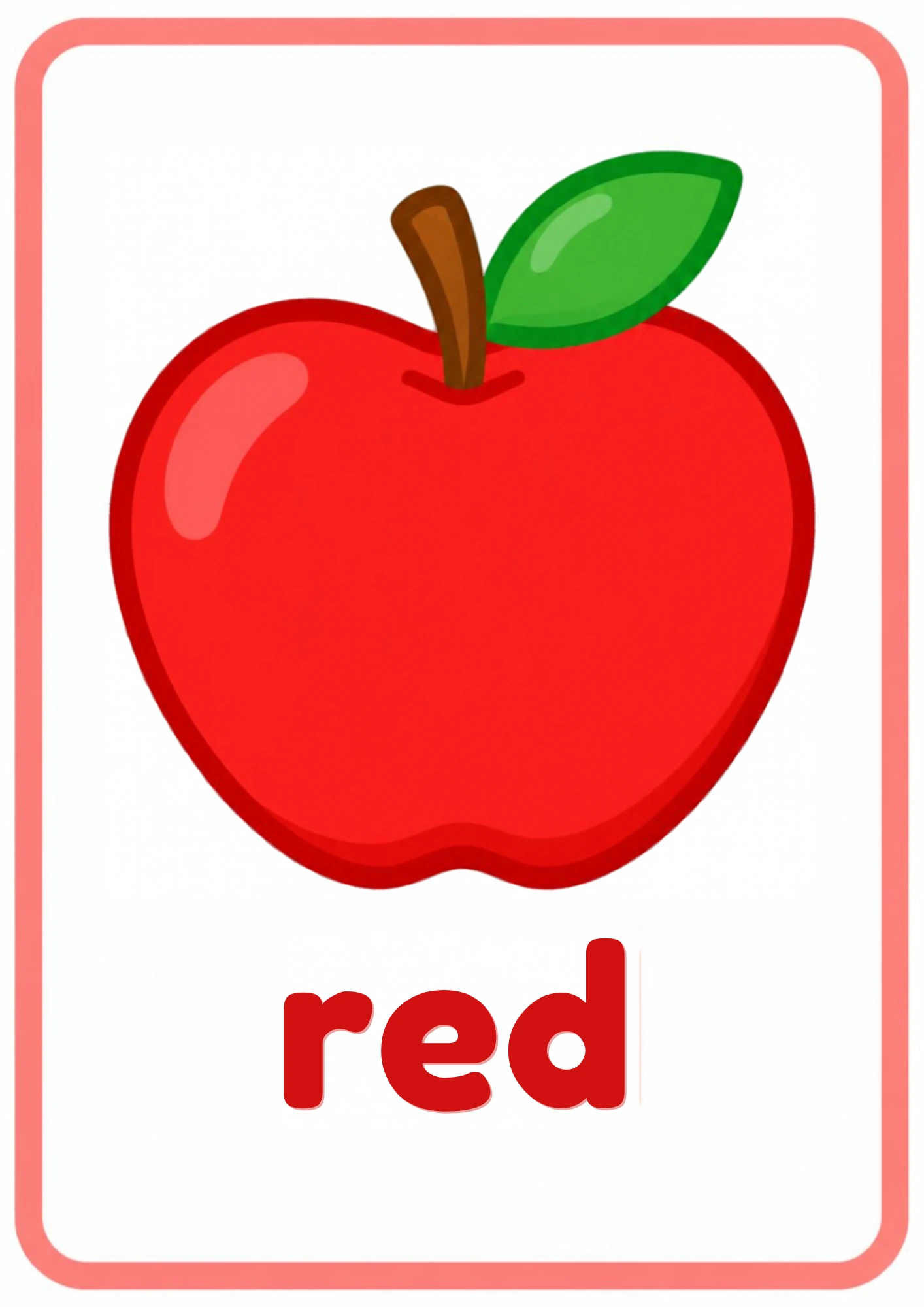
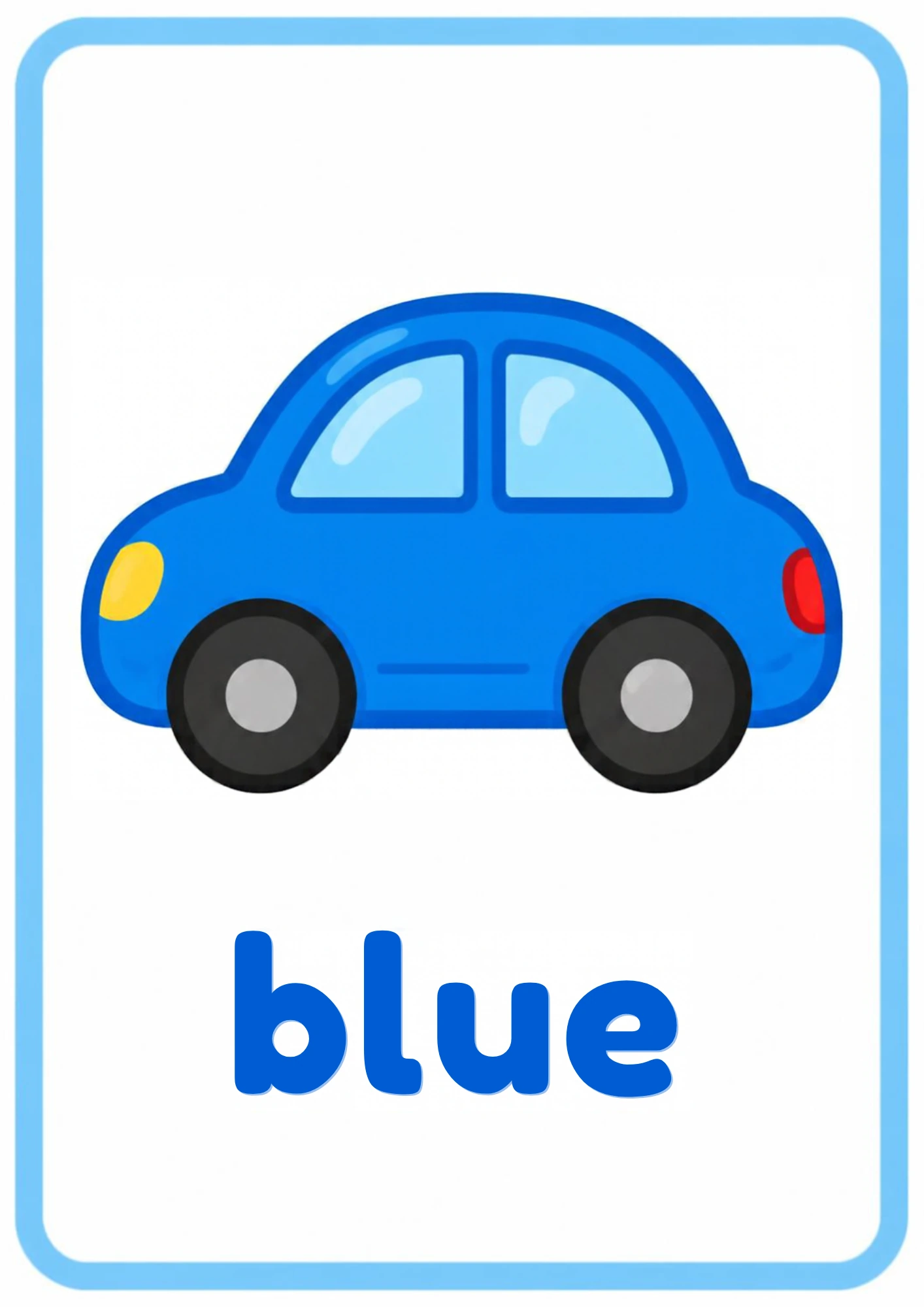
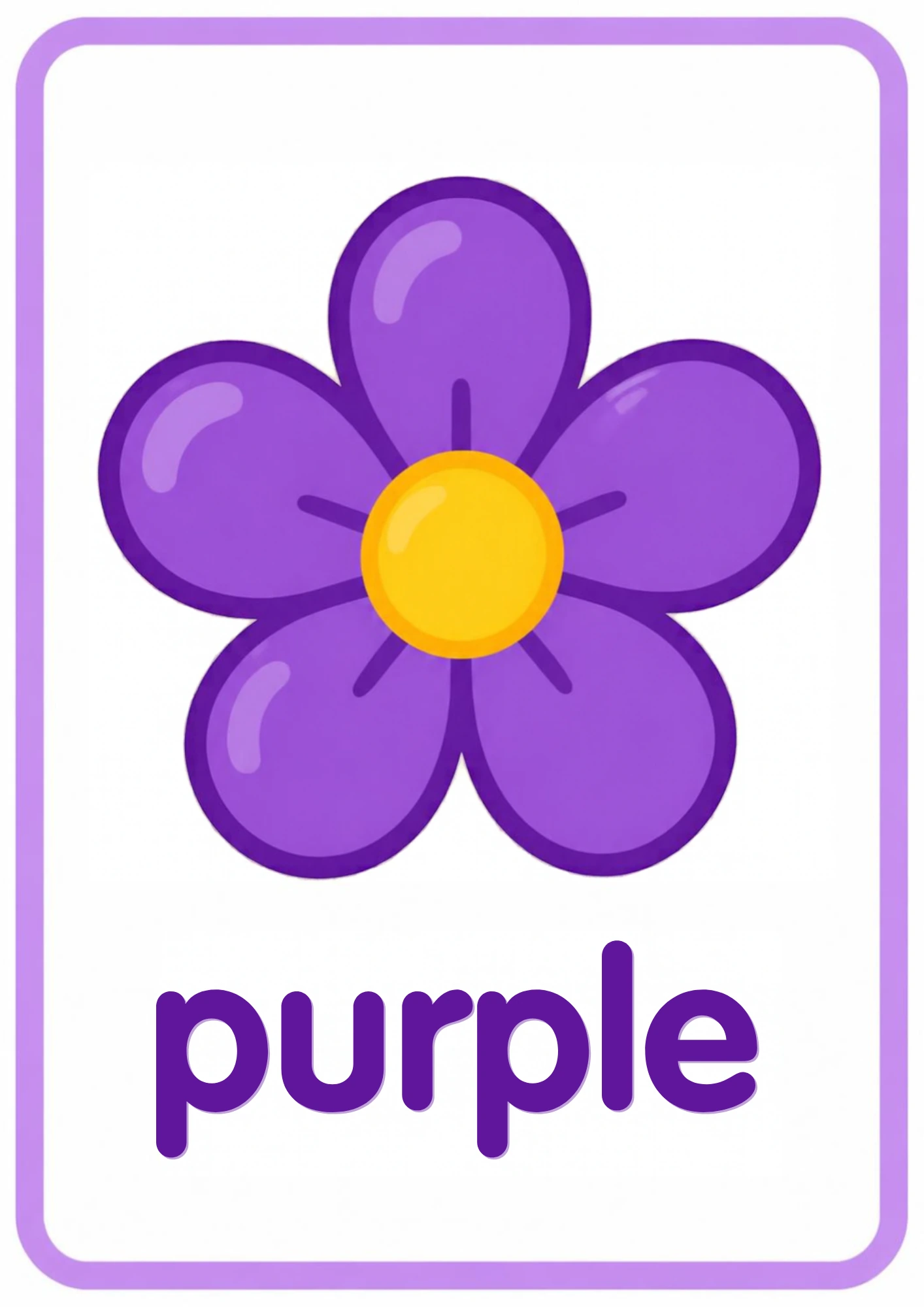
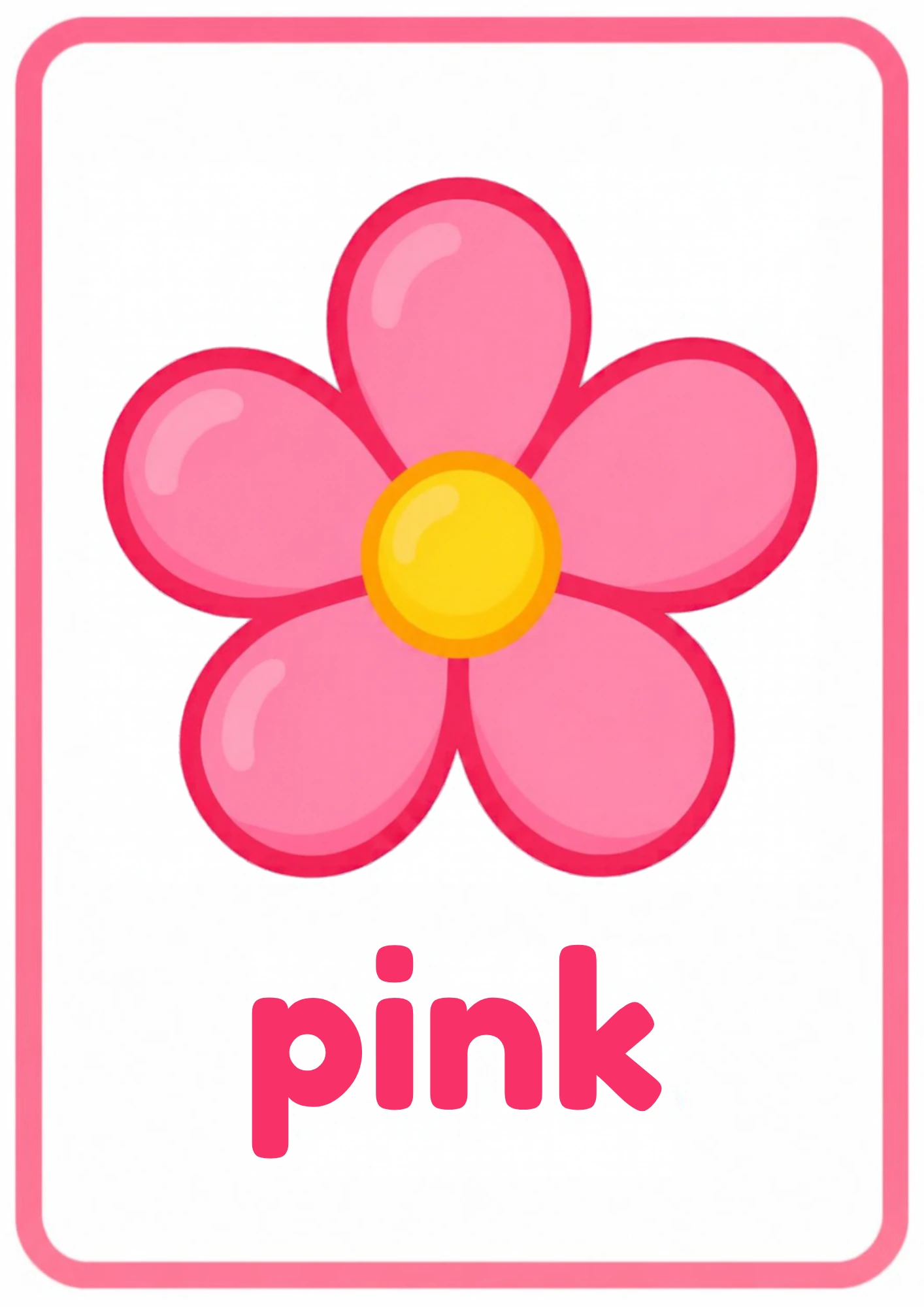
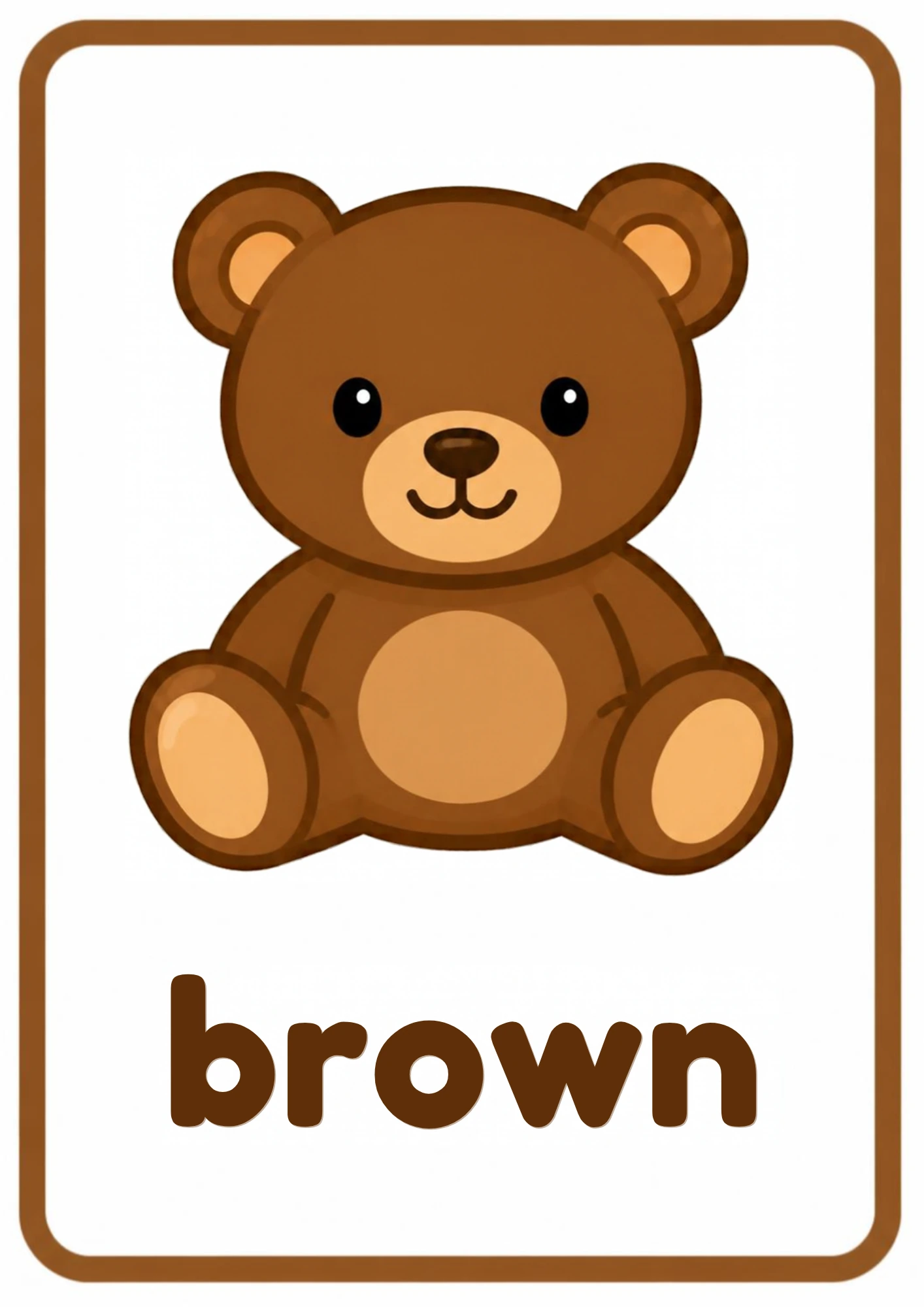
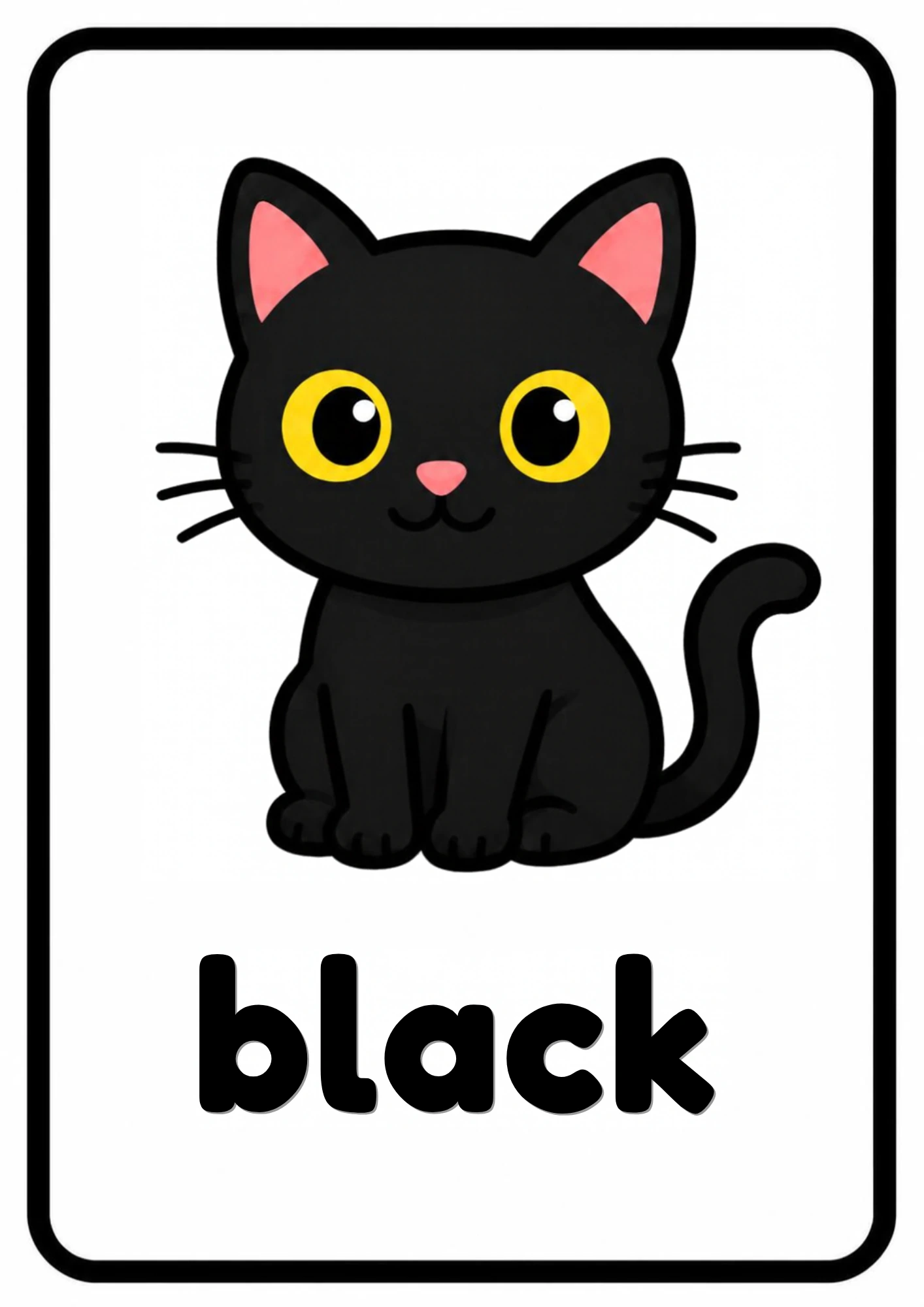
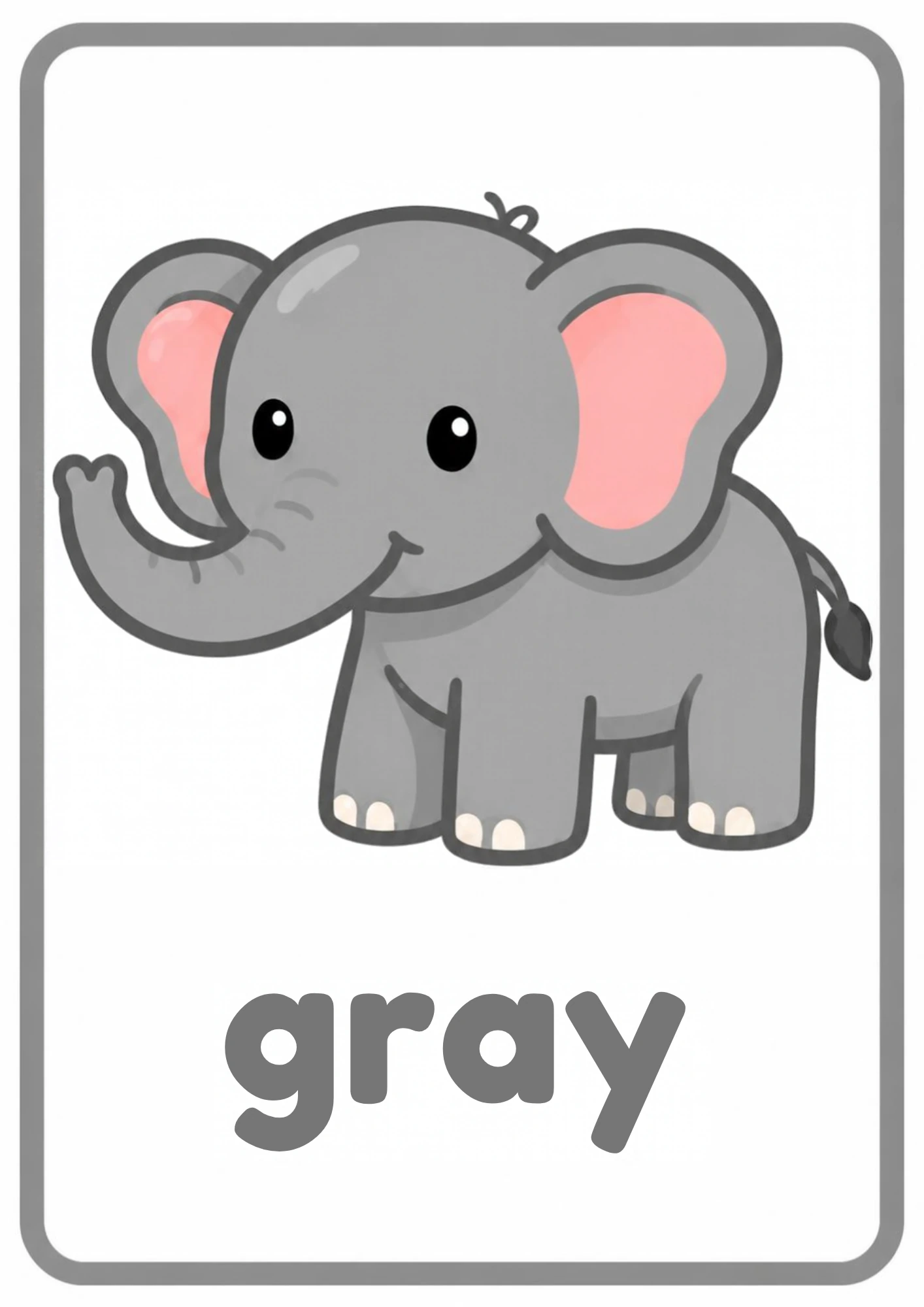
First the pure color — a big, unmissable splash with its name. Then the same color living on a real thing: a red apple, a blue car, a gray elephant. Use the arrows to wander, or simply scroll. Name each color, then let your child spot it in the room before moving on.
Card 1 of 24
Or simply scroll: all 24 cards are below.
RAINBOW ACTIVITY
Every color at once.
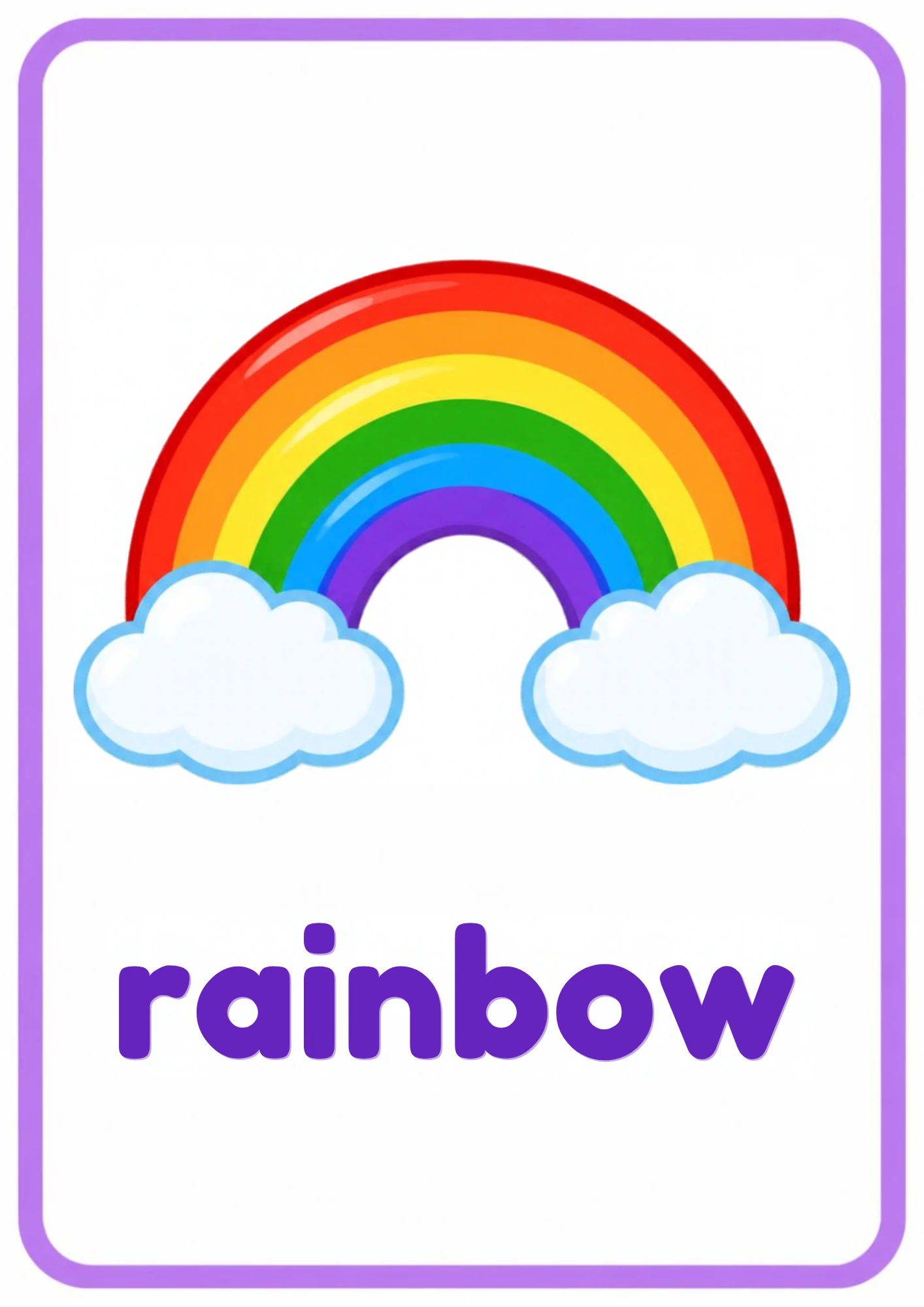
The rainbow is the whole class in one arc: red, orange, yellow, green, blue, purple — in that famous order. Point at each stripe together and say its color, then tap the stripes below to check them off.
1red✓
2orange✓
3yellow✓
4green✓
5blue✓
6purple✓
Rainbow spotting
After rain, look for the real thing — sun plus shower makes rainbows, and one in the sky is a whole lesson.
No rainbow outside? Draw one together: six crayons, six arcs, any size of paper. A rainbow from memory counts.
SOLVE THE SHEETS — ON PAPER OR ON SCREEN
Solve the color sheets together.
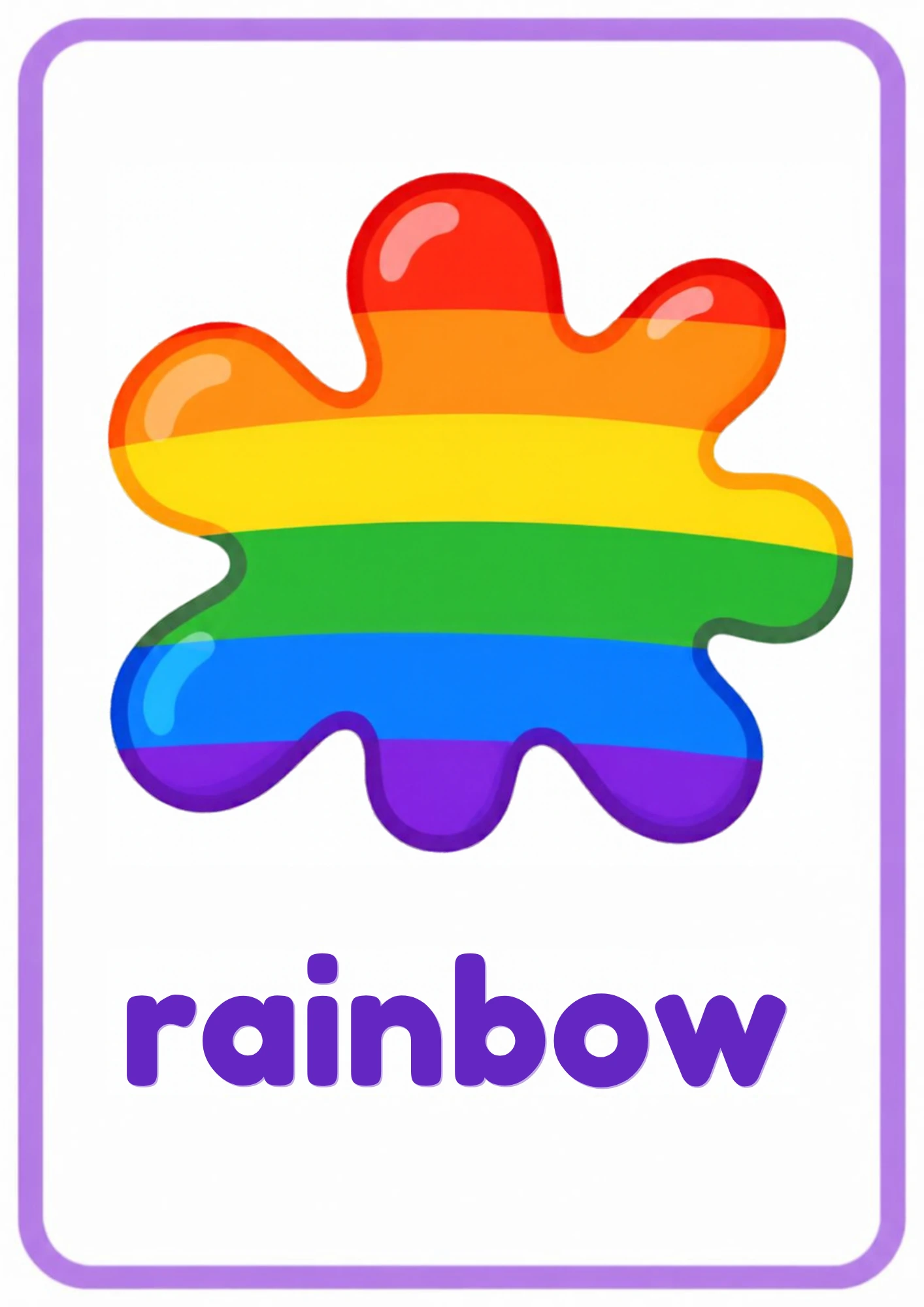
The twelve color cards print two to a page — each color as a paint splash beside its matching picture. Printed, cut and named, they are the class’s real worksheets — and on screen, every card page can be drawn on directly.
01
Print the cards
Open the printable cards and print all twelve pairs, two to a page. Cut them out together, naming each color as it is cut.
02
Name the splash
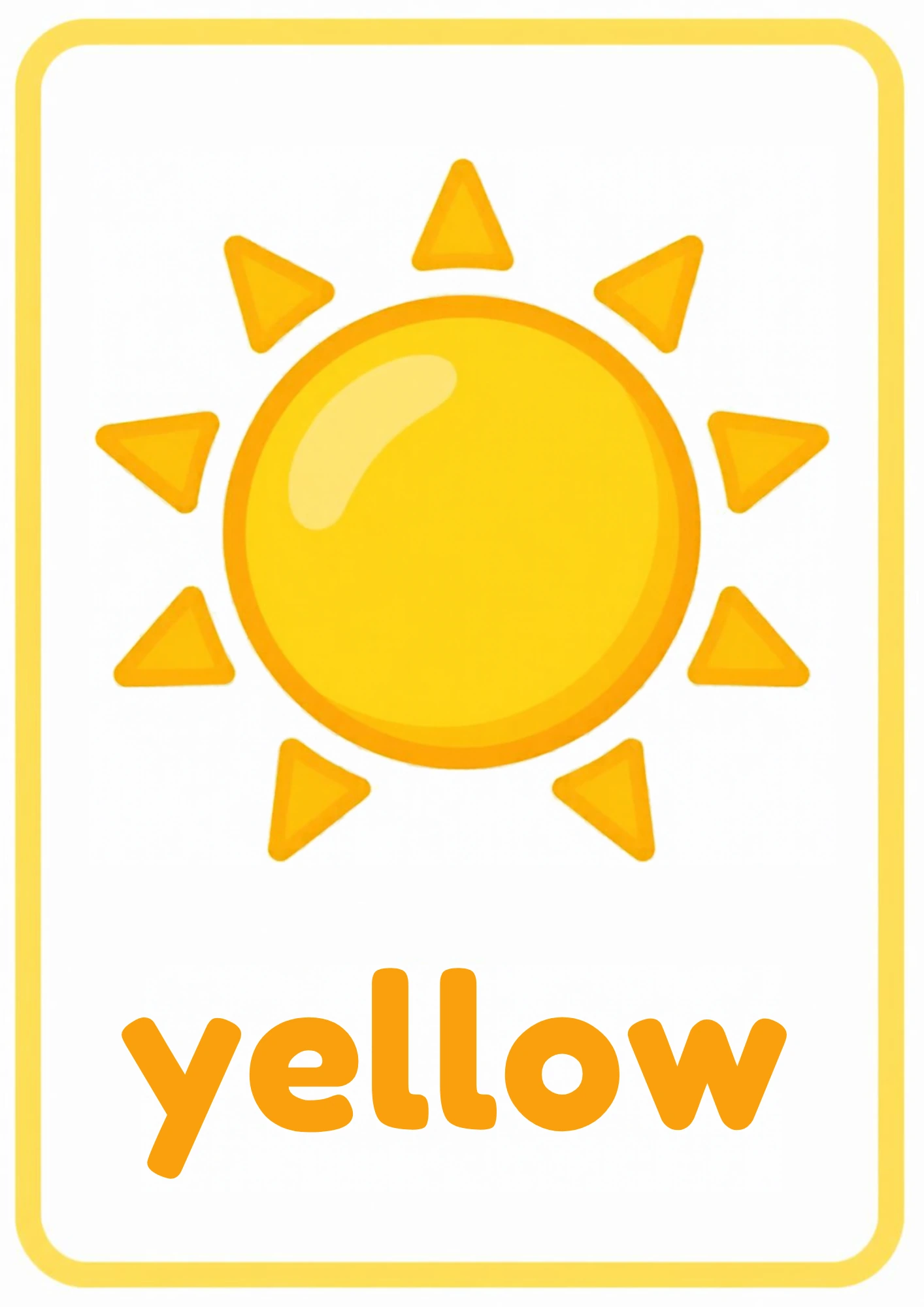
Hold up a splash and name its color, then check the picture twin — red like a strawberry, yellow like a sun. Picture to color, color to picture.
03
Sort the piles
Sort the cards into little piles by color, then line them up rainbow-style: red, orange, yellow, green, blue, purple.
04
Color the pictures
On the picture cards, color the real twin with its crayon — the red strawberry gets red. On screen, the card page’s Write & Color layer is the crayon.
Every card page has a Write & Color layer: your child can draw right on the card with a finger, a stylus or the mouse, then save the finished work. Nothing is uploaded anywhere.
TAKE IT OFF SCREEN
Colors that live in your house.
Color words stick away from the screen, in short playful hunts with real things. Pick one of these — two minutes is plenty — and follow your child’s lead.
The color of the day
Pick one color card in the morning and hunt that color all day: clothes, cups, cars, cushions.
Keep a running count out loud — “that’s four red things!” — and let your child shout each new find.
Real paint mixing
Two blobs of washable, child-safe paint on paper — red and yellow first. Let your child swirl them with a brush or a finger and watch orange arrive.
Then blue + yellow, then red + blue. Grown-up job: stay close, protect the table, and let your child do ALL the stirring. No wiping mid-mix — the brown surprise can wait for another day.
Color snack plate
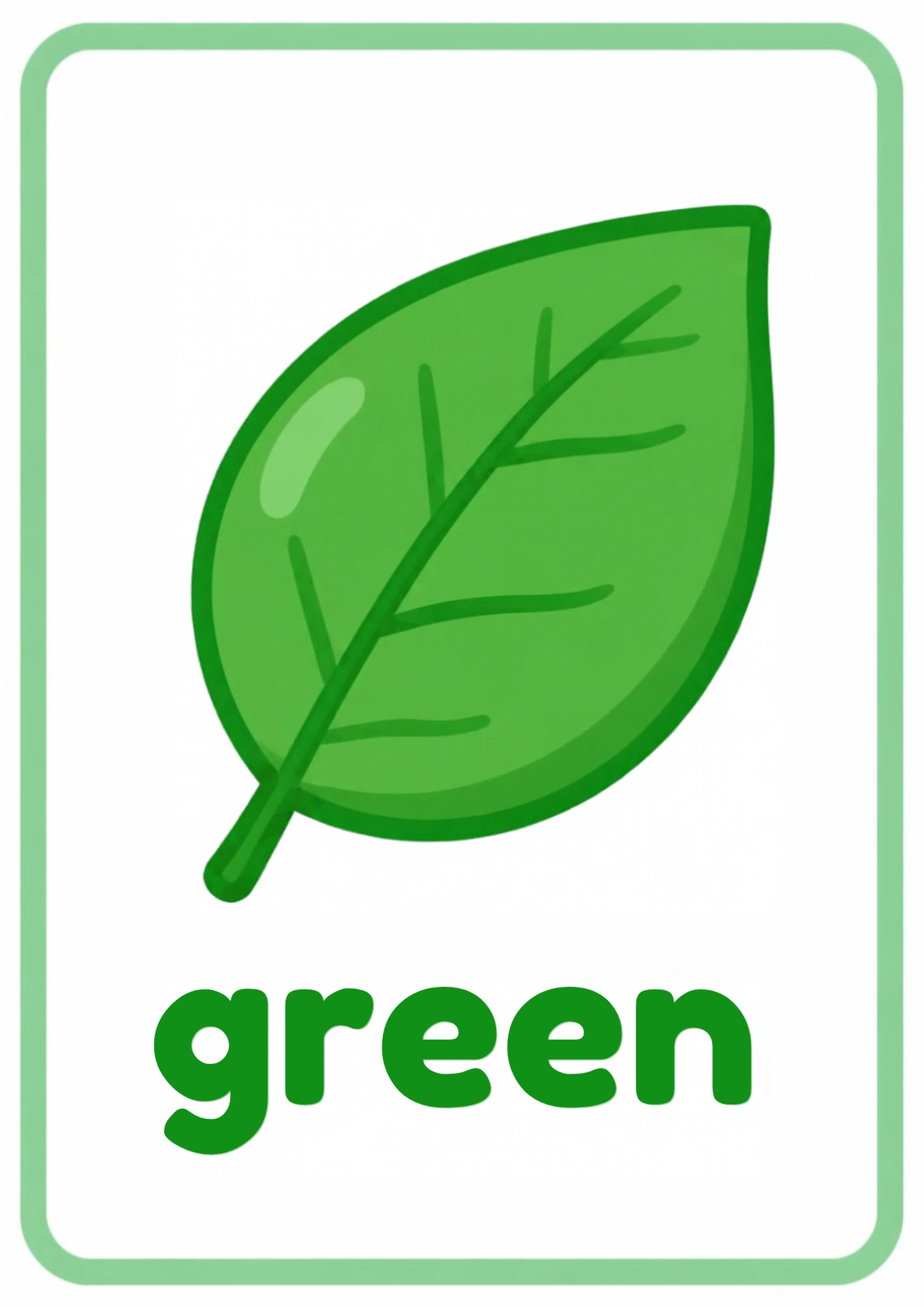
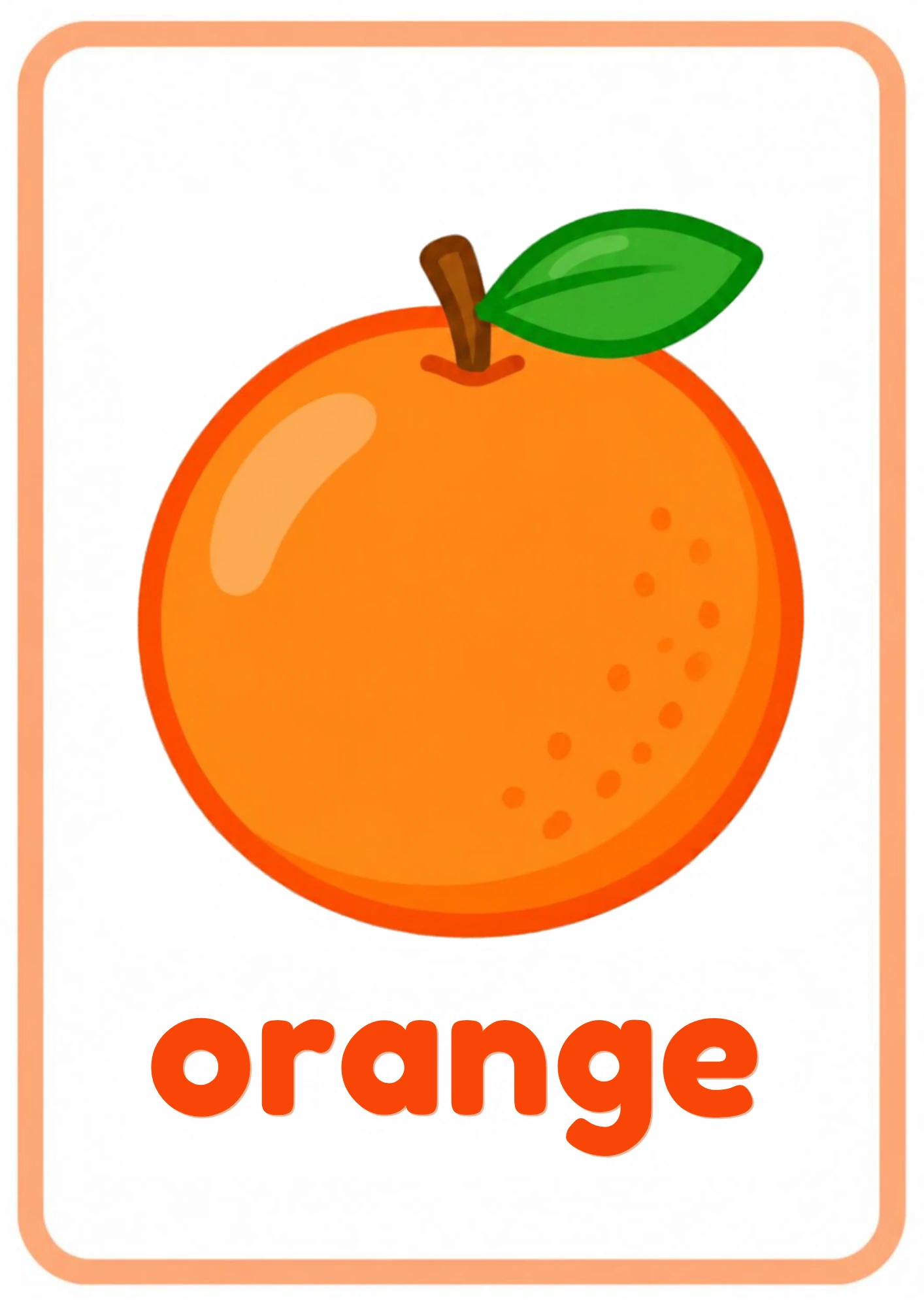
Snack time becomes color time: red strawberries, yellow banana, green cucumber, orange segments — name each color as you serve it.
Let your child build a plate of one single color for their teddy. Appetites and attention spans both welcome.
Laundry sort
Sorting socks by color is a real color lesson disguised as a chore. Whites here, darks there — your child is now a color sorter.
Mismatched socks are fine. The game is the naming, not the pairing.
Stay close, keep it playful and stop while it is still fun. There is nothing to finish here.
PRINT THE CARDS
Take the colors to the kitchen table.
All twelve color pairs print one pair to a page — the splash beside its matching picture — straight from your browser. No PDF, nothing to install.
Printed cards love fridges, bedroom doors and kitchen tables. The same cards also live in the flashcards library, each with its own page.
TEACHER NOTE
One last word from class.
“You did some lovely color spotting today. Colors are hiding everywhere now — in snacks, socks and the sky. Keep naming them together, and save a little paint for tomorrow. See you in class!”
— Your Kiddo School teacher
A NOTE FROM THE PRINCIPAL
For the grown-ups.
At three, color learning is naming and noticing, not color theory: eleven color words, met one at a time in real places, do more than any worksheet. The mixing games here are previews, not tests — red + yellow = orange is worth knowing at the paint table, and nobody needs to memorize it first. Everything gives calm feedback with no scores, and the color swatches are drawn by the page itself, so the games never depend on a picture that might not load.
The class mix pot now has a game of its own. Magic Color Lab lets your child tap two paint splashes — red, yellow or blue — and watch them combine into orange, green or purple, with a friendly explanation for every recipe.
Whether you met two colors or all twelve, that was the whole class — and stopping early is always allowed. The splashes will be right here, and so will the mixing pot, whenever you come back. Next stop on the preschool path: opposites — where big meets small and full meets empty.
Sit together for the card viewing, and let your child do the tapping in the games — even when the answer looks obvious to you. Saying the color word while touching something that color is the fastest route in: “red strawberry”, “blue cup”, “yellow banana”.
Save the mixing for the very end, or for a day with paints on the table. Mixing is the reward for knowing the ingredients — and wiping up together is part of the lesson too.
Age 3 is a guide, not a deadline. If today’s class was one red thing found in the garden, today’s class was a success.
FAMILY FEEDBACK
How was this activity?
Your feedback helps us make Kiddo School better. This is feedback about the activity, for the grown-ups who make it — it is never about a child.
Comments from our school community
FLASHCARDS
Prefer printed cards?
The cards from this class also live in the flashcards library — every card has its own page with the picture, the words to say together and a download button, ready for away-from-screen time.




Comments from our school community