
Panda — a step-by-step lesson for grown-up and child
This lesson teaches what a bamboo forest is and how the panda lives in it: cool mountain air, green stalks everywhere, and a bear that turned eating leaves into a full-time job.
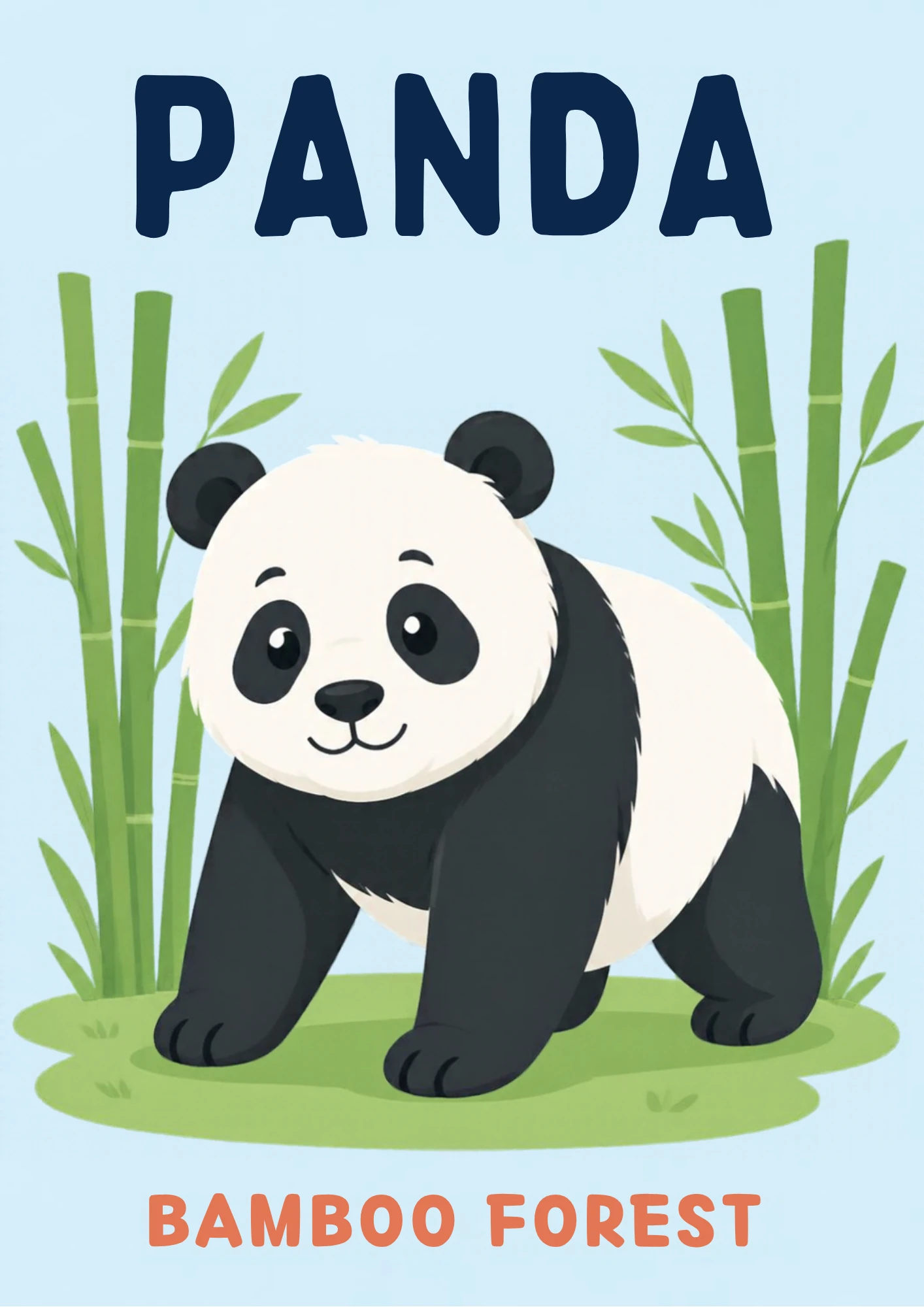
What is this?
A bamboo forest is a stand of bamboo — giant grasses as tall as trees, growing in thick green clusters high on cool, often misty mountains. Bamboo grows so fast it can almost be watched growing.
What does it mean?
Bamboo is mostly water and fibre — filling, but not very rich. So the panda’s strategy is volume: sit among the stalks and eat, for most waking hours, day after day. The forest never runs out, the panda never stops, and the misty mountains keep it all cool and green.
What does the child need to know?
Your child needs three bamboo-forest ideas: bamboo is giant grass, not a tree; pandas eat bamboo for breakfast, lunch and dinner — and most snacks between; and pandas have a special wrist bone that works like a thumb for gripping the stalks.
Why this matters
The panda pairs beautifully with the koala: two specialists, two one-food lives, one cool forest and one warm one. Children meet the idea that a habitat is not just an address but a menu — and that a big strong bear can be a gentle, patient, all-day nibbler.
What it teaches
Diet thinking (what fills you up and why), contrast reasoning (bear expectation versus panda reality), grip mechanics, and pacing — the slow-and-steady eating marathon is a patience model children can feel at snack time.
Words to learn
pandabamboostalkmistymountainsmunchgrip
Say this to your child
“"The panda lives in the bamboo forest, high on the cool mountains. It is a big strong bear that eats bamboo all day — crunch, crunch, crunch. Its wrist has a special thumb just for holding the stalks."”
Step by step
- Show the card: "This is a panda, and this is its home — the bamboo forest."
- Reveal the surprise: this is a BEAR — big and strong — but it does not hunt. It munches grass. Giant grass: bamboo, tall as trees.
- Explain the all-day part: bamboo does not pack much power, so the panda eats and eats — most of its day is breakfast, lunch and dinner rolled together.
- Point at the front paws: a panda’s wrist bone works like a sixth finger, made for gripping bamboo stalks.
- Play the panda snack (below) and close with the picture: cool mist, green towers, one contented bear munching.
Look closer at the picture
On this card a round black-and-white panda walks on all fours across a green patch, tall bamboo stalks rising on every side under a soft pale sky. The words "bamboo forest" sit below — the panda is strolling through its own enormous salad bar.
Ask your child
"What is the panda eating?" "Is bamboo a tree or giant grass?" "How much of the panda’s day is eating?" "What does its special wrist bone do?"
What your child can say or do
Your child might say: "It eats bamboo all day long," "Bamboo is giant grass — taller than Dad!" or the wrist line: "It has a thumb on its wrist for holding the bamboo!"
Out in the real world
At the fruit bowl, compare a juicy grape (rich, small) with a stick of celery (filling, plain) — celery is your household bamboo. One bite fills a little; a panda needs the whole forest. Rich foods make quick meals; plain foods make long ones.
Try it together
Panda picnic: serve a "bamboo" snack — breadsticks, celery sticks or green beans — and eat it panda-style: sitting cross-legged, stalk held in both front paws, chomped sideways from the end. Timer optional, but one stalk must be finished properly before any jumping. All-day eaters eat slowly.
Understanding check
Ask: "Where does the panda live? What does it eat? What helps it grip the stalks?" Bamboo forest, bamboo, the wrist-thumb — three answers and the picnic is packed.
Parent tips
Hold the contrast with other bears gently — yes, some bears hunt, but the panda found a forest full of food nobody else wanted and made it a kingdom. If your child asks why pandas do not eat something richer: the forest only serves bamboo, and the panda likes what its home serves.
This lesson pairs with the Panda flashcard in the library — print it, show it, keep it on the fridge. Back to Animals & Their Habitats (Class 36).