
Pack Your Bag — a step-by-step lesson for grown-up and child
This lesson hands the school bag to its true owner: your child learns to pack it the evening before, check it against a picture list, and treat a forgotten item as information — not a disaster.
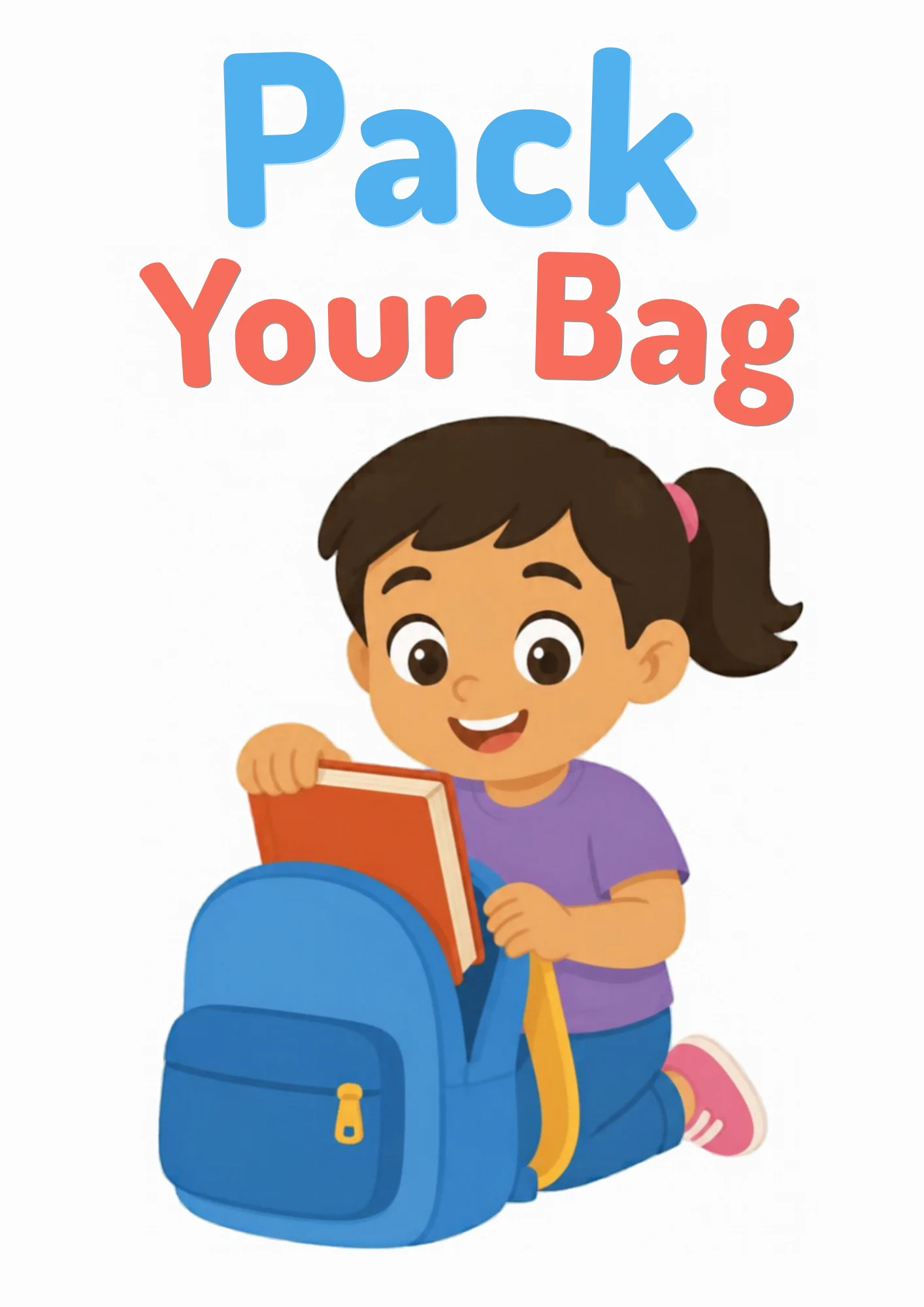
What is this?
Packing your bag means putting tomorrow’s things in tonight — book, bottle, hat, whatever the day needs — and checking the bag against a list before zipping it shut.
What does it mean?
Packing ahead beats packing in the morning because mornings have no slack: one missing shoe and the whole system stalls. The evening has time, calm and the chance to discover the missing thing while it can still be found.
What does the child need to know?
The real skill is not putting things IN — it is checking. A picture checklist (drawings, not words) by the bag lets a non-reader tick each item as it lands. Zip closed only after every picture has its tick.
Why this matters
Owning the bag plants the ownership of the whole school day. It also builds the memory muscle school will lean on for years — and it costs nothing: forgotten items at four are free lessons, forgotten at fifteen they are detentions.
What it teaches
Planning ahead (tomorrow-thinking is new at four), list-checking as a working-memory scaffold, responsibility for belongings, and honest recovery — "it was missing, we found a fix" — when something slips.
Words to learn
backpackpackcheckchecklisttomorrowzip
Say this to your child
“"We pack at night, when the house is calm. Book, bottle, hat — each one in, each picture ticked. Then we check with our eyes before we zip. If something is missing tomorrow, that is not trouble — that is information. We fix the list and try again."”
Step by step
- Show the card: the girl is sliding a red book into her blue backpack — name what she is doing NOW, which is tonight’s job, not tomorrow morning’s.
- Make the picture checklist together: draw the book, the bottle, the hat — one drawing per item, stuck by the bag.
- Pack tonight, not tomorrow: name each item, your child fetches it, ticks the picture, zips it in.
- Teach the check as a separate move: bag open, pictures in hand, one look each — then zip.
- When something is forgotten (it will be), debrief kindly at pickup: "what did the checklist miss?" and fix the list, not the child.
Look closer at the picture
Ask your child: what is the girl putting into the backpack? What color is the book? What is she kneeling on — can you see her shoes? Is the bag open or closed? What would YOU pack for tomorrow?
Ask your child
"When do we pack — tonight or tomorrow morning?" "What is on your checklist?" "What do we do before the zip closes?" "What happens if something is missing?"
What your child can say or do
"Book — tick! Bottle — tick!" "I checked it all by myself." Your child may pack a teddy’s "school bag" with the same ceremony, or announce at dinner that packing happens after bath.
Out in the real world
Packing travels: the swimming bag on swim day, the library book bag, the picnic backpack, the hospital-visit bag when someone is poorly. Each is the same skill with a different list — let your child own the checklist design.
Try it together
Memory bag: put five household items in a backpack, let your child look for ten seconds, zip it, then name what is inside from memory. Unzip and check together — the check is the applause moment.
Understanding check
Ask: "When do we pack? What do we check before zipping? What do we say when something is missing?" Tonight, pictures-ticked, "information not trouble" = landed.
Parent tips
Resist packing it yourself in the morning rush — that steals the skill. Forgetfulness is the teacher, not the enemy: the day the book is missing, talk kindly and repack. Keep the checklist current — an out-of-date list teaches checking to be useless.
Staying safe
Bags stay light — a packed school bag should never weigh more than the child can lift with one hand. Straps go on both shoulders, and nothing sharp, hot or liquid-leaking rides in the same pocket as books.
This lesson pairs with the Pack Your Bag flashcard in the library — print it, show it, keep it on the fridge. Back to Life Skills & Good Habits (Class 32).