
Take Deep Breaths — a step-by-step lesson for grown-up and child
This lesson gives your child the oldest calm-down tool there is, in four-year-old language: slow breaths that fill the belly, practised at calm times so the skill is waiting when big feelings arrive.
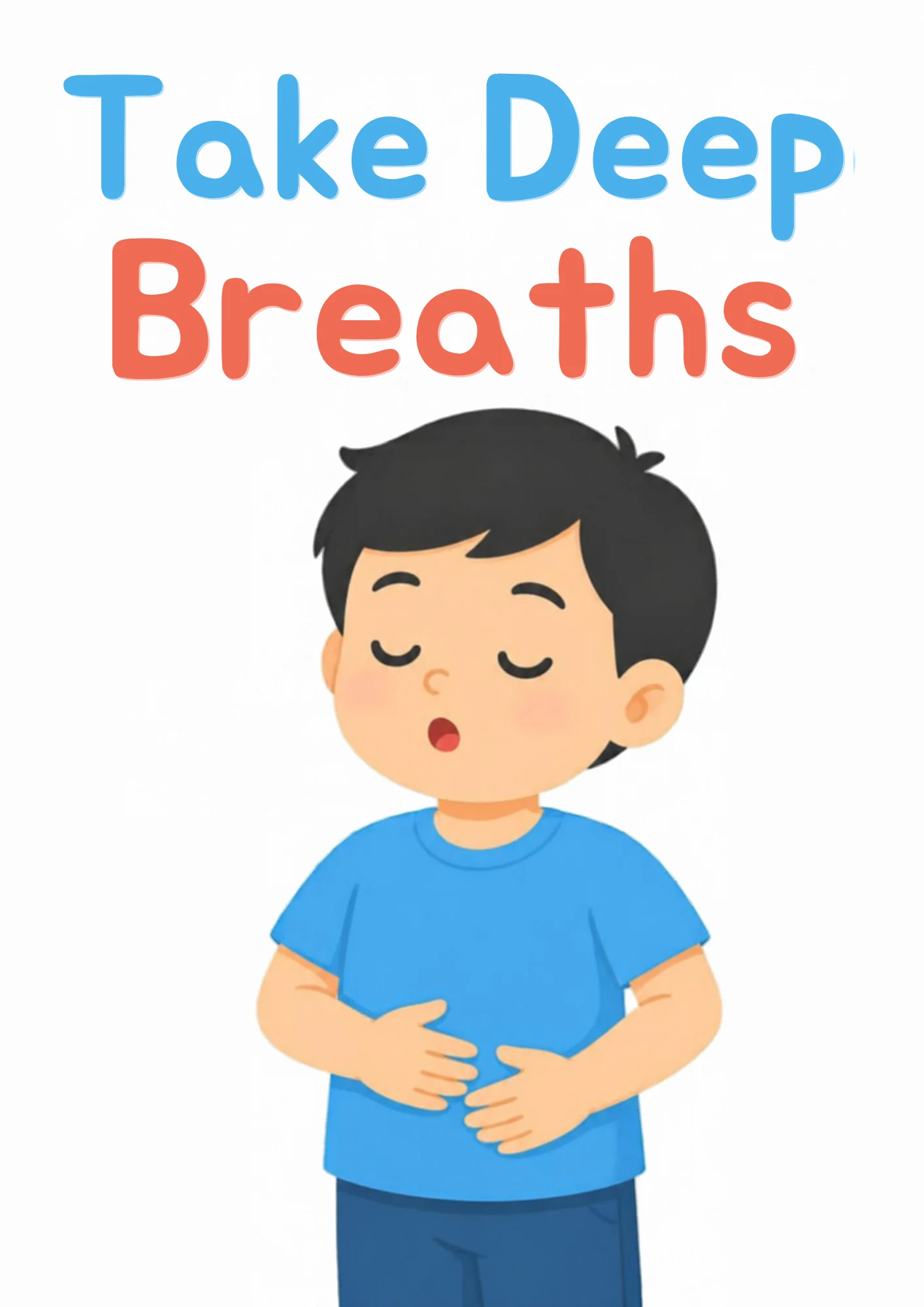
What is this?
Taking deep breaths means breathing slowly IN through the nose — smelling the flower — and slowly OUT through the mouth — blowing the candle — until the body settles.
What does it mean?
Big feelings make breath fast and shallow, which tells the body MORE danger; slow deep breaths tell the body safe. Changing the breath is the fastest lever a small person can pull on a big feeling — and it needs no words at all.
What does the child need to know?
The move: one hand on the belly, in through the nose for a count of three, out through the mouth for three, three rounds. The belly should rise — that is how you know it is deep. The place to learn it is bedtime, not the meltdown.
Why this matters
A child with a rehearsed breath has somewhere to GO inside a storm. The skill only works if it exists before the storm — three rounds at bedtime build the pathway the tantrum will need. It also gives the parent a shared script: "flower and candle" works mid-crowd, mid-car, mid-crisis.
What it teaches
Self-regulation (the core executive skill), interoception (feeling breath and belly), a calm-down routine that travels, body-mind connection, and co-regulation — breathing together is attachment practice as much as technique.
Words to learn
breathedeepslowbellycalmflower
Say this to your child
“"Hands on your belly. Now smell the flower — one, two, three — and blow out the candle — one, two, three. Again, slow as honey. Feel your belly fill like a balloon? That is your calm button. We press it every night so it works when feelings get big."”
Step by step
- Show the card: the boy’s eyes are closed, his hands rest on his belly, his mouth makes a small o. Name the pose — this is the calm shape.
- Do it together: hands on bellies, smell the flower for three, blow the candle for three. Three rounds. Feel YOUR belly fill as you teach.
- Keep it playful at first: blow the imaginary candle, sniff the imaginary flower, swap flowers — roses, daisies, birthday candles.
- Make three rounds the bedtime close — the calmest moment of the day building the calmest habit.
- Only AFTER a week of practice, bring it to real storms: kneel, breathe audibly yourself, offer the flower — never mid-shriek on day one.
Look closer at the picture
Ask your child: are the boy’s eyes open or closed? Where are his hands sitting? What shape is his mouth making? Does his face look busy or quiet? Can YOUR hands find your belly the same way?
Ask your child
"What do we smell? What do we blow?" "Where does your belly go when the air comes in?" "When is our breathing practice time?" "What can we do when feelings get too big?"
What your child can say or do
"Smell the flower... blow the candle!" "My belly went up and down!" Your child may coach YOU through three rounds at lights-out, or press their own belly and whisper "calm button" mid-wobble.
Out in the real world
Calm breaths travel: the waiting room, the long car ride, the doctor’s surgery, the queue for the slide, the moment before the school gate. Flower and candle need no equipment — that is exactly why they work everywhere.
Try it together
Bubble breath: blow REAL bubbles slowly — fast breath pops nothing, slow breath makes the biggest bubble. Pinwheel and feather work the same way. The prop proves the breath, and the proof makes the practice stick.
Understanding check
Ask: "What do we smell and what do we blow? Where does the air go — chest or belly? When do we practise?" Flower-candle, belly, bedtime = landed.
Parent tips
Rehearse away from the storm or the skill will not exist when needed. Breathe WITH your child audibly — your nervous system lends theirs a hand; co-regulation comes before self-regulation. If three rounds feel long, one round done is better than three refused.
Staying safe
Breathing practice is gentle — never breath-holding contests, never dizziness-as-a-game. And calm breath is a helper, not a replacement for a grown-up: if the big feeling comes from real pain or real fear, the grown-up comes first, the flower second.
This lesson pairs with the Take Deep Breaths flashcard in the library — print it, show it, keep it on the fridge. Back to Life Skills & Good Habits (Class 32).