
Water the Plants — a step-by-step lesson for grown-up and child
This lesson hands your child something alive to look after: how to pour slowly at the soil, how to tell a thirsty plant from a swimming one, and what a new leaf says about the job they are doing.
What is this?
Watering plants means giving the plant a drink at the soil — slowly, with a small can, only when the soil is dry — not drowning it with love every afternoon.
What does it mean?
Roots drink from the soil, not the leaves, so the water goes where the roots are. Too much water is worse than too little: roots that sit in a swamp rot. Most kid-plants die of enthusiasm, not neglect.
What does the child need to know?
The check before pouring: poke a finger into the soil — damp means wait, dry means drink. The pour: low and slow at the soil, until a little runs out of the pot’s bottom hole, then stop. Same day each week builds the rhythm.
Why this matters
Caring for a living thing is responsibility with visible results: the leaf that unrolls a week later is proof your child’s care worked. Patience, observation and gentleness all grow alongside the plant.
What it teaches
Responsibility and routine (same plant, same day), observation skills (soil, leaves, new growth), cause and effect across days — a genuinely delayed payoff — plus the fine motor control of a slow, two-handed pour.
Words to learn
watering cansoilrootsleavesthirstygrow
Say this to your child
“"This plant is yours. You check the soil with your finger — if it is dry, the plant is thirsty; if it is damp, it is still drinking from last time. Pour slowly at the roots, not the leaves, and stop when the soil has had enough. Plants drink little and often, just like us."”
Step by step
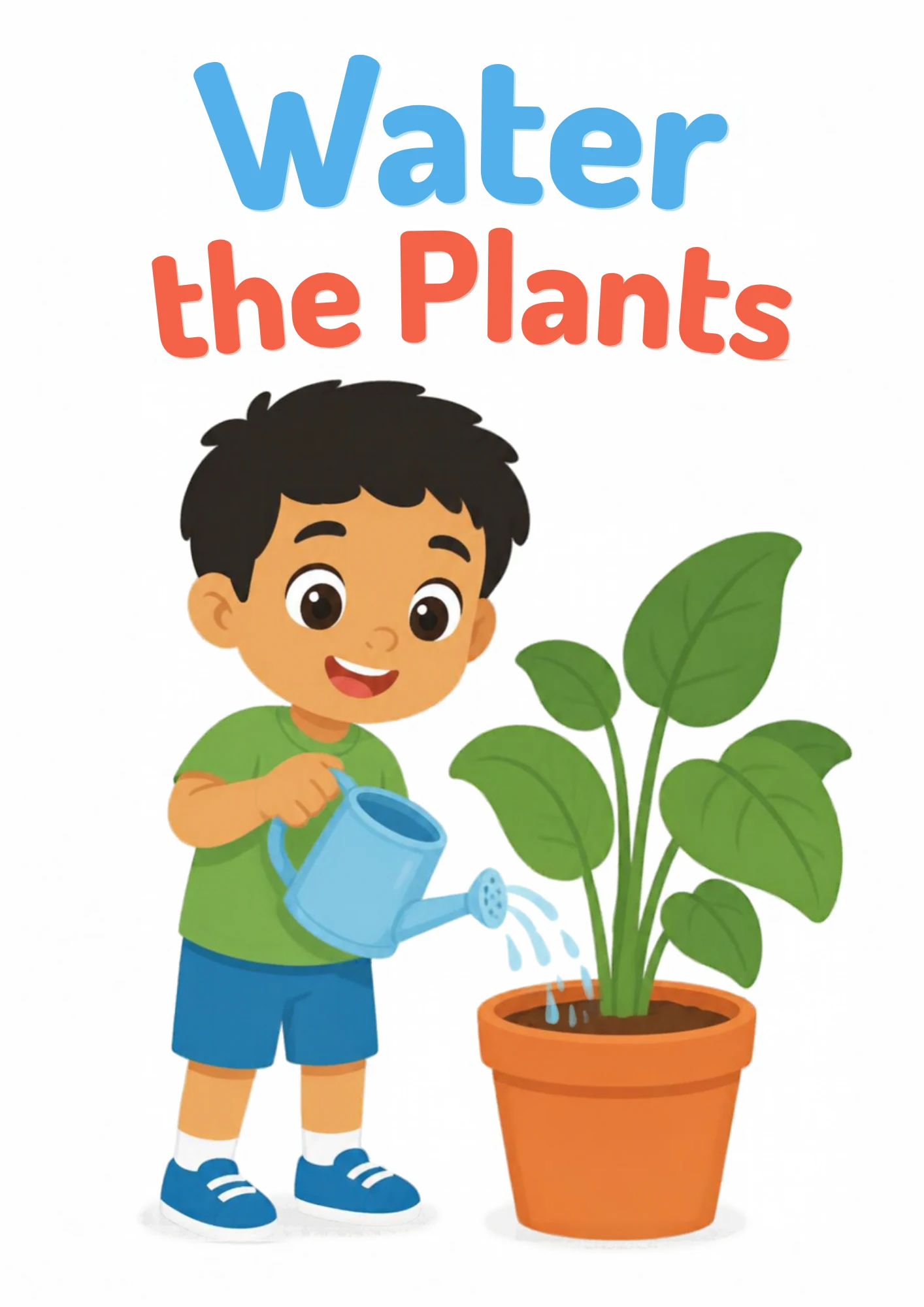
- Show the card: the boy tips a light-blue can so water drips onto the dark soil of an orange pot — name WHERE the water lands, at the roots, not on the leaves.
- Do the finger test together: poke the soil. Damp or dry? Let your child be the one who declares the verdict.
- Practise the pour on empty ground or over the sink first: low, slow, two hands, stop when a little escapes the pot’s bottom.
- Give your child ONE plant that is completely theirs — a hardy one that forgives enthusiasm — and one watering day a week.
- Watch for the payoff together: new leaf, new height, a flower. Photograph it; celebrate it like a first step.
Look closer at the picture
Ask your child: what is the boy holding — is it big or small? Where is the water going — on the leaves or the soil? What color is the pot? How many leaves does the plant have? What will happen after the drink?
Ask your child
"How do we know a plant is thirsty?" "Where does the water go — leaves or soil?" "What happens if we give too much?" "What did the plant do this week?"
What your child can say or do
"The soil is dry — drink time!" "A NEW LEAF!" Your child may introduce the plant to visitors by name, or report the soil verdict with the confidence of a scientist.
Out in the real world
Plant care is everywhere: the windowsill pot, the balcony boxes, grandma’s garden tomatoes, the classroom bean. Each is the same finger test and the same slow pour — your child now speaks fluent plant.
Try it together
Bean in a jar: a bean against the jar wall, wet cotton, and a drawing diary — one picture every two days. The root that grows before the shoot teaches the biggest secret of plants: the important work happens first, underground.
Understanding check
Ask: "How do we check for thirst? Where do we pour? What happens with too much water?" Finger test, at the soil, swamp roots = landed.
Parent tips
Overwatering ends more kid-plants than neglect — teach "damp, not swimming" early. Pick a hardy plant so the job stays winnable. If the plant dies, treat it as science: what did we learn, what will we try next — then plant again.
Staying safe
Some house and garden plants are not for eating — hands water, mouths never. Spilled water is a slip hazard: the pour happens where spills get wiped. Grown-ups handle plant food, scissors and repotting; the watering can is your child’s whole toolshed.
This lesson pairs with the Water the Plants flashcard in the library — print it, show it, keep it on the fridge. Back to Life Skills & Good Habits (Class 32).