
Five Pears — a step-by-step lesson for grown-up and child
This lesson lands on the first big milestone: five, a whole hand. Your child counts five pears laid out two and three, matches the count to their own five fingers and learns why five is the number counters stop and celebrate.
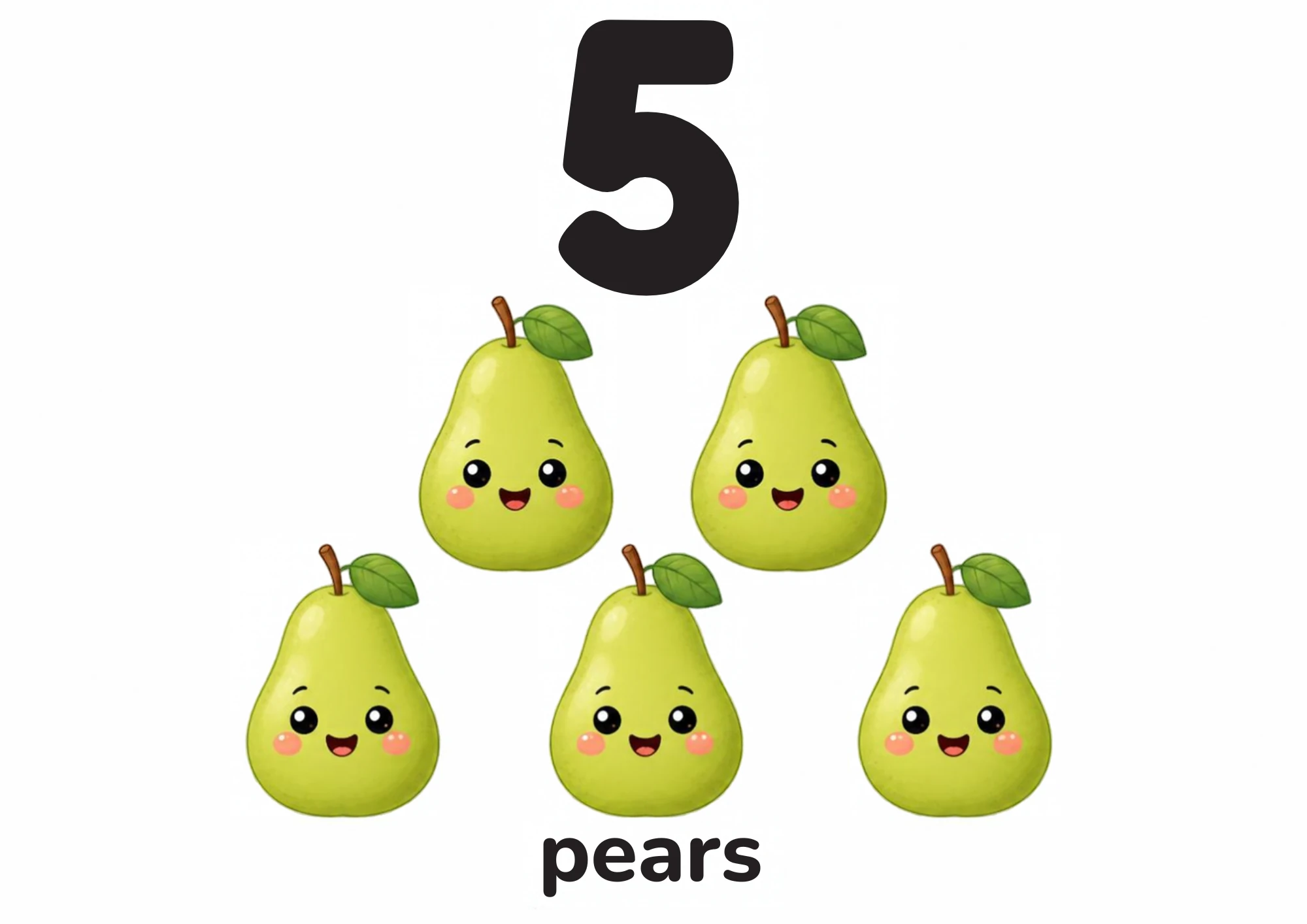
What is this?
Five is a whole hand: five pears on the card, five fingers on your hand. On the card the pears sit two on top and three below — the same five, arranged like a little picture frame of fruit.
What does it mean?
Five is the first number people use as a container: we say "give me a high five", we count fives on clock faces, we sort coins into fives. Seeing five as one group — a whole hand — is the first big step toward working with bigger numbers.
What does the child need to know?
Your child needs three fives: counting all five fingers on one hand by touching each fingertip; recognizing the two-rows shape of five (like the card's pears, like a dice five); and the idea that five can be a stop-and-turn-around point in any count.
Why this matters
The hand is every child's first calculator. Once five is solid, six to nine become "five and some more", and later the whole ten-frame system in school math stands on this exact card. Five is not just a number — it is a tool.
What it teaches
Finger counting as a visible number line, recognizing five arranged in rows, stopping and starting on command in a count, and the first feel for parts inside a whole: two and three live inside five.
Words to learn
fivehandfingershigh fiverowswhole
Say this to your child
“"Five pears, five fingers — five is a whole hand. Count your fingers with me: one, two, three, four, five. When you get to five, you have counted a whole hand, and that is a real milestone."”
Step by step
- Show the card: "Five pears — and look at your hand: five fingers. Five is a whole hand."
- Count the pears one by one, then press your hand flat on the card: the count and the hand match.
- Point at the arrangement: two pears on top, three below. Count the top row, then the bottom, then all five. Same five, two rows — that is a magic trick numbers can do.
- Give the hand a job: hold up five fingers, wiggle them one at a time and count each. Now hide two behind your back: "How many came with me?"
- Celebrate properly: five is the counting finish line everyone knows. High five, then count the five fingers on the high-five hand.
Look closer at the picture
On this card a big black numeral 5 sits over five smiling green pears — two pears in the top row and three in the bottom row — and the word "pears" is printed below, the five drawn in the same two-row shape as fingers spread on a hand.
Ask your child
"How many pears? How many fingers on one hand?" "If I hide two pears, how many are still there?" "What two rows make the five on the card?"
What your child can say or do
Your child might say: "Five pears — a whole hand!" "Two and three!" or the milestone announcement: "I counted all five by myself."
Out in the real world
Fives rule the house: five toes on each foot, five spots on a die, five days until the weekend. Set the table for five spoons, count five buttons on a coat, and clap a high five as the reward for every good count.
Try it together
Hand-stack towers: build a block tower, count to five blocks, then compare it to your spread hand — same five. Then the five-steps game: take exactly five giant steps, freeze, turn around and take five back.
Understanding check
Ask: "How many pears? Show me five. What two rows make the five?" Five pears, five fingers, two and three — the hand number is claimed.
Parent tips
Always count fingers by tapping each fingertip — the touch keeps slow counters from racing ahead. If your child spots the two-and-three split on their own, make a enormous fuss: seeing parts inside numbers is the whole future of arithmetic showing up early.
This lesson pairs with the Five Pears flashcard in the library — print it, show it, keep it on the fridge. Back to Numbers, Counting & Early Math (Class 35).