
Fourteen Raspberries — a step-by-step lesson for grown-up and child
This lesson catches the teen pattern red-handed: fourteen, ten and four. Your child counts fourteen raspberries, says the ten-plus-four recipe out loud, and discovers that from here to twenty, every number follows the same trick.
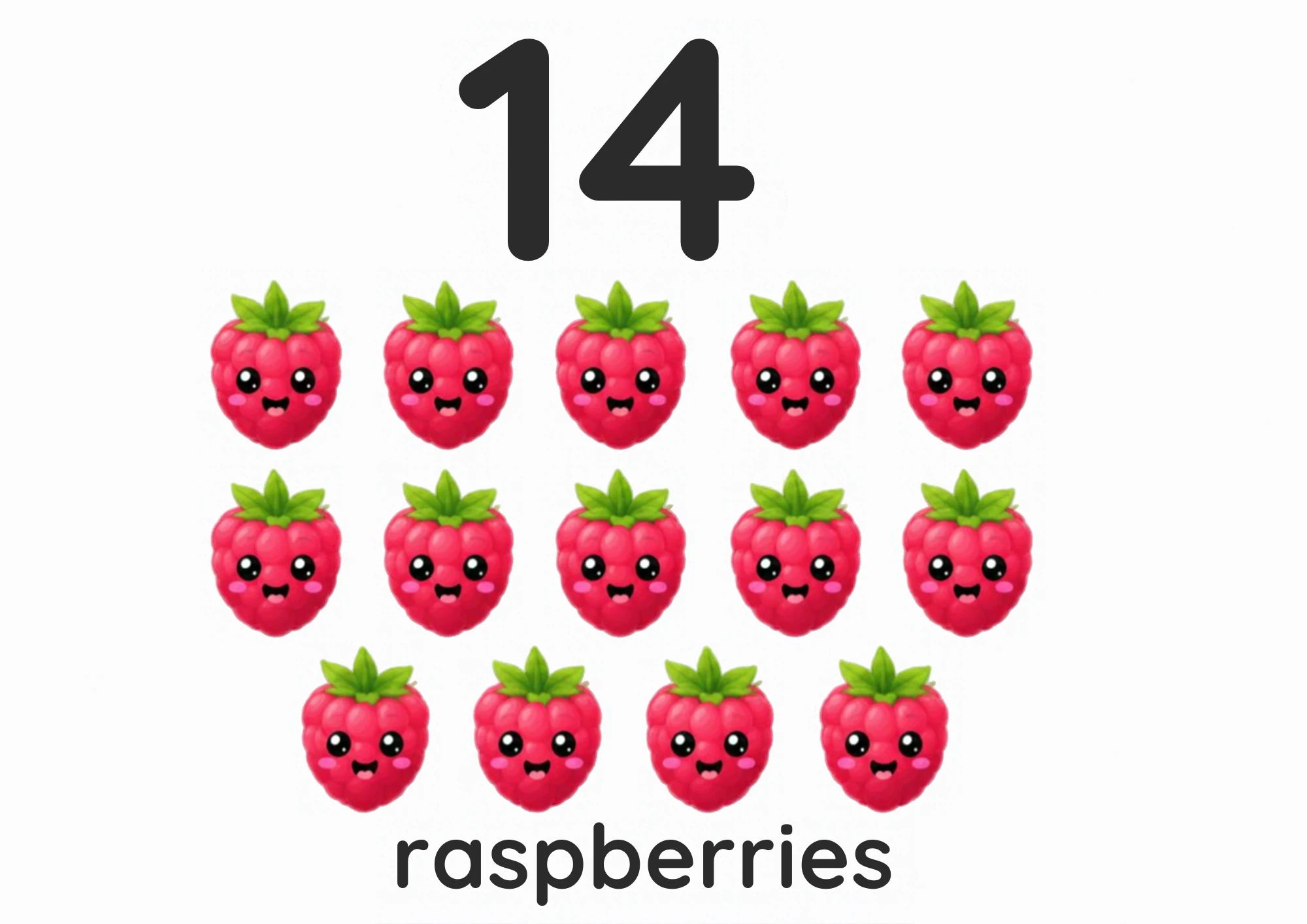
What is this?
Fourteen is ten and four more — fourteen raspberries grouped five, five and four. The word says it plainly: four-teen. And fourteen hides a second treasure: a fortnight, two whole weeks, fourteen days.
What does it mean?
Fourteen is the first teen where the word and the math match perfectly — four plus teen. Once a child hears that recipe, fifteen through nineteen arrive as a march instead of a struggle. Fourteen is the pattern lesson.
What does the child need to know?
Your child needs three fourteens: the ten-and-four count said as a recipe; the fortnight idea — fourteen days, two weeks; and group-reading the card: five, five, four.
Why this matters
Naming the ten-plus-more pattern at fourteen is the whole point of the teens. From here, each new number is practice, not novelty — the pattern does the teaching, and the child starts predicting the next number before you say it.
What it teaches
Pattern recognition across numbers, the ten-plus-n recipe spoken aloud, counting grouped rows to fourteen, and prediction — guessing what comes next and being right.
Words to learn
fourteenraspberriespatternrecipegroupspredict
Say this to your child
“"Fourteen — ten and four more. The word says it: FOUR-teen. And a fortnight? Fourteen days, two whole weeks. From now on, every teen number is ten and some more — you know the trick."”
Step by step
- Show the card: "Fourteen raspberries — say the word slowly and listen: FOUR-teen. It tells you the recipe: ten and four more!"
- Count ten raspberries, then four more, pointing as you go: "Ten... and four... fourteen."
- Read the packs: five, five, four. Count each group, then all fourteen. Big numbers travel in packs.
- Tell the fortnight secret: "A fortnight is fourteen days — two whole weeks in one word. Two Mondays away: that is a fortnight."
- Predict: "Fifteen comes next. What do you think it will be? Ten and... five!" Let the pattern finish the sentence.
Look closer at the picture
On this card a big black numeral 14 stands over fourteen smiling red raspberries, grouped five in the top row, five in the middle and four below, and the word "raspberries" is printed below.
Ask your child
"How many raspberries? What is fourteen made of?" "What does the word fourteen tell you?" "How long is a fortnight?"
What your child can say or do
Your child might say: "Ten and four — fourteen!" "A fortnight is two weeks!" or the pattern prediction: "Fifteen will be ten and five!"
Out in the real world
Fortnights organize family life: a fortnight until the grandparents visit, holiday countdowns in weeks and days. Raspberries themselves count at the market — a punnet held open for a quick five-and-five-and-four count.
Try it together
Recipe numbers: say any teen number as a recipe and build it — ten blocks plus four blocks, stacked apart, counted together. Then the fortnight chain: paper-link fourteen days, tear one daily, and count what is left each morning toward the big day.
Understanding check
Ask: "How many raspberries? Say the recipe. What is a fortnight?" Fourteen, ten and four, two weeks — the pattern is caught.
Parent tips
This is the lesson to be loud about the pattern — children who catch the ten-plus recipe at fourteen glide to twenty alone. If they start predicting fifteen and sixteen correctly, celebrate like they invented arithmetic, because for them, they just did.
This lesson pairs with the Fourteen Raspberries flashcard in the library — print it, show it, keep it on the fridge. Back to Numbers, Counting & Early Math (Class 35).