
Three Oranges — a step-by-step lesson for grown-up and child
This lesson makes three feel famous: the number of bears, pigs and bowls of porridge in every story ever told. Your child counts three oranges one by one, lines up threes at snack time and hears why stories love this number.
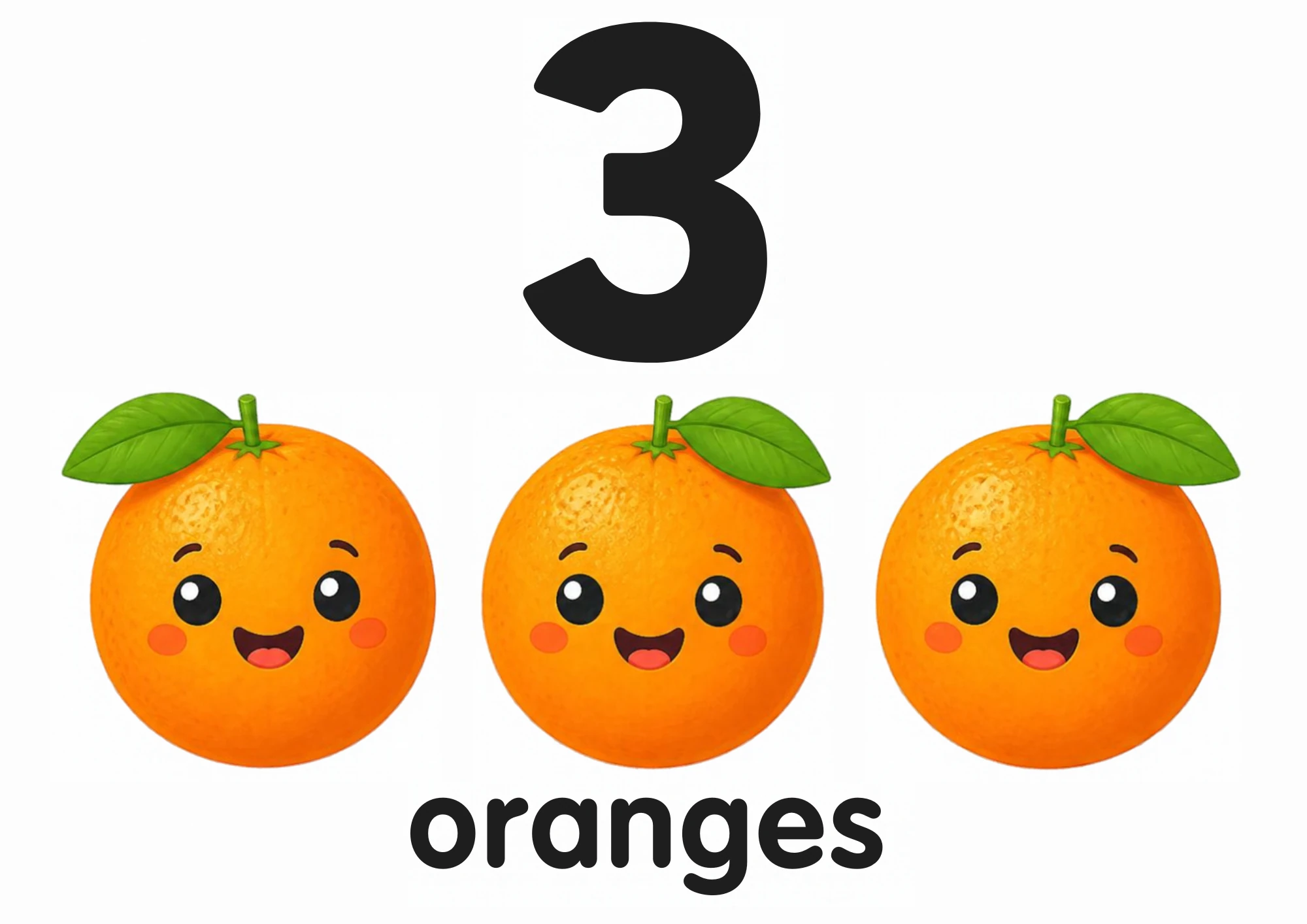
What is this?
Three is one, two, then one more — three oranges standing in a row. It is small enough to see in one look and big enough to feel like real counting.
What does it mean?
Three is the last number the eye can recognize instantly without counting, and the first that fills a proper line. It is also the storybook number: three wishes, three tries, three friends — three is how stories keep things memorable.
What does the child need to know?
Your child needs three threes: touch-counting three things in order without skipping; the numeral 3 spotted out in the world; and the story pattern — things in threes are everywhere, from bowls to billy goats.
Why this matters
Counting a small line of things in strict order trains the scanning eye that bigger numbers will need. And knowing that "three" is a story number gives the count a place to live: tonight's bedtime story becomes counting practice.
What it teaches
Ordered touch-counting left to right, instant recognition of small groups (subitizing), story memory and prediction, and the patience to finish a count before grabbing — three is long enough to require it.
Words to learn
threerowlinefirstnextlast
Say this to your child
“"Three oranges — one, two, three. Three is the storybook number: three bears, three little pigs, three wishes. Let us count three of something and make up our own three story."”
Step by step
- Show the card: "Three oranges in a row. Let us count them the slow way."
- Touch each orange once, left to right: one, two, three. Then run the finger back and check — the row did not change.
- Say the story secret: "Three bears, three pigs, three wishes. Three is the number stories love. Tonight we will count the threes in our story."
- Line up three real things — three crackers, three cars, three spoons — and count them. Rearrange into a triangle and count again: still three.
- Finish with three jumps, three claps, three big breaths. Three is a number the whole body can act out.
Look closer at the picture
On this card a big black numeral 3 stands above three smiling oranges with green leaves in a neat row, and the word "oranges" is printed below — a proper little number line of fruit.
Ask your child
"How many oranges? Which one is first? Which is last?" "What three things happen in your favorite story?" "Can you hop three times?"
What your child can say or do
Your child might say: "One, two, three!" "The three pigs!" or the beginning-middle-end discovery: "First this, then that, then the end — three things!"
Out in the real world
Threes hide in plain sight: traffic lights have three colors, stools have three legs, sandwiches get cut in three for sharing. Ask "does that come in threes?" at every stop this week.
Try it together
The three-act snack: choose three things for the plate, count them in, eat them in order — first, next, last. Then tell a three-sentence story together about the three oranges: where they grew, who found them, who ate them.
Understanding check
Ask: "How many oranges? What number do stories love? Show me three jumps." Three in a row, three bears, three hops — the storybook number is home.
Parent tips
When a count skips or doubles back, slide your own finger under each orange and count with them — helping the finger is kinder than fixing the voice. Story threes work best when your child supplies the silly bits; counting is sneaky when the story is funny.
This lesson pairs with the Three Oranges flashcard in the library — print it, show it, keep it on the fridge. Back to Numbers, Counting & Early Math (Class 35).