
Clouds — a step-by-step lesson for grown-up and child
This lesson turns "what are clouds?" from a shrug into a skill: your child learns what clouds hold, how to tell a fine-day cloud from a rain cloud, and how to watch the sky like a little forecaster.
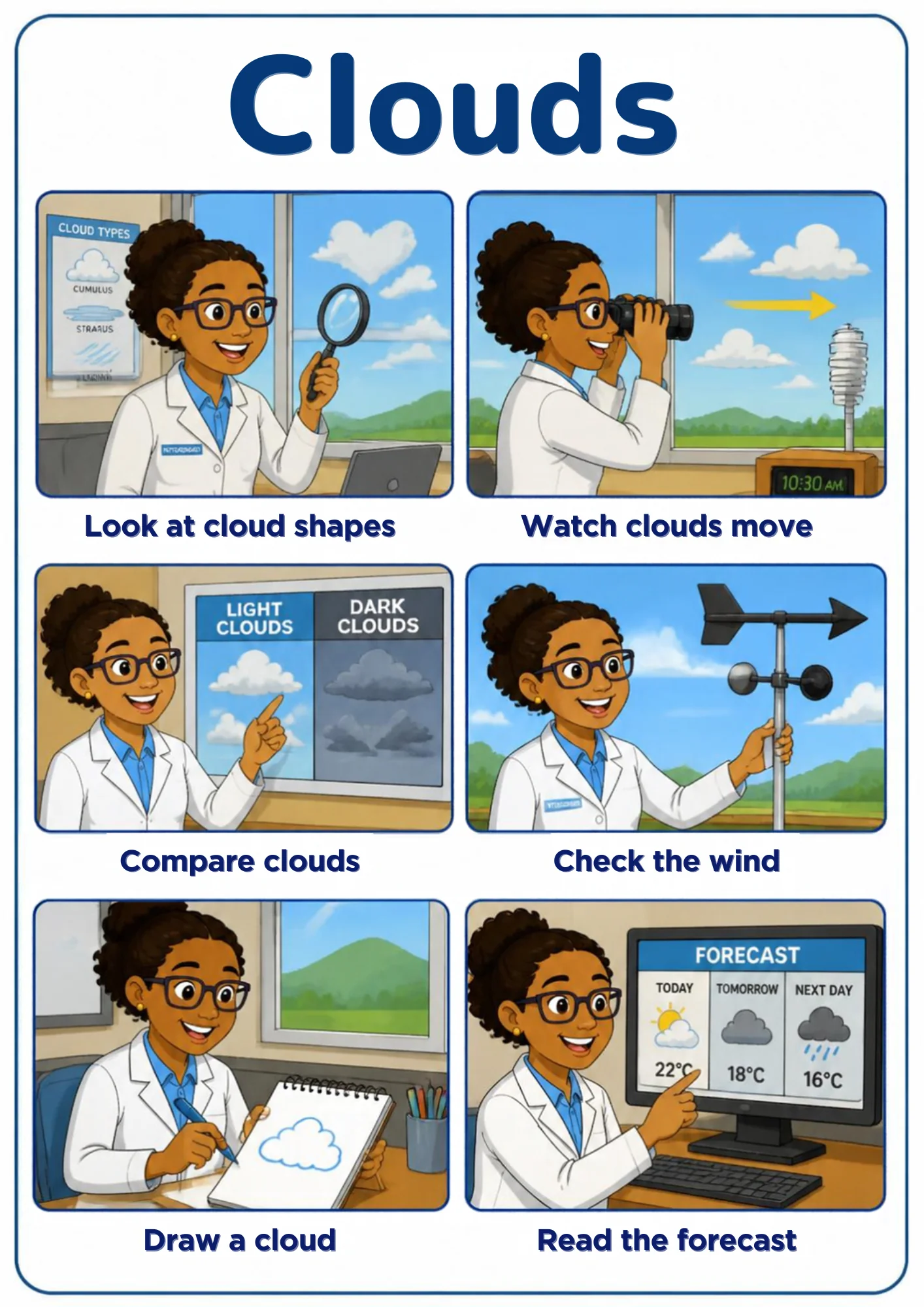
What is this?
Clouds are collections of tiny water drops floating high in the air — so light they drift, so many they shade whole cities. They are not smoke or candyfloss; they are water you can see from far away.
What does it mean?
Every cloud is a weather flag. White, fluffy clouds usually travel with a fine day. Grey, heavy-looking clouds are carrying more water — often rain on the way. Watching clouds move and change is reading the sky’s own news.
What does the child need to know?
Your child needs three cloud ideas: clouds are made of tiny water drops; white puffy clouds usually mean a nice day while grey heavy ones hint at rain; and clouds drift and change shape because the wind pushes them along.
Why this matters
Clouds are the perfect first forecast tool — visible, free, changing daily. Reading them builds comparison vocabulary (light/dark, big/small, high/low) and the scientist’s habit of gathering clues before announcing a conclusion.
What it teaches
Observation and comparison, early prediction ("grey cloud, maybe rain"), shape-naming and imagination through cloud figures, weather vocabulary, and patient watching — a full minute of quiet sky-watching is a real attention win at this age.
Words to learn
cloudfluffygreydrizzlefloatskywindrain cloud
Say this to your child
“"Clouds are tiny drops of water floating high in the sky. White fluffy clouds usually mean a lovely day. When the clouds turn grey and heavy, they might be full of rain. We can read the clouds like a book!"”
Step by step
- Show the card: "Clouds are made of lots and lots of tiny drops of water, floating high above us."
- Read the picture: the meteorologist looks at cloud shapes through a magnifying glass, watches clouds move, compares light clouds with dark clouds on a chart, checks a weather vane, draws a cloud and reads the forecast on a screen.
- Do the light-versus-dark test on the real sky today: find a white cloud and a grey cloud. Which one might be carrying rain?
- Watch one cloud move for a slow count of ten — it shifts. Something invisible is pushing it: the wind.
- Start a cloud diary: each morning, one quick drawing of today’s clouds. After a week, look back and find the rainiest-looking page.
Look closer at the picture
On this card a meteorologist in a white lab coat works beside a big window: she studies cloud shapes through a magnifying glass beside a cloud-types poster, looks through binoculars, points at a chart comparing light clouds with dark clouds, holds a weather vane, sketches a cloud in a notepad and points at a forecast screen showing three days — partly sunny, cloudy, rainy.
Ask your child
"What are clouds made of?" "Which cloud looks like it carries rain?" "Can you see the clouds moving?" "What shape does that cloud look like to you?"
What your child can say or do
Your child might say: "Clouds are tiny drops of water," "That grey cloud might drop rain!" or proudly report a cloud shape: "That one is a dinosaur — now it is a boat!"
Out in the real world
Check the sky before dressing each morning and let the clouds help pick the coat. At the bus stop, find the fastest-moving cloud. Airport days and tall buildings give cloud-level views that make the floating obvious.
Try it together
Cloud charades: lie back and take turns "being" a cloud shape for the other to guess. Then the rain-cloud game — start as a small white puff, grow bigger and greyer as your child piles on cushions, and end with a gentle finger-rain drizzle all over the carpet.
Understanding check
Ask: "What are clouds made of? Which clouds might bring rain? What pushes the clouds along?" Drops, the grey ones, the wind — three answers, one little forecaster born.
Parent tips
Resist the urge to make cloud-watching a quiz — the magic is in the lying-back and the noticing. If your child invents cloud animals, join in happily; imagination is the doorway through which observation walks. Keep the diary drawings tiny — ten seconds each.
Staying safe
Pick cloud-watching spots away from roads and water. On bright days, shade or a hat first — nobody should squint upward into glare. And if the sky turns properly dark and rumbling, that is a cloud lesson for another day: inside we go.
This lesson pairs with the Clouds flashcard in the library — print it, show it, keep it on the fridge. Back to Weather, Seasons & What We Wear (Class 34).