
Warm Weather — a step-by-step lesson for grown-up and child
This lesson names the season children love best: the comfortable middle between cool and hot. What warm weather changes — clothes, windows, routines — and the simple habits (water bottle handy, hat for bright hours) that keep the golden days easy.
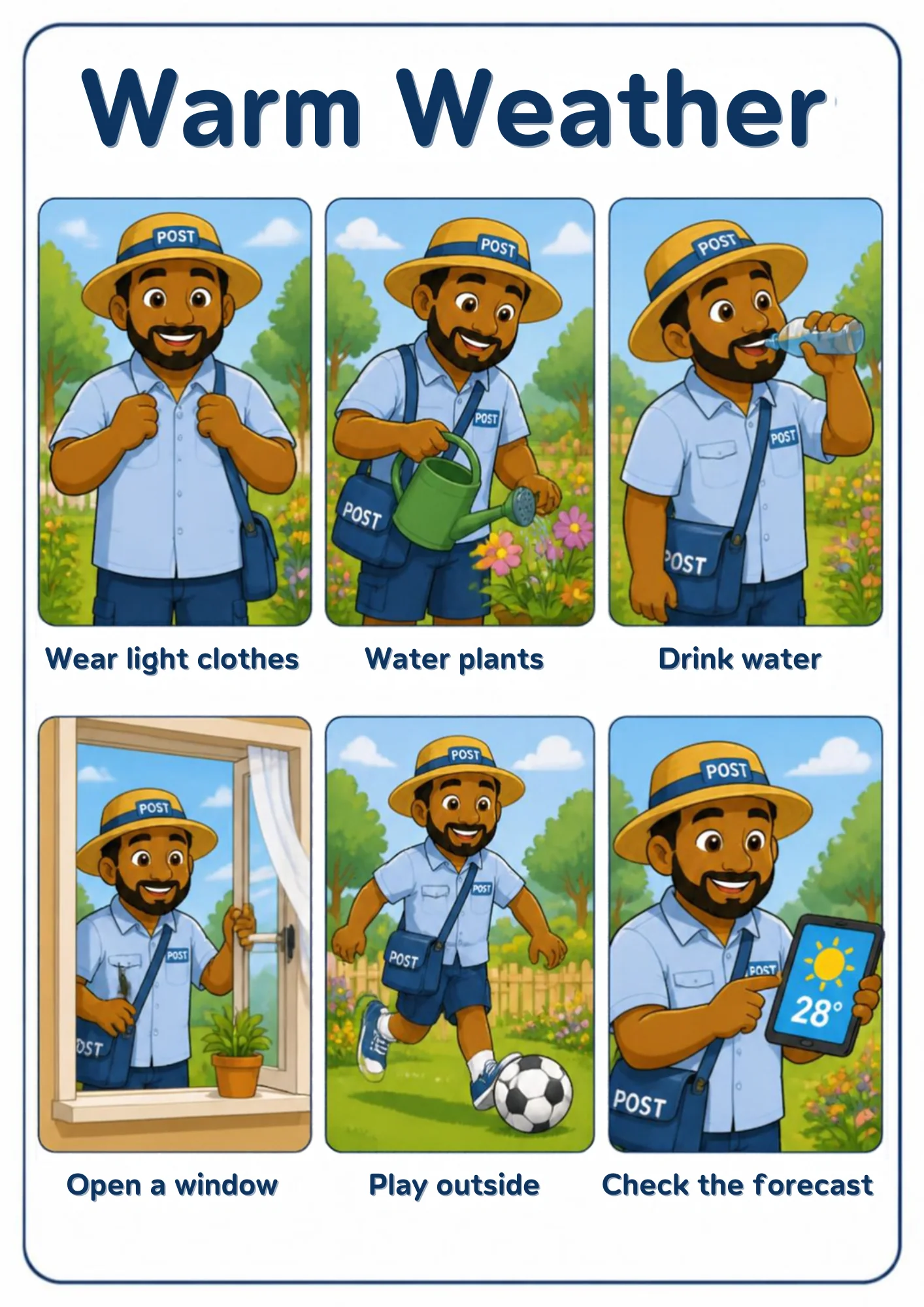
What is this?
Warm weather is comfortable mild heat: warmer than cool days, gentler than hot ones. Shirtsleeve and shorts weather, when windows stay open, play moves outdoors and nothing about going outside needs negotiating.
What does it mean?
Warm weather changes whole households: heavier clothes go away, blankets thin out, windows open for fresh air, plants drink more, and the garden becomes the family’s best room. It is the easiest weather to be out in — which is exactly why the small habits still matter.
What does the child need to know?
Your child needs three warm-weather ideas: warm days ask for light clothes; houses get fresh air with open windows — feet stay on the floor near low ones; and the water bottle comes to every game, because warm-air play still drinks the body dry, just slowly.
Why this matters
Warm weather is where weather routines become automatic — the training ground between the drama of hot and cold. A child who keeps the bottle-and-hat habits through the easy season owns them by the time the difficult seasons test them.
What it teaches
Seasonal sorting (what changes when warmth arrives), self-dressing in lighter layers, fresh-air awareness, steady hydration habits, and the observational joy of comparing the same room, the same walk, across two seasons.
Words to learn
warmmildlight clothesfresh airopen windowgardengentleseason
Say this to your child
“"Warm weather means it is easy to be outside — we wear our light clothes, we open the windows for fresh air, we water the flowers in the evening, and we keep our water bottle close while we play, because even easy weather makes us thirsty."”
Step by step
- Show the card: "Warm weather is the comfortable middle — not too hot, not too cold, just right for playing."
- Read the picture: the postman in a straw hat and light blue shirt waters pink and yellow flowers with a green can, drinks from his water bottle, opens a window from inside, kicks a football across the lawn, and points at a sunny forecast reading 28 degrees.
- Do the wardrobe switch together: which clothes are warm-weather clothes? Let your child sort the drawer — shorts here, jumpers there.
- Open the day like the card: window open, air in, plant watered. Feet on the floor by low windows — fresh air yes, climbing no.
- Anchor the bottle: warm-weather play still needs water. Bottle lives where the game lives, and refills are cheered.
Look closer at the picture
On this card a postman in a straw hat with a navy band, a light-blue short-sleeve shirt and navy shorts stands in a sunny garden: he adjusts his collar, waters pink and yellow flowers with a green watering can, drinks from a water bottle, opens a window beside a potted plant on the sill, runs kicking a black-and-white football across the grass, and points at a tablet showing a sun icon and 28 degrees.
Ask your child
"What do we wear in warm weather?" "What do we open to let fresh air in?" "What does the garden need more of in warm days?" "What stays with us at every game?"
What your child can say or do
Your child might say: "Warm day — shorts day!" "Window open, fresh air coming," or the gardener’s news: "I watered the flowers and the football match continued."
Out in the real world
Track the season’s changes on your own street: lighter clothes on the washing line, open windows up the road, the ice-cream van’s return, longer evenings. Compare photographs of the same walk in winter and in warmth — the trees, the clothes, the light, all different.
Try it together
Warm-evening games: the lawn becomes the stadium — football, skipping, chalk hopscotch, all in golden light. Flower-crew: your child owns the evening watering round with a small can. Window-report: each morning, is today a light-clothes day? The child who reports the season runs the season.
Understanding check
Ask: "What do we wear in warm weather? What do we open for fresh air? What comes to every game?" Light clothes, windows, the water bottle — the easy season is now fully managed.
Parent tips
Warm days whisper rather than shout — keep the routines quietly alive: bottle filled, hat for the bright hours, window safety said once and held. And bank the ease: the child who self-manages water and hats in warm weather will re-learn the winter kit twice as fast.
Staying safe
Warm-day rules: water bottle within reach of every game; hat and shade for the brightest midday hours even when the air feels gentle; feet on the floor near open low windows — fresh air, no leaning; and evening watering with a watchful eye so the can waters flowers, not puddles indoors.
This lesson pairs with the Warm Weather flashcard in the library — print it, show it, keep it on the fridge. Back to Weather, Seasons & What We Wear (Class 34).