
Stand a ruler beside the plant with zero at the soil surface. Read the height at the highest point without pulling or stretching the plant. Use the same method each time. A grown-up can help you subtract an earlier height from a later height.
With a grown-up: use untreated planting beans; do not eat seeds or sprouts. Keep small seeds away from younger children. Wash hands after handling. An adult should discard any mouldy setup.
Read the complete activity guide ↗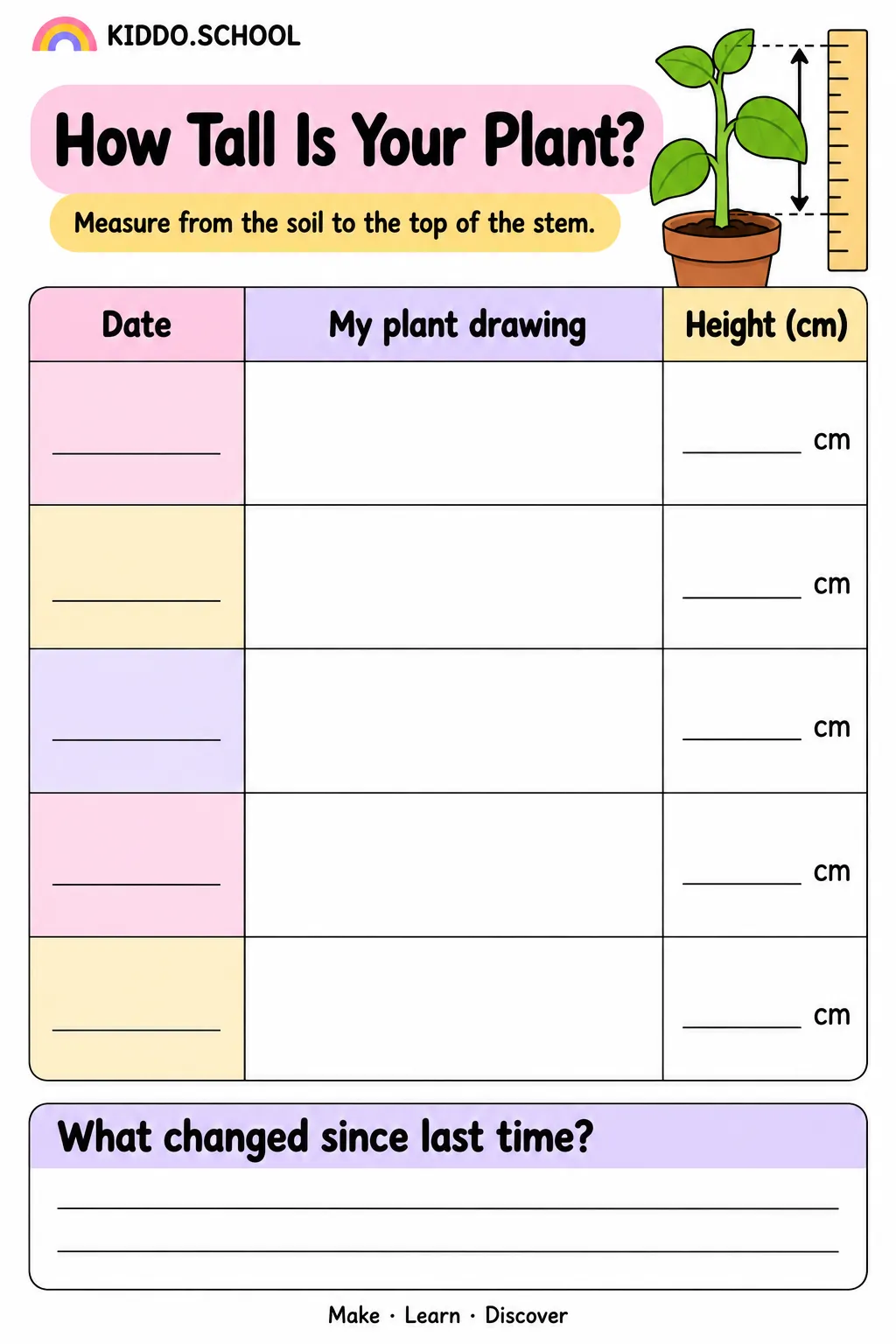
Explore before you start.
A fair comparison uses the same unit and starting point. Plants may grow at different rates, and small differences can also come from how we measure.
Look at the picture, talk about what you notice, then use the drawing and writing spaces below. Open the picture for a closer look.
Choose one method
Keep the ruler upright, with zero at the soil surface. Measure to the same part of the plant each time without stretching it.
Compare two records
Subtract an earlier height from a later height to find the change. If your plant was 4 cm and is now 6 cm, the difference is 2 cm.
A surprising result
A drooping leaf or a tilted ruler can change a reading. Check your method before deciding that the plant became shorter.
Use a finger, stylus or mouse in each drawing box. Type below it, or ask a grown-up to write your words. Your work stays in this tab. Save before refreshing or leaving.
Measurement one
Measure from the soil surface to the highest point of your plant.
Measurement two
Measure again another day, using the same starting point and centimetres.
Measurement three
Compare your latest measurement with your earlier records.
Your ideas belong here. There is no score.
What are we learning?
A fair comparison uses the same unit and starting point. Plants may grow at different rates, and small differences can also come from how we measure.
Prefer a worksheet?
Open the individual cartoon activity sheet to print or save. Use portrait orientation and fit to page.
Open worksheet to save ↓Try another little investigation.
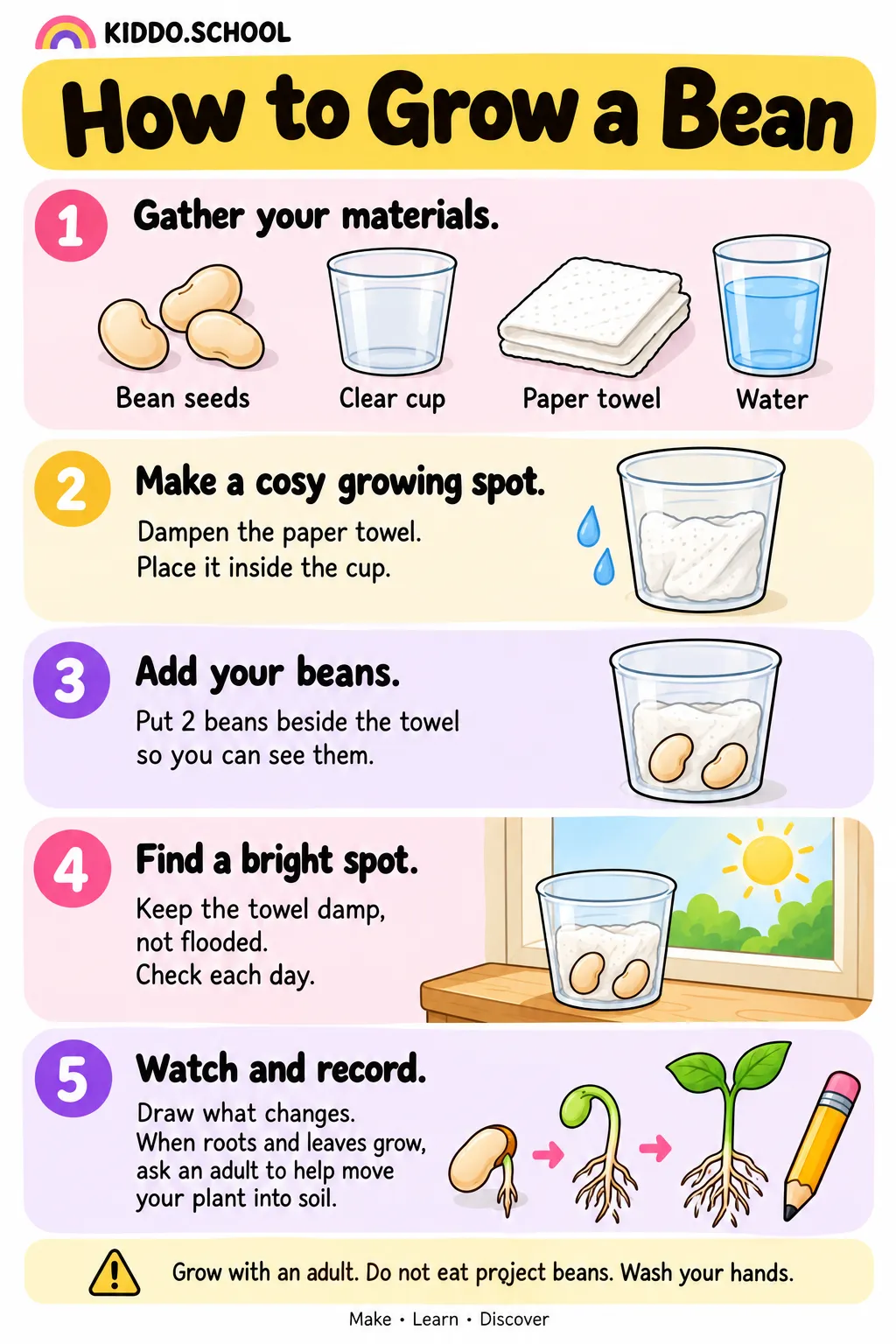 01How to Grow a Bean
Set up a tiny science project with a grown-up. Make a prediction, then check your bean each day.
Draw · Type · Save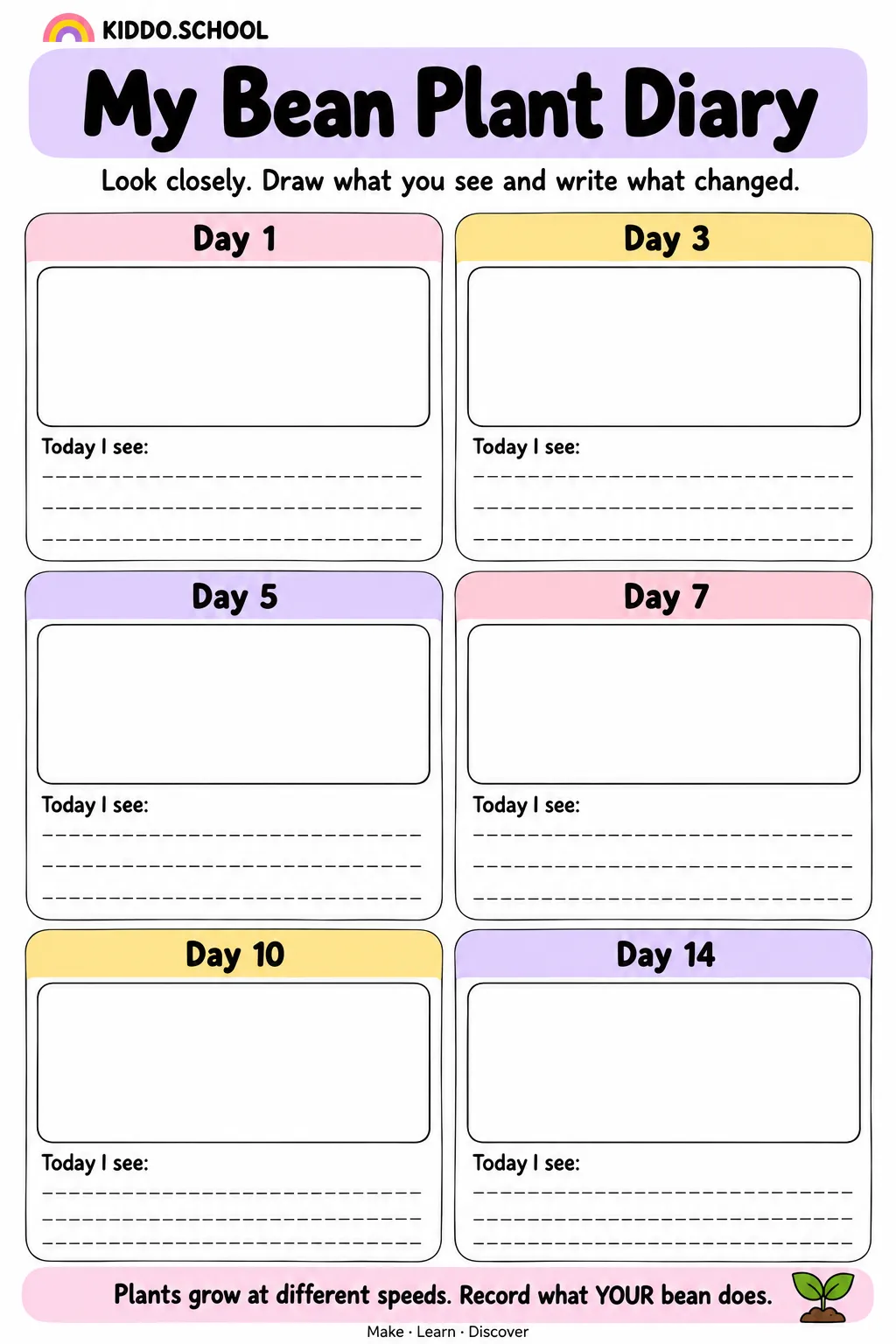 02My Plant Diary
Look at the same bean over several days. Record what you actually see—even if nothing has changed yet.
Draw · Type · Save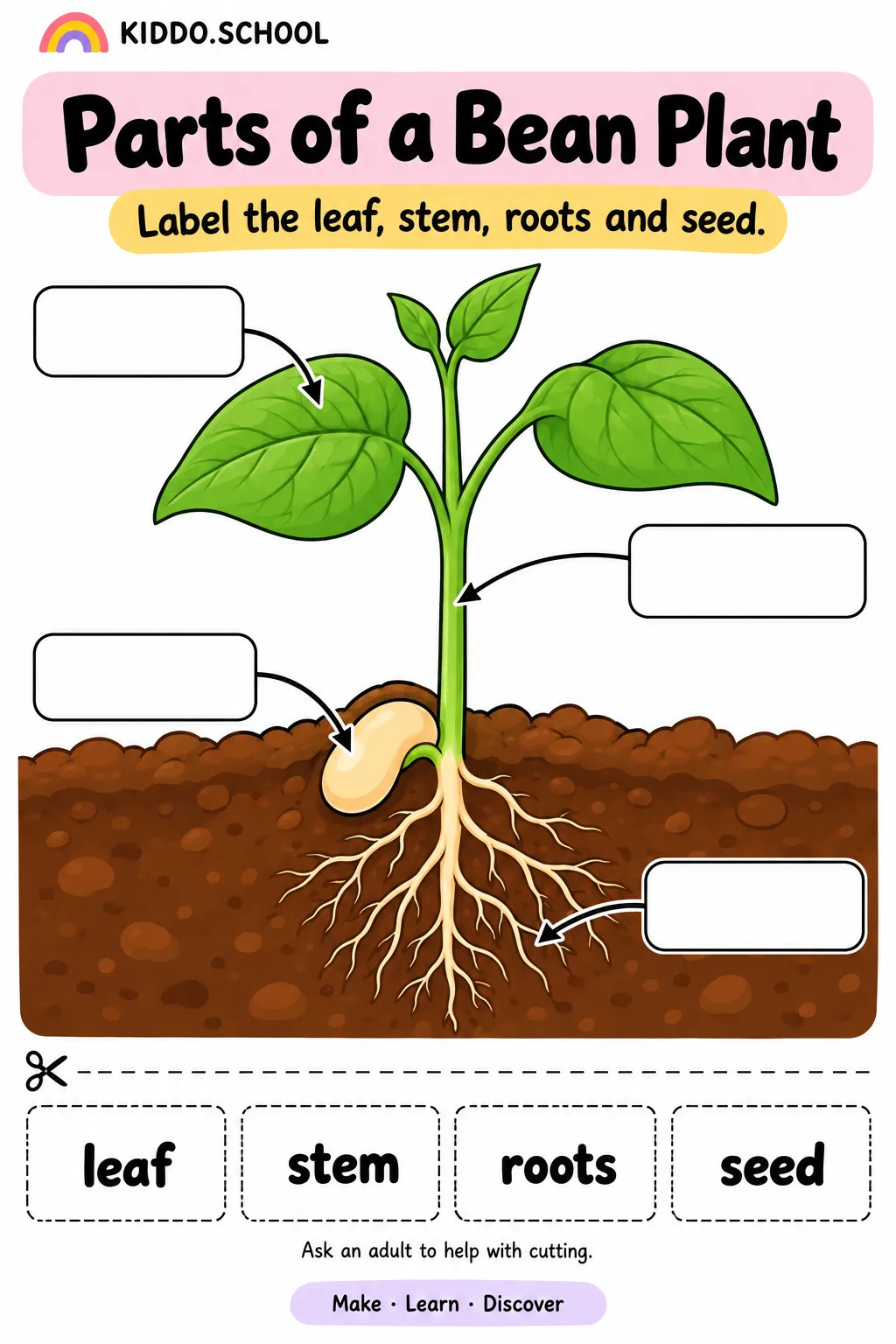 03Parts of My Plant
Look for a seed, root, stem and leaf. Draw each part, name it and describe what it does.
Draw · Type · Save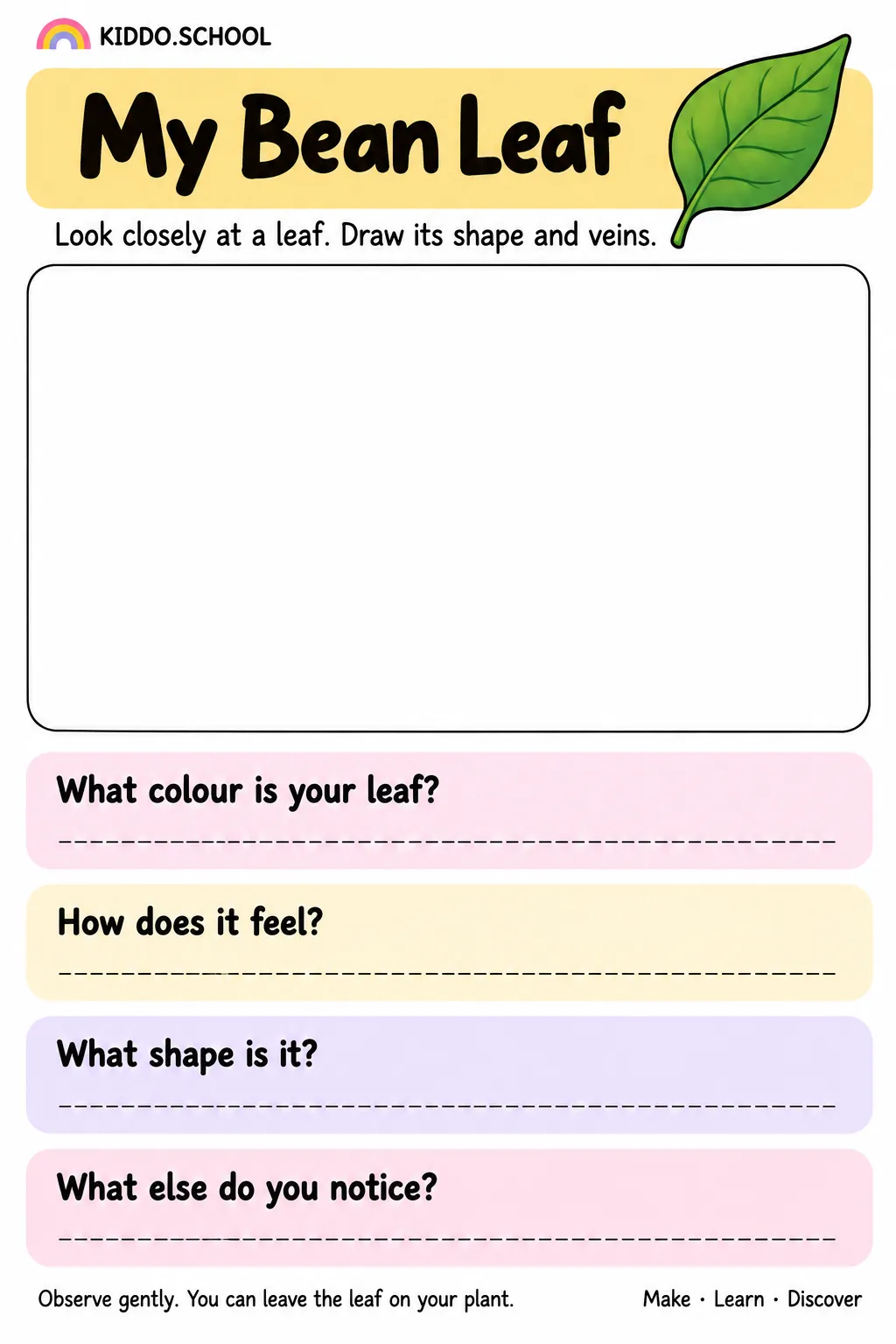 04My Bean Leaf
Become a leaf detective. Look gently and leave the leaf attached to the plant.
Draw · Type · Save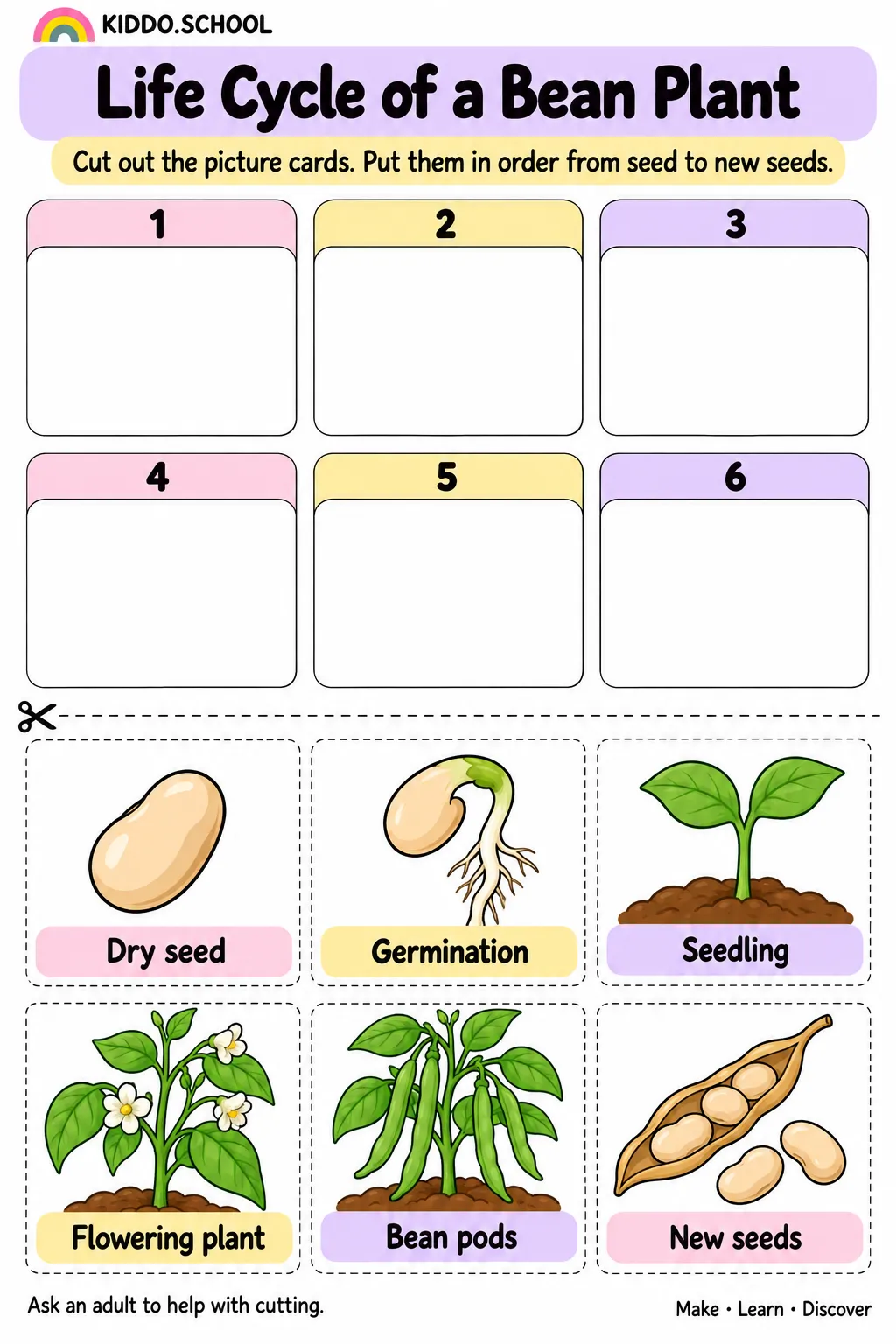 05Life Cycle of a Bean Plant
Follow a bean from seed to new seeds. Use the picture cards, then explain the changes in your own words.
Draw · Type · Save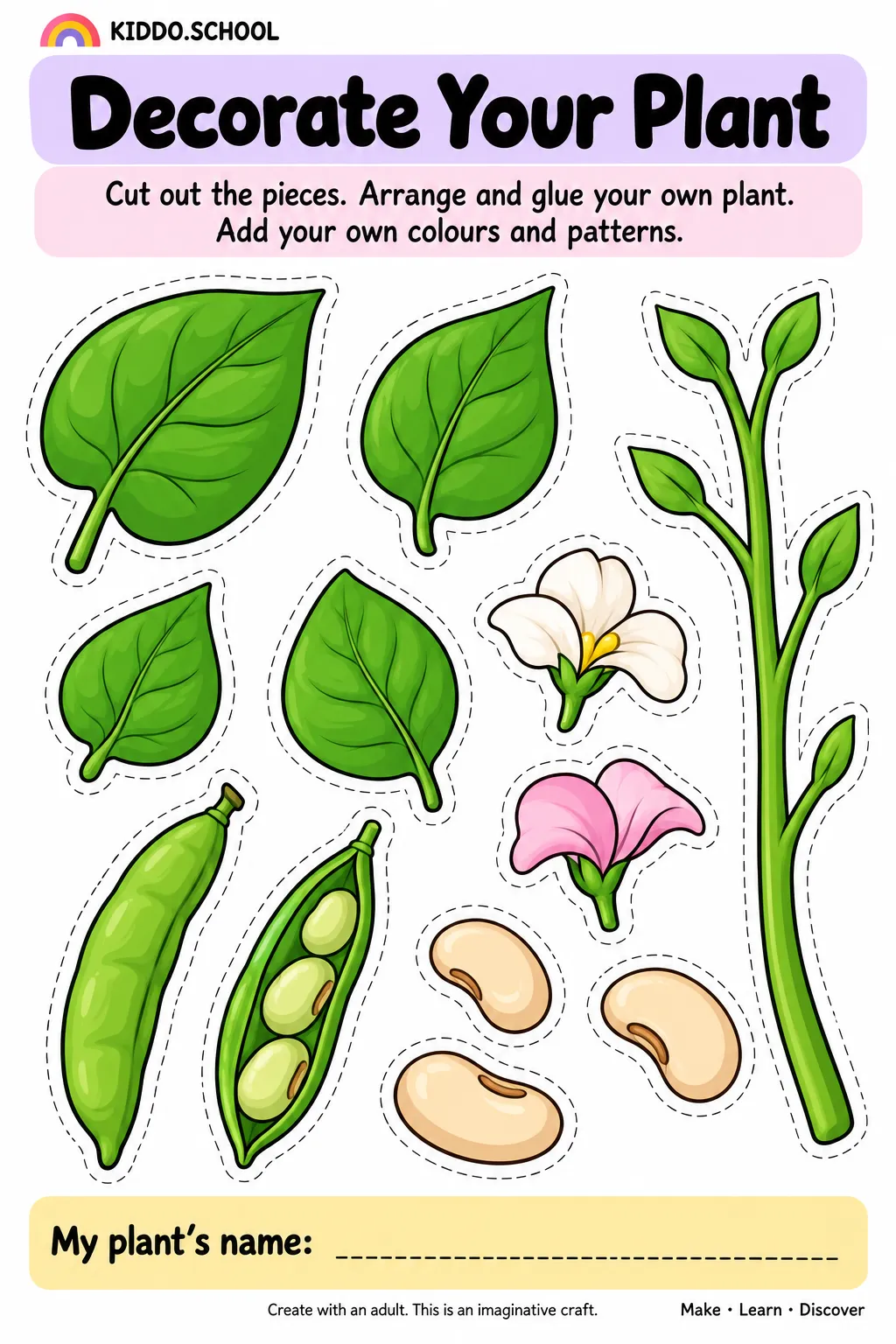 06Decorate Your Plant
Design an imaginary plant with leaves, flowers, pods and seeds. Draw on screen or use the printable cutouts.
Draw · Type · Save