
Orange — a step-by-step lesson for grown-up and child
The orange card carries a quiet double: a fruit and a colour sharing one name. This lesson keeps it simple — peel, smell, name — and lets the double meaning sort itself out later.
What is this?
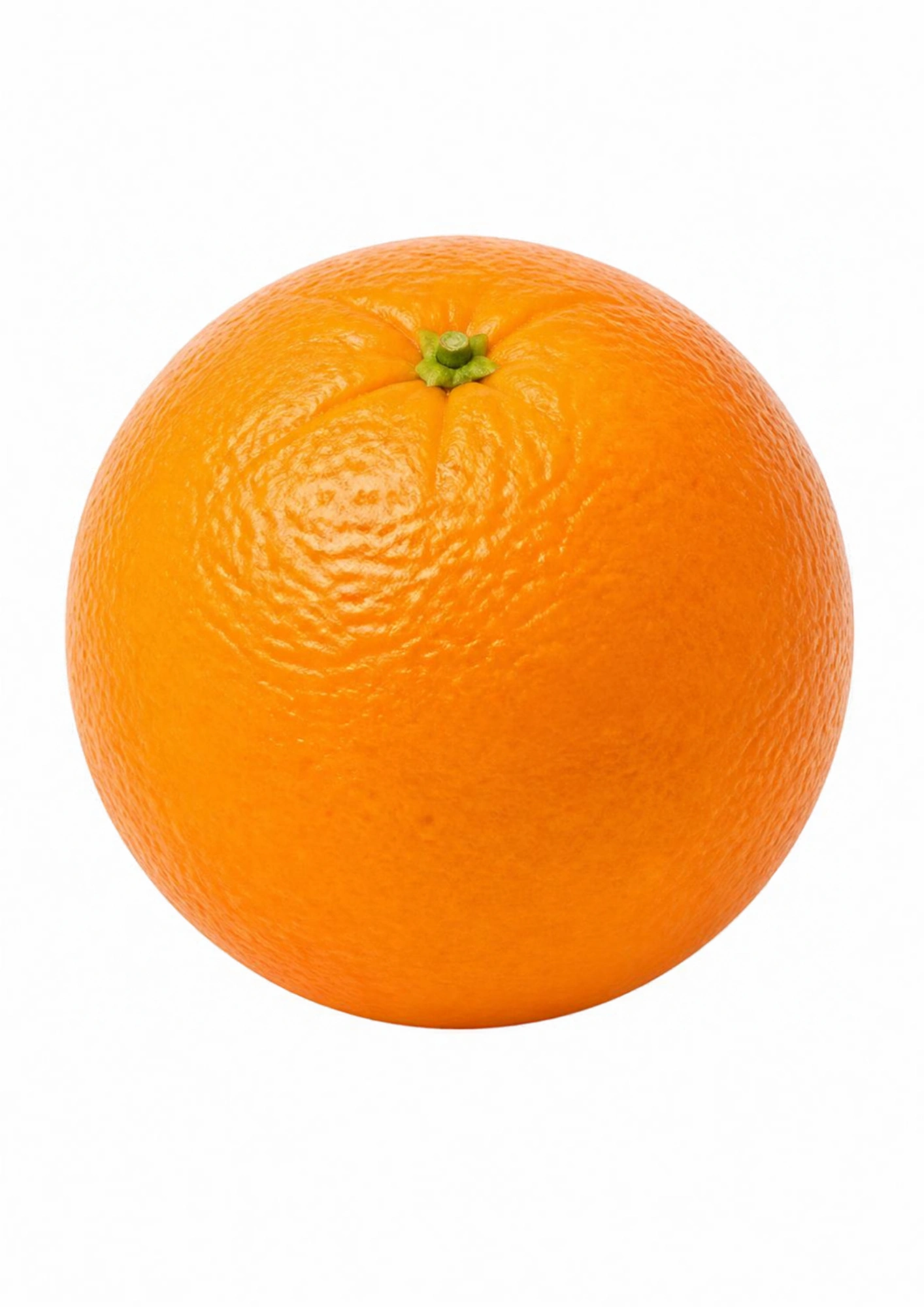
An orange is a round citrus fruit with a thick peel and a smell that fills the room when it opens. The card shows a bright orange; the word names the fruit and, handily, the colour — two ideas riding on one name.
What does it mean?
Toddlers do not need the fruit-colour split explained; hearing "orange" for both quietly builds two folders under one label, and the folders separate on their own later. Meanwhile the smell gives the word a second sense to anchor to.
What does the child need to know?
Peel the real orange at the table and say the word into the released smell: "orange". Smell plus sight plus taste makes a three-sense word, and three-sense words are the stickiest kind. Skip the explanation of the double name entirely.
Why this matters
Multi-sensory words — seen, smelled, tasted — collect more memory hooks than any flashcard can offer on its own. The orange is the set’s best example: the peel’s tear, the citrus smell and the bright round fruit all point at the same name.
What it teaches
Multi-sensory vocabulary, smell as a learning channel, the fruit-colour overlap left to sort itself, and naming through everyday kitchen routines.
Words to learn
orangepeelsmellroundjuicypieces
Say this to your child
“"Orange! A big round orange. Peel, peel — hear it open? Smell that — mmm, orange. Here is a piece, juicy and sweet. Orange for eating today — and orange is a colour too, but mostly orange is for yum."”
Step by step
- Show the card with the real orange beside it: "Orange. Here is an orange."
- Start the peel and pause at the first scent — say the word into the smell: "Orange. Mmm, smell that."
- Hold the fruit near — not under — your toddler’s nose and let them breathe it in; some lean in, some wrinkle their nose, and both are data.
- Hand over a piece and name it once more: "Orange. Yum." Then let the eating happen; the word has already landed three times.
- Finish by offering the empty peel for a last sniff — the ending of the ceremony is part of the ceremony.
Look closer at the picture
The artwork is a bright, round orange, plain on the card. Say that much, then bring the real fruit forward — the card cannot send the smell across the table, and the smell does half the teaching.
Ask your child
Watch the sniff: does your toddler lean in or pull back, and does the word get tried at the smell or the taste? Wonder aloud: "I wonder which sense is doing the heavy lifting for you."
What your child can say or do
A leaned-in sniff and a delighted "mmm", the word attempted at the peel — "oh-oh" is a fine start — the card orange tapped against the real one, or "orange" said at the fruit bowl a day later, out of nowhere, on purpose.
Out in the real world
Oranges appear all winter: the bowl, the segments at snack, the shop displays, the smell of one opened in another room. The nose finds them first — and the word follows the nose.
Try it together
Smell test: line up an orange, a banana and a bread roll, sniff each in turn and name it. A three-item smell-and-name is a complete sensory game, and the orange wins it on drama every time.
Understanding check
Parent self-check: did the word ride the smell at least once, and did you resist explaining the double name? Simple naming now, sorting later — the order matters.
Parent tips
If the peel frustrates your toddler, start the tear and hand it over — shared ceremonies stay fun. The colour meaning needs nothing from you at all; saying "orange" at the fruit and at an orange toy does the whole job quietly.
Staying safe
Peel fully — pith and skin are chewy and bitter — and cut rounds into pieces for new chewers. Stay close through citrus snacks, and keep the card clear of the juice: paper and orange part badly.
This lesson pairs with the Orange flashcard in the library — print it, show it, keep it on the fridge. Back to First Words: Food & Home (Toddler 1).