
Spoon — a step-by-step lesson for grown-up and child
Spoon has been on the team since the first solids, and by now your toddler wields it with something between skill and weather. This card names the tool and turns finding it into the game.
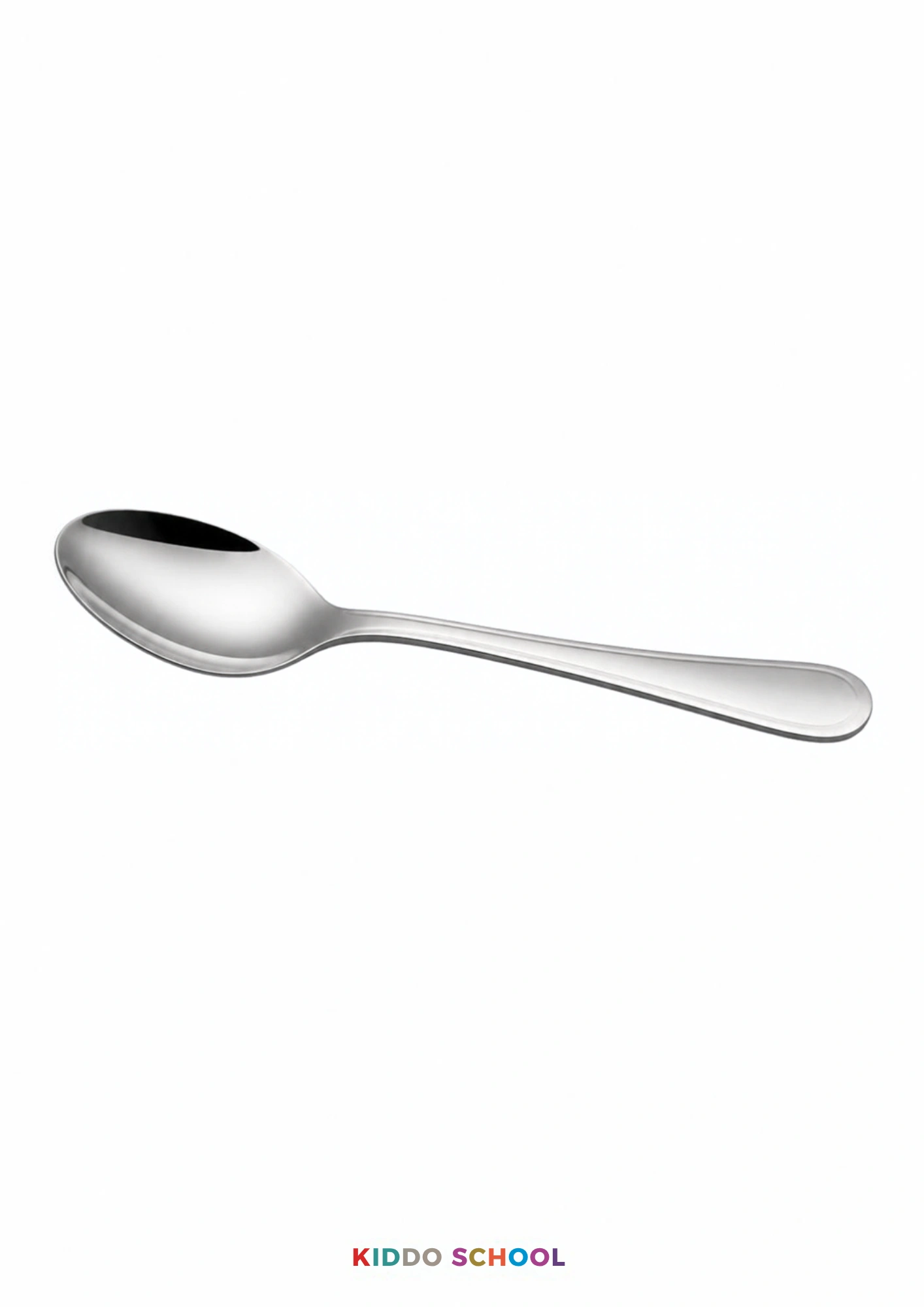
What is this?
A spoon is the scooping tool of every meal — held, banged, loaded, inverted. The card shows a trusty spoon; the drawer supplies dozens. At 12–18 months the spoon is also a project: your toddler is learning to get food to mouth with one.
What does it mean?
The spoon card doubles as a find-it game: say the word, let your toddler’s eyes and feet hunt for the real one, and the finding completes the loop. Finding a named thing is comprehension made visible — the word went in, the object came out.
What does the child need to know?
Run the hunt gently: say "spoon", open the drawer cupboard together, and let the discovery be theirs. Name it at the find — "Spoon! You found it" — and again at the giving. Two landings, no quiz.
Why this matters
Hunt games turn vocabulary into little quests, made for the busiest bodies in the house. Each found spoon is proof that words point at real things, which is the whole deal language offers — signed and delivered.
What it teaches
Comprehension through finding, object permanence out in the open, spoon skill (scooping, wrist rotation), and mealtime vocabulary that carries real wants.
Words to learn
spoonscoopfindmoretapdip
Say this to your child
“"Spoon! A trusty spoon. Scoop, lift, in it goes. Now, where would a spoon hide — in the drawer! There it is. You found the spoon. Here is your spoon for dinner: scoop, scoop, yum. The spoon works, and so do you."”
Step by step
- Show the card at a calm moment: "Spoon. This is a spoon — you eat with it."
- Mime the scoop in the air: scoop, lift, to the mouth — the action picture your toddler is already studying at every meal.
- Say "spoon" and hunt the kitchen drawer together; let your toddler find the real one and name it at the find: "Spoon! You found it."
- Hand the spoon over at the next meal and name the giving: "Your spoon." Then let the practice happen in peace.
- Keep one spoon in the toy box for scooping and dumping games between meals — the word gets off-duty rehearsals too.
Look closer at the picture
The artwork is a spoon, drawn plain and trusty — one tool, no clutter. Name it, then watch the live version: the grip, the upside-down loading, the determined stabs. The card shows the tool, your toddler the work-in-progress.
Ask your child
Watch the hunt: does the search start before you finish the word, does the right drawer get opened? Wonder aloud: "I wonder how many spoons you think the world holds."
What your child can say or do
A dash to the drawer at the word, the real spoon presented with a "doo!" of triumph, the spoon banged on a pot lid as drum practice, or a first loaded scoop delivered all the way to the mouth — skill and word, both under construction.
Out in the real world
Spoons live all over: the drawer, the bowl, the toy kitchen, the pot-lid drum kit. Every sighting takes one word, and the meal itself is the word’s daily dress rehearsal.
Try it together
Scoop station: a bowl of dry oats, two spoons and two cups. Scooping, dumping, refilling — the spoon word rides on a game your toddler would play anyway.
Understanding check
Parent self-check: did one find-it hunt happen this week, and did the mealtime practice stay uninterrupted? The game teaches the word; the peace teaches the skill.
Parent tips
Let the messy self-feeding run — the spoon years are sloppy on purpose, and hovering corrections sour both dinner and the word. Name the tool at handovers, not on a loop; the spoon does the talking.
Staying safe
Choose spoons with soft tips for gums, skip sharp-edged serving spoons, and stay close while your toddler practises standing up with one. The card stays out of the porridge — paper does not survive the breakfast shift.
This lesson pairs with the Spoon flashcard in the library — print it, show it, keep it on the fridge. Back to First Words: Food & Home (Toddler 1).