
Bird — a step-by-step lesson for grown-up and child
This lesson turns the deck’s everyday animal into an ears-open habit: listen, point, whisper "bird!" — a game with no table, no props and no end.
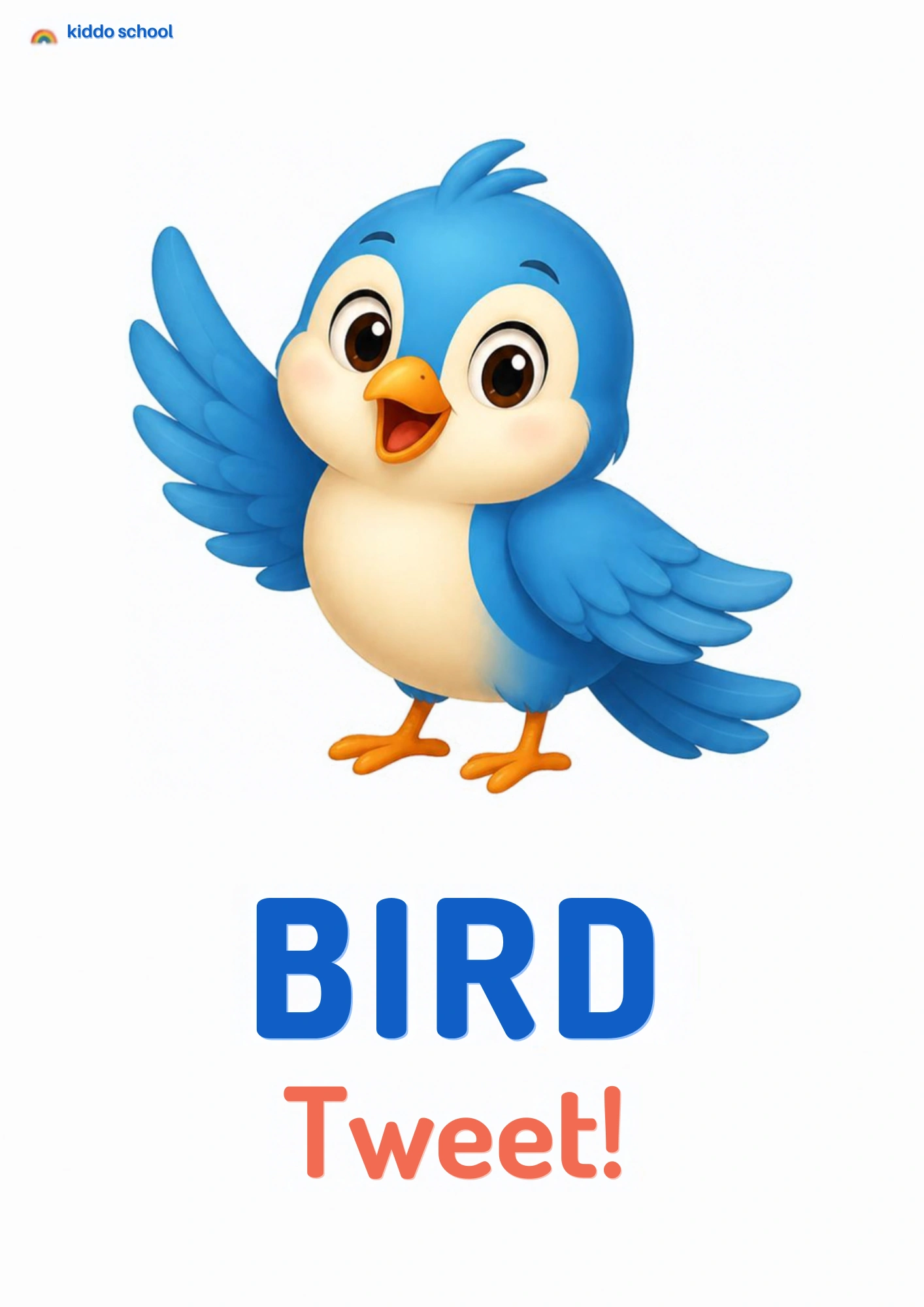
What is this?
A bird is a flying animal with wings that says tweet — and unlike the other cards, the sound usually arrives before the animal is ever seen.
What does it mean?
Listening for hidden birds is sound discrimination in the wild: locating a noise, matching it to a name. That hear-then-find chain is the foundation of all later listening skills.
What does the child need to know?
Birds vanish at the first shout, so the stealth trick is the lesson: hushed voices and slow feet are what bring birds closer. The stillness trick is a bonus skill for the grown-up too — patience, modelled out loud.
Why this matters
Birds are everywhere, every day, free of charge. This is the one animal card that keeps teaching after breakfast, after lunch and out of every window in town.
What it teaches
Listening and sound-locating, whisper-voice control, and the stillness habit — the first step of every nature watcher and every quiet game.
Words to learn
birdtweetlistenwingsquietsky
Say this to your child
“"Listen… tweet, tweet! A bird! Can you hear it? Whisper now — birds fly away from loud voices. Point at the bird. Tweet tweet — hello, bird!"”
Step by step
- Show the card and say bird, then tweet tweet with a finger beak pecking the air.
- Take up position at a window or open door and hold a shared silence for a few slow seconds — count them in your head so you outlast the wiggle.
- When a bird sings or hops past, point and whisper "bird!" — whispering keeps the birds and makes the game exciting.
- When your toddler spots a bird before you do, hand over the win completely: "you found the bird! Tweet tweet!" Their find beats any card.
- Make the window listen a daily habit this week — breakfast, noon, dusk — and keep the card on the sill as the reminder.
Look closer at the picture
The card shows a bird saying tweet. Find the bird, find the tweet, then ask where the bird’s wings are — wings are what make this card’s animal different from all the others.
Ask your child
"Where is the bird?" "What does the bird say?" "Can you hear a bird right now?" "Can you whisper like we do for birds?"
What your child can say or do
A pointing arm and a whispered "bir!" — the whisper is the triumph. Some toddlers freeze dramatically mid-step when a real bird lands; that freeze is the listening skill in action.
Out in the real world
Pigeons, gulls, sparrows and magpies are daily free lessons. Every street has birds; the game is simply remembering to stop and listen for the length of one slow breath.
Try it together
Bird-spotting walk: one street, five slow minutes, count the birds you find together on your fingers. One bird is a success. Point, whisper, move on — no chasing, ever.
Understanding check
Ask what the bird says. A tweet, a chirp or a pointing whisper passes. Then watch the window tomorrow — a toddler who stops and listens unprompted has taken the lesson outside.
Parent tips
Whisper is the whole atmosphere of this card, so keep your own voice low and the game lasts longer. A window-side card lives permanently after this week; birds never stop visiting.
Staying safe
We watch birds, we do not chase them — running at pigeons teaches the opposite of the game. Feeding is a grown-up job at the table, never from a toddler’s hand on the street.
This lesson pairs with the Bird flashcard in the library — print it, show it, keep it on the fridge. Back to Animals & Sounds (Toddler 5).