
Cat — a step-by-step lesson for grown-up and child
This lesson teaches the cat the toddler way: the meow comes first, the creep-and-pounce comes second, and the word cat sneaks in behind both.
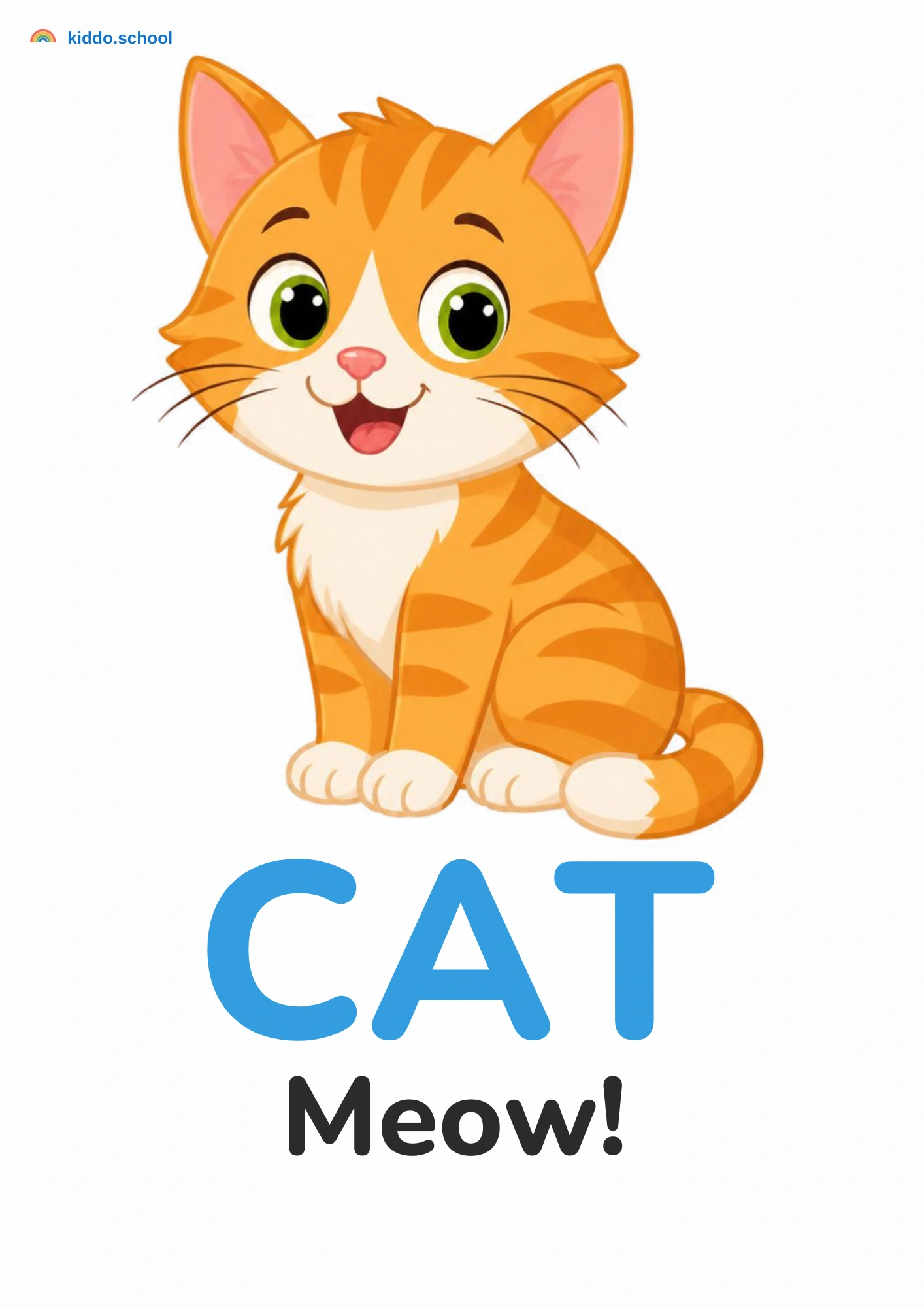
What is this?
A cat is a soft, whiskery animal that says meow — a sound with two easy parts, mee-ow, that a two-year-old can split and stitch back together.
What does it mean?
Meow is a two-syllable sound, which makes it quiet mouth-gymnastics: your toddler is learning to blend syllables long before anyone says the word blending.
What does the child need to know?
The meow is a naturally quiet sound, which is why the whisper version belongs in this lesson — dropping your volume keeps the game fresh and teaches that voices have settings.
Why this matters
Cats nap on windowsills and fence posts in most neighbourhoods, so the chance to use the word out in the world arrives almost daily. A word used daily is a word kept.
What it teaches
Sound imitation with syllable blending, volume control, and gentle-hand practice — the cat rewards soft voices and soft fingers alike.
Words to learn
catmeowwhiskerssoftkittenquiet
Say this to your child
“"A cat! The cat says meow. Can you say meow? Big meow… and now a whisper meow, like this. Cats creep on their soft feet — can you creep like a cat?"”
Step by step
- Show the card and say cat, then meow — the name once, the sound twice.
- Meow together at two volumes: a big meow, then a tiny whisper meow behind your hand. Let your toddler pick the volume next.
- Creep like a cat across the floor on hands and knees, then "wash" your face with a paw. Your toddler will copy before you finish.
- When your child answers with mee, ow, or just a grin and a creep, celebrate it — that is the sound being assembled in public.
- Keep the card by the window for the week and meow at any real cat you spot together; one cat a day keeps the word alive.
Look closer at the picture
The card shows a cat saying meow. Find the cat together, find the meow word, and ask whether your toddler wants the loud meow or the quiet one today.
Ask your child
"Where is the cat?" "What does the cat say?" "Can you do a tiny meow?" "Can you creep like a cat to the door?"
What your child can say or do
"Meow!" — sometimes aimed at the dog, which is fine and funny. Your toddler may whisper-meow with a hand over the mouth, or creep one knee forward and look back to check you are watching.
Out in the real world
Cats appear on walls, in gardens and at grandma’s house. Each sighting is a repetition: point, whisper "cat — meow", and move on before the cat does.
Try it together
Cat and mouse: you squeak and scurry, your toddler cats and creeps. Swap roles after two rounds — being the cat that catches is just as educational as being the mouse that escapes.
Understanding check
Ask what the cat says while covering the card. A meow in any volume or dialect passes. Then hand over a soft toy cat — if your toddler pats it gently, the gentle-hands half of the lesson landed too.
Parent tips
Whisper-meow is the secret weapon: it reboots a tired game instantly and pulls a wiggly toddler back from the edge of chaos. Keep cat play off the dinner table and the lesson stays welcome everywhere.
Staying safe
Only pet real cats when their owner says it is fine, and stroke the back, never the tail. A cat mid-dinner or mid-nap gets waved at, not touched.
This lesson pairs with the Cat flashcard in the library — print it, show it, keep it on the fridge. Back to Animals & Sounds (Toddler 5).