
Frog — a step-by-step lesson for grown-up and child
This lesson makes the frog impossible to teach sitting down: every ribbit comes with a jump, every jump comes with a count, and the pond rules ride along.
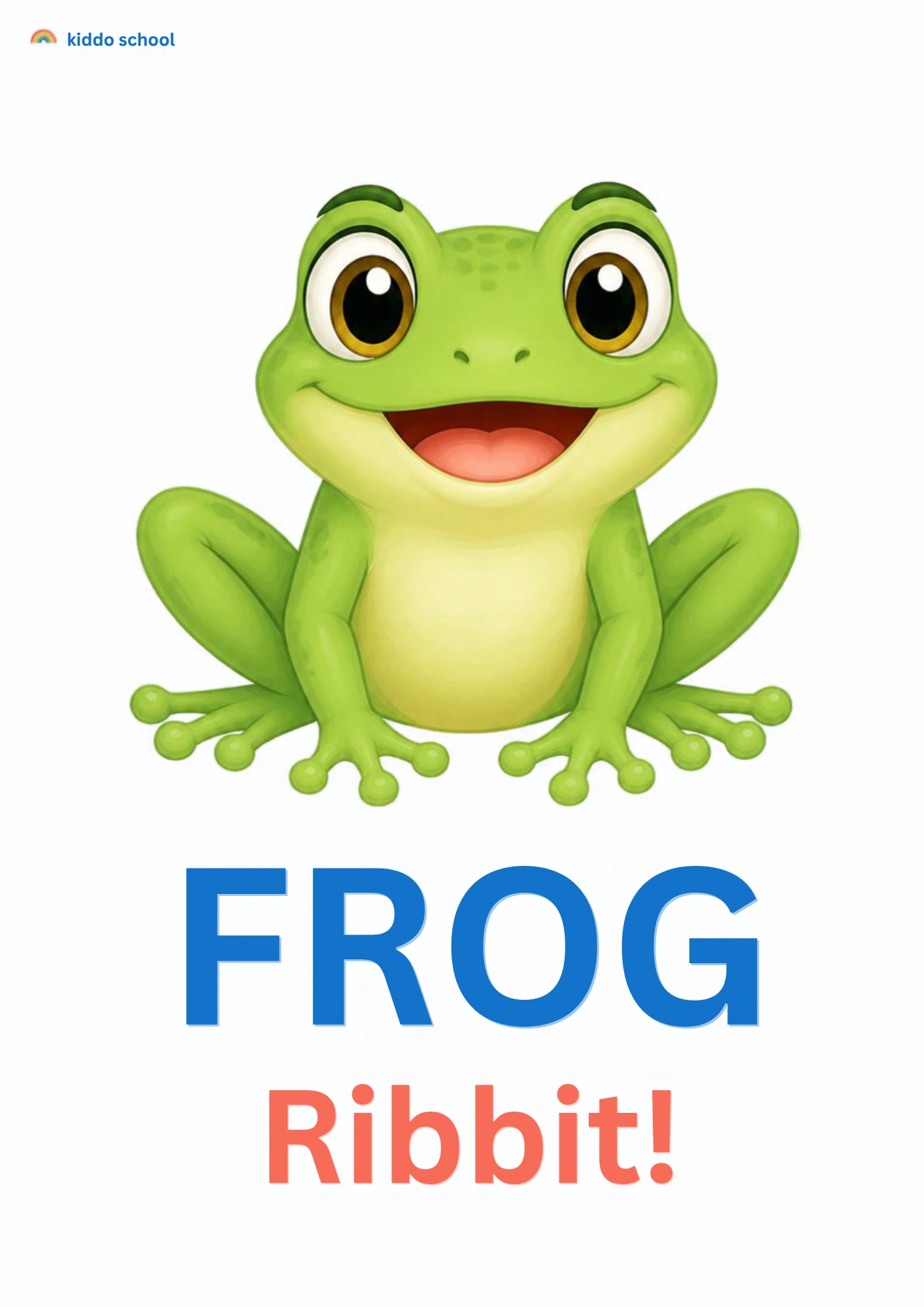
What is this?
A frog is a small green jumper that says ribbit — a bouncy sound that matches the legs, which is why the two are taught together here.
What does it mean?
Sound-plus-movement pairs stick harder than sound alone; the crouch-and-spring gives ribbit a body memory that outlasts the card.
What does the child need to know?
A real frog tends to sit perfectly still, which turns one into ideal pointing practice. Real frogs are look-and-leave creatures — hands stay in pockets when the real one appears.
Why this matters
The frog converts a language lesson into exercise on rainy days, and the sitting-still real frog teaches watching — a genuinely new skill at two.
What it teaches
Gross-motor imitation (crouch, spring, land), counting chances with every hop, and the watching-not-touching habit that all nature study reuses.
Words to learn
frogribbitjumppondgreenhop
Say this to your child
“"A frog! Ribbit! Can you jump like a frog? Crouch down low… and SPRING — ribbit! One more! Frogs sit very still by the pond and then — boing! — they are gone."”
Step by step
- Show the card and say frog, then ribbit — one sound, one little bounce in place.
- Crouch like a frog together, hands on the floor, then spring: one ribbit per jump.
- Hunt frogs: green toys, frog pages, bath frogs. Line them up and ribbit each in turn.
- When your toddler jumps without the sound or ribbits without the jump, supply the missing half yourself and cheer the half they brought.
- Set a daily hop count this week — five jumps, five ribbits — and let the number grow only when your toddler asks for more.
Look closer at the picture
The card shows a frog saying ribbit. Find the frog, find the ribbit, then ask what the frog is sitting on and where frogs live — the pond is the answer the card points to.
Ask your child
"Where is the frog?" "What does the frog say?" "Can you crouch like a frog?" "How many jumps can you do?"
What your child can say or do
A standing "ribbit!" followed by a vertical launch is the classic. Some toddlers ribbit every time they hop off a step for a fortnight — each one is a repetition.
Out in the real world
Pond edges, garden shady corners and picture books all hold frogs. At a real pond, crouch together, watch, whisper ribbit — and keep hands firmly pocketed.
Try it together
Lily-pad league: scatter cushions as lily pads and ribbit-jump from pad to pad across the rug. Missed pads are funny, landed pads get counted, and the whole game is over in four minutes — perfect.
Understanding check
Ask what the frog says and what frogs do. A ribbit plus a jump passes completely. Tomorrow’s first sofa dismount, if ribbitted, ends the assessment with full marks.
Parent tips
Count the hops out loud every time — numbers ride on movement at this age. Keep the game short; five jumps is genuinely enough, and wanting more tomorrow is the retention plan.
Staying safe
Real frogs stay where they sit: look, whisper, hands in pockets. Frog skin is delicate and human hands are far too warm and dry for it — watching is the kind version of loving frogs.
This lesson pairs with the Frog flashcard in the library — print it, show it, keep it on the fridge. Back to Animals & Sounds (Toddler 5).