
Horse — a step-by-step lesson for grown-up and child
This lesson makes the horse a bouncy ride: the trot, the reins, the giddy-up, with the neigh free to arrive as a trill, a whisper or a full theatrical whinny.
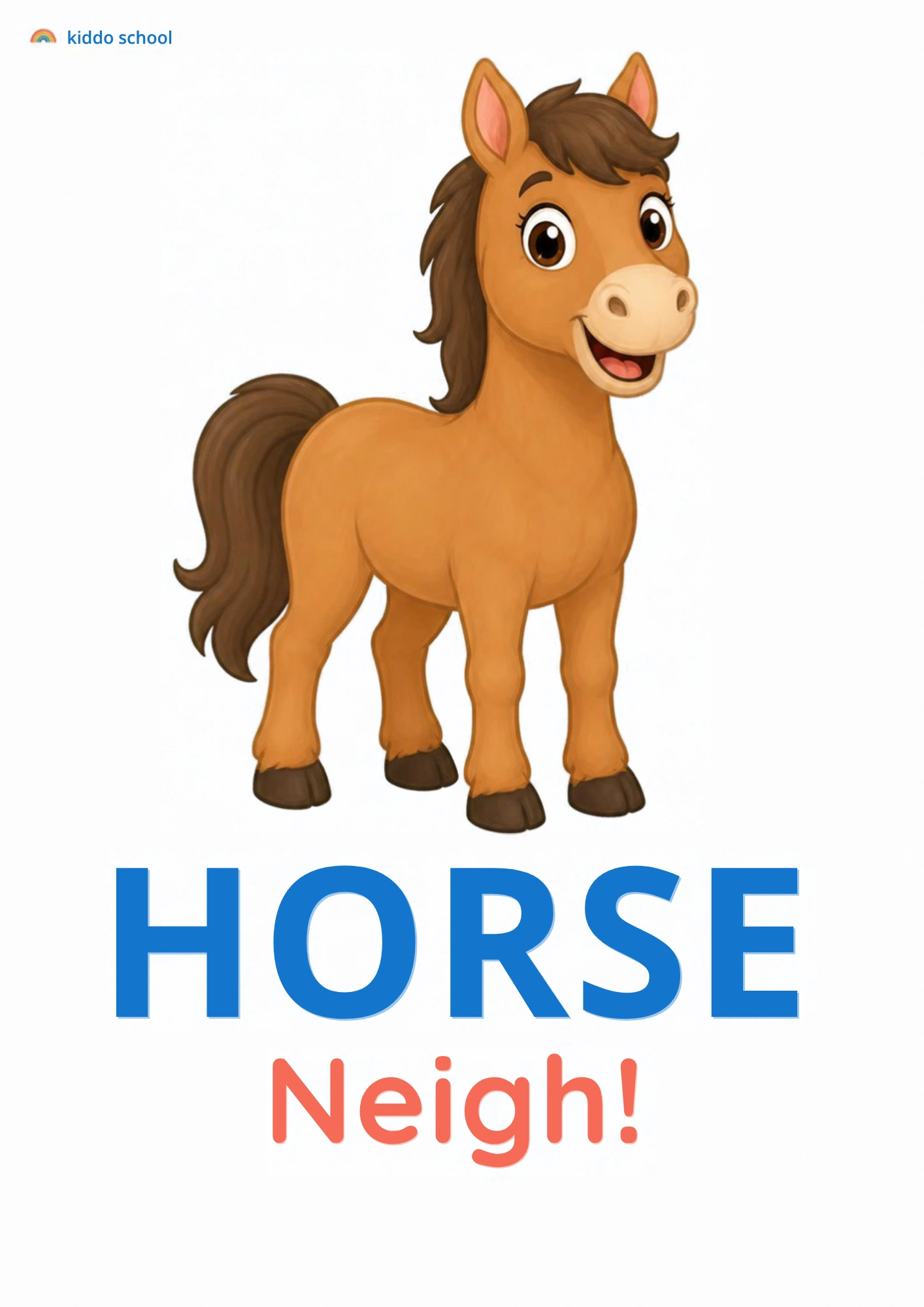
What is this?
A horse is a big animal with a long tail and a flowing mane that says neigh — a sound many toddlers make first as a wobbling lip trill.
What does it mean?
The lip trill is real progress: your toddler is experimenting with lips and breath the way the neigh actually works. Sound attempts do not have to be accurate to be valuable.
What does the child need to know?
A real horse towers over a toddler and moves suddenly, so the honest plan is admiring from a distance first. Over-the-fence viewing is plenty close for a first meeting.
Why this matters
The horse card bundles the biggest animal, the bounciest game and a sound that doubles as breath play — high value for one card.
What it teaches
Breath and lip control, big-movement imitation through trotting, and size language — bigger than me is the horse’s headline.
Words to learn
horseneighmanetrotgiddy-uptail
Say this to your child
“"Big horse! The horse says neigh. Can you try? Bounce, bounce — giddy-up! Hold your reins. The horse has a long tail and big hair called a mane."”
Step by step
- Show the card and say horse, then try the neigh — any version, trill included.
- Bounce in place on soft knees — a toddler-sized trot — one hand up as a rein, neighing at every bounce. Invite your toddler aboard as the rider.
- Hunt horses: rocking horses, hobby horses, horse pages in books — each find earns a bounce.
- When the neigh comes out as a raspberry or a giggle, trot it forward: "yes! That is the horse noise!" Attempt beats accuracy at two.
- Trot once a day this week — down the hallway, around the kitchen — and neigh from the window when a real horse or a delivery pony goes past.
Look closer at the picture
The card shows a horse saying neigh. Find the horse, find the neigh word, then ask where the horse’s big hair is — the mane is named on purpose here.
Ask your child
"Where is the horse?" "What does the horse say?" "Can you trot like a horse?" "Is the horse bigger than you or smaller?"
What your child can say or do
A lip trill, a neigh-ish whinny or a bouncing "giddy-up!" all count. Many toddlers skip the sound and deliver pure gallop — take the gallop and add the neigh yourself.
Out in the real world
Horses appear at paddocks, fairs and riding schools. Watch together from over the fence, name the mane and tail from a safe distance, and let the bigness do the impressing.
Try it together
Obstacle trot: cushions become jumps, the rug becomes the meadow, and the hallway is the racetrack. Trot the course together, neighing at each jump — big movement, big sound, nap-friendly tiredness.
Understanding check
Ask what the horse says. A neigh, a trill or a bouncing giddy-up passes. Then watch story time — a horse page that triggers a bounce means the card moved in for good.
Parent tips
Hand over the reins literally: a scarf or a belt becomes leading-reins, and being the rider gives your toddler control of the game. Big animals stay big in books all week — revisit often.
Staying safe
Real horses stay behind fences — hooves move faster than toddler reflexes, and even quiet horses startle. Over-the-fence waving is the whole friendship for now.
This lesson pairs with the Horse flashcard in the library — print it, show it, keep it on the fridge. Back to Animals & Sounds (Toddler 5).