
Oval — a step-by-step lesson for grown-up and child
This lesson brings the deck’s sneakiest shape to the breakfast table: a real egg beside the card, one finger tracing the stretch — the oval settles its argument with the circle by itself.
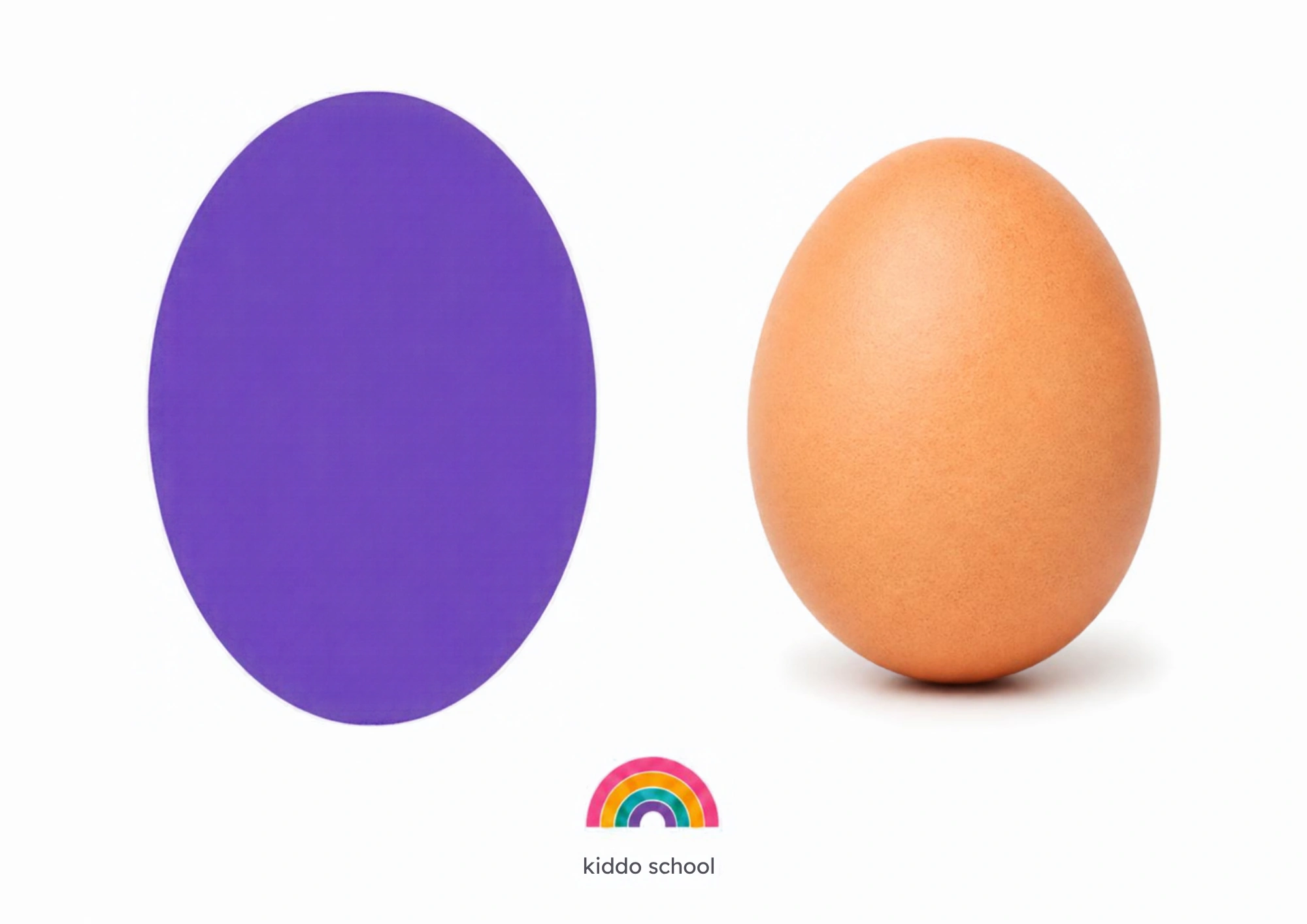
What is this?
An oval is an egg of a shape: take one circle and pull it gently longer. The card shows one, plain and simple, with the word printed for toddlers.
What does it mean?
Oval against circle is a real puzzle at two, and the breakfast egg settles it more neatly than any explanation: one is egg-shaped, one is round. Hands sort it; words follow.
What does the child need to know?
Park a real egg beside the card at breakfast, trace egg then card, and let the two shapes introduce themselves. The wobbly roll is the oval’s signature move.
Why this matters
The oval completes the shape family’s gentle ending: after corners and points, a shape that is almost a circle but not quite — the finest distinction in the deck.
What it teaches
Fine shape discrimination (almost-round versus round), real-object matching, and the quiet pride of spotting the difference grown-ups gloss over.
Words to learn
ovaleggstretchwobblytraceroll
Say this to your child
“"Oval! Like an egg. A circle that got stretched — see? Trace it with me, the long way round. Roll it… wobble, wobble! Eggs are ovals. Can you find the egg shape?"”
Step by step
- Show the card and say oval, then trace the long way round with one slow finger — a circle, but stretched.
- Hold a real egg beside the card at breakfast: same shape. Trace the egg gently, then trace the card.
- Compare with the circle card: this one is round, this one is stretched. Lay them side by side and let your toddler point at each on request.
- Prove the difference: roll the ball (smooth), roll the egg-shaped object (wobbly). The wobble is the oval’s name in movement.
- Hunt ovals through the week — a spoon bowl, a cucumber slice cut lengthways, a balloon — with egg mornings as the anchor.
Look closer at the picture
This card is the oval card — one stretched-round shape filling the picture, with the word oval printed for toddlers. Ask your child to trace it the long way with one finger.
Ask your child
"What shape is this card?" "What is shaped like an egg?" "Is the oval round like the circle or stretched?" "Which one rolls wobbly?"
What your child can say or do
A slow tracing finger that stretches further than it should, or egg! aimed at the breakfast plate — which is the right answer wearing a smaller word. Wobbly-roll experiments will follow.
Out in the real world
Eggs, balloons, lemons, plums and spoon bowls carry the oval through the week. Breakfast is the standing appointment; the card lives by the egg cups.
Try it together
Wobbly roll derby: an egg-shaped object, a ball, and a short ramp of cushions — which rolls smooth, which wobbles? The oval announces itself in motion, no words required.
Understanding check
Ask what the card is and what it looks like. An oval, an egg, or a stretched circle — any of the three passes. A wobbly-roll demonstration on request is the pass with honours.
Parent tips
Let the egg do the teaching — real objects beat explanations at two, and breakfast repeats daily. Keep circle and oval cards neighbours; the almost-twins sharpen each other.
Staying safe
Eggs at the table sit in egg cups, not on edges — one grab and the lesson becomes a clean-up. Tracing a real egg happens with a gentle finger and a grown-up’s hand underneath.
This lesson pairs with the Oval flashcard in the library — print it, show it, keep it on the fridge. Back to Colors & Shapes (Toddler 3).