
Purple — a step-by-step lesson for grown-up and child
This lesson takes on the deck’s mouthful: purple, two syllables of genuine difficulty, taught slowly, hunted patiently and applauded in every draft.
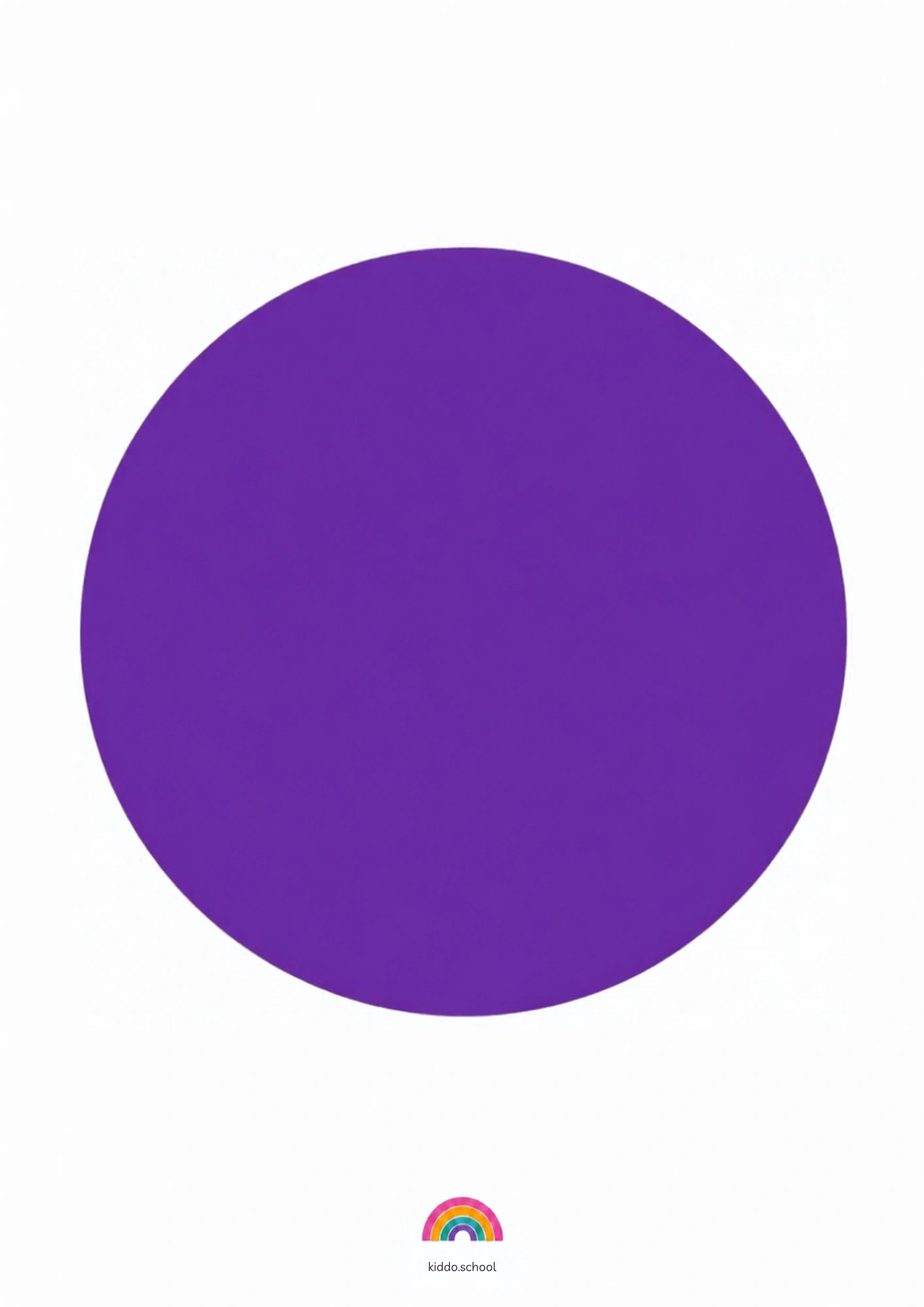
What is this?
Purple is a color — the color of grapes and lavender — and this card holds it alone, from edge to edge, ready for the hunt.
What does it mean?
Purple asks for three consonants in a row, which is why per-per and burple are standard first drafts. Two syllables, one pointed finger, all the time in the world.
What does the child need to know?
Purple is scarce in most houses, and that is the game: colour a picture with only the purple crayon, or find one purple thing per room and celebrate each find.
Why this matters
The hard words need the gentlest teaching. Purple succeeds when the pressure stays low and the repeats stay high — say it slowly, play it often, accept every draft.
What it teaches
Tricky-word articulation, scarcity hunting (looking harder when the target is rare), and the blue-purple near-neighbor sorting that sharpens all color vision talk.
Words to learn
purplegrapeslowfindcrayonspecial
Say this to your child
“"Purple! Can you say it slowly? Pur… ple. Nice and slow. Look — grapes are purple! Can you find one purple thing in this room? One is plenty. Per-per… purple!"”
Step by step
- Show the card and say purple slowly — pur-ple — then again at normal speed, so both versions are on the table.
- Hunt purple one room at a time: a book cover, a flower, a sock. If the house runs dry, bring out the purple crayon and colour the hunt instead.
- Park the purple card next to the blue card and compare out loud — two nearly-friends, side by side.
- When per-per arrives, echo purple slowly once and keep playing; the draft counts, and the polish comes free with repetition.
- Feed the word through the week: grapes at snack, a lavender sniff on the walk, purple find number three whenever it turns up.
Look closer at the picture
The purple card carries one color and one word, both filling the picture. Say the word slowly together while a finger rests on the color.
Ask your child
"What color is this card?" "Can you say purple slowly?" "Can you find something purple?" "Are the grapes purple or green?"
What your child can say or do
"Per-per!" or "burple!" — both drafts are welcome and both are on schedule. Some toddlers will skip the word and simply match the crayon to the card; matching is proof enough.
Out in the real world
Grapes, lavender, figs and birthday wrapping keep purple in small but steady supply. The garden lavender patch, if you have one, is the card’s outdoor office.
Try it together
Purple crayon day: one picture, one crayon, nothing but purple on the page. The scarcity makes the color the whole event, and the word gets said with every stroke.
Understanding check
Ask what the card is, slowly. A purple, per-per or burple passes. Then hold up blue and purple together — a correct point at purple on request is the pass with honours.
Parent tips
Say it slowly yourself first — your pacing is the model. Never drill the draft away; the word polishes itself through weeks of hearing the full version said warmly.
Staying safe
No hazards here — one practical note: grapes at snack time get cut in half lengthways for two-year-olds, and the purple lesson proceeds better with everyone breathing easily.
This lesson pairs with the Purple flashcard in the library — print it, show it, keep it on the fridge. Back to Colors & Shapes (Toddler 3).