Age 2 YearsSubject Talk & ConnectClass Toddler 7Duration 3–5 minutes
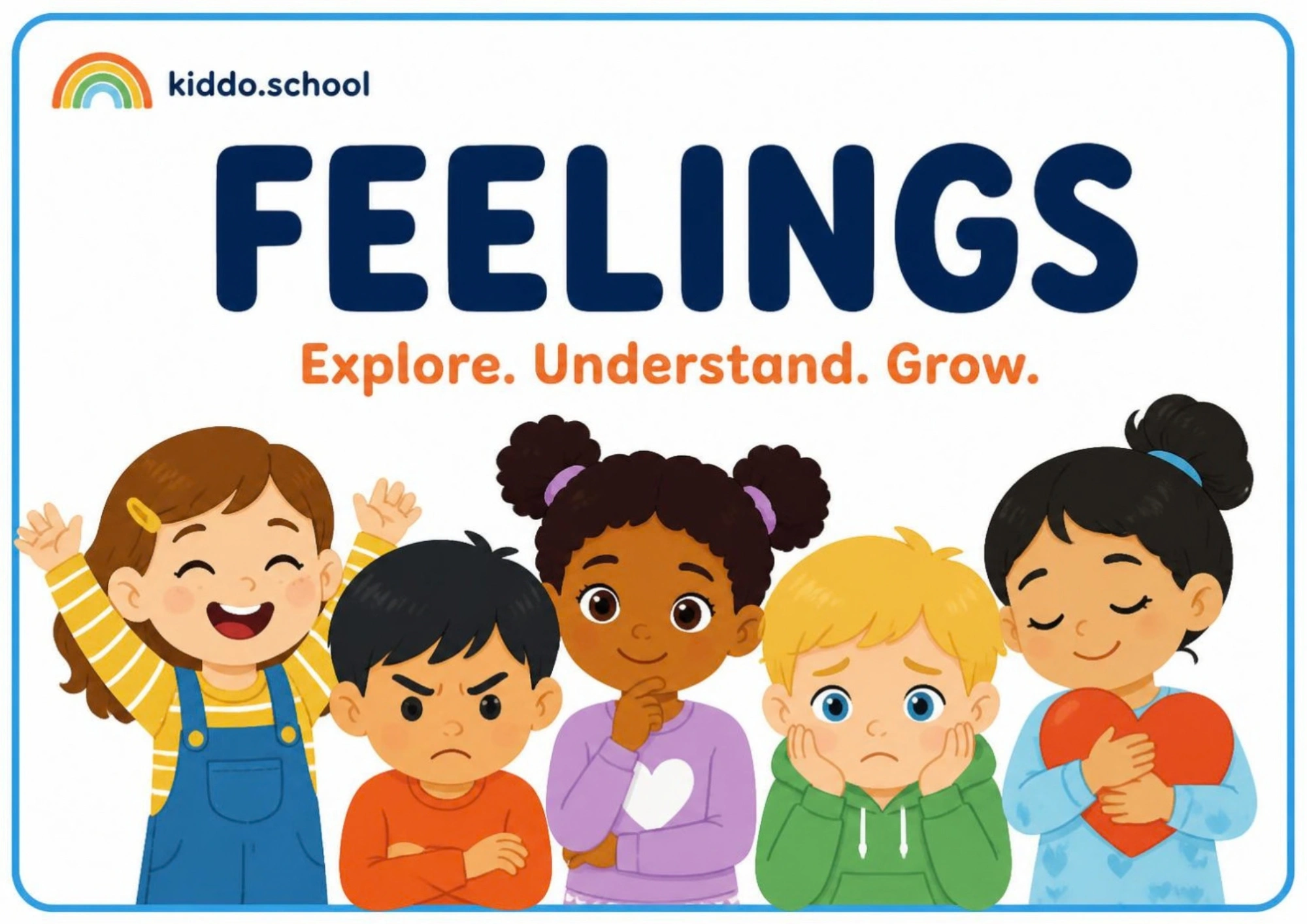
Happy, sad, angry, excited — little feelings can have big names. Look at the faces together and give those feelings simple words.
Nothing to read and nothing to fix. You name the feeling, your toddler makes the face — a point or a giggle counts. Stop whenever they have had enough.
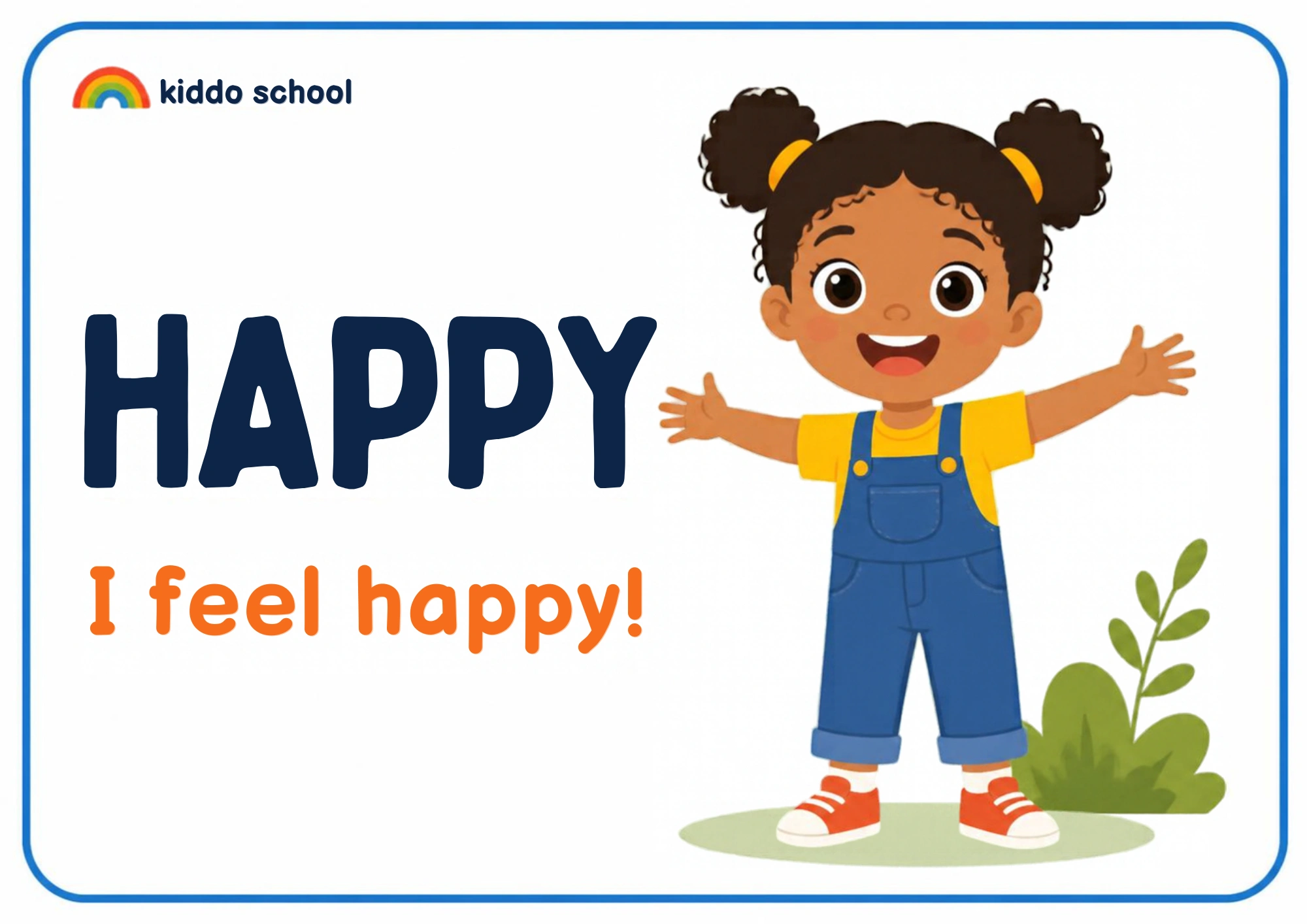
Start Class ↓Start with happy — the one they know best.
TODAY’S CLASS
How today’s class works.
Seven little steps, in order: a welcome from your teacher, all twenty feelings, faces to make, a few words that help, solve the feelings cards on paper, then off screen and cards to print. Every step stands on its own.
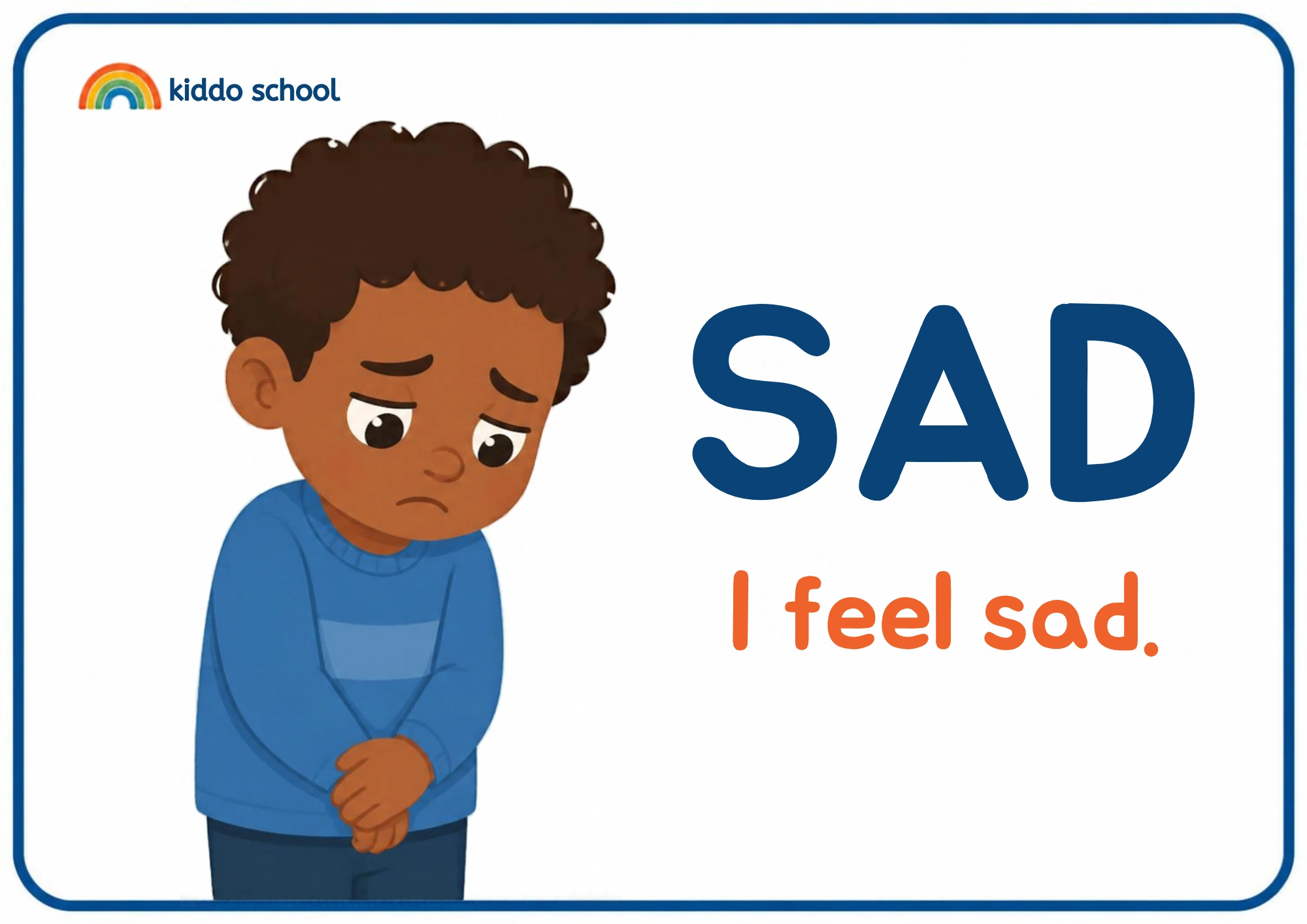
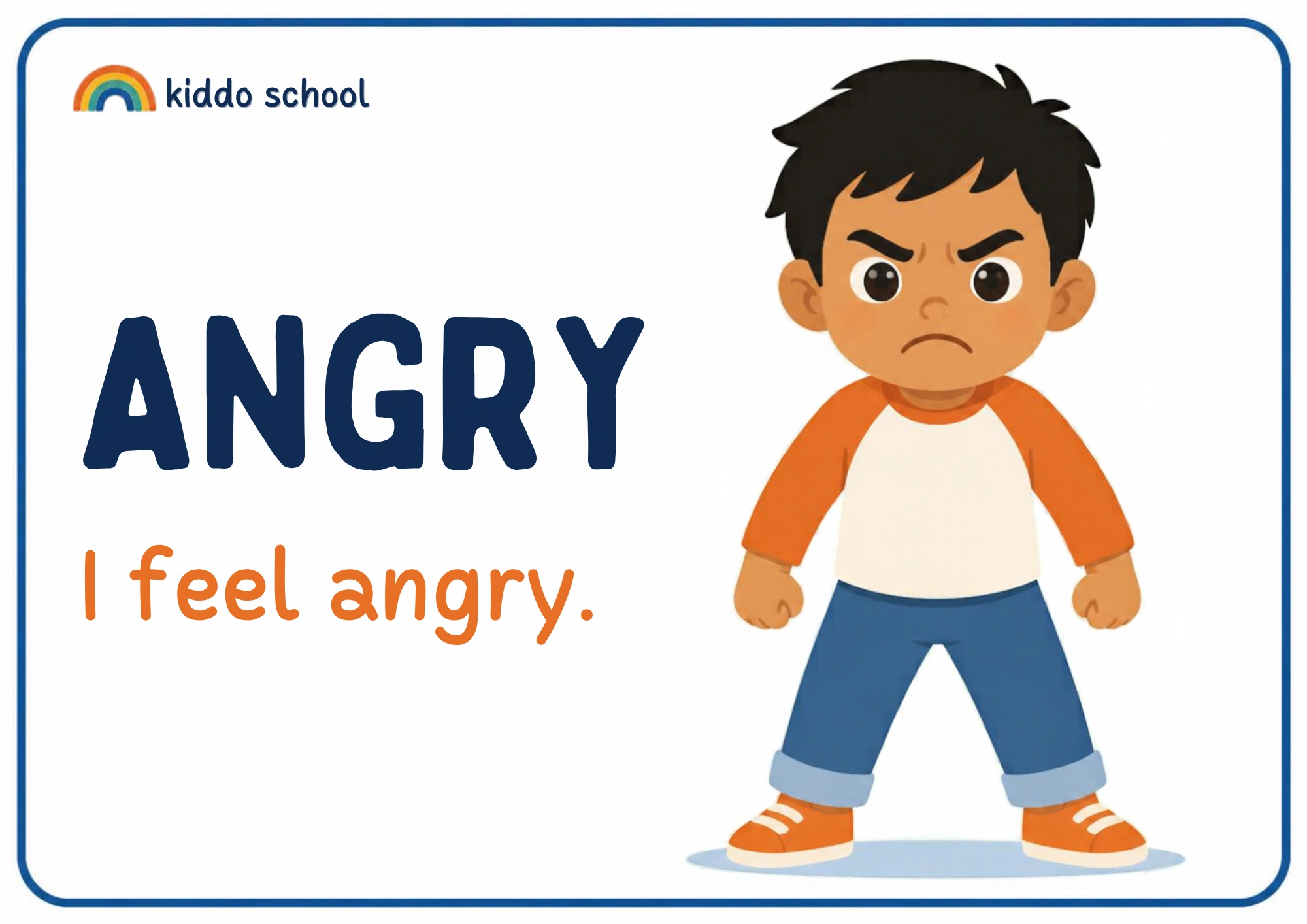
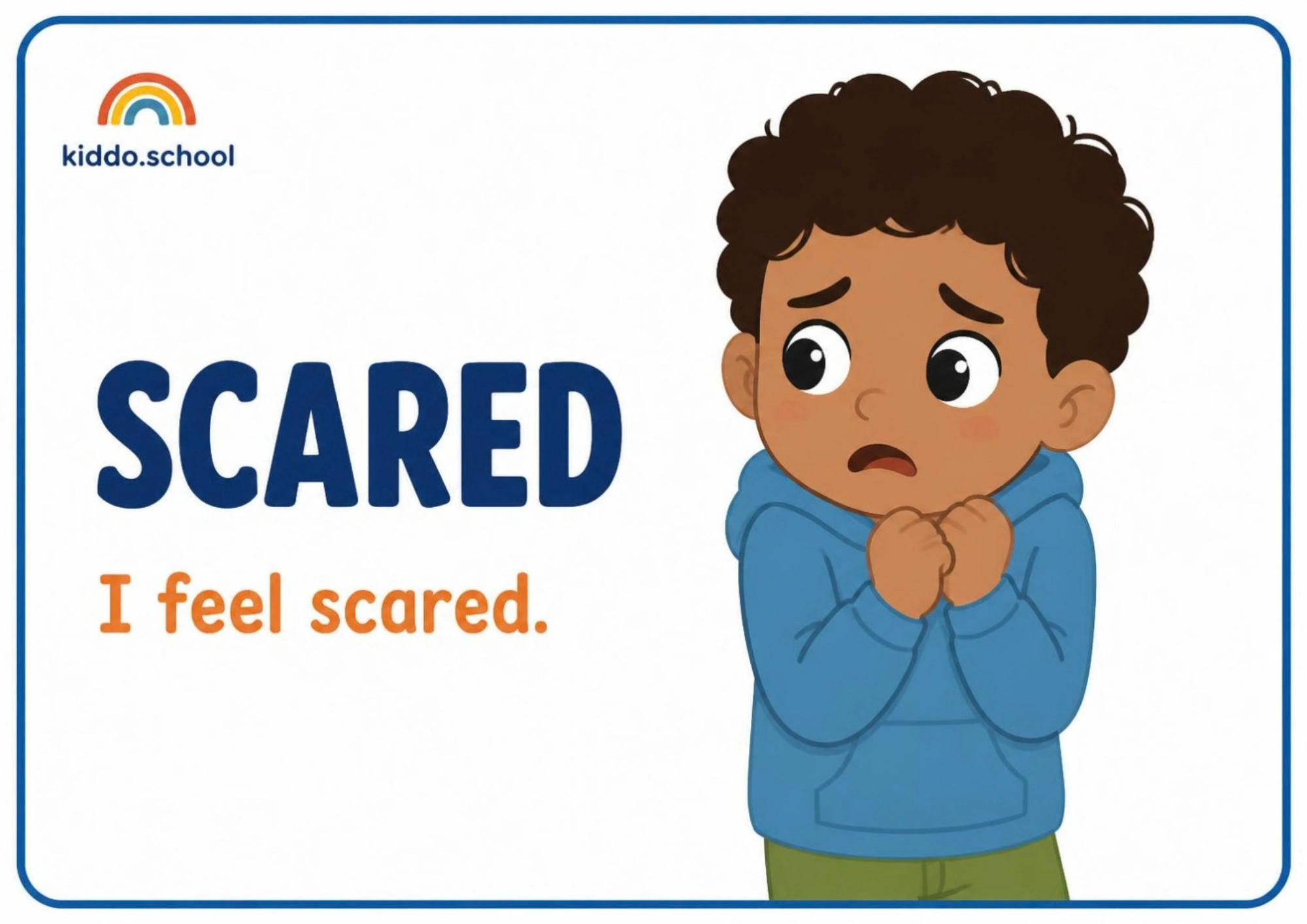
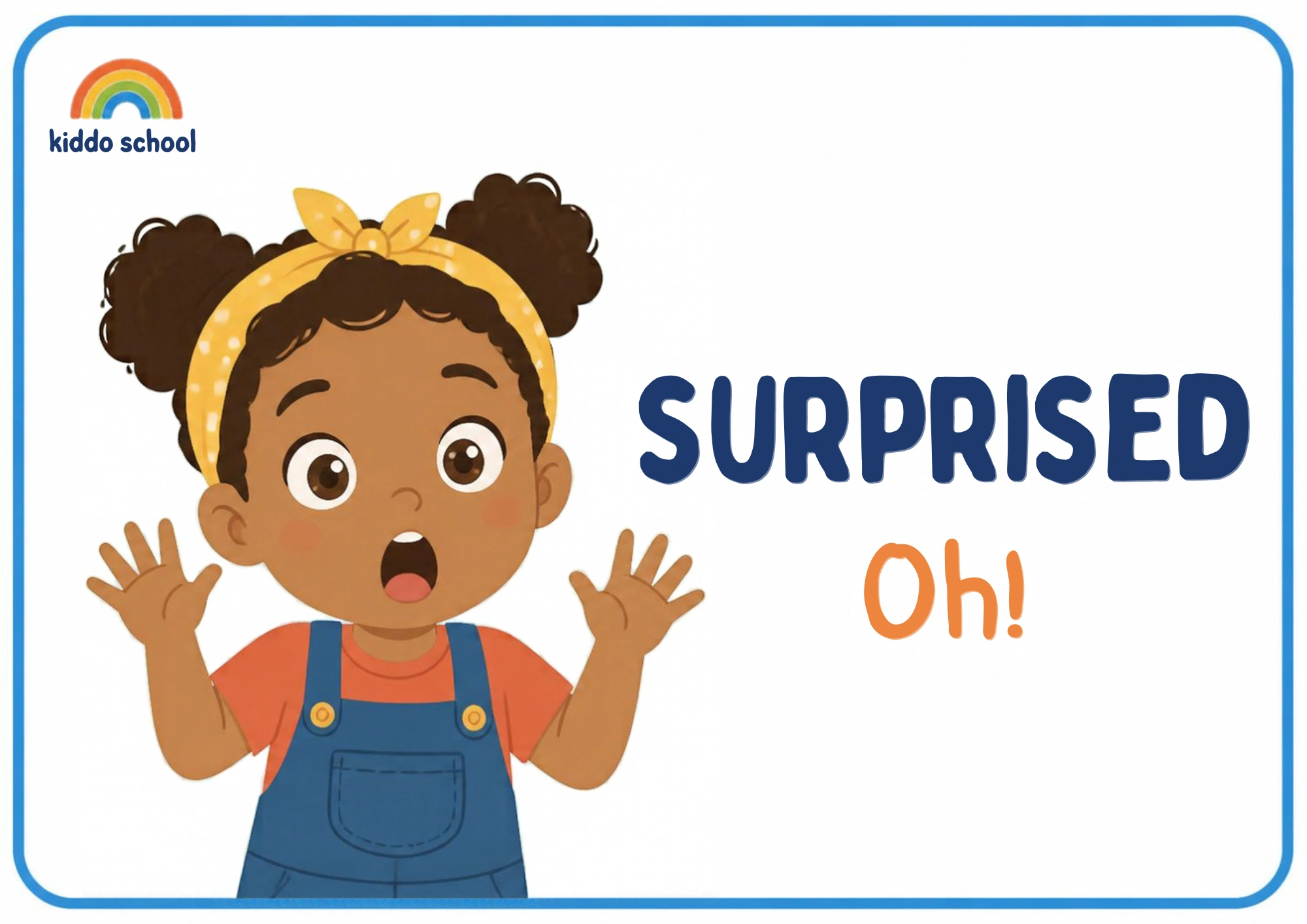
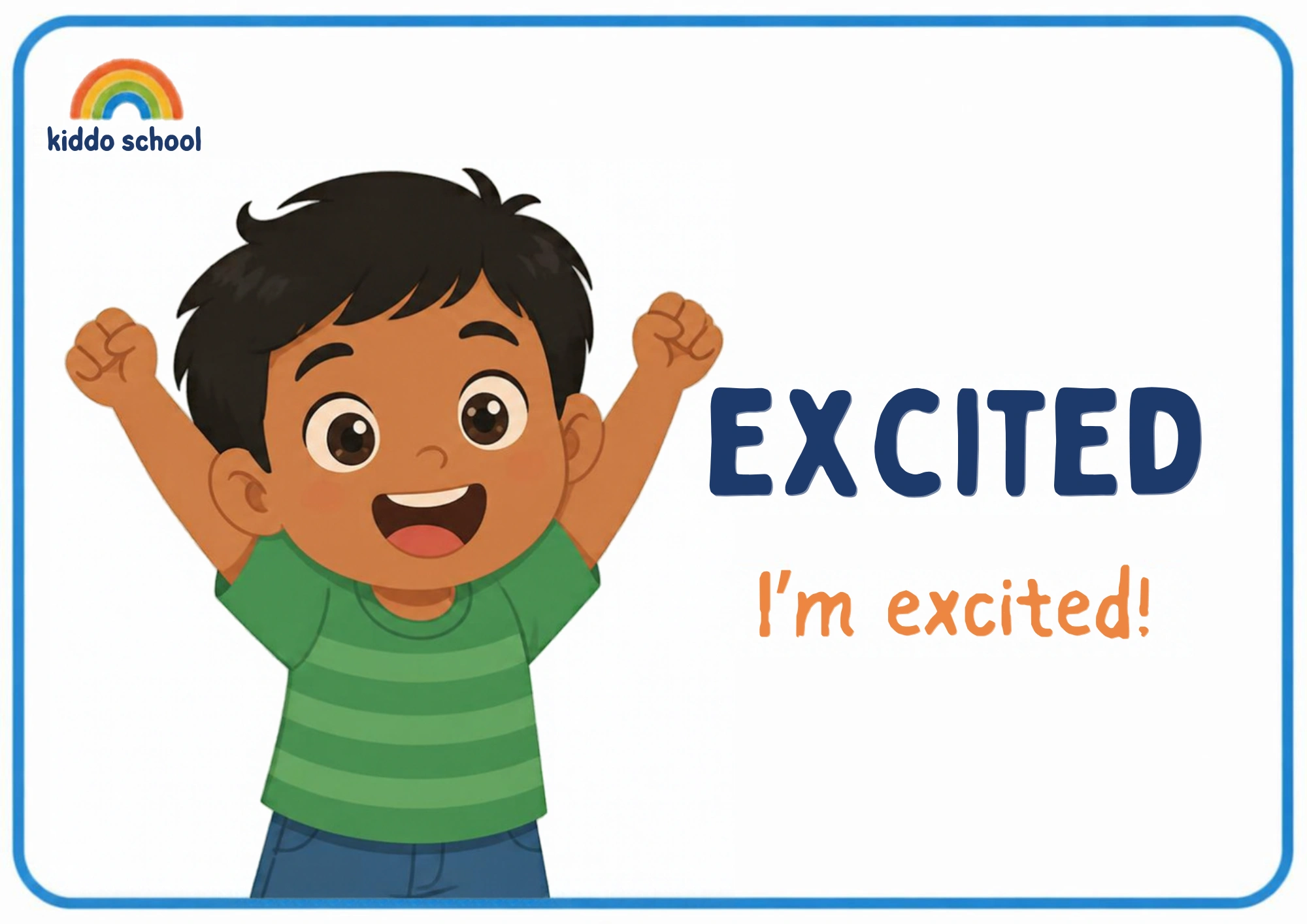
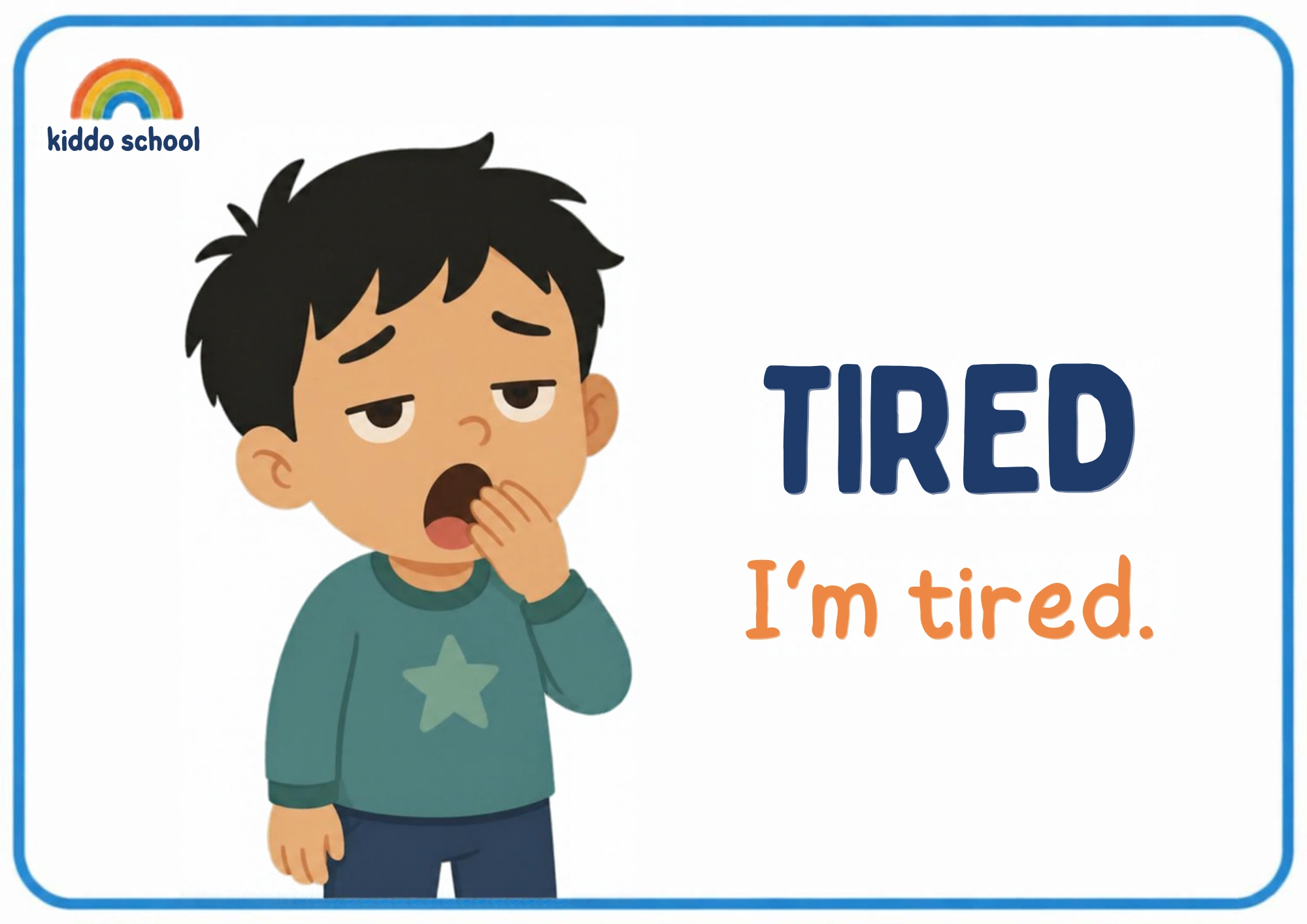
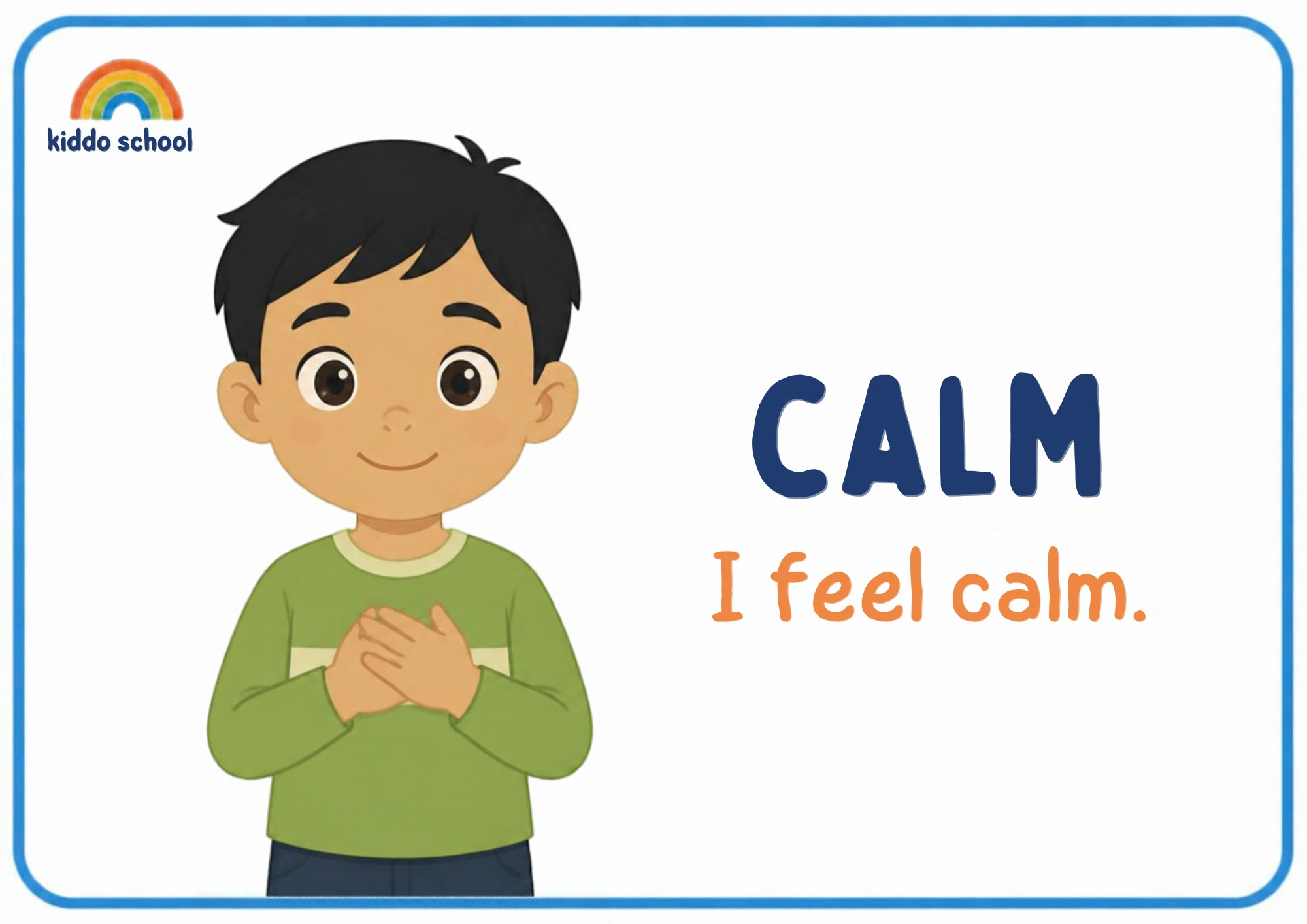
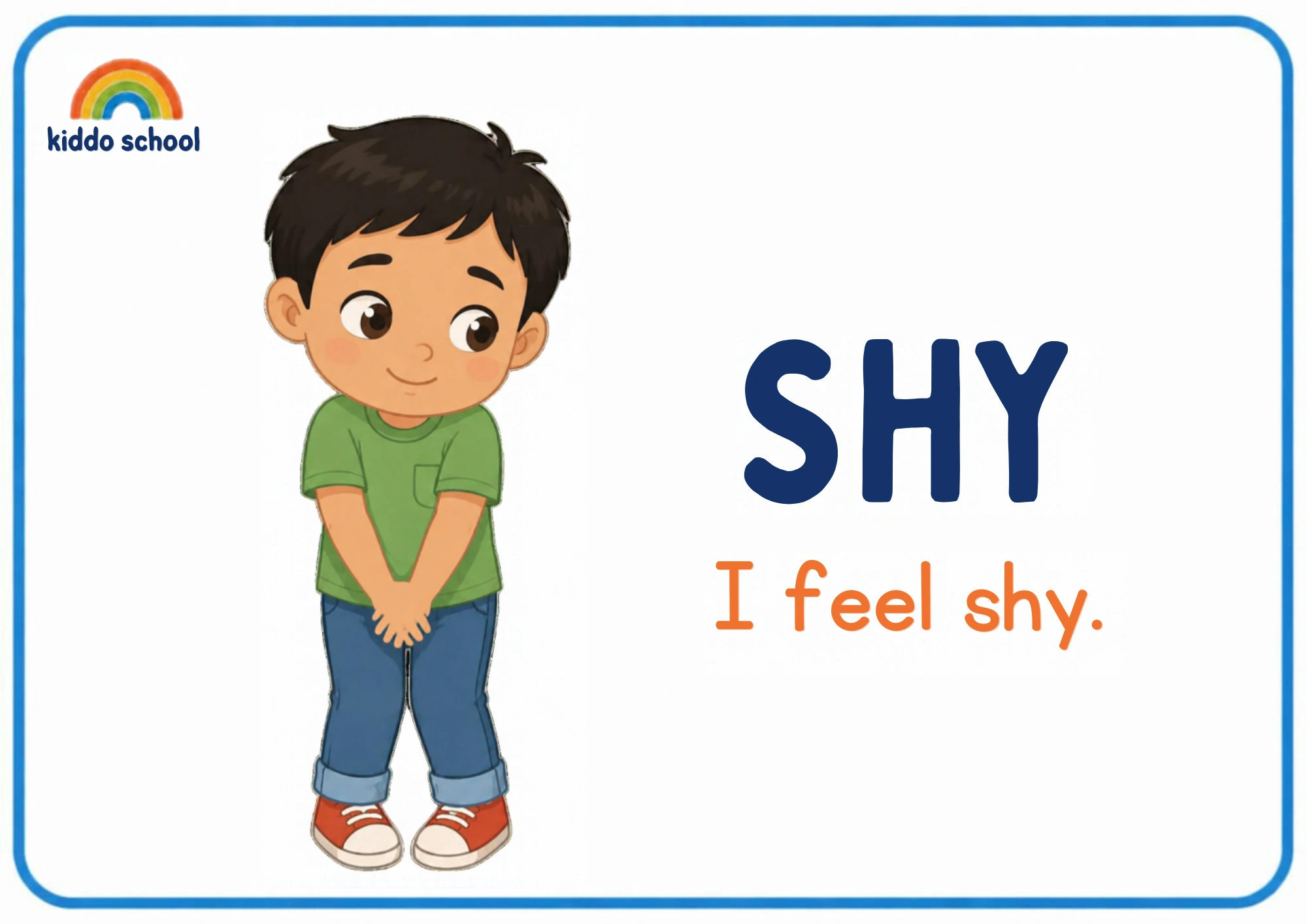
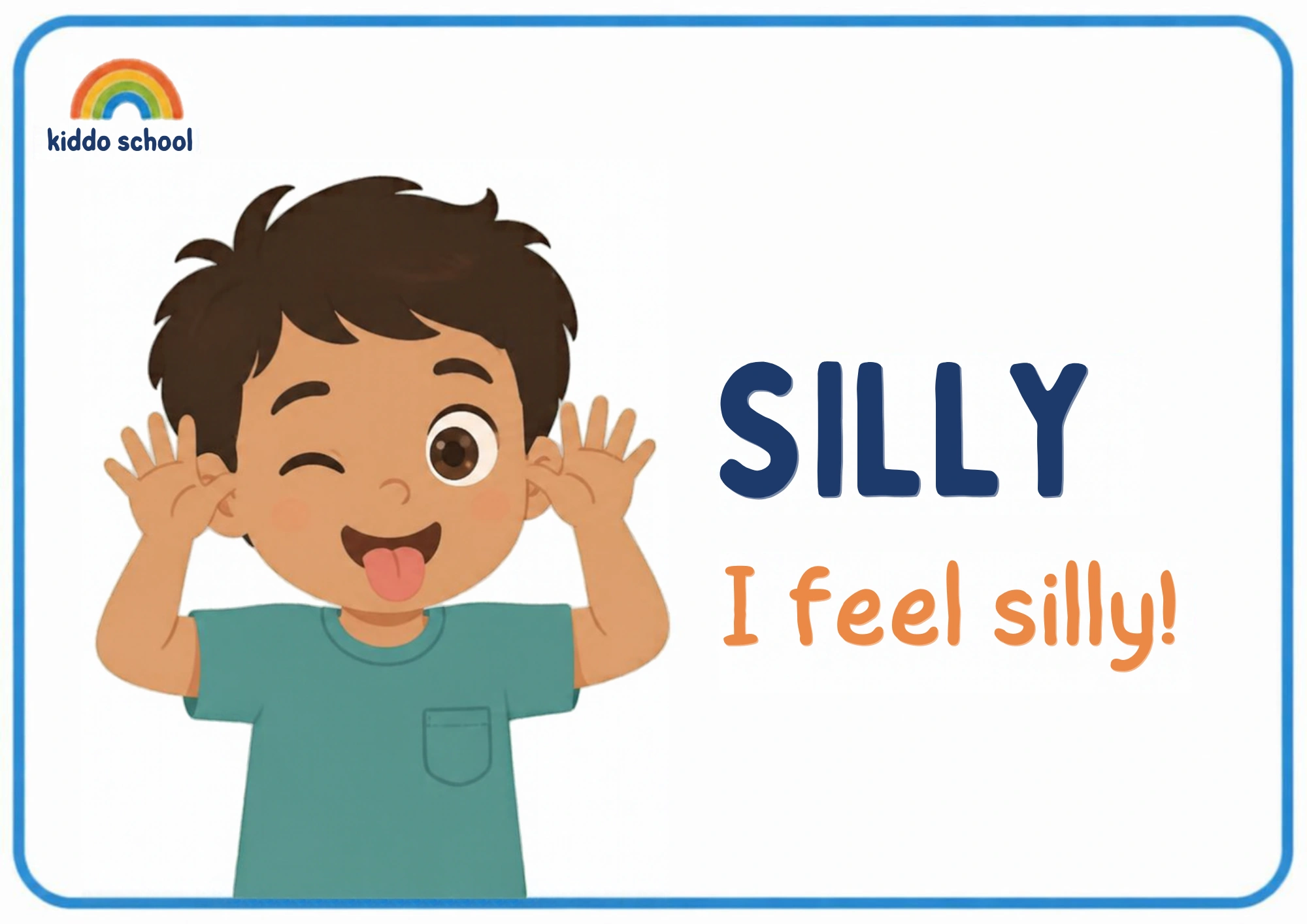
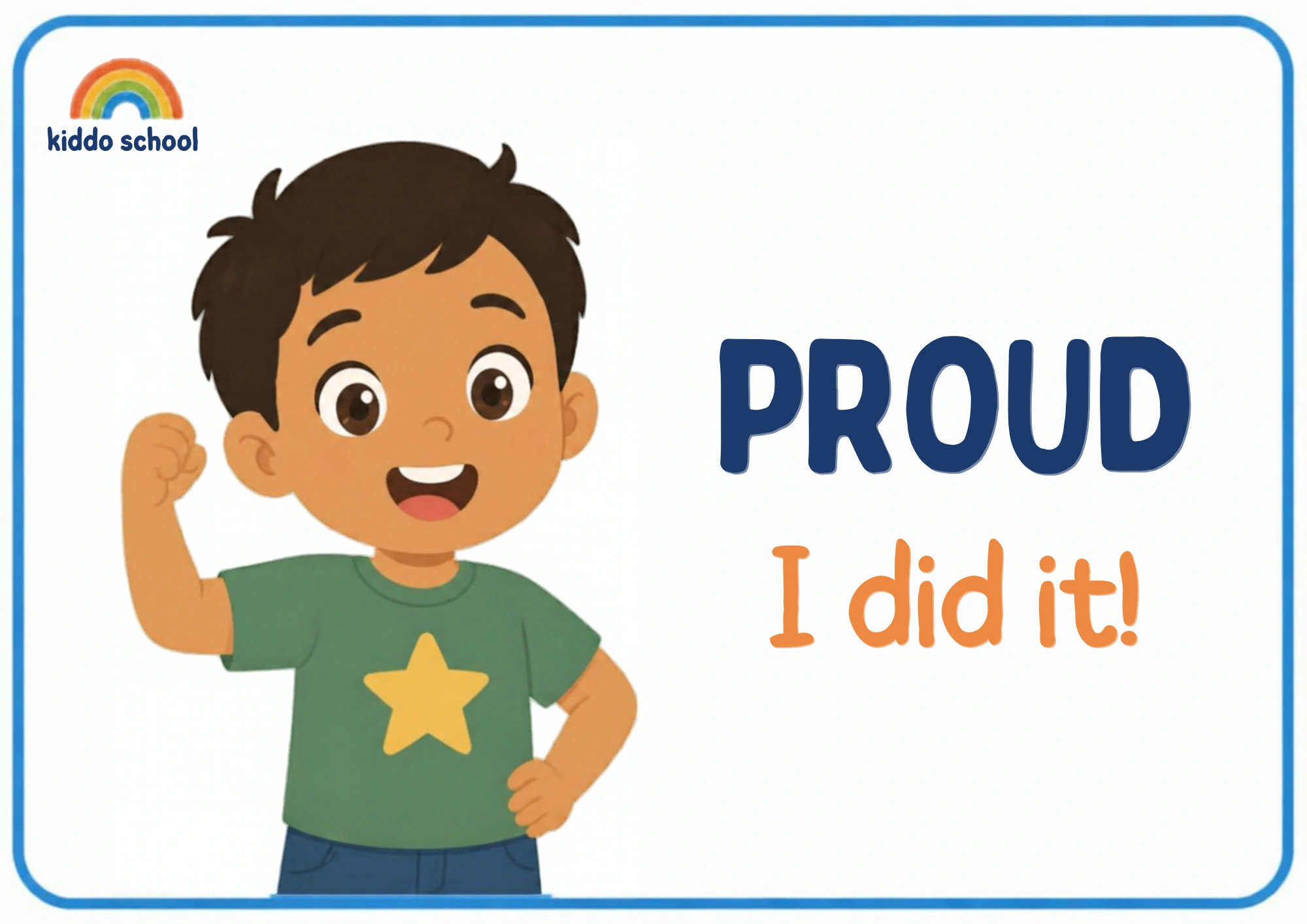
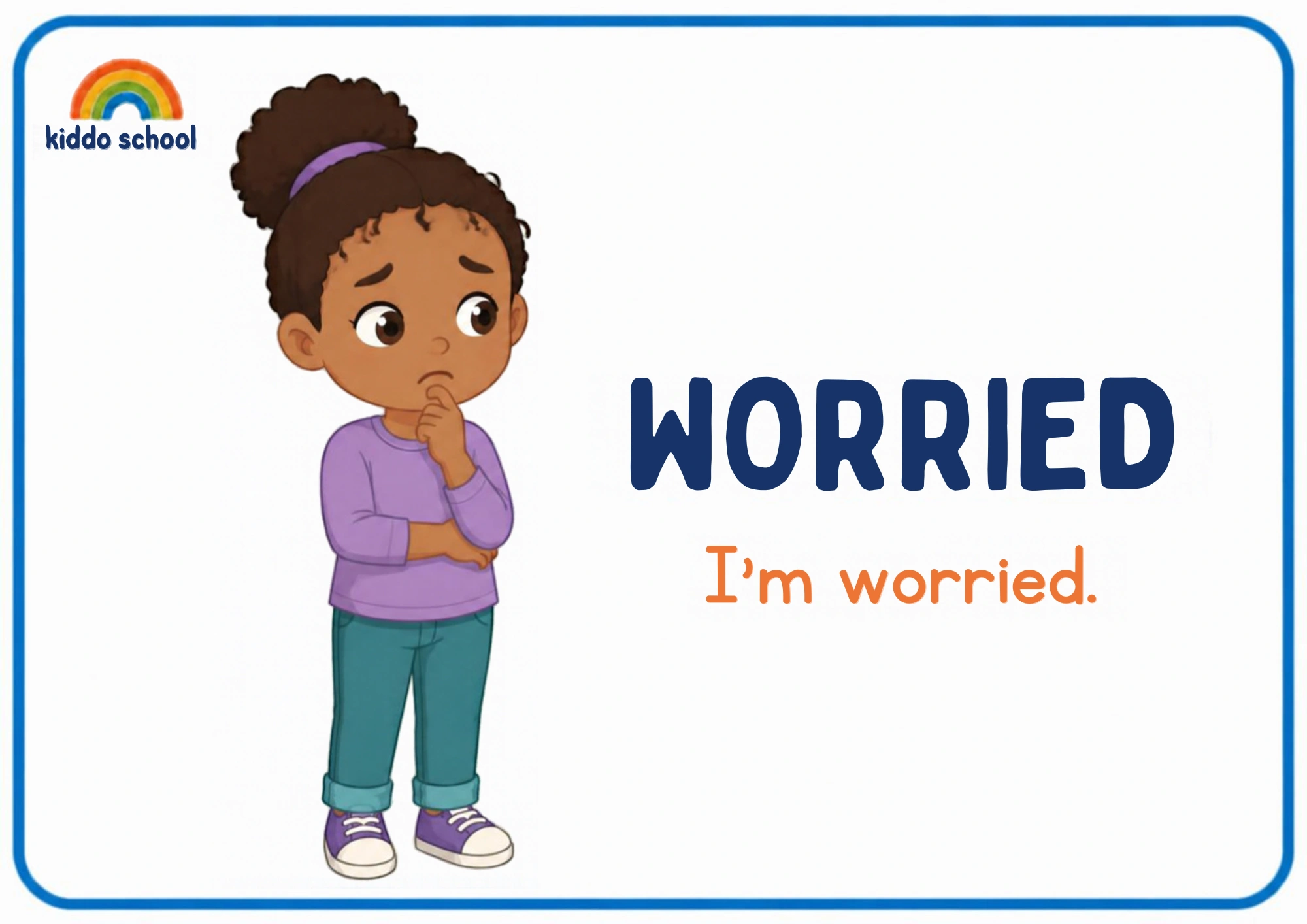
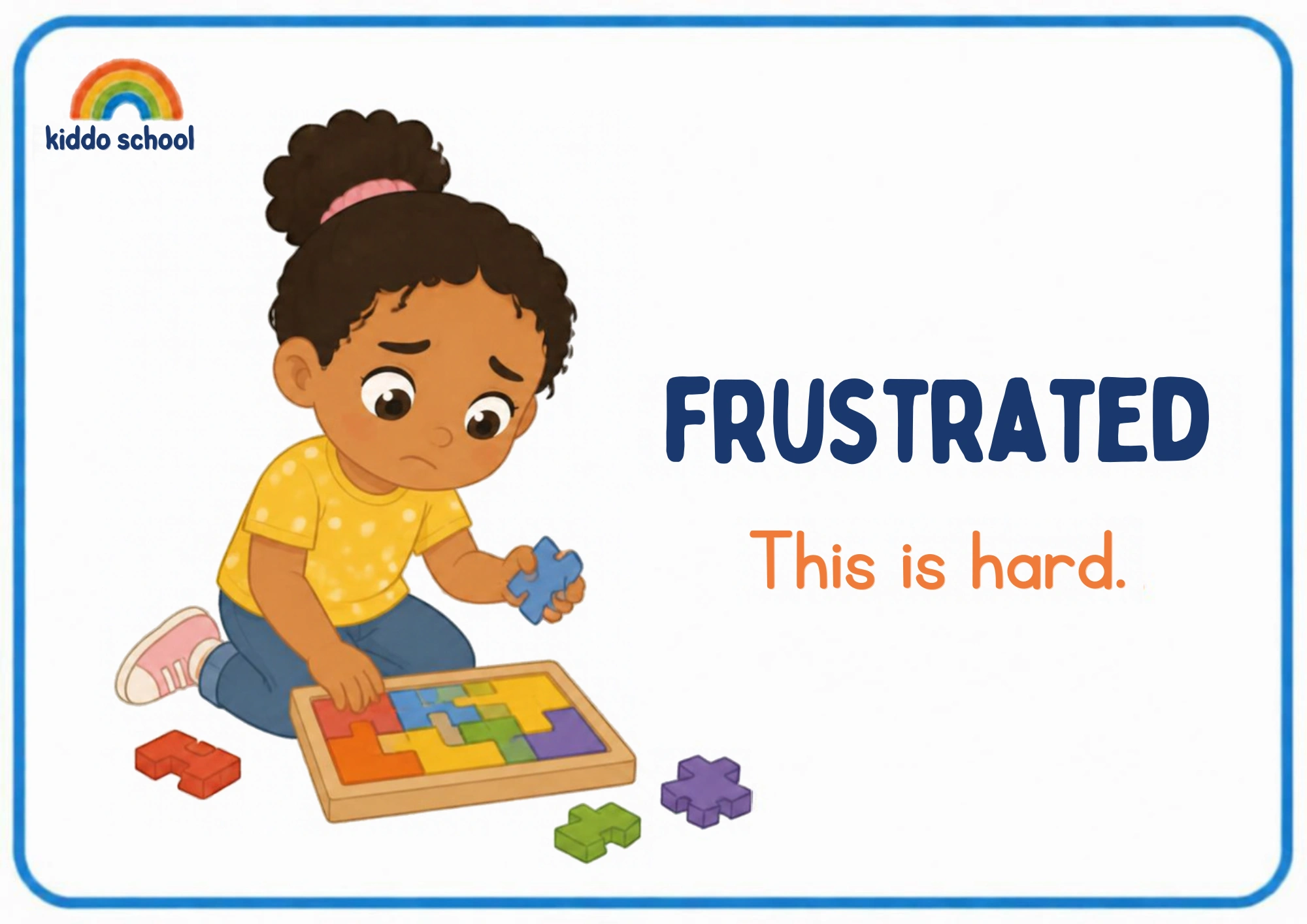
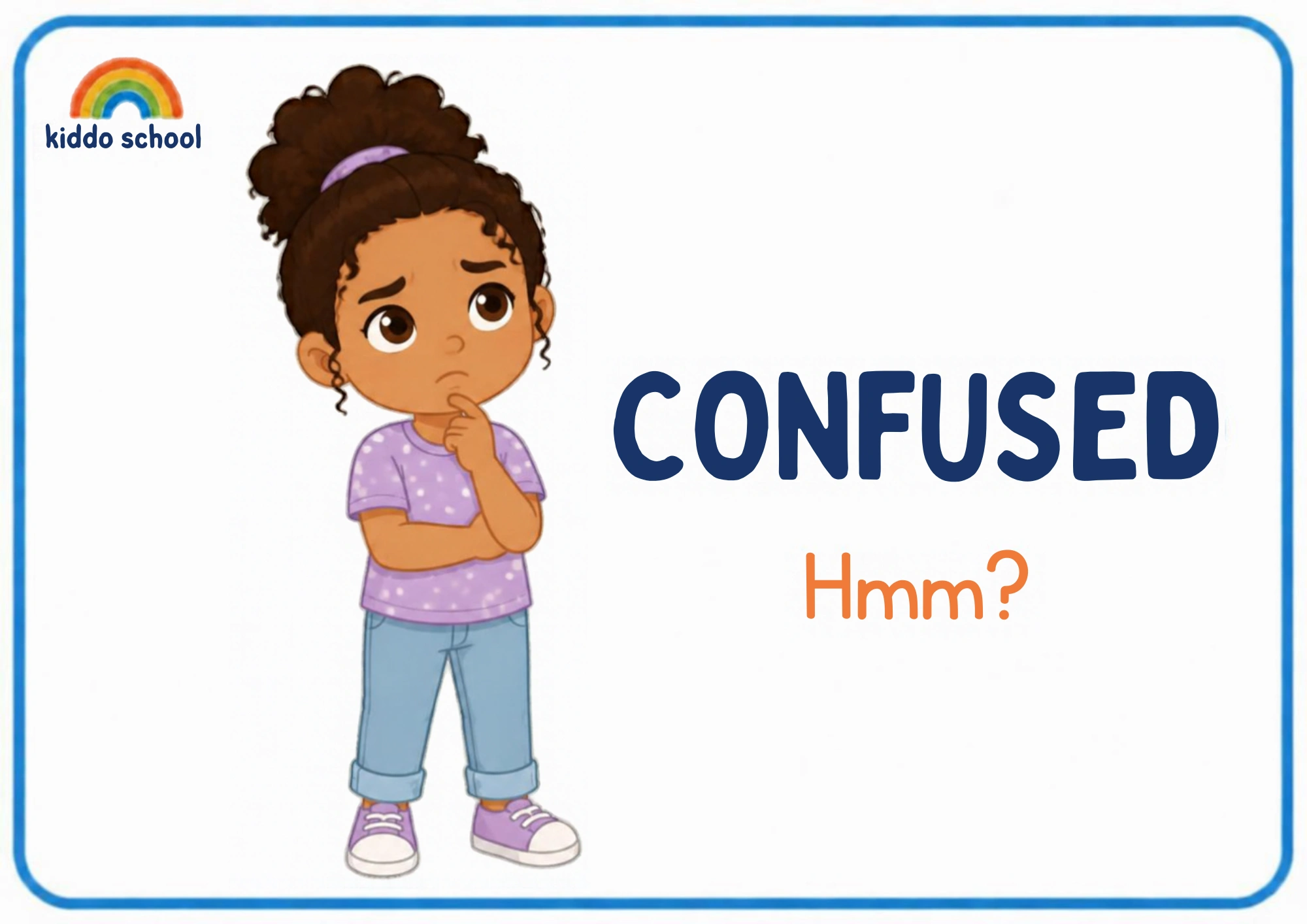
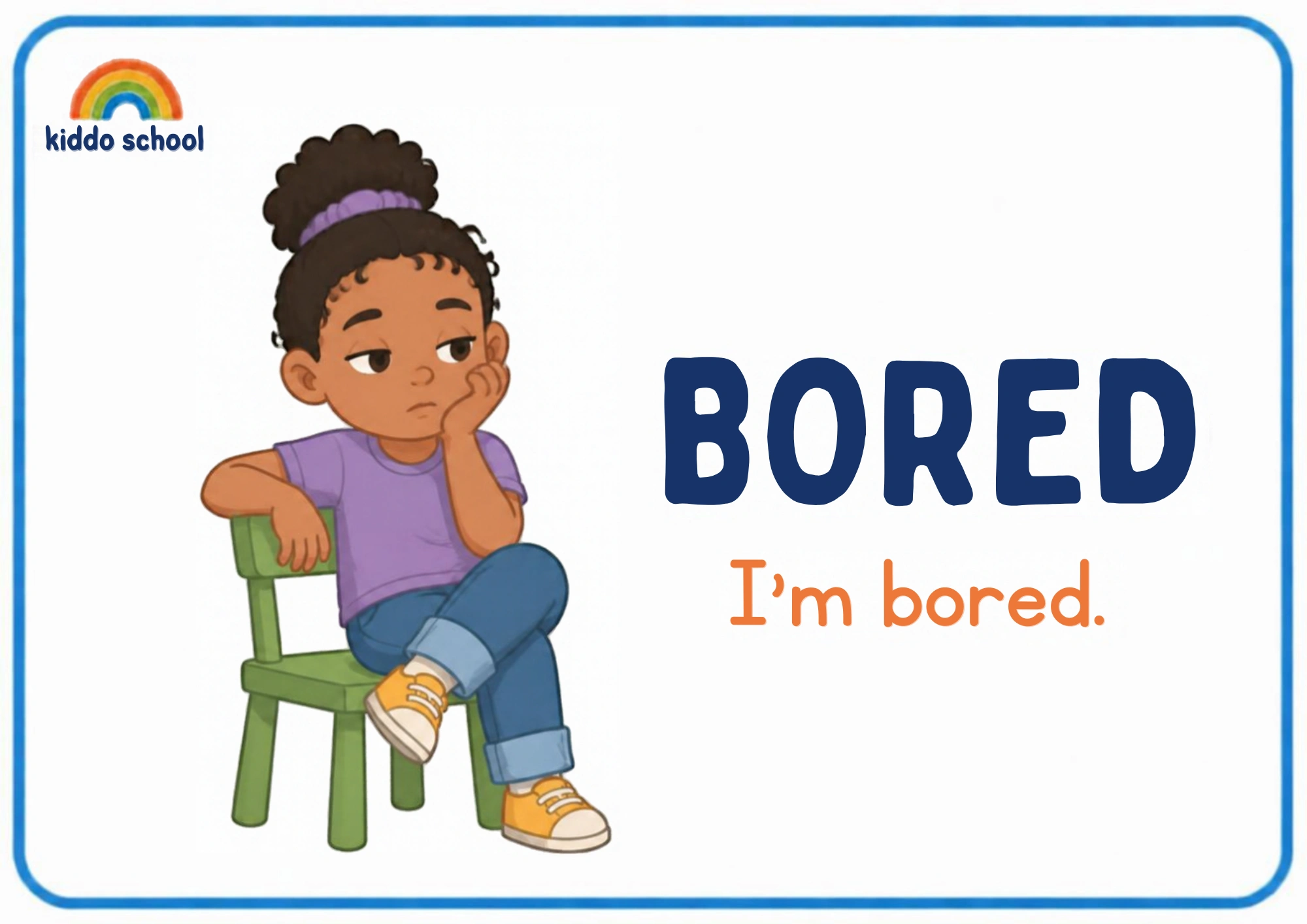
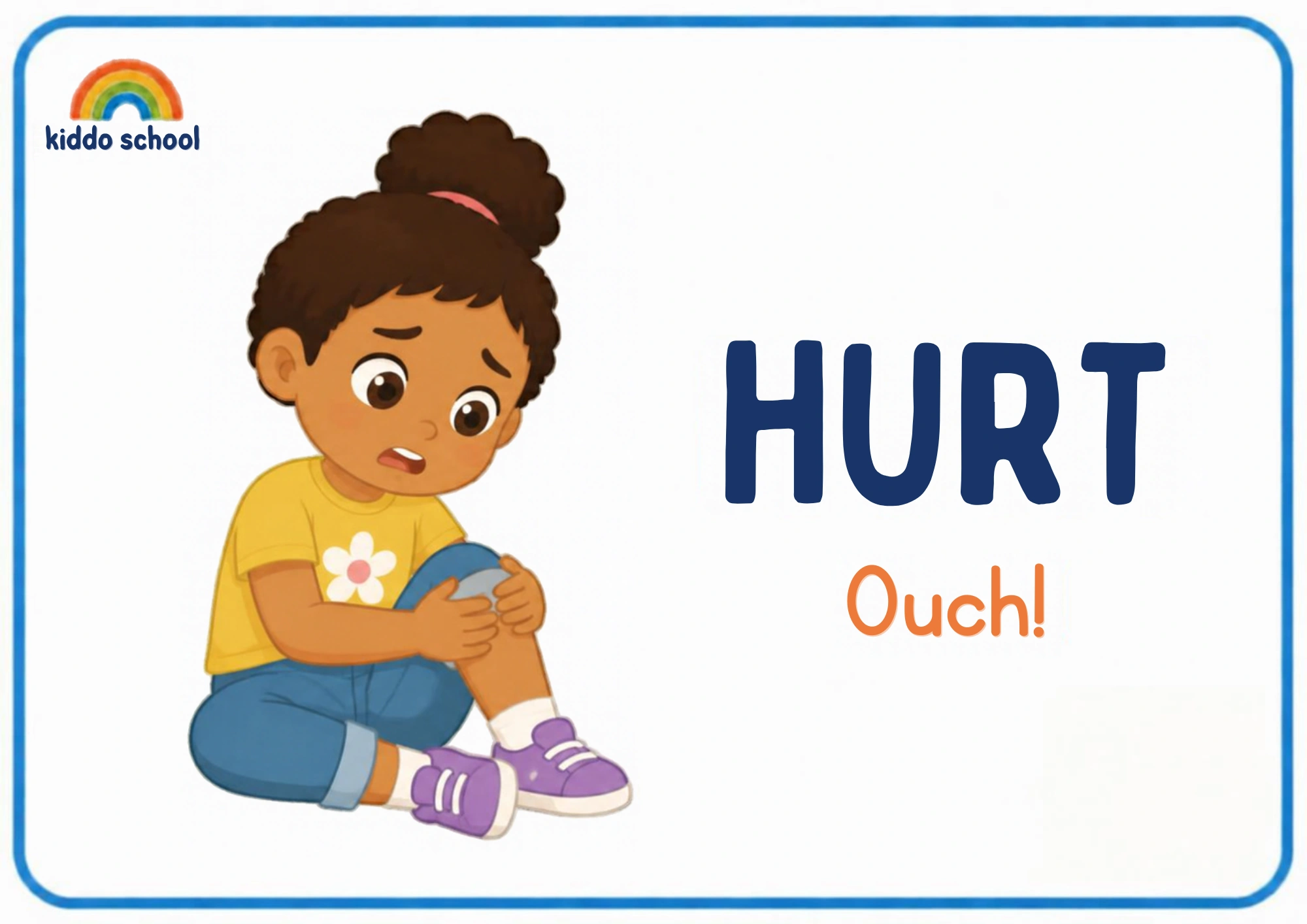
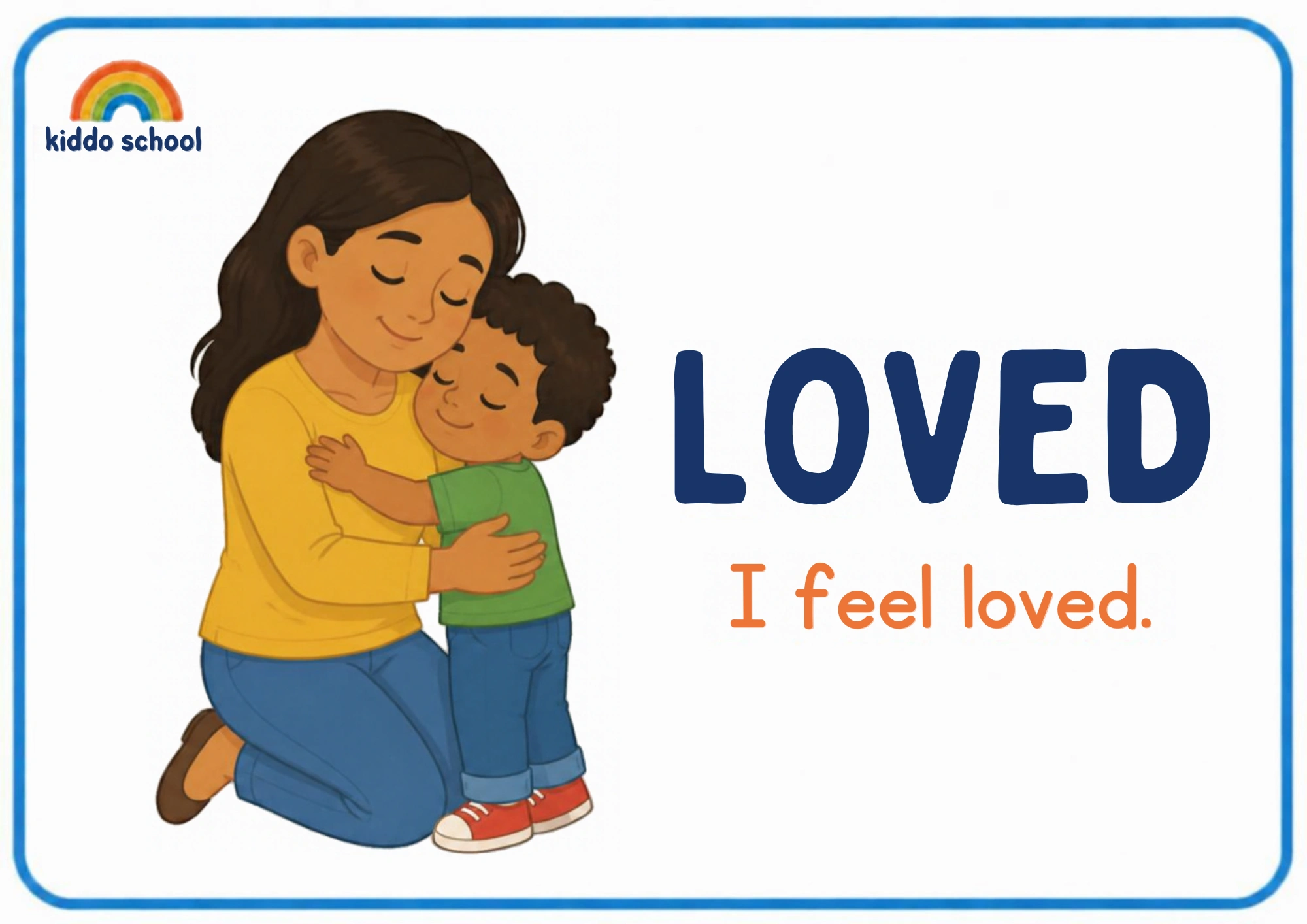
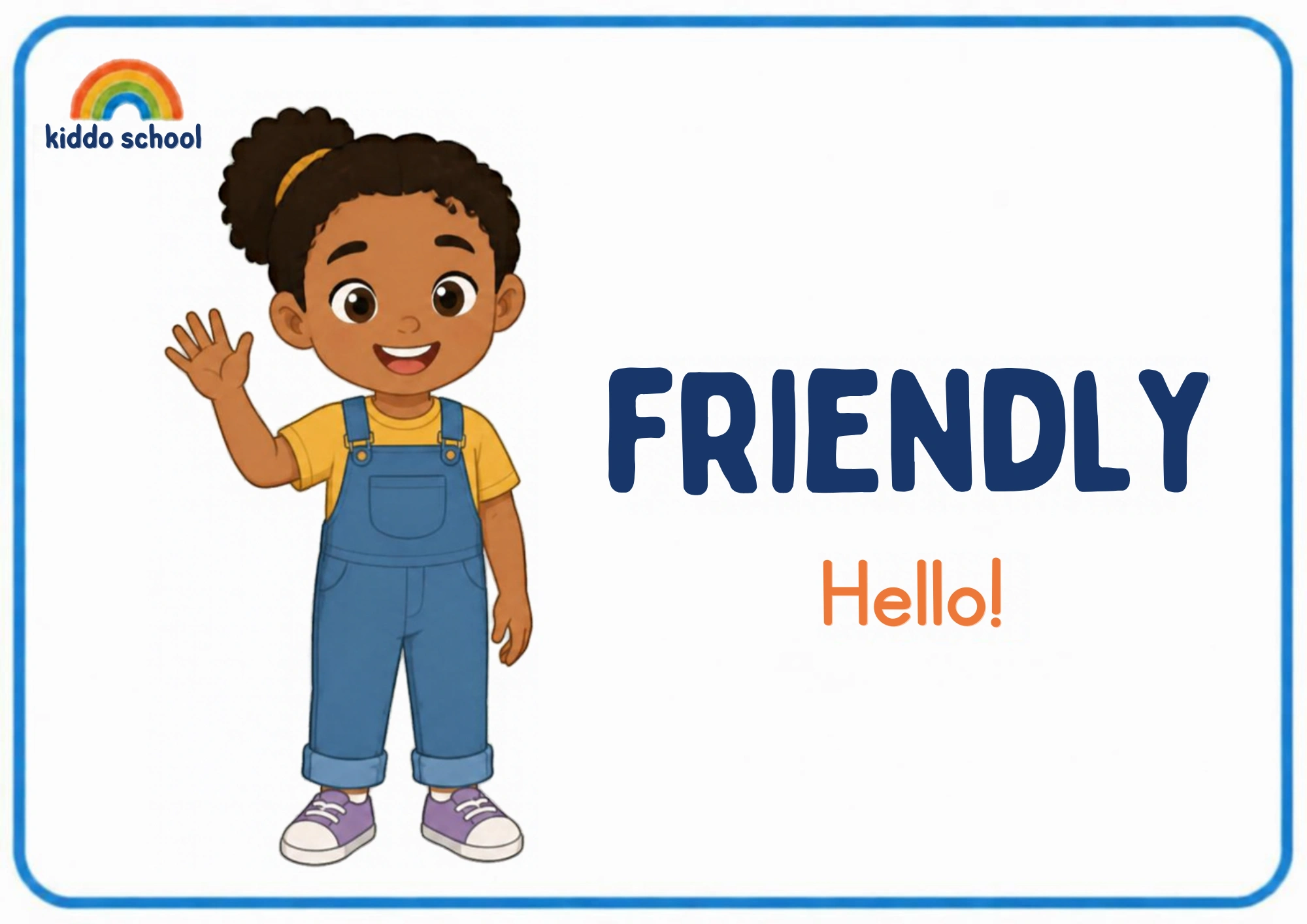
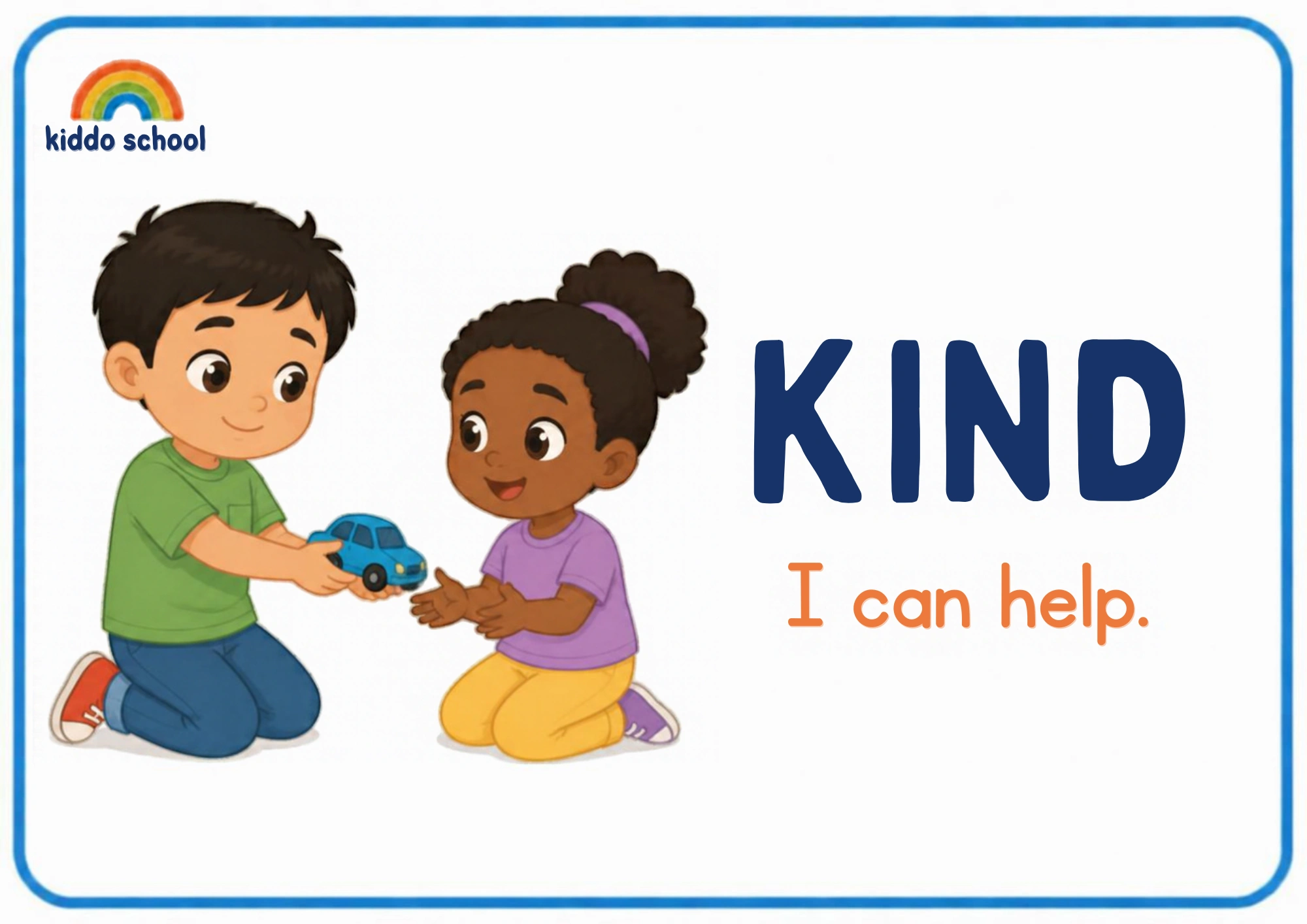
Twenty faces, one at a time. Look together, say the feeling word, then try the face yourselves.
Card 1 of 20
Or simply scroll: all 20 cards are below.
PLAY · FACES & FEELINGS
Faces & feelings.
Now your turn — no tapping needed. Make the face together and see who looks silliest.
Card 1 of 6
Or simply scroll: all 6 cards are below.
TOGETHER · WHAT CAN WE DO?
What can we do?
No scripts needed. When feelings run big, one calm sentence is enough — a few to keep in your pocket.
Sad
“Want a hug?”
Angry
“Let’s slow down together.”
Scared
“Stay close.”
Frustrated
“Let’s try together.”
Tired
“Maybe it’s time for a rest.”
SOLVE THE SHEETS — ON PAPER OR ON SCREEN
Solve the feelings cards together.
The twenty feeling cards print two to a page. On paper they become the best kind of feelings practice — naming a face, making the face, and finding your own.
01
Print the cards
Open the printable cards and print all twenty, two to a page. Cut them out together, naming each feeling as it is cut.
02
Make the face
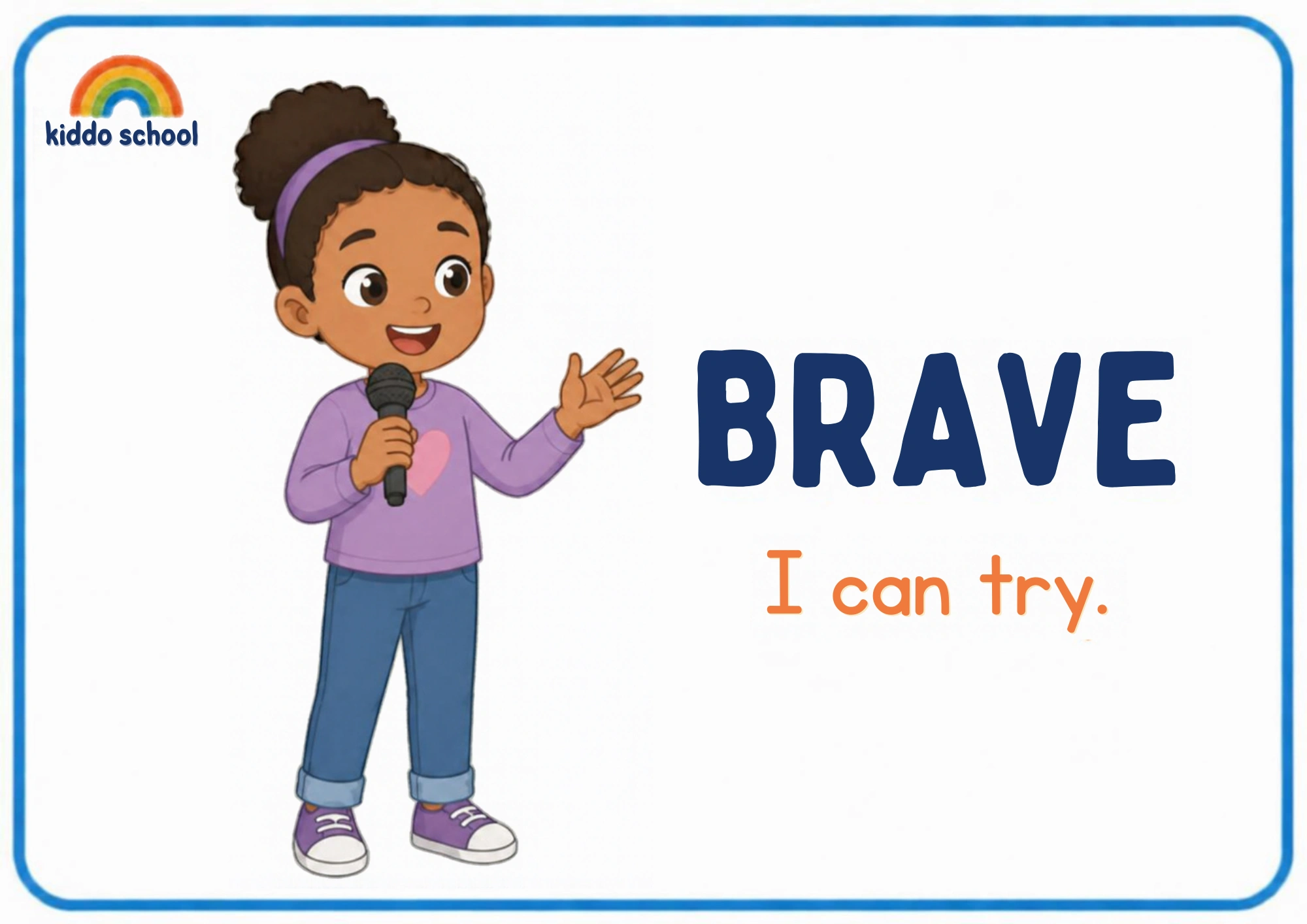
Pick a card and make that face in a mirror together — happy, sad, silly, brave. The face teaches the word.
03
Guess my feeling
Make a feeling face and let your toddler find the matching card. Then swap: your child makes the face, you guess.
04
Find today’s feeling
Ask “how do you feel right now?” and lay that card on the table. One honest card, chosen freely, is the whole exercise.
Every card page has a Write & Color layer: your child can draw right on the card with a finger, a stylus or the mouse, then save the finished work. Nothing is uploaded anywhere.
TAKE IT OFF SCREEN
Feelings in our day.
Name feelings when they naturally come up today.
Try one today
“You’re smiling. You look happy!”
“That was frustrating.”
“You look tired.”
“Are you feeling excited?”
Make silly faces together in a mirror.
You name it and move on — no quizzing, no waiting for an answer. One feeling shared together is a complete class.
PRINT THE CARDS
Print the feeling cards.
Print the cards for simple feeling games and conversations.
All those feelings together — happy, sad, silly and brave. However many rounds you played, however long it took, that was the whole class — and stopping early is allowed too.
Your feedback helps us make Kiddo School better. This is feedback about the activity, for the grown-ups who make it — it is never about a child.
Comments from our school community
FLASHCARDS
Prefer printed cards?
The cards from this class also live in the flashcards library — every card has its own page with the picture, the words to say together and a download button, ready for away-from-screen time.



Comments from our school community