
Centipede — a step-by-step lesson for grown-up and child
This lesson walks on a hundred make-believe legs: your toddler learns the centipede’s rippling walk with ten wiggly fingers, counts legs until counting collapses into giggles, and meets the quickest mover in the garden’s dark corners.
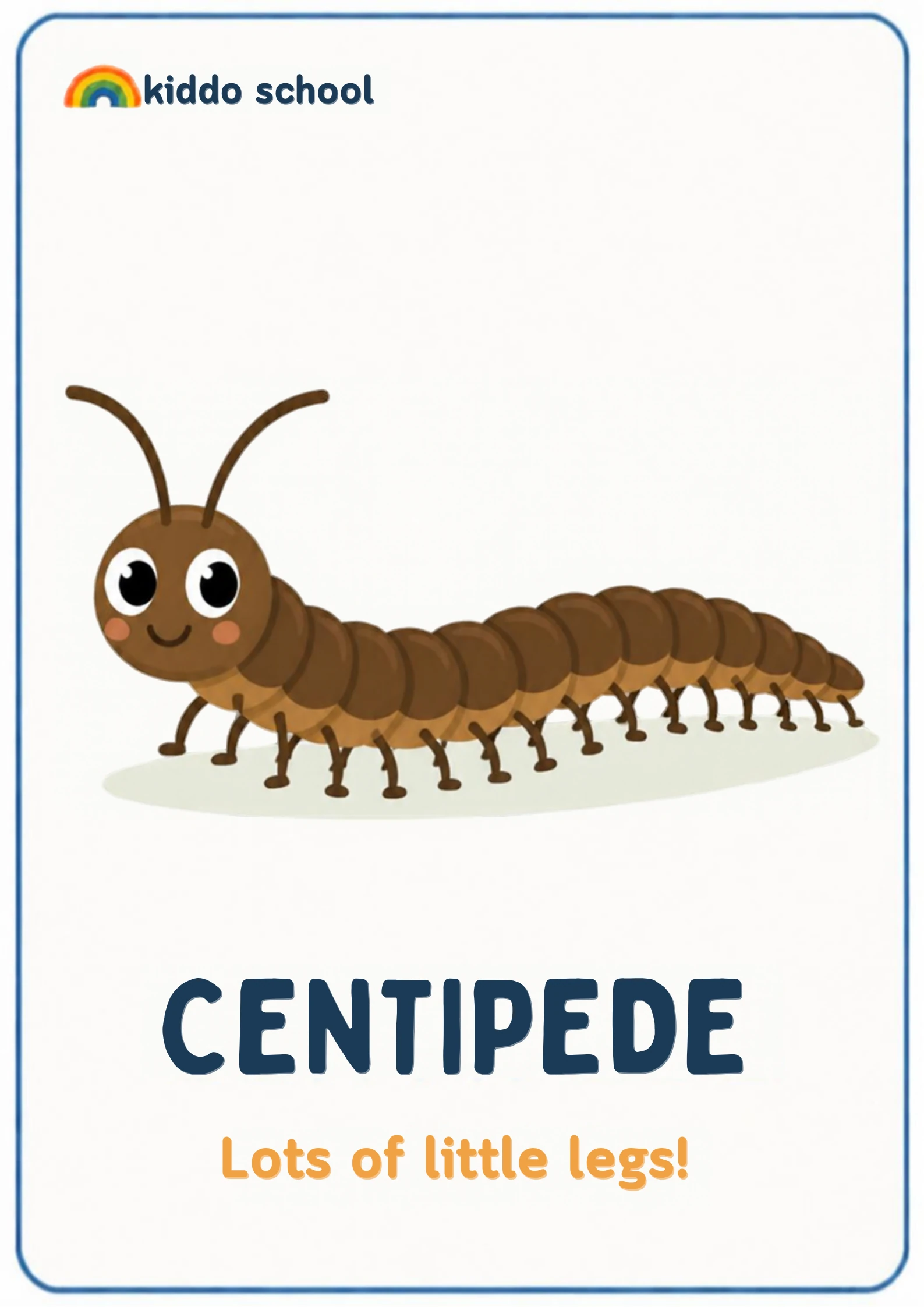
What is this?
A centipede is a long, flat creature with very, very many legs that ripple along in waves, carrying it surprisingly fast over the ground. It likes dark, damp places and hurries out of the light.
What does it mean?
The centipede is the set’s exaggeration card: no toddler will ever count its real legs, and that is the fun — enormous numbers become a joke, a wiggle and a race rather than a lesson.
What does the child need to know?
Centipedes have many legs and hurry through dark, damp corners, and they are look-don’t-touch friends like the rest of the set. After any under-the-pot adventure, the sink comes next.
Why this matters
Finger-walking builds the little muscles that later hold crayons, and the leg-counting silliness keeps numbers playful exactly when they start getting big. The hurry-away habit also explains something useful: dark corners belong to the creatures in them.
What it teaches
Fine-motor wiggles (ten fingers, independent legs), big-number silliness, observation of fast small movers, and the after-soil hand-washing routine, rehearsed again.
Words to learn
centipedelegswigglefastdarkcount
Say this to your child
“"A centipede! One leg, two legs... SO many legs! See them ripple — wiggle, wiggle, off it goes! Can your fingers walk like a centipede? Fast, fast! Centipedes love dark corners, so we peek with our eyes only — and wash our hands after the garden."”
Step by step
- Show the card and say centipede — then count a few legs out loud, give up happily, and declare: SO many legs!
- Walk your fingers across the table like a centipede — wiggling, rippling, off somewhere in a rush — and let your toddler’s fingers race yours.
- Be centipedes on the rug: crawl on hands and knees with extra-fast wiggles, then freeze when the light comes on — centipedes dash for the dark.
- Tell the hiding story: centipedes adore dark, damp corners, so under pots and logs is where they hurry home to.
- End with the rule: many-legged friends are look-at friends — eyes follow, fingers stay, and hands get washed after every garden adventure.
Look closer at the picture
Say centipede together and find the legs on the card — this one is long, with many legs to point at. Count two or three of them, then walk your fingers along the card like a tiny many-legged friend.
Ask your child
"How many legs does the centipede have?" "Can your fingers walk like it?" "Where do centipedes like to hide?" "Do we touch the many-legged friend, or watch?" — answered with wiggles, a big number guess and pointing fingers only.
What your child can say or do
Finger-centipedes racing across every table and tummy, absurd leg-counts shouted with total confidence — one hundred! — and centipedes spotted at every log and flowerpot, always off somewhere at speed.
Out in the real world
Centipedes dash through gardens, under logs and along damp walls, most often seen as a fast ripple and then gone. Each glimpse is a rerun: point, whisper centipede, watch it hurry, and let it get where it was going.
Try it together
Finger-leg races: two centipedes (one hand each, or two for the advanced) race across a table from edge to edge. Fast wiggles, slow wiggles, backwards wiggles — the legs decide everything.
Understanding check
Ask tomorrow how many legs a centipede has: any enormous, delighted number is a perfect pass — the exaggeration landed, and so did the wiggle that carries it.
Parent tips
Keep the counting brief and the wiggle long; the race teaches more than the arithmetic at this age. If a real centipede startles you, borrow its own lesson — freeze, breathe, and narrate it hurrying home.
Staying safe
Centipedes hurry away rather than hug, but fingers stay out of dark corners all the same — pot-lifting is grown-up work, and peeking is eyes-only. Garden play ends at the sink: hands washed, snacks after, nothing from the garden in mouths.
This lesson pairs with the Centipede flashcard in the library — print it, show it, keep it on the fridge. Back to Garden Bugs & Friends (Toddler 8).