
Ladybug — a step-by-step lesson for grown-up and child
This lesson turns the garden’s tiniest celebrity into a pointing-and-counting game: your toddler finds the spots, counts as far as the mood holds, and hears the lovely secret that ladybugs look after the flowers.
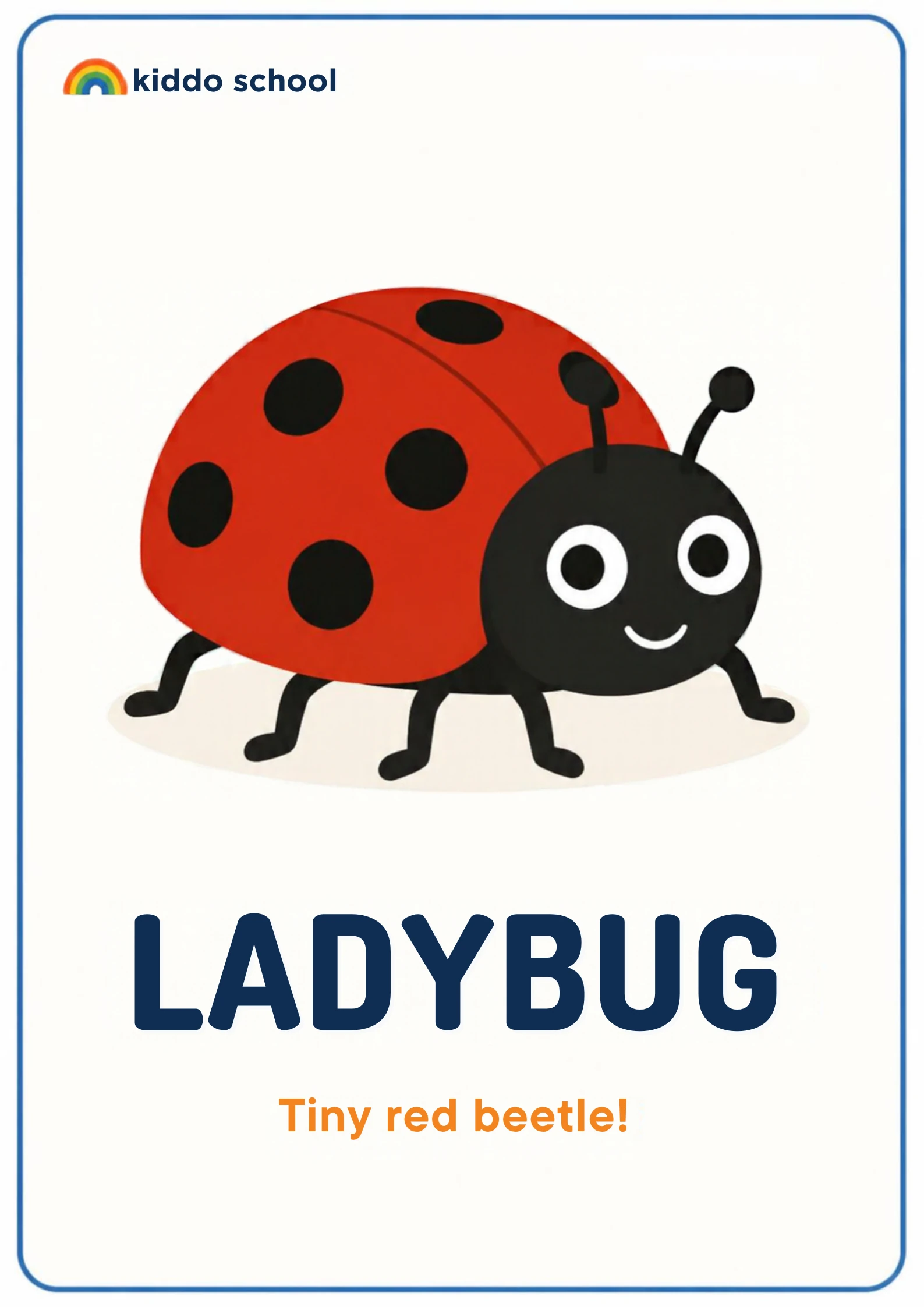
What is this?
A ladybug is a very small, round beetle with a red shell and black spots. It crawls slowly over leaves and stems, eating tiny bugs that would otherwise nibble the garden — a small friend with a big job.
What does it mean?
The ladybug matches a toddler’s own scale: little, round, red and friendly. Pointing at its spots is often a two-year-old’s very first purposeful counting — real pointing, real numbers, one tiny beetle.
What does the child need to know?
The ladybug is red with spots and crawls on leaves, and it helps the flowers by eating pests. It is a look-at friend too — small things are exactly the things fingers want to poke, so hands stay gentle and down.
Why this matters
Counting spots on a card is counting without pressure: any number reached is a win, and the same beetle offers a fresh total every time. The helper story plants the first seed of caring for the garden.
What it teaches
Early counting with real pointing, colour naming (red and black), fine-motor pointing at tiny targets, and the first this-creature-has-a-job idea, planted small.
Words to learn
ladybugspotsredtinycountgentle
Say this to your child
“"Look — a ladybug! Red and round with little black spots. Can you point to a spot? One... two! The ladybug munches the bugs that nibble the leaves, so the flowers say thank you. We watch our tiny friend and keep our big fingers to ourselves."”
Step by step
- Show the card and say ladybug — then let your toddler find it: where is the little red friend sitting?
- Hunt the spots together: point to one, then another, saying one, two for as long as the counting mood holds — any total is a triumph.
- Draw a big ladybug on paper and let your toddler add the dots with a finger dipped in paint or a fat crayon — the spottier the better.
- Tell the helper story in one line: the ladybug eats the tiny bugs that nibble the leaves, so the flowers say thank you.
- End with the rule: the ladybug is so small that our big fingers stay far away — we look, we count, and it crawls on its way.
Look closer at the picture
Find the ladybug together and say its long, lovely name. This ladybug is red with spots — ask your toddler to point at each spot they can find, and count along for as long as the pointing stays happy.
Ask your child
"Where is the ladybug?" "What colour is it?" "Can you find a spot?" "Do our fingers touch the tiny ladybug, or stay far away?" — answered with points, a colour word and a careful little head-shake.
What your child can say or do
"Ladybug!" shouted at anything red and round, spots pointed out on every page from now on, and thumbs painted with dots at craft time. Some toddlers will lower one careful finger towards a real ladybug — the moment to open your palm and redirect to looking.
Out in the real world
Ladybugs land on leaves, walls and pram hoods all summer. Each one is a rerun: whisper the name, point out the spots you can see, say thank you for helping the flowers, and let it crawl off untouched.
Try it together
Spot-sticker ladybug: draw a big red circle, then hand your toddler black stickers or crayon dots to place wherever spots belong. Peeling and pressing is real fine-motor work wearing a ladybug costume.
Understanding check
Show any red-dotted picture tomorrow and ask what it is: a quick ladybug means the word and the shape have bonded. Then ask what ladybugs do all day — munching the leaf-nibblers is the answer worth waiting for.
Parent tips
Count to whatever number the day allows: two spots today, five next week — the pointing matters more than the total. Keep paint dots big and taste-safe, because fingers wander to mouths at two.
Staying safe
A ladybug is fingernail-small, so the looking happens with hands down and eyes close. After any garden or paint session, wash little hands — and nothing from the garden, spots or leaves or bugs, ever goes near a mouth.
This lesson pairs with the Ladybug flashcard in the library — print it, show it, keep it on the fridge. Back to Garden Bugs & Friends (Toddler 8).