
Match Red — a step-by-step lesson for grown-up and child
This lesson turns matching into a colour game: one red thing above, a small row below, and exactly one answer your toddler gets to find and claim.
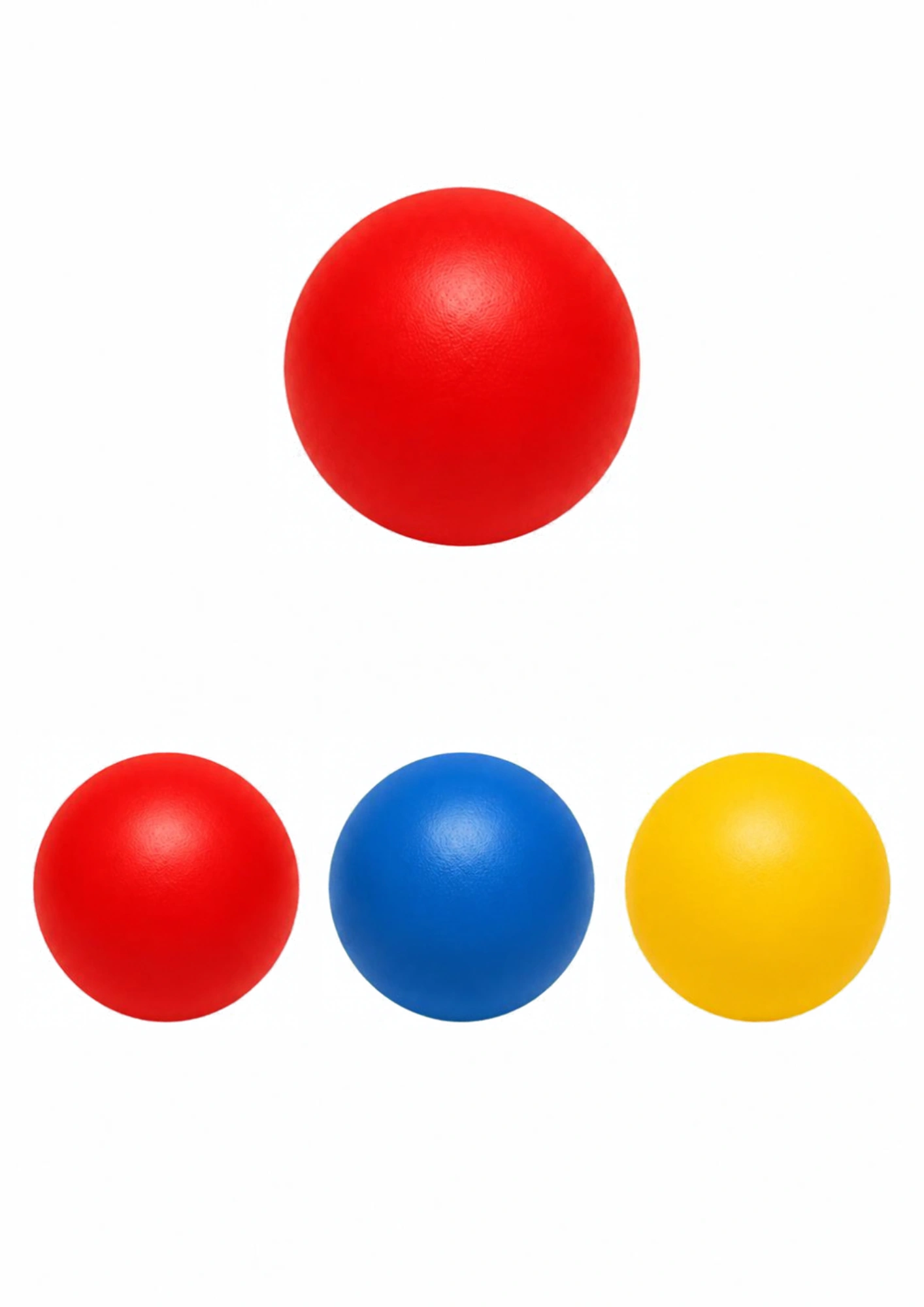
What is this?
Matching by colour means ignoring shape and size and finding the one that shares the colour. Here the colour is red — loud, common and usually a toddler’s first colour word.
What does it mean?
Colour matching is harder than object matching: your toddler must decide what matters (the colour) and what does not (everything else). That filtering is real thinking, dressed as a game.
What does the child need to know?
The hunt matters more than the hit: a wrong choice gets a kind look and a together-check, never a fix. Red said back to you in any accent counts as the answer.
Why this matters
Red is everywhere — coats, cups, cars, berries — so the game reruns all day. Every found red thing is a repetition of both the colour and the matching skill.
What it teaches
Colour recognition, visual scanning down a row of choices, and decision-making — your toddler choosing one answer and committing to it with a point.
Words to learn
redmatchfindsamecolourlook
Say this to your child
“"Here is the red one. Can you find the other red one, down below? Look at each one… is it red? That one! Red and red — they match! Say it with me: red!"”
Step by step
- Show the card and name the top red thing, then sweep your finger down the row below: one of these matches. Let the searching start.
- Ask the question simply: can you find the other red one? Then wait — count five slow breaths before you help.
- When the red twin gets found, trace from top to bottom with one finger: red… red. Same! The connection made visible.
- If a wrong choice comes first, look together kindly: this one is blue — where is red? Then let your toddler take the next pick themselves.
- Rerun with real objects: put three things on the table, two red and one not, and let the same find happen in three dimensions.
Look closer at the picture
The card shows a red colour matching activity with visual choices — one red to match and a row to search. Ask your toddler to point at the red up top first, then hunt the row below.
Ask your child
"Can you find the other red one?" "Is this one red?" "Where else is red in this room?" "What did you match?"
What your child can say or do
A decisive point is the usual answer, often with a shout: red! or dat one! Some toddlers match with their whole arm swept across the row — the sweep is scanning, and scanning is the skill.
Out in the real world
Street walks turn red-hunt: post boxes, stop signs, red coats, red cars. One found red per outing keeps the lesson alive without a card in sight.
Try it together
Red picnic: gather three red things and two others from one room onto a blanket, and let your toddler hand over only the red ones. Wrong hand-overs get named and thanked, not corrected.
Understanding check
Tomorrow, two red things and one blue: ask for the red pair. A grab of both reds passes; a pause at the blue with a shake of the head passes even better, because not-red is the deeper half of the idea.
Parent tips
Keep the row short — three or four choices, not ten. Say red before each find and after it: red cup, red found. The word before the point is what builds the label, not just the lucky tap.
Staying safe
Table-top finds stay bigger than a toilet-roll tube and away from the mouth — red berries found on the ground are for birds, not toddlers. The blanket game lives on the floor, clear of stairs.
This lesson pairs with the Match Red flashcard in the library — print it, show it, keep it on the fridge. Back to Matching & Sorting (Toddler 4).