
Sort By Shape — a step-by-step lesson for grown-up and child
This lesson runs the sort a second way: the objects stay, the rule changes from colour to shape, and your toddler discovers one pile can be split two different ways.
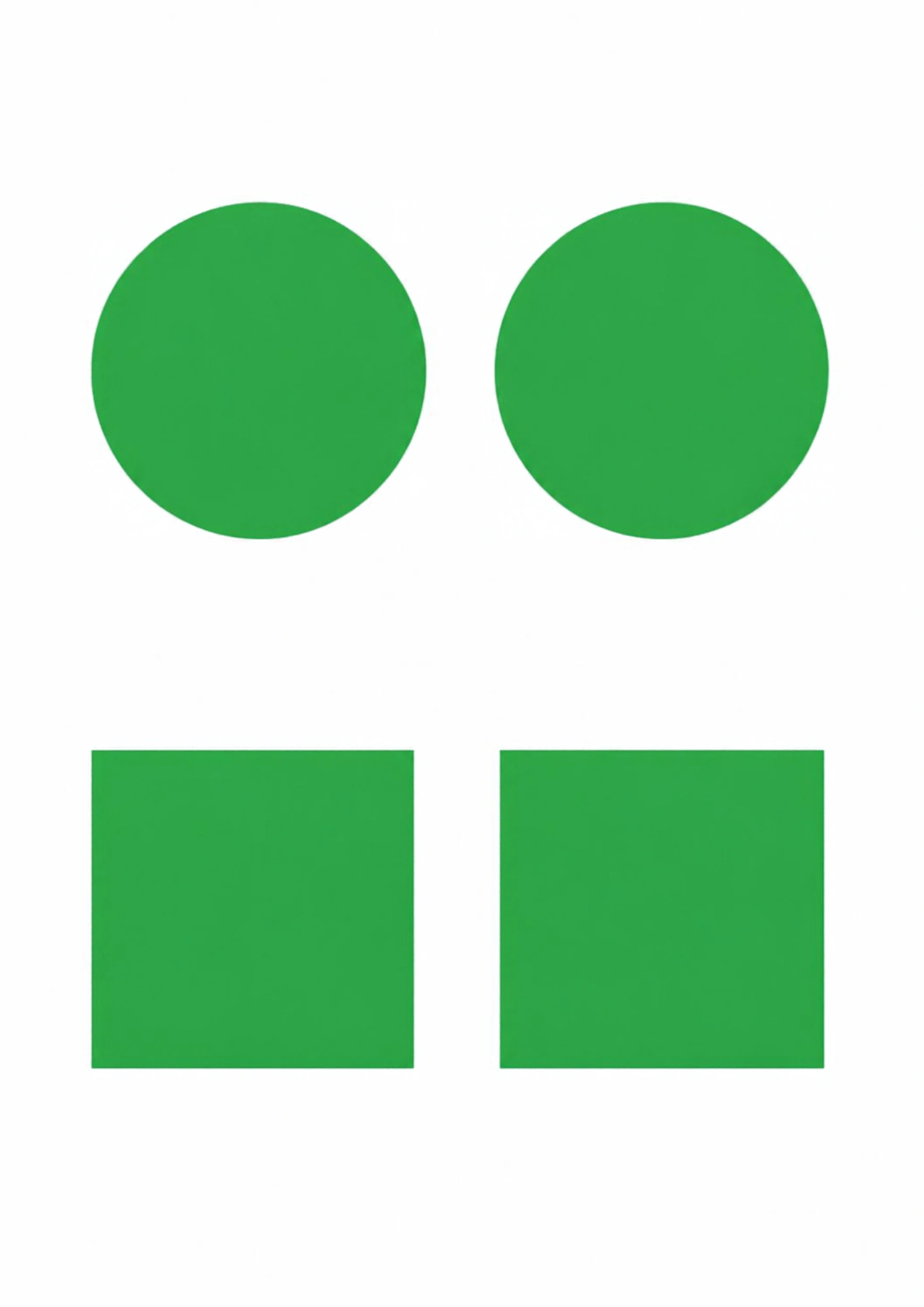
What is this?
Sorting by shape means the question changes: not which colour, but which outline. Circles gather with circles, squares with squares, and every piece gets asked the new question.
What does it mean?
Rule-switching is the real stretch: the pieces your toddler sorted by colour must be re-asked, re-checked and re-homed today. Discovering that one pile can split two different ways is a big idea wearing a small game.
What does the child need to know?
Announce the new rule at the start of every round — shapes today! — because the rule is the whole lesson. Wrong drops are information: name what the piece is and let it try again.
Why this matters
One toy box, two lessons: the same blocks that sorted by colour now sort by shape, doubling the play value of toys you already own. No new pieces required, ever.
What it teaches
Rule-switching, shape recognition under pressure, flexible thinking — and the early metaskill of knowing that sorting depends on the question you ask.
Words to learn
shapecirclessquaressortrulesame
Say this to your child
“"New rule — shapes today! Circles here, squares there. Is this one round? Circle — here it goes. Does this one have corners? Square! Look — same toys, sorted a different way. You did that!"”
Step by step
- Set out the same mixed pieces from the colour sort and announce the change: today we sort by shape — circles here, squares there.
- Sort one of each yourself with the question spoken every time: is it round? Then it is a circle. Corners? Square. The rule, made audible.
- Hand over the next piece and let your toddler ask and answer in their own way — a hover, a turn-over, a tap, then a drop.
- When the piles stand finished, point at both and say the big idea plainly: the same toys, sorted a new way. Same pieces — different rule.
- Swap rules once more if the mood holds — by size, by what rolls — then mix everything back and let the day have its toys returned.
Look closer at the picture
The card shows circles and squares for a sorting-by-shape activity — one family of round shapes, one family of cornered shapes, waiting for their teams. Ask your toddler to tap a circle, then a square, before the piles begin.
Ask your child
"Is this one round or cornered?" "Where do the circles go?" "Can we sort them a new way?" "What rule is today?"
What your child can say or do
Expect the rule to wobble: a square dropped with the circles, retrieved, then dropped right. The retrieve is the milestone — nobody mentions the wobble, everybody celebrates the second try.
Out in the real world
Two-bowl lunches sort by shape for free: round cucumber coins one bowl, square cheese slices the other. Blocks back in the box by shape is tidy-up doing a lesson’s job.
Try it together
Rule dance: sort by shape, then colour, then shape again — the same handful of pieces, three rules, one rug. Announce each rule change like a starting whistle and watch the brain change gear.
Understanding check
Ask for the circles only, from a mixed line of six pieces. All circles collected passes. A square handed over with a sorry face passes too — the checking glance before the drop is shape knowledge in action.
Parent tips
One rule at a time keeps the game honest: announce it, play it, then change it with a whistle and a grin. If your toddler invents a rule of their own — soft things here — that is the lesson graduating with honours.
Staying safe
Shape-sorting pieces obey the toilet-roll rule: too big to swallow, too light to hurt. The game ends when pieces start flying — rule-switching includes switching to thrown, and grown-ups call that ending.
This lesson pairs with the Sort By Shape flashcard in the library — print it, show it, keep it on the fridge. Back to Matching & Sorting (Toddler 4).