
Rose — a step-by-step lesson for grown-up and child
This lesson gives your toddler the garden’s best smell word: sniff the pretend rose, sniff the kitchen, sniff the outside air — and learn why we smell roses with our noses only.
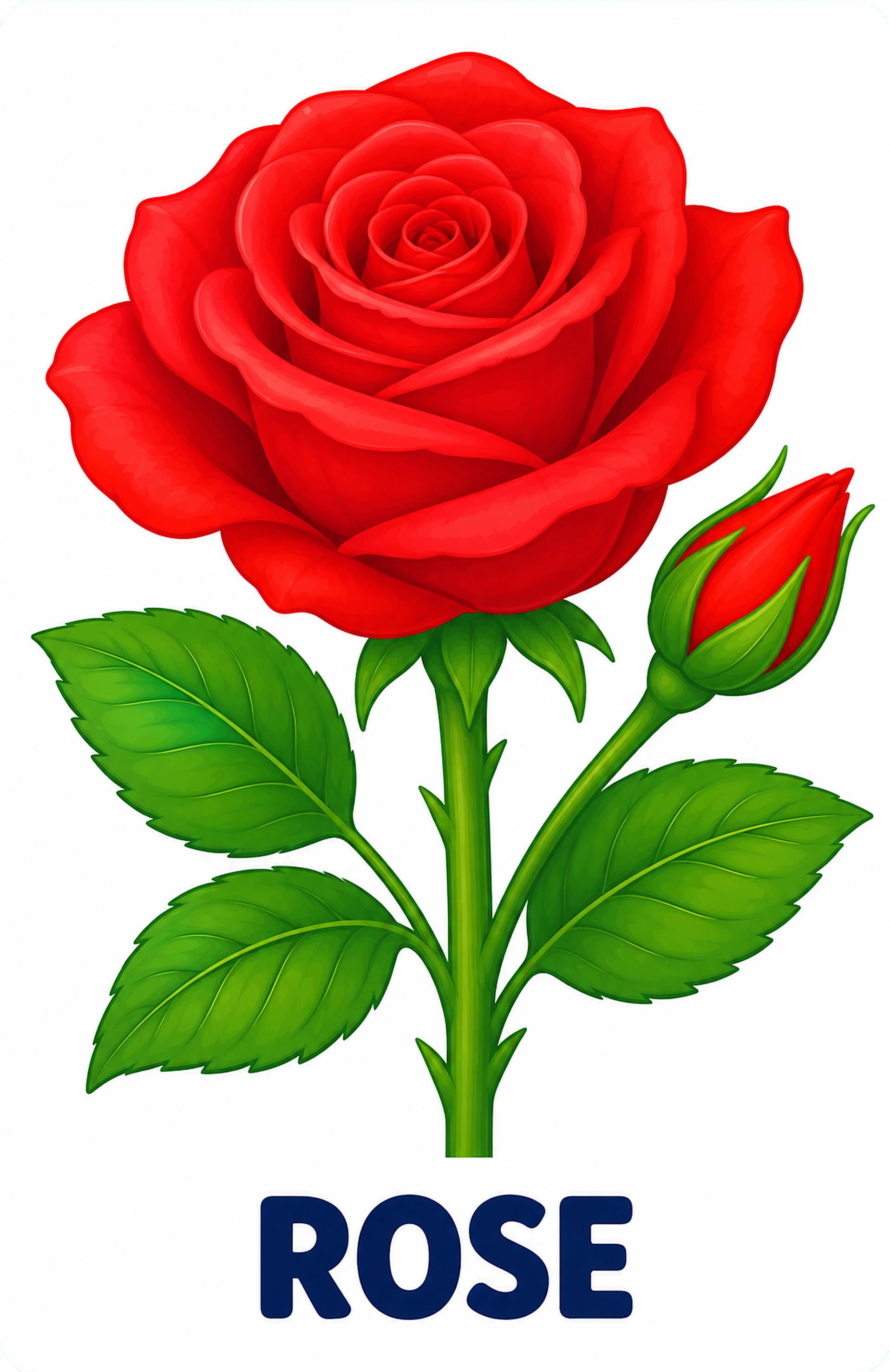
What is this?
A rose is a flower with layers and layers of soft petals and a scent that makes everyone lean in. Rose bushes grow prickles — sharp little spikes — on their stems.
What does it mean?
The rose teaches smelling as a way of knowing. Toddlers live nose-first anyway, so a flower that asks for a sniff is the most natural lesson in the set — with a visible reason (prickles!) for careful hands.
What does the child need to know?
Roses smell lovely and their petals feel soft — but the stems carry prickles, so we sniff with our noses and keep our fingers to ourselves. Grown-ups hold the smelling when the rose is close.
Why this matters
A flower with a boundary built in is a gift: your toddler practises the ask-first, touch-later pattern on something they meet everywhere. And sniffing games sharpen a sense most cards ignore.
What it teaches
Smell awareness and the sniffing motion itself, gentle-breath control, soft/hard and smooth/prickly contrast words, and the early safety habit of looking before reaching.
Words to learn
rosesmellsniffpetalspricklessoft
Say this to your child
“"A rose! Sniff, sniff — roses smell so lovely. Soft petals, layer after layer. But look here: prickles on the stem! So our noses do the smelling and our hands stay down. When you want a really big sniff of a real rose, you come to me first and we sniff together."”
Step by step
- Show the card, say rose, and take a big theatrical sniff of the air — the smell should arrive before the explanation does.
- Sniff-hunt the room together: what smells nice here? An orange, a hand cream, the outside air through the door — sniff and give each one a word.
- Hold your palm flat and stroke it with one finger: petals are soft like this — then tap your other arm lightly: prickles! Soft and spiky, felt in the air.
- Say the rule with your hands: noses smell the rose, fingers stay far away, and smelling close happens only in a grown-up’s arms.
- Finish with a pretend bouquet — sniff each invisible rose you hand each other and sigh happily, three stems at least.
Look closer at the picture
Say rose and sniff the air beside the card, eyes closed — then ask your toddler to find the petals with one careful finger. The flower on the card does the smelling for you today.
Ask your child
"What does the rose smell like?" "Can you sniff like a puppy?" "Are the petals soft or spiky?" "Who holds you when you smell a real rose?" — answered with a sniff, a soft word and a hug-shaped answer.
What your child can say or do
"Sniff sniff!" Expect dramatic sniffing at fruit, flowers and strangers’ perfume, roses declared on every walk, and the prickle rule recited at bushes. Random sighs of "lovely!" are part of the course.
Out in the real world
Roses bloom in gardens, parks and petrol-station tubs all summer, and appear in every bunch at the shop. Each one is a sniffing station: stop, sniff the air from a step away, name the flower.
Try it together
Smell detective: set out three safe smells — orange peel, a herb, a flower — sniff each with closed eyes, and name them. Then add the pretend rose and let your toddler teach YOU which is which.
Understanding check
Watch the next rose encounter: if your toddler sniffs the air with hands clasped and looks at you for permission to come closer, the prickle rule has bloomed — lesson complete.
Parent tips
Keep the sniff pretend whenever the rose is out of arm’s reach — the game works at any distance. Grow a rosemary or mint pot for a smell-my-child-can-pick-safely: same joy, no prickles.
Staying safe
Rose prickles scratch, so all close-up smelling happens in your arms or not at all — hands stay down outdoors. Watch that sniffing enthusiasm does not become leaning into flowerbeds: thorns, wasps and nettles live there too.
This lesson pairs with the Rose flashcard in the library — print it, show it, keep it on the fridge. Back to Garden Flowers (School Garden).