
Bird — a step-by-step lesson for grown-up and child
This lesson turns the bird card into your toddler’s first watching game: name the bird, notice it move, then keep still together and let a real one arrive on its own.
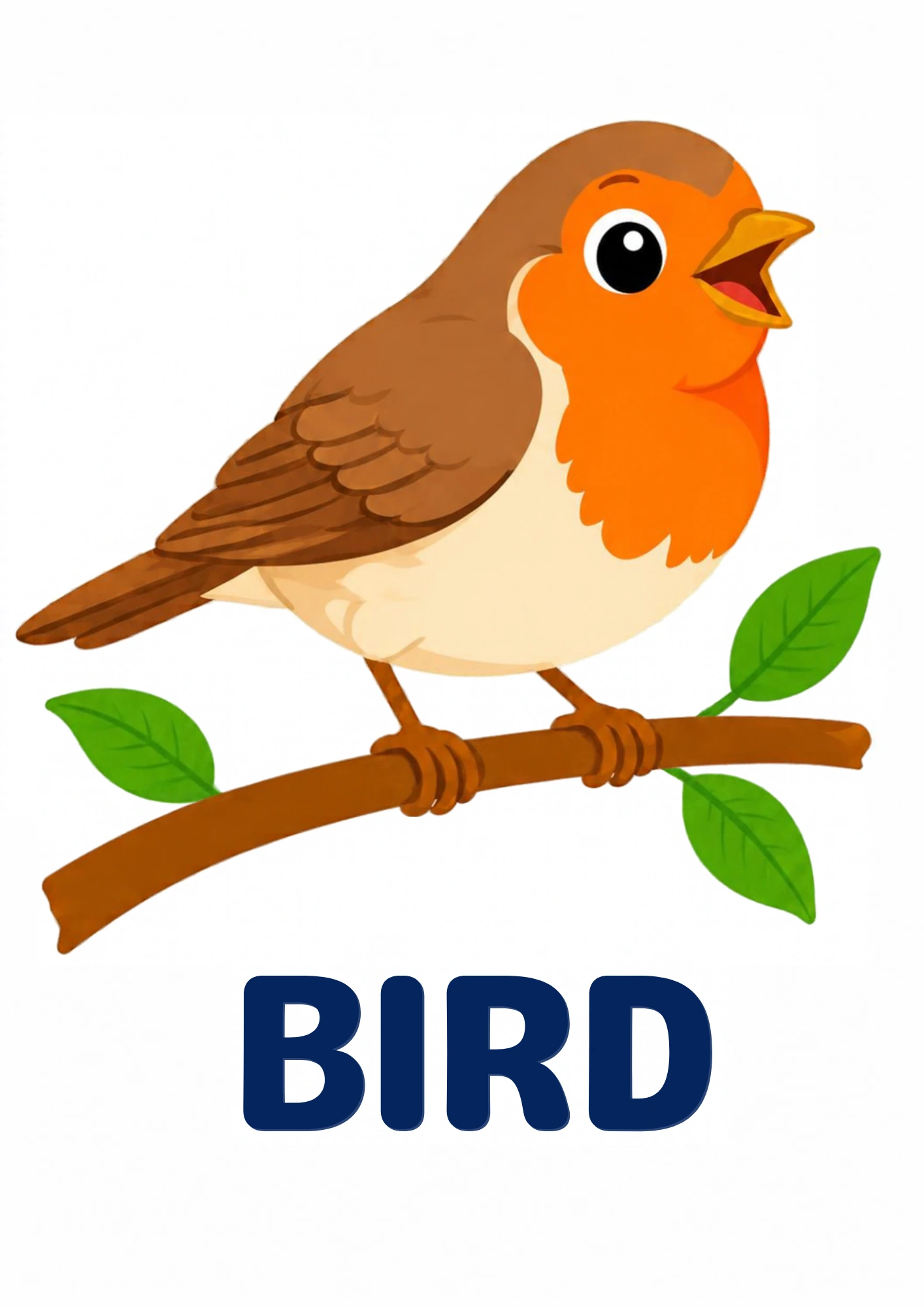
What is this?
A bird is an animal with feathers and wings that flies and sings. Birds visit gardens, hedges and windowsills every morning, looking for seeds and crumbs.
What does it mean?
Birds give a two-year-old the day’s first magic trick: something appears, moves and disappears on its own schedule. Learning to watch without touching is the deepest thing the card teaches.
What does the child need to know?
The one big idea: birds come to the still and quiet. Running feet send them away. We look at birds, we talk softly to them, and our hands stay down.
Why this matters
Watching a bird is a toddler’s first lesson in patience with a payoff — the stiller they sit, the longer the bird stays. That cause and effect is learned in the body, no words needed.
What it teaches
Attention and stillness (a real skill at two), first nature vocabulary, cause-and-effect noticing, pointing and naming, and the gentle beginnings of caring about living things.
Words to learn
birdfeatherswingsseedsquietfly
Say this to your child
“"Here is the bird! Birds have wings and they fly. When we get quiet like this — ssh — and watch out the window, a bird might come and say hello. Birds are watch-friends — chasing only sends them away. Quiet feet find birds."”
Step by step
- Show the card and say the word bird slowly, twice — then make a little tweet together so the word arrives with a sound.
- Ask your toddler to find the bird’s beak and its wing on the card with one finger — pointing is how twos study a picture.
- Carry the card to a window and whisper: "maybe a bird is outside right now." Looking quietly is the game, and the whisper sets its mood.
- Sprinkle a few seeds on a sill or step, stand back, and count the seconds of stillness out loud — even ten quiet ones deserve applause.
- End with the rule, warm and short: birds are our look-at friends — hands down, feet still, and they come close all by themselves.
Look closer at the picture
Find the bird on the card with one fingertip. Say bird together, then make a little tweet. Ask where the beak is and where the wing is — pointing is a two-year-old’s way of studying a picture.
Ask your child
"What does the bird say?" "Can you point to the wing?" "Where did the bird go?" "Were your quiet feet still?" — questions a two-year-old can answer with a sound, a point or a giggle.
What your child can say or do
"Tweet tweet!" "Bird gone!" Your toddler may press their nose to the window, freeze dramatically still for three whole seconds, or point at pigeons, crows and ducks on every walk afterwards, calling each one bird.
Out in the real world
Birds are the most reliable wildlife in any street: on the sill, in the hedge, strutting across the car park at the shop. Each sighting is a rerun of the lesson — point, whisper, watch, wave goodbye.
Try it together
Seed sprinkle and freeze: shake a tiny cup of seeds onto a step, then play freeze together — crouch, hold hands tight, breathe loudly enough to hear, and wait. Whoever stays frozen longest wins, and the prize is usually a bird.
Understanding check
Watch what happens at the next window: if your toddler drops to a whisper and points instead of banging on the glass, the lesson has landed — stillness was the whole point.
Parent tips
Keep one card by the window permanently. Two minutes is a full sitting at this age; stop while the pointing is still happy. Name the big obvious kinds as they come — black bird, big beak — precision can wait years.
Staying safe
Windows and doors stay shut while you watch together, and the sill stays for seeds, not elbows. If you feed birds, do it outside where they stay wild — and wash little hands after touching seed.
This lesson pairs with the Bird flashcard in the library — print it, show it, keep it on the fridge. Back to Garden Friends (School Garden).