
Chipmunk — a step-by-step lesson for grown-up and child
This lesson uses the chipmunk’s best trick — cheeks crammed with food — as a game your toddler can win: gather fast, stash it away, and remember exactly where everything went.
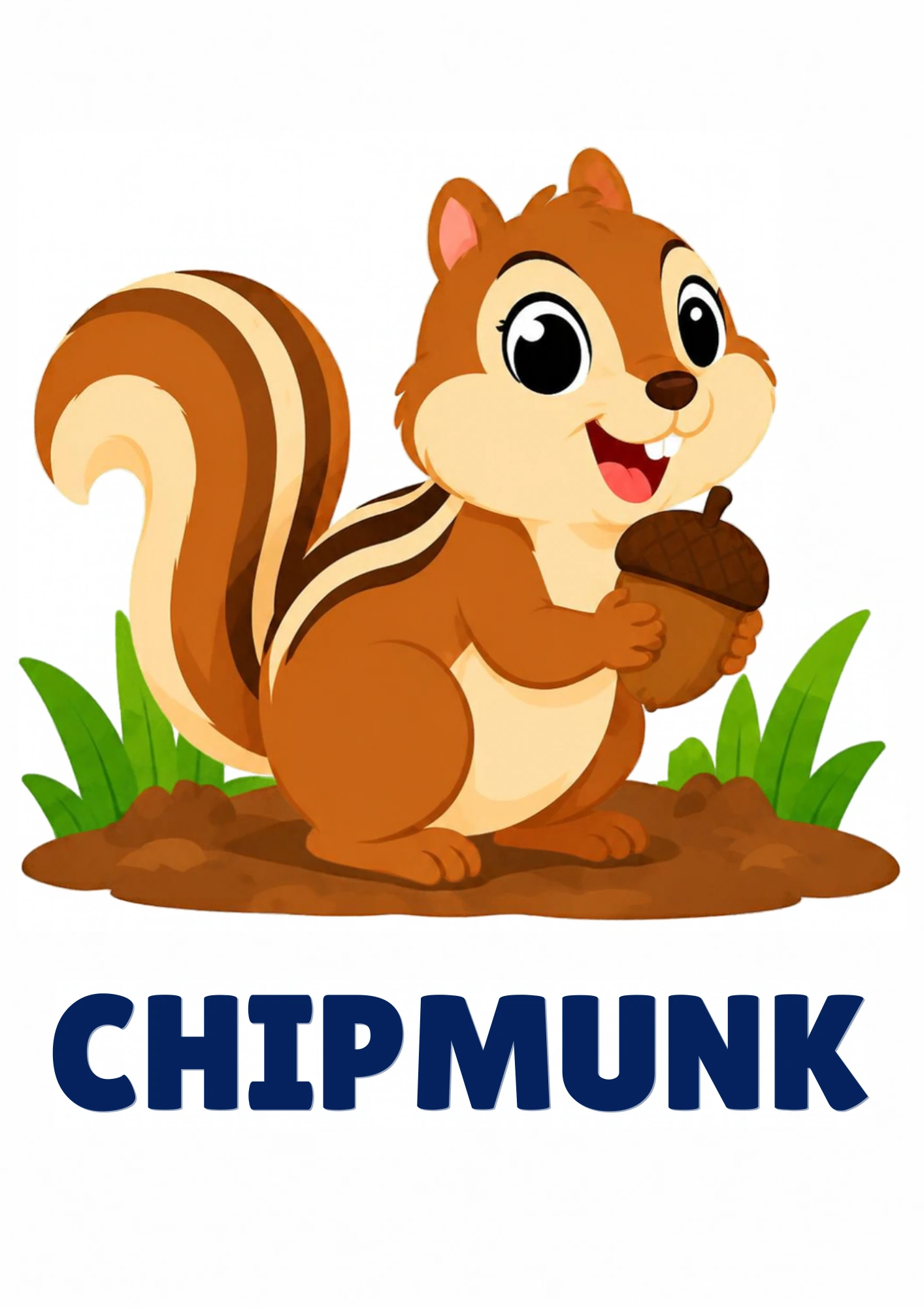
What is this?
A chipmunk is a small striped animal, like a squirrel wearing racing stripes down its back. It stuffs seeds into its stretchy cheek pouches and carries them home to its burrow.
What does it mean?
The chipmunk is the gather-and-hide specialist, and gathering is a game toddlers are brilliant at. It is also the rare animal lesson that ends with the playroom tidier than it started.
What does the child need to know?
Chipmunks carry food in their cheeks and hide it in burrows — and they remember every hiding spot. Wild and quick, they are a watch-only animal, even when the cheeks look funny.
Why this matters
Gathering games build working memory (where does it go?), categorising (all the blocks here) and speed with control. And the stash-remembering trick is your toddler’s first memory challenge with a real payoff.
What it teaches
Carrying and stashing (whole-arm coordination), memory for hidden places, sorting by kind, fast-but-careful movement, and vocabulary for stripes, cheeks and burrows.
Words to learn
chipmunkcheeksstripesgatherburrowseeds
Say this to your child
“"A chipmunk! See the stripes — a squirrel with racing stripes! It stuffs food in its big cheeks and carries it to its burrow, and it never forgets where it put things. Can you puff your cheeks? Can you gather like a chipmunk? We watch the little striped friend from far away."”
Step by step
- Show the card, say chipmunk, and puff your own cheeks out big — hold a breath in each one — the picture and the puffed face land together.
- Point out the stripes: a chipmunk is a squirrel with racing stripes — then scurry once across the room to prove the speed.
- Set up the gather: scatter blocks or toy food on one side of the room, place a basket burrow on the other, and let your chipmunk ferry everything home, cheeks puffed.
- Hide one item under a cushion mid-game and ask where it went — chipmunks always remember their stash, and so will your toddler.
- Finish with the rule, cheeks still puffed: chipmunks are quick and wild, so we watch them scurry and keep our hands cheerful at our sides.
Look closer at the picture
Say chipmunk and puff both cheeks out wide. Ask your toddler to find the stripes running down its back, then scurry to the toy basket and back — one quick chipmunk run, cheeks held the whole way.
Ask your child
"What does the chipmunk carry in its cheeks?" "Where does it hide its food?" "Can you scurry like a chipmunk?" "Do we hold the chipmunk, or watch it?" — answered with puffed cheeks, a dash to the basket and a happy head-shake.
What your child can say or do
"Cheeks!" Expect puffed-cheek faces at every meal, toys ferried to baskets in chipmunk style, and a suspicious talent for remembering where things were hidden. Tidying-up may never be the same again.
Out in the real world
Chipmunks live in woods, parks and gardens in many places, dashing between cover with cheekfuls. Every stripe-and-dash sighting reruns the lesson — point, puff, whisper, admire from the path.
Try it together
Cheek pouch relay: your toddler carries one item at a time pressed to their puffed cheeks from pile to burrow — one trip, one item, puff held the whole way. Silly, physical and weirdly calming.
Understanding check
Ask tonight where the chipmunk keeps its food: "in its cheeks!" followed by a stash report of hidden toys means the word, the habit and the memory game all landed.
Parent tips
Turn the daily tidy into the gather game — chipmunks tidy the burrow, and the burrow is the playroom. Keep the stash-hiding simple: one item, one cushion, one triumphant discovery.
Staying safe
Wild chipmunks are quick, jittery and unholdable — hands stay down and snack-feeding is a no, for their diet and yours. If gathering real seeds or nuts outdoors, they go in the basket, not the mouth.
This lesson pairs with the Chipmunk flashcard in the library — print it, show it, keep it on the fridge. Back to Garden Friends (School Garden).