
Hedgehog — a step-by-step lesson for grown-up and child
This lesson turns the hedgehog card into a hiding game with a safety lesson folded inside: curl small, peek gently, and understand that some friends are loved from a distance.
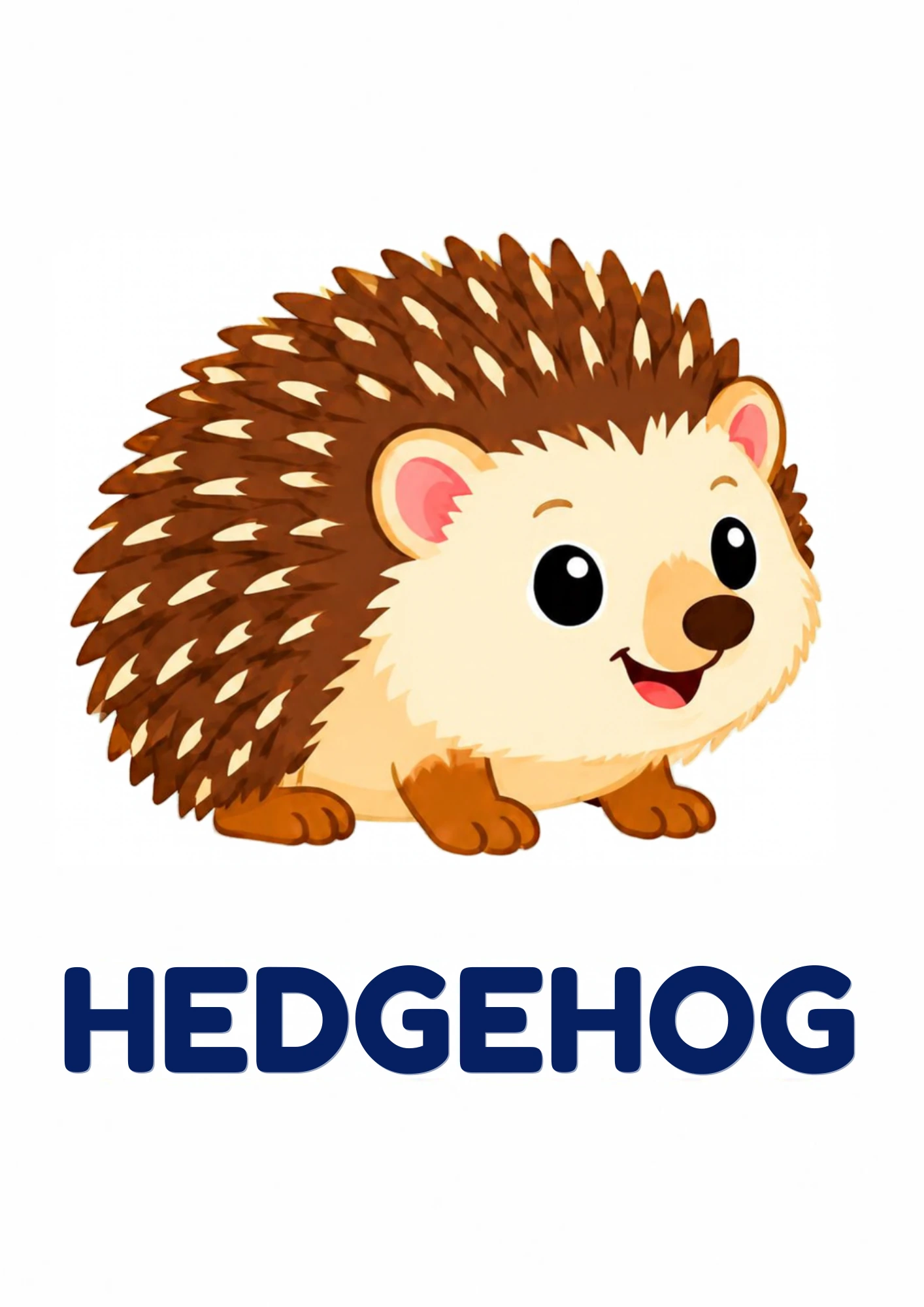
What is this?
A hedgehog is a small animal whose back is covered in sharp spikes called spines. It snuffles around at night eating slugs and bugs, and curls into a ball when it feels unsafe.
What does it mean?
The hedgehog carries the set’s clearest boundary: prickly means do-not-touch. For a two-year-old, meeting that boundary in a story-shaped way — curl small, peek out — makes the rule feel wise, not cruel.
What does the child need to know?
Two facts and one rule: hedgehogs have spines instead of soft fur, they come out at night, and we never touch them — the spikes are for protection, and we protect them right back by keeping our hands away.
Why this matters
Toddlers learn some-things-are-not-for-hands from animals first, because the reason is visible — spines! A boundary with a visible reason is the easiest boundary for a two-year-old to accept and remember.
What it teaches
Body shaping (curling into a ball takes real control), gentle curiosity about other creatures’ bodies, the night-and-day idea, and early empathy: the hedgehog curls up because it feels safer, just like you sometimes.
Words to learn
hedgehogspikescurlnightsnufflegentle
Say this to your child
“"This is a hedgehog! Its back is full of tiny spikes — prickly, prickly! When it feels shy, it curls into a little ball, like this. Hedgehogs come out at night, and we never touch them. We look, we whisper hooray, and we let it snuffle on its way."”
Step by step
- Show the card, say hedgehog, and run one fingertip very lightly along your own arm — prickly, prickly — so the spikes arrive as a feeling.
- Curl up on the rug into a tight ball together, then peek out with only a nose showing — the hedgehog’s own hiding trick, and toddlers adore it.
- Snuffle around the room like hedgehogs hunting supper — soft snuffling noises, slow wandering, one imaginary slug eaten each.
- Explain the night habit simply: hedgehogs wake up when we go to bed, so a garden torch from the window is how we might ever see one.
- Land the rule warmly: hedgehogs are prickly, so our hands stay far away — we love them by leaving them be.
Look closer at the picture
Find the hedgehog together and say its long name slowly — hedge-hog. Curl up small like the animal on the card, peek out with a nose, and ask what covers its back. Prickles is the answer worth waiting for.
Ask your child
"What does the hedgehog have on its back?" "Can you curl up small?" "When does the hedgehog wake up?" "Do our hands touch the hedgehog, or stay far away?" — answered with a curl, a whisper and a firm little head-shake.
What your child can say or do
"Prickly!" "Hedgehog night-night!" Expect curl-up games at bedtime that double as wind-down, hedgehogs suspected under every bush, and the rule quoted back in emergencies — including, eventually, at you: "no touch!"
Out in the real world
Hedgehogs visit gardens after dark, snuffling along fences; most toddlers meet them in stories first, which is fine preparation. Any night sighting from a window becomes the day’s headline.
Try it together
Hedgehog hide-and-peek: curl up under a light blanket, peek out with a nose, hide again — then swap and let your hedgehog find YOU curled up. Slow, dark and cosy by design.
Understanding check
Ask tomorrow what a hedgehog feels like: if the answer is prickly paired with pulling your hand back, both the word and the boundary have landed — the lesson is complete.
Parent tips
Let the curl-up game double as the calm-down trick on stormy days — a body that knows how to curl small can find calm on purpose. Never demo spines with real objects; the fingertip-on-arm pantomime carries the idea safely.
Staying safe
Real hedgehogs are strictly hands-off: spines scratch, and they can carry ticks and fleas. If a hedgehog calls by after dark, a shallow dish of water is the kind welcome — bread and milk make them ill, so those stay inside.
This lesson pairs with the Hedgehog flashcard in the library — print it, show it, keep it on the fridge. Back to Garden Friends (School Garden).