
Mole — a step-by-step lesson for grown-up and child
This lesson goes underground: your toddler digs, tunnels and crawls while learning that some garden neighbours spend their whole lives down below, and that is worth a whisper of wonder.
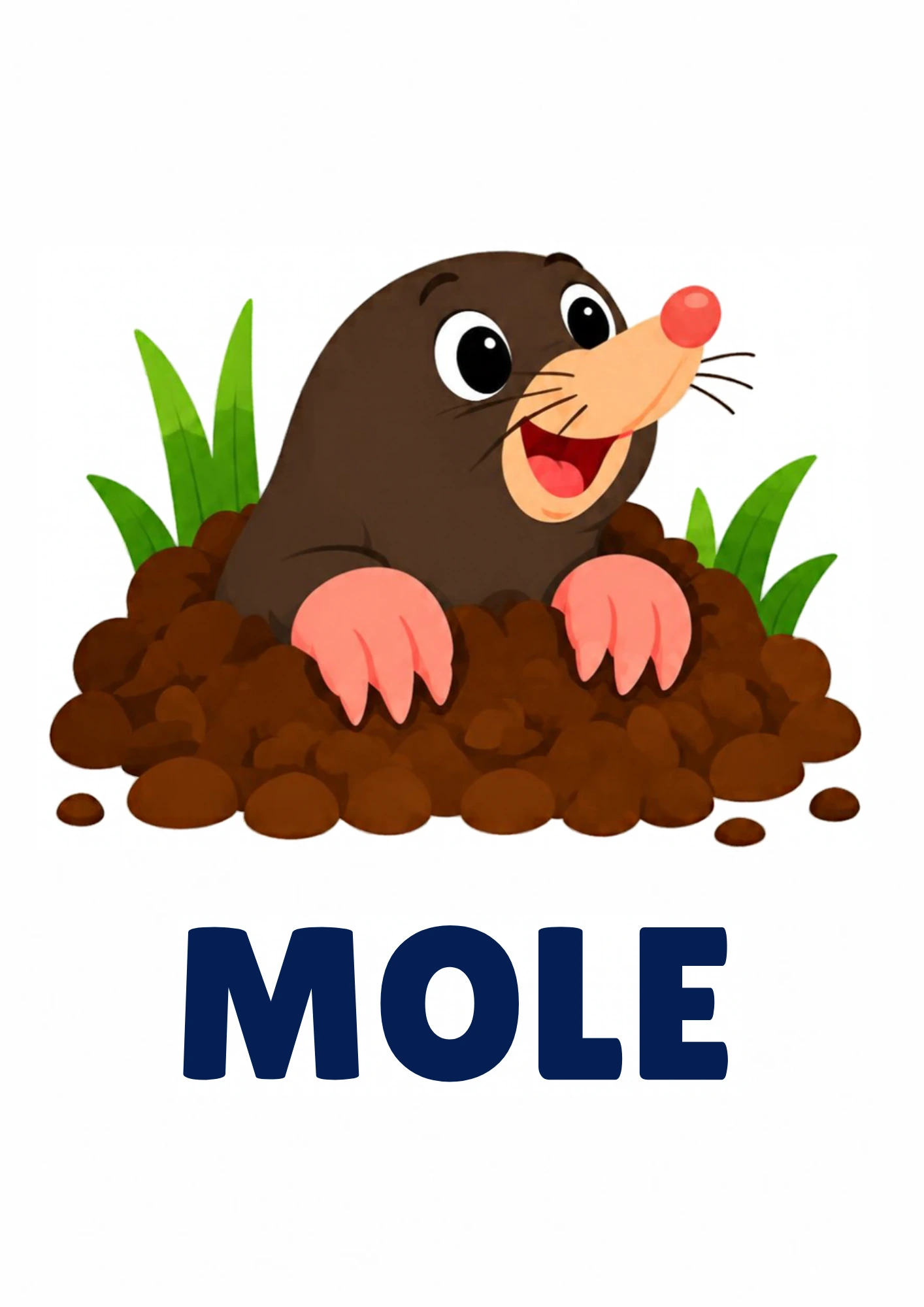
What is this?
A mole is a small animal with soft dark fur and big digging paws that lives almost its whole life in tunnels underground. It eats worms and bugs and rarely comes up to the surface.
What does it mean?
The mole stretches a toddler’s world downward — there is a whole hidden layer under the lawn. Knowing a creature exists that you hardly ever see is an early lesson in how big the world really is.
What does the child need to know?
Moles dig tunnels with strong paws and live in the dark. Meeting one above ground is rare and special — if it ever happens, we whisper, we watch for a moment, and we let it dig on.
Why this matters
Digging is deep sensory play — resistance, texture, mess — and tunnelling through blankets builds body awareness in tight spaces. Both are the kind of input busy toddler nervous systems are hungry for.
What it teaches
Hand and arm strength (digging, scooping, patting), spatial play (under, through, tunnel), sensory tolerance for the dark and cosy, and the abstract leap of imagining life underground.
Words to learn
moledigtunnelundergroundpawsdark
Say this to your child
“"A mole! It digs, digs, digs under the garden — tunnels everywhere, all in the dark. Moles have big strong paws for digging. Can you dig a tunnel like the mole does? Can you crawl through it? If we ever see a real one, we whisper — it hardly ever comes up to visit."”
Step by step
- Show the card, say mole, and hold your hands up as digging paws — curl your fingers and show the scooping motion.
- Fill a pot with clean soil or head for the sandpit and dig with spoons and cups, narrating the tunnel as it grows longer.
- Build a blanket tunnel between two chairs and crawl through it, moles in the dark — a small torch adds real magic.
- Tell the truth simply: moles live down there all the time, and their eyes are tiny because the dark is their daytime.
- End with the molehill fact: those little soil volcanoes on lawns are mole work — a sign your underground neighbour is busy.
Look closer at the picture
Say mole and hold up curled digging paws. Ask where the mole lives — down below, in the dark — then scoop the air twice together. The card shows the tunneller; your hands show the job.
Ask your child
"Where does the mole live — up high or down low?" "Can you dig deep like the garden mole?" "Is it light or dark in the tunnel?" "What are those little molehills on the grass?" — answered with digging, crawling and a solemn "down low".
What your child can say or do
"Dig dig!" Expect sandpit tunnelling marathons, blanket forts claimed as burrows, and molehills pointed out on every lawn walk. Dark-cosy play may become a bedtime favourite — moles sleep well.
Out in the real world
Moles stay hidden but their molehills advertise them on lawns, parks and verges everywhere. Spotting the hill and knowing who built it is your toddler’s first piece of detective natural history.
Try it together
Tunnel run: chair-blanket tunnel, crawl through, pat the "soil" (a duvet) flat behind you, then dig a spoon-pot mine in the sandpit and connect the two stories — the same mole, two playrooms.
Understanding check
Ask what a mole does all day: "digging!" — with paws demonstrated — means the card moved in. Bonus if the answer arrives from inside a blanket tunnel.
Parent tips
Keep digging tools toddler-sized and the soil clean and chemical-free; a dedicated dirt pot beats the flowerbed for repeat play. Join the crawl — tunnels are twice as funny when the tunnel-leader fits badly.
Staying safe
Dig in sand, topsoil or a clean plant pot — never where chemicals, pets or unknown muck might be, and no soil in mouths, ever. Blanket tunnels stay low and open-ended so a crawl is always an easy exit; wash hands after all digging.
This lesson pairs with the Mole flashcard in the library — print it, show it, keep it on the fridge. Back to Garden Friends (School Garden).