
Squirrel — a step-by-step lesson for grown-up and child
This lesson borrows the squirrel’s own game — dash, stop, look — and hands it to your toddler: scurry like a squirrel at home, then freeze and spot the real one from the path.
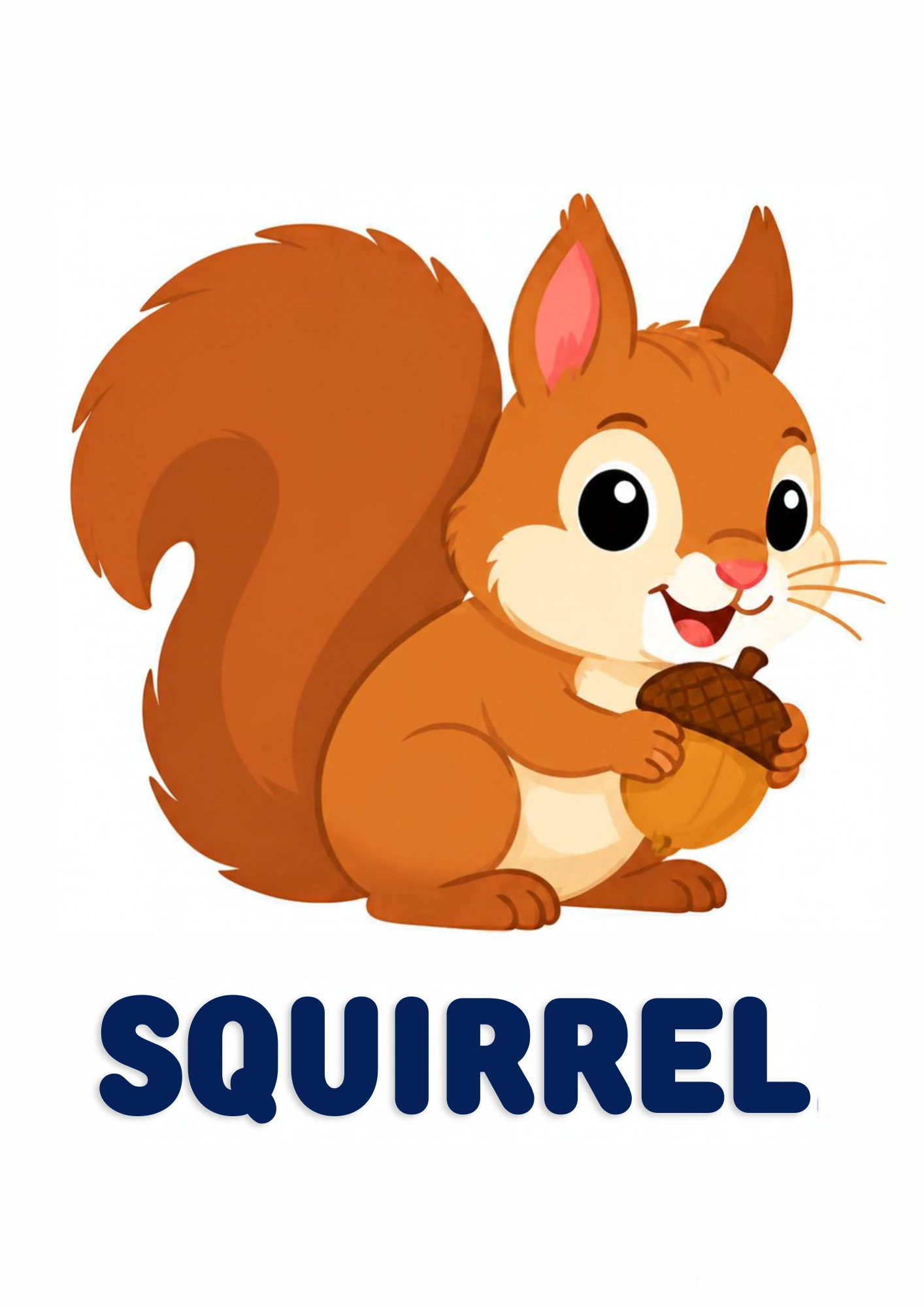
What is this?
A squirrel is a small furry animal with a big bushy tail that climbs trees and buries nuts to eat later. Squirrels dash along fences and branches all day long.
What does it mean?
Squirrels are the only wild animal a toddler sees almost daily, doing something a toddler loves: hurrying. Naming the dash and the tail gives your child a script for every park visit from now on.
What does the child need to know?
The squirrel game has two moves: scurry fast, then freeze and look around — that is exactly how real squirrels behave. And the watching rule holds: we look at squirrels; our hands stay low.
Why this matters
Freeze-and-watch is an attention exercise disguised as play, and spotting a squirrel in a tree is your toddler’s first genuine search-and-find. Owning an animal they see every day builds the confident feeling that the world is knowable.
What it teaches
Visual tracking (eyes following the dash), impulse control in miniature (freeze!), climbing-and-crouching movement play, vocabulary for tails and trees, and the pride of a spot announced loudly.
Words to learn
squirreltailtreenutsdashclimb
Say this to your child
“"Look — a squirrel! See the big fluffy tail? Squirrels run up the tree, stop, and look around. Can you scurry like a squirrel? Now freeze... and watch. We look at squirrels from far away, and they put on their show for us."”
Step by step
- Hold up the card and say squirrel with a big wagging arm behind you — a make-believe tail makes the new word unforgettable.
- Play the squirrel’s own game indoors: scurry three steps, stop, look left, look right, scurry again — narrating each move as you both do it.
- Hide a toy nut under one of three cups, shuffle slowly, and let your toddler find it — squirrels always remember where their food is hiding.
- Take the card outside to any tree and whisper the question: is a squirrel up there right now? Eyes only, quiet feet.
- Close with the rule, spoken with a smile: squirrels are look-at friends — we watch their tails, and our hands stay by our sides.
Look closer at the picture
Look for the squirrel’s tail on the card and wag an arm-tail of your own. Say squirrel twice, then ask what the tail is doing — bushy is the word you are fishing for with your toddler.
Ask your child
"Where is the squirrel going?" "What is its tail doing?" "Can you freeze like a squirrel?" "Did we touch the squirrel, or watch it?" — answered with a dash, a freeze and a proud point.
What your child can say or do
"Squirrel!" shouted at full volume in every park. Expect arm-tail wagging at dinner, nut-hiding games under cushions, and the first honest freeze when a real squirrel crosses the path — the watching rule working exactly as built.
Out in the real world
Squirrels live wherever trees do: the garden, the park, the churchyard, the tree outside the bakery. Every dash between branches is a rerun — point, whisper, follow with your eyes only.
Try it together
Three-cup nut hunt: hide a nut (or any small toy) under one cup, shuffle, and let your squirrel find it. Swap jobs — being the hider is the cleverer half of the game.
Understanding check
On the next walk, watch your toddler’s feet when a squirrel appears: still feet and a pointing finger mean the lesson landed — the freeze has replaced the chase.
Parent tips
Follow real squirrels with your eyes, never your feet — say that line on every sighting until your toddler finishes it for you. Keep the cup game tiny: three cups, one toy, big celebration.
Staying safe
Chasing is the danger here — a toddler dashing after a squirrel stops watching for paths and prams. Hold hands near roads, and let your fingers, not theirs, do any nut-handling; unknown nuts are not for mouths.
This lesson pairs with the Squirrel flashcard in the library — print it, show it, keep it on the fridge. Back to Garden Friends (School Garden).