
Garden Bench — a step-by-step lesson for grown-up and child
This lesson sits down: your toddler learns the bench as the garden’s finishing line — the place where adventures end, snacks happen and the view gets named out loud, three things at a time.
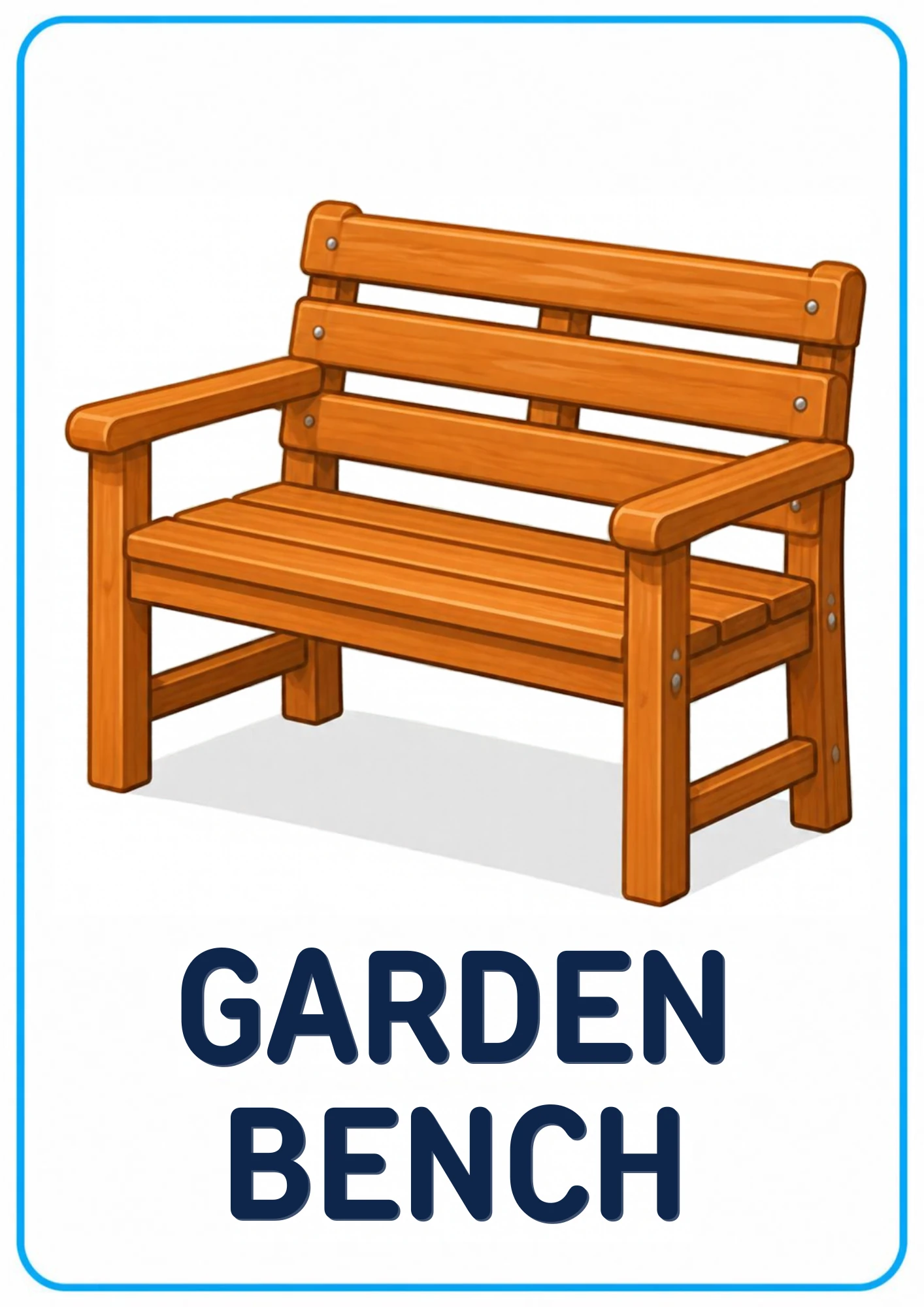
What is this?
A garden bench is a long outdoor seat, usually wooden, where people sit to rest, eat and look at the garden. Every good garden has one, and every good garden visit ends on it.
What does it mean?
The bench gives the garden a shape: adventure, then rest. Naming the sit-down place teaches your toddler that outings have endings — and that the ending is a treat, not a punishment.
What does the child need to know?
The bench is where the garden sits down: snacks, stories and big looks happen there. Wooden seats hold the morning damp, so a grown-up hand checks first — then up you climb, and name what you can see.
Why this matters
A named rest spot builds the outing rhythm toddlers thrive on: go, go, go, then sit and say. Naming three things from the bench is observation, memory and language practice disguised as a snack break.
What it teaches
Sitting still with a purpose, observation and naming from a fixed viewpoint, snack-and-story routines, damp-or-dry checking as a life skill, and the calm pride of a completed adventure.
Words to learn
benchsitrestviewsnackstory
Say this to your child
“"The garden bench — rest stop! This is the garden’s own sitting spot: snack seat, story seat, the finish line of every trip out here. Climb up, wriggle in... now spot three things from up there — maybe a tree, maybe a bird, maybe a cloud. Wonderful looking! Every garden trip ends sitting together, right here."”
Step by step
- Show the card, say garden bench, and sit down on the floor cross-legged — the bench pose, indoors edition.
- Tell the bench story: it is where the garden rests — snack seat, story seat, the place where every garden trip properly ends.
- Play bench at home: sit together and each pick out three things in sight — a plant, a light, a teddy — then swap turns.
- At a real bench, the grown-up hand checks for damp first, then up you climb — sit, wiggle in, and start the naming.
- Close every garden visit the same way: bench, snack, three things named, story — the garden is officially finished, and the finish line is lovely.
Look closer at the picture
Sit down cross-legged where you are and say garden bench. Ask your toddler to find the long seat on the card, then name three things in this room, bench-style — rest included.
Ask your child
"Where do we sit in the garden?" "What happens on the bench?" "Can you pick out three things in sight?" "Who checks if the bench is dry?" — answered with a sit, a snack claim and three surprising nominees for the naming.
What your child can say or do
"Bench time!" Expect bench rest-stops demanded at every park, three-things naming attempted from car seats and high chairs, and snacks solemnly relocated to the nearest seat. The finish-line feeling is the lesson working.
Out in the real world
Benches sit in gardens, parks, bus stops and woodland corners everywhere — free resting, supplied by councils. Each one is a rerun: check, climb, name, snack, story — the most portable routine in the set.
Try it together
Three-things game: from any seat, pick out three things in view, then swap — your toddler names three for you. Vary it: three green things, three tiny things, three things that would fit in a pocket.
Understanding check
At the next park bench, listen: "bench!" with climbing intentions means the finishing line is installed. Three named things without prompting is the full certificate — with snack.
Parent tips
End every outing on a seat, even a step or a wall — the routine matters more than the furniture. Keep the naming light; two things and a giggle is a passing grade at two.
Staying safe
A grown-up hand checks any outdoor seat for damp, wet leaves and uninvited wildlife before little bottoms land. Benches mean sitting, not standing or climbing on backs — and snacks eaten outside need the hand-wash that follows every garden session.
This lesson pairs with the Garden Bench flashcard in the library — print it, show it, keep it on the fridge. Back to Garden Things (School Garden).