
Grass — a step-by-step lesson for grown-up and child
This lesson sits down on the job: bare feet in the grass, one blade studied up close, the mown smell collected in one big sniff — the softest, tickliest card in the set.
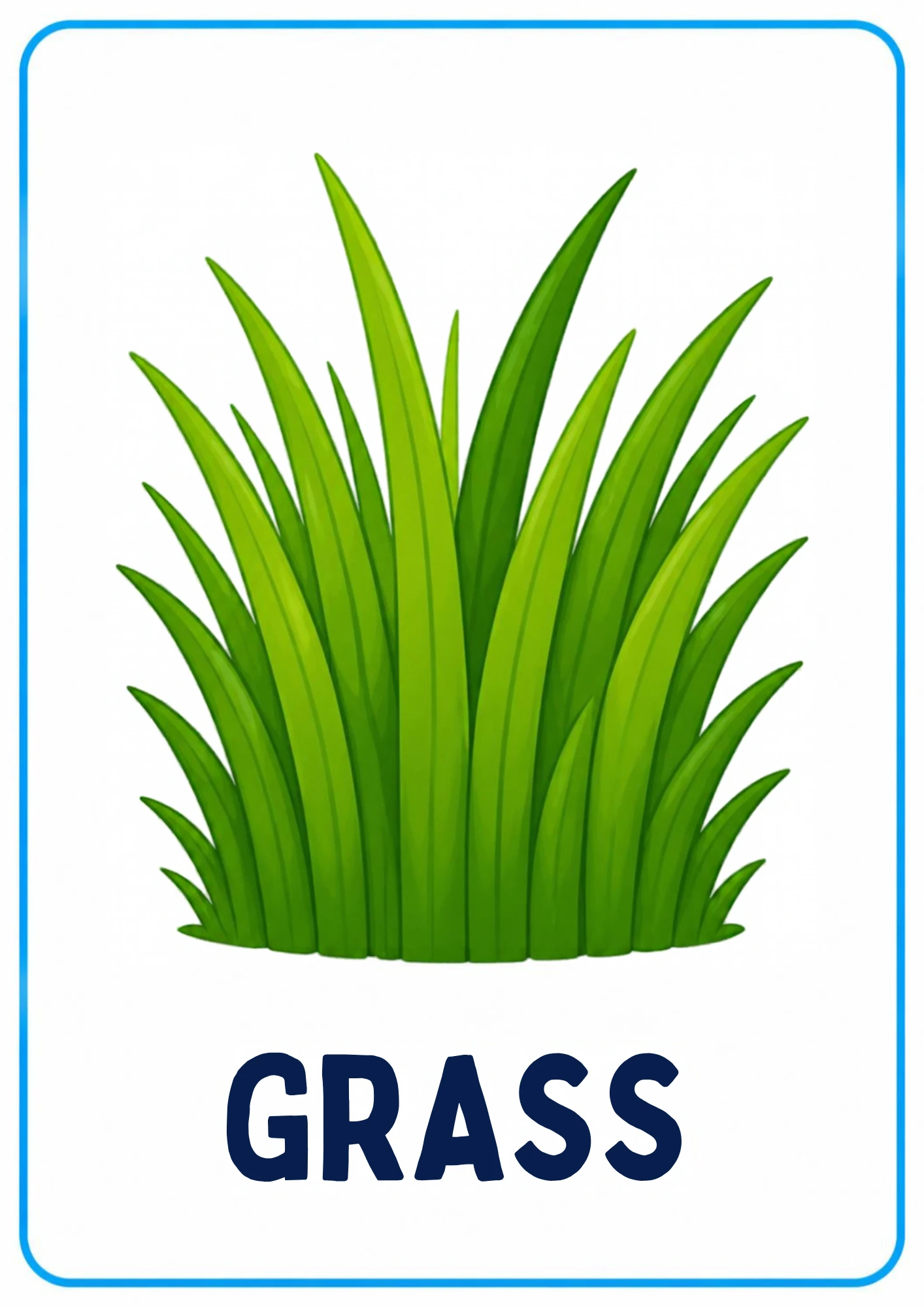
What is this?
Grass is the soft green carpet that covers lawns, parks and fields. It grows millions of thin blades close together, and it smells amazing just after it has been mown.
What does it mean?
Grass is where toddlers already live — every picnic, every roll, every barefoot minute. The card gives that daily surface a name and turns a patch of green into something worth studying closely.
What does the child need to know?
Grass is made of millions of thin green blades, soft and tickly on bare toes. Freshly mown grass has a big smell worth one giant sniff — and we check for bees in the clover before any barefoot sitting.
Why this matters
Barefoot sensory play is developmental gold — texture, temperature, tickle — and grass is the safest wild surface there is. Naming the everyday thing under your feet teaches that every word in the world can be learned.
What it teaches
Barefoot sensory input, one-blade close observation (how thin is thin?), smell vocabulary, tiny-motor plucking with a grown-up pinch, and the body-satisfaction of lying down on purpose.
Words to learn
grassgreensoftticklybladesmell
Say this to your child
“"Grass! Soft and green and tickly. Can you feel it with your toes? Wiggle them! Grass is millions and millions of tiny blades — see how thin this one is? And when it is freshly cut, it smells wonderful — take a big sniff with me. Grass is the garden’s own carpet."”
Step by step
- Show the card, say grass, and stroke your own arm with spread fingers — grass feels soft like this, blade after blade.
- If there is a lawn, take off shoes and socks and stand on it together: wiggle your toes and say the words — soft, tickly, cool?
- Pick one blade (you pinch it, your toddler holds it) and look closely: this thin! One of millions!
- If you smell a fresh mown lawn anywhere this week, take the giant sniff together and name it: that is grass smelling amazing.
- End lying down: five seconds of grass-lounging, staring at the sky, before the tickle necessarily turns into rolling.
Look closer at the picture
Spread your fingers and stroke the air like brushing a lawn. Say grass, then ask your toddler to point at the green on the card — the carpet that holds the whole garden up.
Ask your child
"What are we standing on?" "Is the grass soft or spiky?" "Can you wiggle your toes in it?" "How many blades are there — one or millions?" — answered with toes, a touch and a loud "millions!".
What your child can say or do
"Tickly!" Expect barefoot requests at every lawn, blades handed to you as gifts, and the mown-smell sniff requested at every park. Sitting down mid-walk to wiggle toes is the lesson expressing itself.
Out in the real world
Grass is the most available nature in any town: lawns, parks, verges, football pitches. Every sit-down is a rerun — toes out, blades found, one big sniff if the mower has been recent.
Try it together
Toe race: on a safe lawn, walk a short line barefoot and describe the feeling out loud — cold, tickly, bumpy. Then sit and pull one blade each (grown-up pinch) and compare whose blade is longest.
Understanding check
At the next lawn, listen: "grass!" with shoes already coming off means the word and the feeling are bonded. A blade offered for you to hold completes it.
Parent tips
Keep a sit-upon or scarf in the buggy for damp lawns — the game should never be cancelled by morning dew. Say the sensory words as they happen; texture vocabulary grows one barefoot minute at a time.
Staying safe
Check any lawn before barefoot play — bees love clover, dogs leave surprises, and stones hide. Nothing green goes in the mouth, freshly cut grass can prick, and a quick hand-wash follows every rolling session.
This lesson pairs with the Grass flashcard in the library — print it, show it, keep it on the fridge. Back to Garden Things (School Garden).