
Plant Pot — a step-by-step lesson for grown-up and child
This lesson plants something: your toddler learns the pot, tucks a seed into its soil bed, waters it gently and starts the morning check — the daily ritual that makes gardening magic observable.
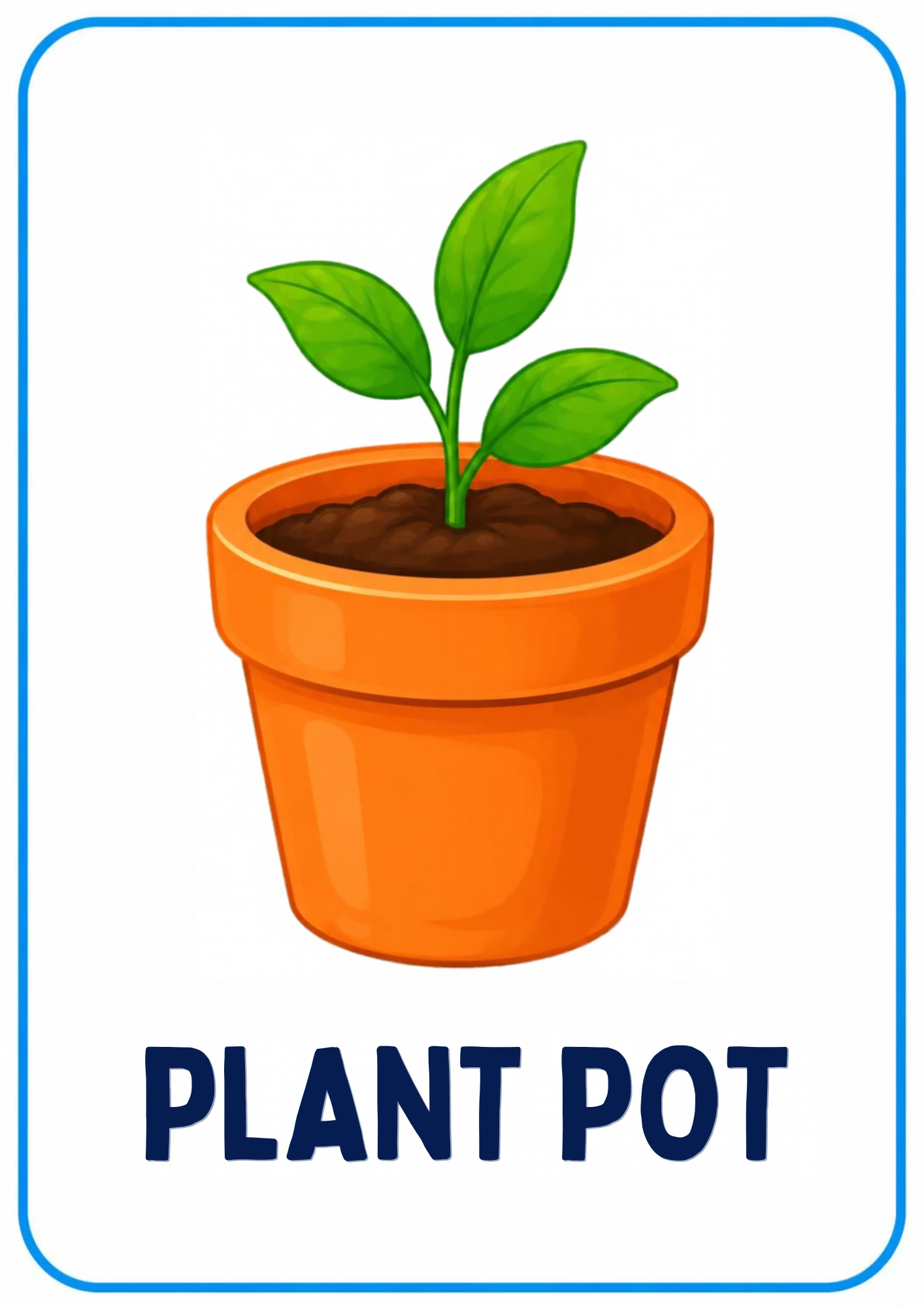
What is this?
A plant pot is a little home for a plant, filled with soil. Pots come in every size, most have a small hole underneath to let extra water drip out, a single pot with a single seed is the whole idea of gardening, shrunk small.
What does it mean?
The pot makes growing visible and manageable: one seed, one home, one result. For a toddler it is the difference between hearing about plants and owning one — and the hole in the bottom is a genuine engineering lesson hiding in plain sight.
What does the child need to know?
A pot is a plant’s home with soil inside and a little hole underneath so extra water can escape — roots do not like sitting in puddles. The daily job is one gentle drink and one morning check: anything green yet?
Why this matters
Caring-for-something-daily is the longest game a two-year-old can play, and the seed sprouts on toddler timescales — days, not months. The waiting itself is the curriculum: check, water, wait, wonder.
What it teaches
Gentle watering control, daily ritual-building, patience in days-long stretches, observation skills (is anything different?), and cause-and-effect wonder — I watered it and it grew.
Words to learn
plant potseedsoilholewatergrow
Say this to your child
“"A plant pot — a cosy little house for a plant, full of soil. See the tiny hole underneath? Extra water drips out so the roots stay cosy, not soggy. Let us plant a seed in ours — tuck it in, water it gently, and every morning we check: anything green yet? Growing takes waiting, and we are very good at waiting."”
Step by step
- Show the card, say plant pot, and cup your hands around an invisible little home — that is what a pot is to a plant.
- Find the parts: the pot, the soil inside, and the secret hole underneath that lets the extra water out so roots never sit in puddles.
- Plant for real if you can: one cup, some soil, one big seed (a bean is fast), tucked in with one finger and a goodbye whisper.
- Water it gently together — a small cup, a slow pour — and put the pot somewhere bright where morning checks happen naturally.
- Start the ritual tonight: tomorrow morning, the first job is looking. Anything green yet? Not yet? Water, wait, wonder — same time tomorrow.
Look closer at the picture
Cup both hands like a little round home and say plant pot. Ask your toddler to find the pot on the card and the soil inside it, then pat an invisible seed gently into your own cupped hands.
Ask your child
"What lives in a plant pot?" "What is inside the pot — soil or sand?" "Why does the pot have a hole at the bottom?" "What do we do every morning?" — answered with a cupped pair of hands, a hole-hunt under an imaginary pot and a solemn "check for green".
What your child can say or do
"Green yet?" Expect dawn pot-checks in pyjamas, watering done with terrifying generosity, and the first sprout announced to the whole household at a shout. Beans deliver in roughly a week — plan the celebration.
Out in the real world
Pots live on windowsills, balconies, patios and shop fronts everywhere; garden centres are pot parades. Each pot your toddler passes is a rerun — name it, wonder what is growing inside, check your own on getting home.
Try it together
Pot parade: line up three cups with different seeds — bean, sunflower, cress — and let your toddler be head of morning checks: water, look, report. Cress sprouts in days and can be tasted on toast at the finish line.
Understanding check
The morning check arriving unprompted is the certificate — especially before you have had tea. A gentle pour that lands in the soil, not the ceiling, is the skill ribbon on top.
Parent tips
Beans and cress are the speed champions — pick fast seeds for short patience. Photograph the pot daily beside your toddler and let them spot the change: the sprout they find themselves is worth ten they were shown.
Staying safe
Soil is for seeds, not snacking, and pots are heavy and breakable — they sit on sturdy tables and shelves, never wobbling at edges. Watering stays small-scale near electricity-free windowsills, and any plant that sprouts stays unchewed until a grown-up says it is a tasteable one.
This lesson pairs with the Plant Pot flashcard in the library — print it, show it, keep it on the fridge. Back to Garden Things (School Garden).