
Shovel — a step-by-step lesson for grown-up and child
This lesson digs: your toddler scoops, piles and pats with hands and spoons, watches the real shovel move mountains, and learns the tool deal that keeps everyone digging for years.
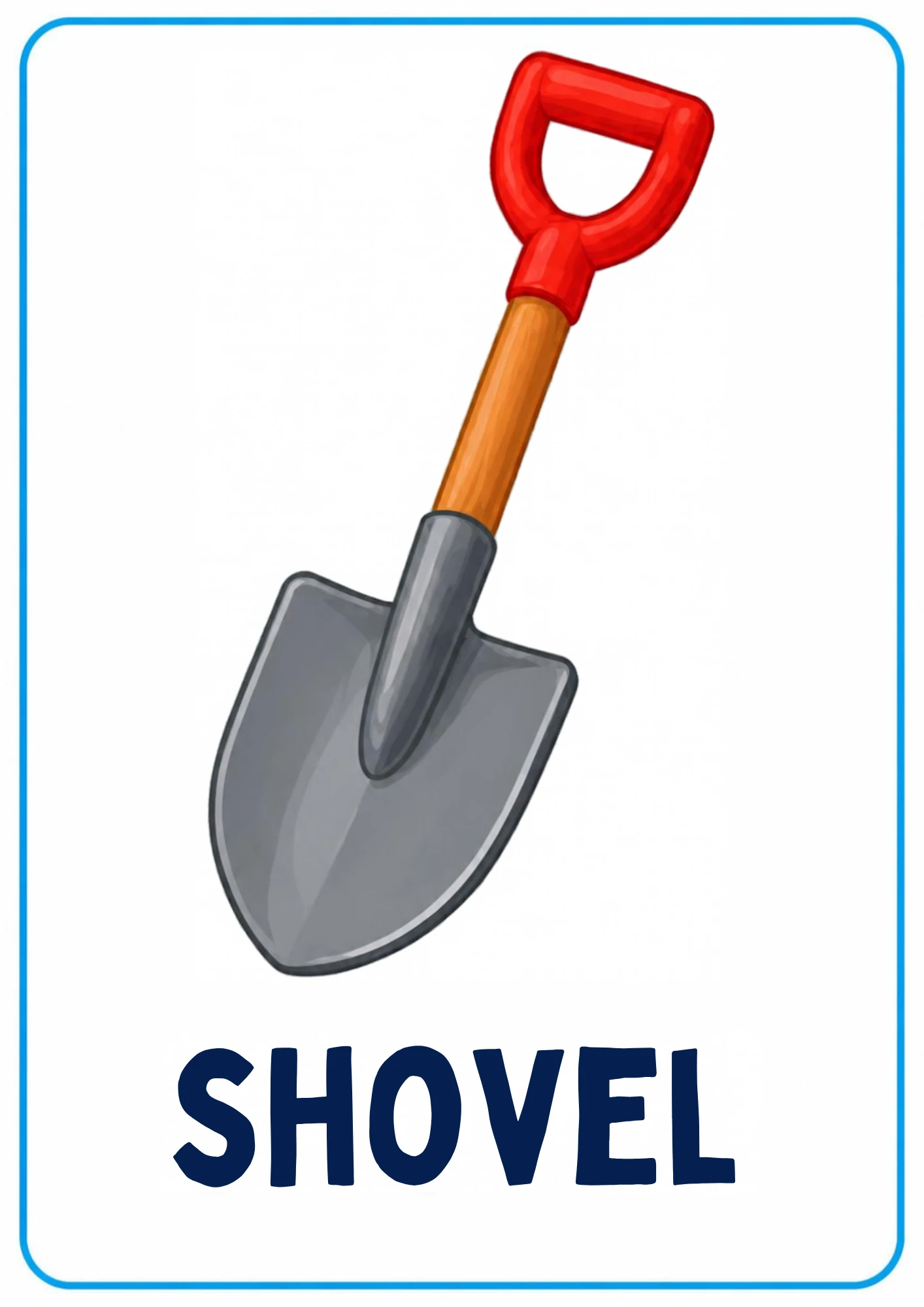
What is this?
A shovel is a big tool with a wide metal blade and a long handle, made for digging holes and moving soil. It is heavy, strong and firmly a grown-up tool.
What does it mean?
The shovel is the set’s tool-deal card: wanting to dig is right, wanting the sharp heavy tool is not. Your toddler gets the full digging experience — scoops, piles, treasure — through the tools that fit their hands.
What does the child need to know?
The shovel digs big holes and belongs to grown-ups — heavy, sharp-edged, not for little hands. The toddler deal is hands and spoons for you, shovel for me, and the two diggings meet in the middle of the biggest hole.
Why this matters
Tool rules with visible reasons (heavy! sharp! pointy!) are the easiest to keep. And hands-on digging is sensory-rich strength work — scooping, piling, patting — that needs no equipment and never gets old.
What it teaches
Hand and arm strength (scoop, pile, pat), tool-size sorting, soil science through the fingers, turn-taking on the big hole, and the patience of watching a grown-up do the heavy half of a shared job.
Words to learn
shoveldigsoilscoopholeheavy
Say this to your child
“"A shovel! Dig, dig, dig — it moves the soil and makes big holes. The shovel is a grown-up tool: heavy and strong. But look at your tools — hands and a spoon! Scoop, pile, pat... you are digging too. Grown-ups dig big, toddlers dig small, and both diggings end up in the same big hole."”
Step by step
- Show the card, say shovel, and mime one big dig — a long slow scoop through the air, finish with a tip and a pile.
- Ask what the shovel does — digs! — and where the soil goes when the shovel tips: into a pile, every time.
- Set up the toddler dig: a pot of soil or the sandpit, spoons and cups, and start scooping — pile, pat, pile.
- If a real shovel is about, watch the grown-up dig one big hole and compare holes afterwards: yours little, mine big, the same work.
- Close with the deal, hands dusted: spoons and hands for you, the shovel for me — and any treasure found belongs to the finder.
Look closer at the picture
Make one long scoop through the air and say shovel. Ask your toddler to find the big digging blade on the card, then start the real work: spoon in hand, pot of soil ready, scoop number one.
Ask your child
"What does a shovel do?" "Who digs with the shovel?" "What do you dig with?" "Where does the soil go when we scoop?" — answered with a dig-motion, "grown-ups!", "spoons!" and a pointing finger at the pile.
What your child can say or do
"Dig dig!" Expect soil mountains in the sandpit, spoons requisitioned from the kitchen drawer, and holes inspected for treasure daily. The deal may be recited back if the real shovel comes near: "grown-up tool!"
Out in the real world
Shovels appear in gardens, allotments, building sites and beaches — every big dig is a rerun of the deal. Beach spades and toy trowels are the toddler editions, and they count completely.
Try it together
Treasure dig: bury a few large, safe treasures (big pebbles, toy coins) in the sandpit and let your toddler dig them out by spoon — then bury them again for the next crew. Grown-up shovel strikes the mother lode, of course.
Understanding check
At the next real dig, watch the hands: they stay on the spoon while the eyes follow the shovel means the deal is holding. A "big hole, little hole, same work!" comparison is the graduation.
Parent tips
Join the digging yourself — a grown-up on hands and knees in the dirt is the best endorsement a garden can give. Rotate treasures so the dig never truly ends.
Staying safe
Real shovels are weighty, keen-edged and pointy — the grown-up keeps full custody, and no digging happens close enough for a swing to connect. Soil play means clean soil only, no mouths, and hands washed before anything reaches a face.
This lesson pairs with the Shovel flashcard in the library — print it, show it, keep it on the fridge. Back to Garden Things (School Garden).