

Apple — a step-by-step lesson for grown-up and child
The apple card does triple duty: it is a colour lesson, a shape lesson and a preview of the fruit bowl. This lesson uses its best trick — the same object, two sizes.
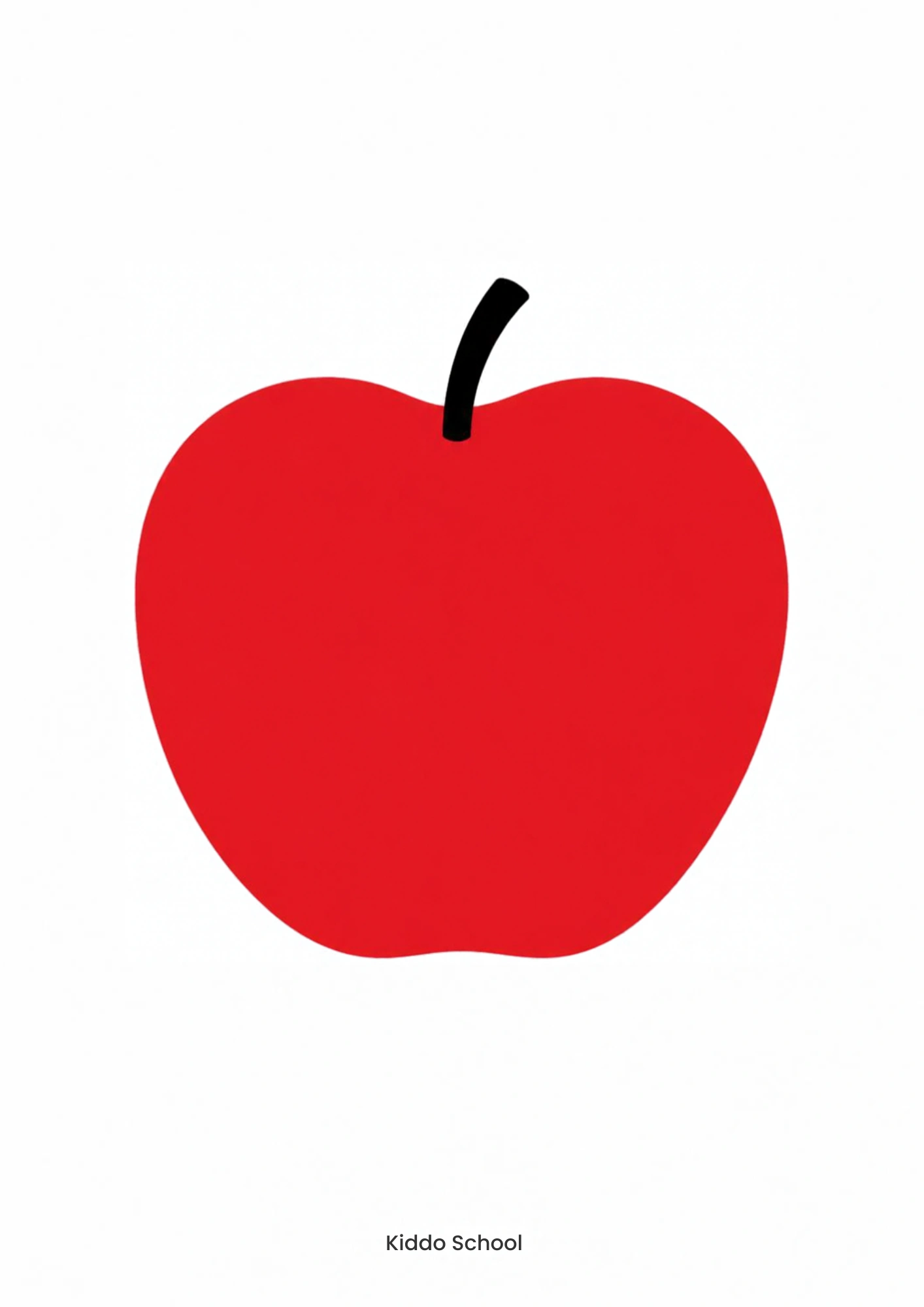
What is this?
An apple is a round fruit, red or green, that lives in your kitchen and will one day live in your baby’s hand. The card shows one shiny example; the lesson brings the real thing alongside for the comparison.
What does it mean?
Picture-to-world transfer is a genuine cognitive leap: understanding that a flat image stands for a real thing. Babies build it through exactly this exercise — same object, same word, two presentations — repeated casually over months.
What does the child need to know?
Hold the real apple right beside the card at close range and let your baby look between them. Say "apple" for each. Do not rush tasting — your baby is months from solids — and do not expect the comparison to look like anything. The wiring happens quietly.
Why this matters
Every picture book your child will ever love depends on this skill: flat apple means apple. Building it now, with an object this familiar, means the skill will be waiting when books arrive — and it costs ten seconds a day.
What it teaches
Picture-world transfer, size comparison (big card, small fruit), colour and shape reinforcement, and vocabulary attached to a multi-sense object your baby will soon hold, smell and taste.
Words to learn
appleroundredshinyfruitsame
Say this to your child
“"Apple! Here is the picture apple, and here is a real apple from our kitchen. Big apple, small apple — the same round shape. Red and shiny on the card, red and shiny in my hand. Apples are everywhere."”
Step by step
- Show the card at close range and name it: "Apple. A round, shiny apple."
- Let the picture get its full look — then fetch a real apple from the kitchen, clean and dry.
- Hold the apple beside the card, matched height if you can, and say "apple" as the eyes move between them.
- Turn the real apple slowly in your hand — a different angle, the same apple — then bring the card back for the final look.
- Put the fruit away and end with the card; the picture should get the last word today.
Look closer at the picture
The artwork is a bright, round apple — say that much. The live noticing is the transfer itself: does your baby’s gaze travel between card and fruit, or settle on one? Even a single crossing is the leap being built, on the days it happens.
Ask your child
Watch the crossing: card to apple, apple to card — how many trips today? Does the real apple’s smell or shine pull extra attention? Wonder aloud: "I wonder if you know the picture and the fruit are the same thing yet."
What your child can say or do
Gaze trips between card and fruit, a longer look at the real apple’s shine, an arm swing that grazes either one, or a calm study of both — every version is fine; the wiring does not need a visible reaction to grow.
Out in the real world
Apples ride through the week: in the fruit bowl, in your lunch, at the shop in a pyramid. Each sighting earns the word once. By the time your baby can grasp an apple, the word will already be an old friend.
Try it together
Fruit-bowl hello: once a day, lift the apple out of the bowl, say "apple" to your baby, and put it back. Thirty seconds, no card needed. The bowl becomes a daily page-turn of the world’s biggest picture book.
Understanding check
Parent self-check: did the real apple actually join the session, and did you resist the urge to add more fruit? One object, two forms, repeated — that is the whole method, and extra props only blur it.
Parent tips
If the real apple steals the show, let it — the card will be waiting tomorrow. Keep the fruit out of the session when it is bruised or cut; the card apple is always perfect, and the comparison works best when the real one looks its best.
Staying safe
Whole apples are far too hard for this age and stay in the fruit bowl, not the session. When solids begin months from now, apple arrives cooked or grated, never as a chunk — but that is another lesson; today is only about the name.
This lesson pairs with the Apple flashcard in the library — print it, show it, keep it on the fridge. Back to Colors & First Objects (Infant 1).