

Spoon — a step-by-step lesson for grown-up and child
The spoon card belongs to the future as much as the present: one day soon this object will run your mealtimes. This lesson gives the word a head start.
What is this?
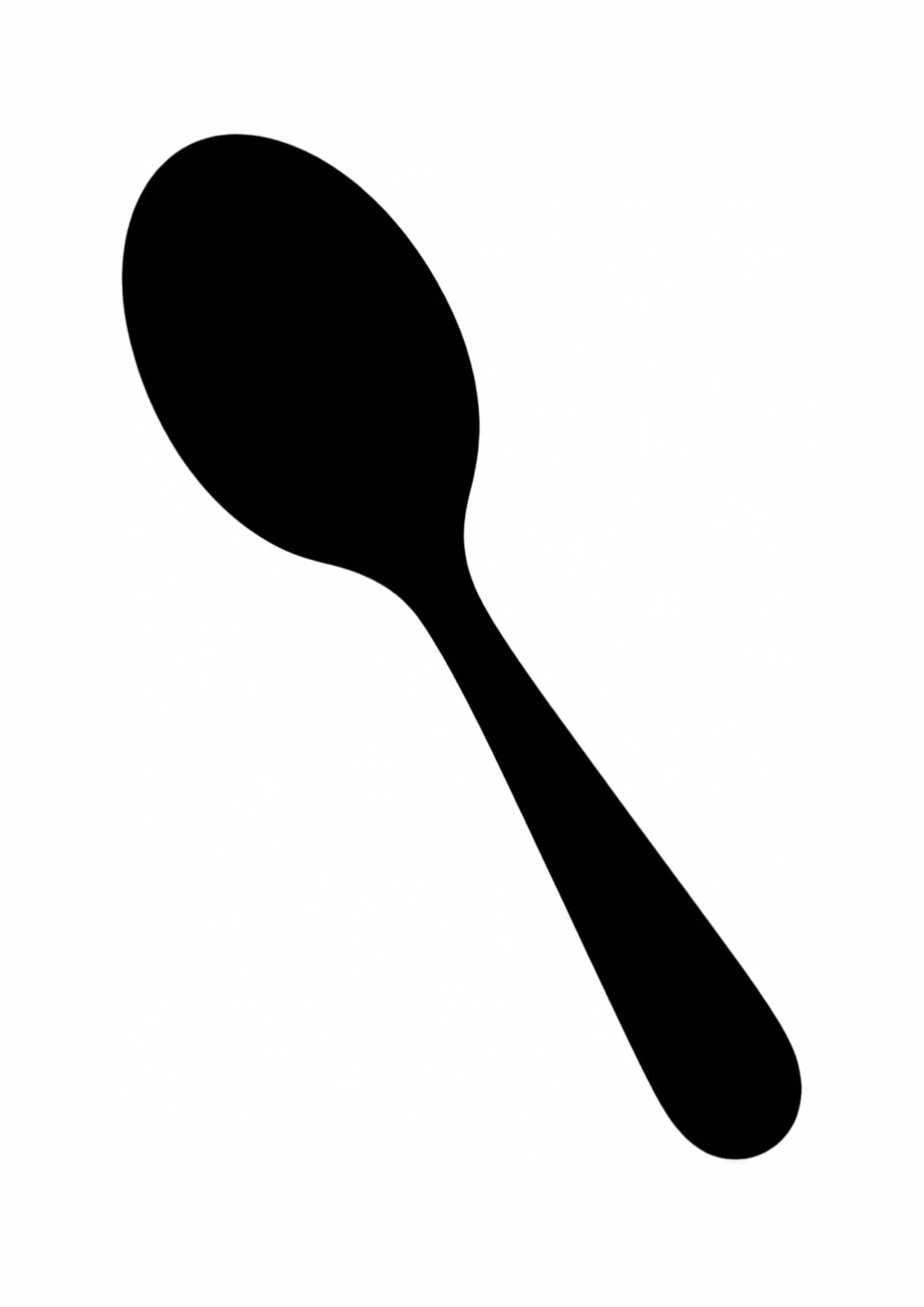
A spoon is the small scoop that brings food to mouths, and your baby has watched you use one at every meal of their life. The card shows it plainly; the lesson says its name out loud, at card time and at table time.
What does it mean?
Spoon sits in a special family of words — the tool words — that children learn through watching them work. Naming the tool before the baby wields it builds a bridge: when self-feeding starts, the word is already old news and the object already has a story.
What does the child need to know?
Two settings, one word: the card at quiet time, then the real spoon held up at the next meal — "spoon" — with a smile. The flicker of recognition you may catch is real progress at this age. Keep both meetings under a minute each.
Why this matters
Mealtimes give this word more performances than any other card could buy: several shows a day, every day, with food as the co-star. Repetition in different places is what teaches a baby that words belong to objects everywhere, not just on paper.
What it teaches
Tool recognition, word-object mapping across settings (card and table), mealtime attention, and the earliest narrative habit — you, supplying words for what happens next.
Words to learn
spoonscooptastyhere comesmoreyum
Say this to your child
“"Spoon! Here is the picture spoon, long and shiny. And at lunchtime — look — here is our real spoon. Same word, same scoop. The spoon brings the food, all the way to your mouth. Here comes the spoon."”
Step by step
- At a calm moment, show the card at close range: "Spoon. The little scoop that brings the food."
- Trace its shape aloud — the bowl at the end, the long handle — while your baby looks.
- At the next meal, lift the real spoon into view before it starts working and say "spoon" once, warmly.
- Let the spoon do its ordinary job without commentary; the word has already been planted.
- Repeat the pre-meal greeting daily — the card can visit the table edge (out of grab range) or stay on the shelf; the real spoon carries the lesson.
Look closer at the picture
The artwork is a bold, simple spoon — say that much. The live noticing: when you hold up the real spoon at mealtime, do your baby’s eyes lock on, and does their body lean towards the incoming food? That leaning is anticipation — learning wearing its work clothes.
Ask your child
Watch the two settings: does the word "spoon" collect attention in both places, or only at the table? Wonder aloud: "I wonder when you will start opening your mouth at the word alone — I am watching for it."
What your child can say or do
Locking eyes on the raised spoon, a full-body wriggle as food approaches, mouth-opening practise at the sight of it, or a hand batting towards the shiny bowl — all of it is mealtime literacy being born, months before the first self-fed bite.
Out in the real world
Spoons appear all day: yours at breakfast, the little weaning spoon waiting in the drawer, the big wooden one that stirs the pot. Each glimpse can carry a one-word replay — "spoon" — making your kitchen the card’s second home.
Try it together
Spoon parade: at each meal, bring the spoon into view from the same side with the same greeting — "here comes the spoon" — and let the arrival be mildly theatrical. Predictable shows build anticipation, and anticipation is attention in disguise.
Understanding check
Parent self-check: did the word "spoon" land at a real meal today as well as at card time? Two settings, one word — that is the entire method. If card time was skipped but the meal greeting happened, the day still counts.
Parent tips
Keep the card away from the actual eating — a card on the tray becomes a chew toy and the lesson becomes laundry. The table-edge placement only works within your reach, never the baby’s.
Staying safe
Real spoons for babies are the soft-tipped weaning kind, and they stay with the grown-up until feeding time — a spoon waved by a 3–4-month-old ends up in an eye or a throat. Card and food never share a surface.
This lesson pairs with the Spoon flashcard in the library — print it, show it, keep it on the fridge. Back to Colors & First Objects (Infant 1).