

Bird — a step-by-step lesson for grown-up and child
Birds are among the first moving things a baby notices outdoors — flashes of motion at the window that nothing else explains. This lesson gives that fascination a name.
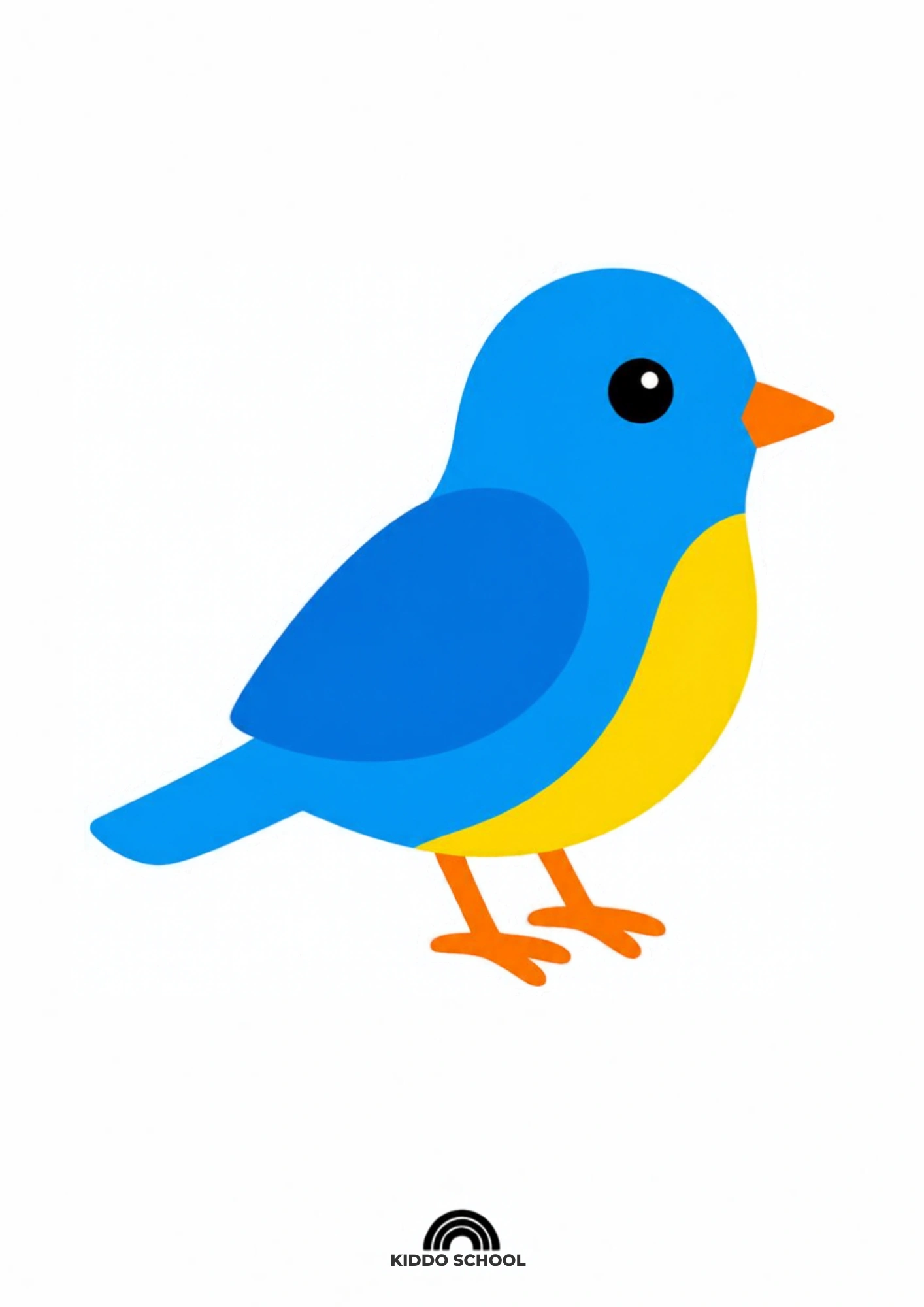
What is this?
A bird is a small feathered animal that flies, hops and sings. The card shows one clearly; the window supplies the live version; and the word — bird — connects the two across your baby’s whole day.
What does it mean?
Words that land on things your baby has already watched are the fastest route into language: the memory exists, and the word simply moves in. Birds have the added gift of motion — the eyes found them long before the word did, which means attention was never the problem.
What does the child need to know?
Then take the session to the window and watch together in real quiet. A single passing bird, named at the moment it moves, outweighs any number of rounds at the card.
Why this matters
Window words — bird, sun, car, tree — are your baby’s first reach past the arm’s-length world. They prove that language describes things too far away to touch, and they turn every windowsill into a reading of the day’s news.
What it teaches
Distant-object naming, motion tracking, word-event association at real moments, and the habit of shared looking — two people watching the same small wonder.
Words to learn
birdflytweetup highwindowthere
Say this to your child
“"Bird! Here is the picture bird, with its little wings. Now let us look outside — up in the sky, out on the branch... birds fly out there, fast and free. Did you see one? Bird is the word for all of them."”
Step by step
- Lay the card out at close range and introduce it: "Bird! A small bird with feathers."
- Trace the wing on the card and flap your hand gently — birds are their flying.
- Move to the window with your baby settled against you, and simply watch together for a while.
- If a bird appears or a branch moves, say "bird" once, at the moment of the sighting — then let the quiet return.
- Close with the card back at your lap, so the word has lived in both places today: page and pane.
Look closer at the picture
The artwork is a small friendly bird in bold simple shape — say that much. The live noticing: what does your baby watch at the window — the birds, the leaves, the light? Naming what they actually track, not what you hoped they would, is the honest version of this lesson.
Ask your child
Watch the window: does a moving bird collect the gaze faster than a still scene? Does the word earn a look even when no bird shows? Wonder aloud: "I wonder if you would spot the bird before I do if your eyes were quicker — some days I think they are."
What your child can say or do
A locked stare on a flying bird, whole-body stillness at the window, squeals when wings move, or a patient study of empty branches — window watching is its own activity, and every version of it is language preparation.
Out in the real world
Birds are daily guests: on the lawn, at the feeder, crossing the sky on the school run, in the car park at the shops. The word costs one breath per sighting and repays itself for a lifetime.
Try it together
Wing-flap echo: at the card, flap your hands like wings and say "fly" as you lift them. Your baby cannot copy yet, but the motion-word pairing sinks in — and one day, a flapping baby at this same card will be your proudest data point.
Understanding check
Parent self-check: did the window actually happen today, and did you resist narrating every second of it? Shared quiet looking, punctuated by one word at the right moment, is the technique — commentary is its enemy.
Parent tips
No birds today? The card still teaches, and the window still works — sky-watching is the ritual, birds are the bonus. Keep a mental note of your baby’s best window hour; every house has one, and it is worth knowing.
Staying safe
Window sessions happen in your arms or a supported seat, never propped against the glass — and screens stay closed if the baby is within reach of the latch. Balconies and open windows are grown-up territory; the lesson ends at the pane.
This lesson pairs with the Bird flashcard in the library — print it, show it, keep it on the fridge. Back to First Words & Familiar Things (Infant 2).