

Dog — a step-by-step lesson for grown-up and child
Dogs bring their own sound and action to every card session: barking and tail-wagging are easy to act out. This lesson turns the dog card into a tiny performance your baby will wait for.
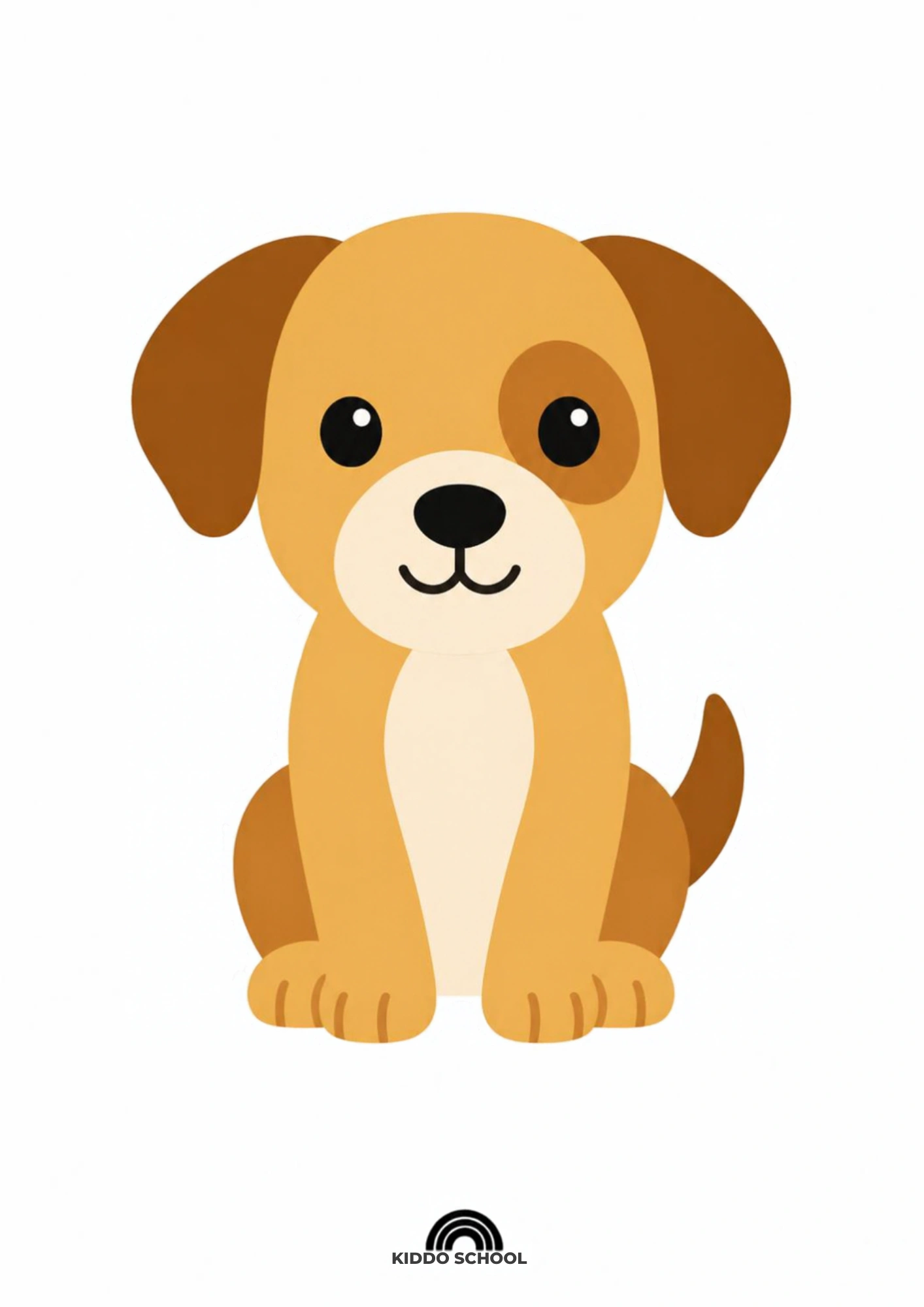
What is this?
A dog is a four-legged, tail-wagging, often noisy friend — the animal your baby is most likely to meet in real life, on leads, in parks and on doorsteps. The card gives the word a face; your performance gives it everything else.
What does it mean?
Sound plus action gives a word two handles to hold: the ears remember woof, the eyes remember the wag. Multi-channel words survive better in baby memory — and dog, performed with commitment, is the most multi-channel word in the set.
What does the child need to know?
Do the woof, then pat your own head like floppy ears or wag an imaginary tail — then wait. Any reaction is participation: a jolt, a laugh, a kick. Dogs vary in real life — big, small, loud, quiet — so say that out loud across the week: all of them are dog.
Why this matters
Dogs are often the first animal a baby names in the wild, because the wild is full of them. A word with a built-in sound gives your baby something to recognise before speech: the day your baby turns towards a real bark and brightens, the card will be working.
What it teaches
Sound recognition, action-word pairing, reaction-and-recovery to loud sounds, and generalisation — one word covering many different-looking dogs.
Words to learn
dogwoofwagtailbigsmall
Say this to your child
“"Dog! Here is the picture dog, tail going wiggle-waggle. A dog says woof! Woof, woof! Big dogs, small dogs, loud dogs, quiet dogs — they all say woof, and they are all called dog. What a useful word this is."”
Step by step
- Show the card at close range with a bright voice: "Dog! A happy dog with a waggy tail."
- Point out the tail on the card and give it a wiggle with your fingertip — dogs are defined by that wag.
- Do your best woof — two of them, playful not percussive — then wait for whatever comes back.
- Add the body: pat your head like floppy ears or wag your hand like a tail, pairing sound with movement.
- Across the week, replay the word at every real or pictured dog, noting that huge hounds and tiny lapdogs share one name.
Look closer at the picture
The artwork is a happy dog with its tongue out and tail up — say that much. The live noticing: does the woof earn a bigger reaction than the picture alone? And does the recovery — surprise melting into interest — get faster across the week? That speed-up is learning.
Ask your child
Watch the performance: which part collects your baby — the sound, the action, or the picture? Does a real dog’s bark out in the world pull a look now? Wonder aloud: "I wonder if you are starting to know this word before it even lands."
What your child can say or do
A jolt at the first woof that turns into watching, full kicks of delight at the tail-wag hand, babbling that copies the b-sound, or a head-turn towards real barks on walks — the last one is the milestone hiding in plain hearing.
Out in the real world
Dogs are everywhere: on leads at the park, behind garden fences, in every third picture book. Each real dog is a replay — and saying "dog" about a great dane and a chihuahua in the same afternoon is generalisation, the quiet superpower of words.
Try it together
Woof-peek: hide the card behind your back, do a small woof, then reveal the dog with "there he is!" Repeat until the giggles or the yawns arrive. The sound predicts the reveal — your baby is learning prediction, the root of all games.
Understanding check
Parent self-check: did the word cover more than one dog this week — two sizes, two barks, one name? If yes, generalisation is happening; if not, next walk is the classroom and it is already scheduled.
Parent tips
Commit to the performance — a shy woof teaches half a word. If your baby startles strongly, halve the volume and double the smile; the goal is surprise with recovery, not fright. Vary dog sizes in books across the week.
Staying safe
Real dogs stay at arm’s length and behind their owners’ control — the word is learned freely, the animal is met only with permission and calm. If a passing bark startles your baby, name it warmly and move on; recovery is part of the lesson.
This lesson pairs with the Dog flashcard in the library — print it, show it, keep it on the fridge. Back to First Words & Familiar Things (Infant 2).