

Bottle — a step-by-step lesson for grown-up and child
If your baby is bottle-fed, this card names the most familiar object in their world — the thing they know better than anything else in it, arriving with a name at last. This lesson keeps it gentle and routine-shaped.
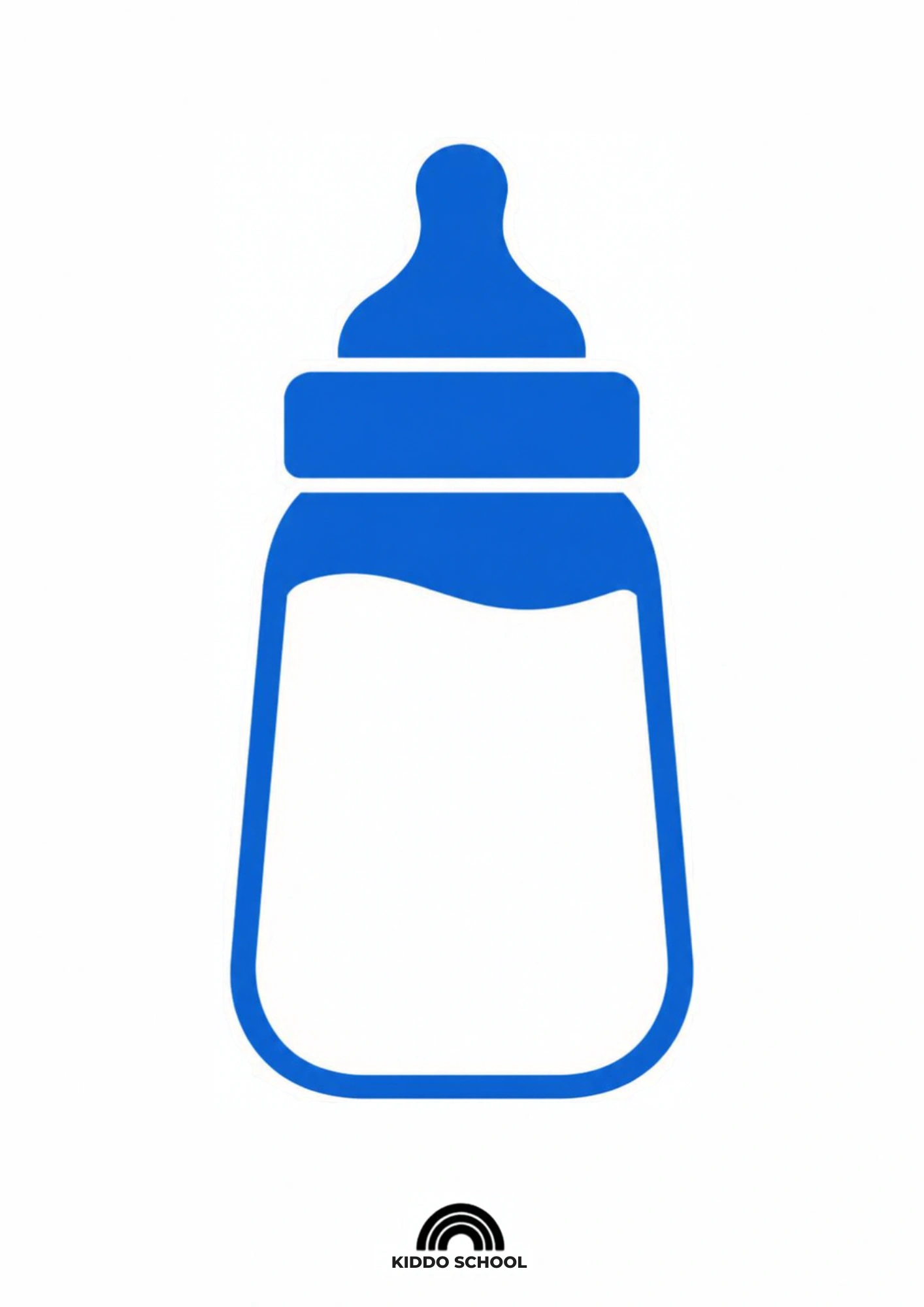
What is this?
A bottle is the feeding vessel your baby knows intimately: held, tipped, warm, arriving at the best moments of the day. The card turns that deeply loved object into a picture that can be named.
What does it mean?
Comfort-and-food words are heavyweight vocabulary: they arrive when your baby is relaxed, attentive and emotionally wide open. Bottle is not just a label; it is the name of a feeling that happens several times a day.
What does the child need to know?
Show the card in the minute before a feed, say the word softly, and let the beloved routine carry it — your only job is not overdoing it. One warm word before the milk is worth ten repetitions after it.
Why this matters
Comfort words build the emotional foundation of language: they teach your baby that sounds can predict good things. A baby who brightens at "bottle" has learned what words are for — announcements of the best parts of life.
What it teaches
Word-ritual association, anticipation and recognition, emotional security through naming, and the earliest understanding that sounds can stand for things not yet visible.
Words to learn
bottlemilkwarmtime forhungrydrink
Say this to your child
“"Bottle! Here is the picture bottle. And look — here comes the real one, warm and ready, just for you. Bottle time, little one. The best word at the best moment. Hello, bottle. Welcome back."”
Step by step
- Just before the feed begins — not during, not after — show the card at close range and say "bottle" once, softly.
- Let your baby look at the picture while the real feeling of feeding-time arrives; the card rides the moment.
- Then bring the actual bottle into view: "Here it is." Picture, then reality, seconds apart, every feed if you like.
- Keep your voice at feed-volume — low, warm, unhurried; this word should never shout.
- Over days, watch for the brightening at the word alone; when that arrives, the word has done its deep work.
Look closer at the picture
The artwork is a simple, clear baby bottle — say that much. The live noticing is emotional: what changes in your baby’s body between the card, the word, and the real bottle arriving? Feed-time vocabulary shows up as whole-body recognition, not pointing.
Ask your child
Watch the order: does the word alone start to pull attention before the bottle appears? Does the card get a soft look or an impatient one? Wonder aloud: "I wonder if you think the picture is the same promise as the real thing."
What your child can say or do
Whole-face brightening at the word, rooting and wriggling as the feed approaches, hands opening and closing towards the real bottle, or contented sucking noises aimed at the card — comfort vocabulary shows its work in the body first.
Out in the real world
Bottle moments happen several times a day in bottle-feeding families — every one is a natural replay. And breastfed babies can borrow the lesson too: the card simply names a feeding vessel they will meet in daily life soon enough.
Try it together
Bottle countdown: as you prepare the feed, hold the card where your baby can see it and let them watch the bottle being made — picture in view, word said once, then the real thing. Waiting becomes part of the word’s story.
Understanding check
Parent self-check: did the word arrive before the milk today, and did it stay soft? Sequence and tone are the entire technique — the word must always be the herald of the good thing, never a commentator on it.
Parent tips
If your baby is too hungry at feed time to look at anything, show the card slightly earlier — during preparation, not presentation. Never wedge the card into a crying moment; this word only works in happiness.
Staying safe
Prepared bottles follow your usual safe-handling rules — temperature-checked, fresh, held by you. The card stays out of the feed zone entirely: no paper near the milk, and the card goes away before the feeding hold begins.
This lesson pairs with the Bottle flashcard in the library — print it, show it, keep it on the fridge. Back to First Words & Familiar Things (Infant 2).