

Spoon — a step-by-step lesson for grown-up and child
Meals are the busiest classroom in the house, and the spoon is its best prop. This lesson shows you how to teach the word without turning any meal into a lesson.
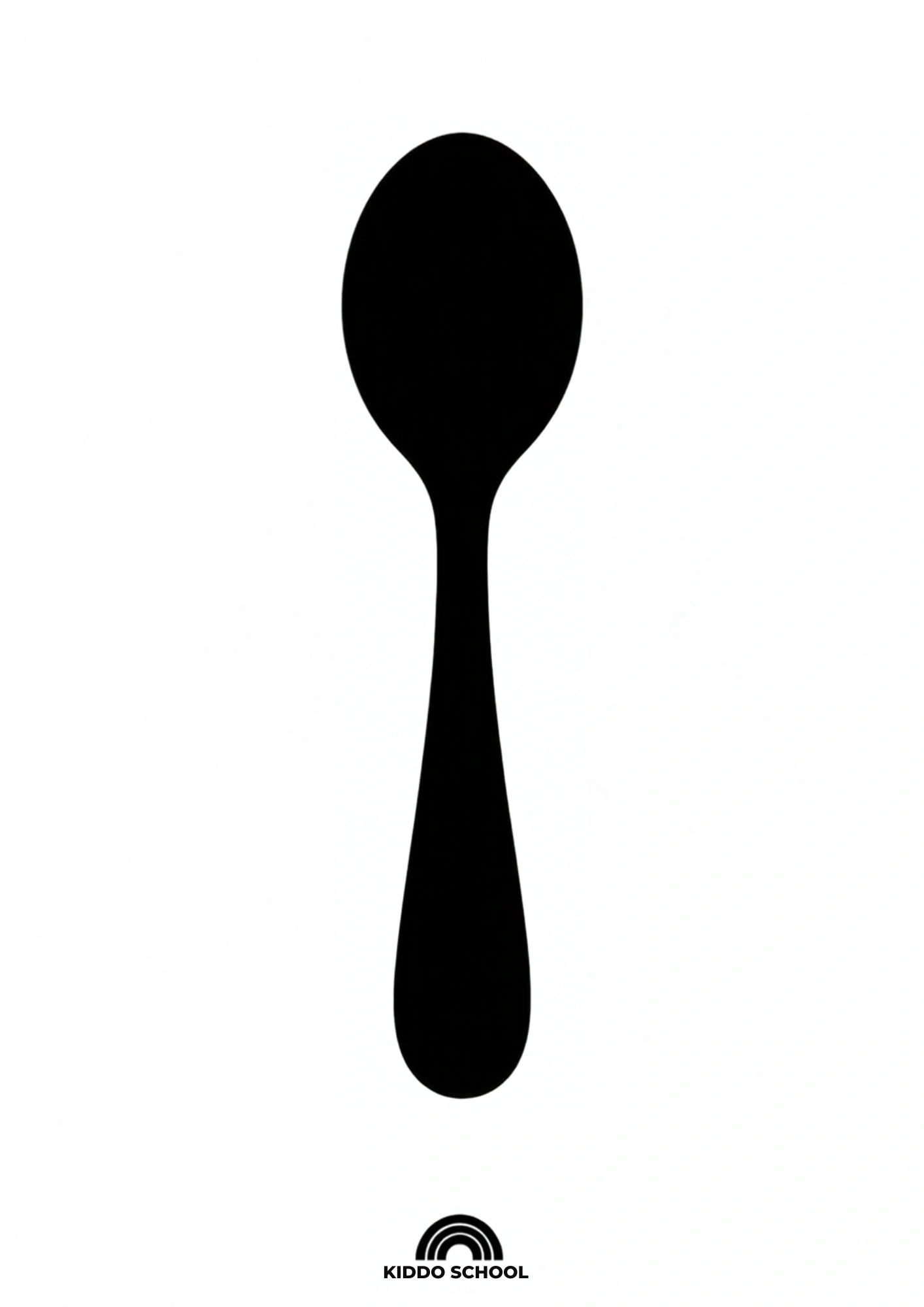
What is this?
A spoon is the scoop that carries food, and your baby has watched it fly between bowl and mouth for months. The card gives the tool a calm portrait before the busy version appears at the table.
What does it mean?
Not every word needs a sit-down session. Ambient repetition — the word said casually, in passing, at the real moment — is how much of early vocabulary actually lands. The card prepares the sound; the meals supply the rehearsals.
What does the child need to know?
The card can simply sit on the table, safely out of grab range, while you point at it once, mid-meal, and say "spoon" without ceremony. Low drama is the point: casual meetings teach your baby that words are part of ordinary life, not performances.
Why this matters
Words that appear in their natural habitat stick differently than words on paper alone. Spoon at the table, spoon in the card, spoon in the drawer — each meeting in a new place tells your baby the word is bigger than any one sighting.
What it teaches
Tool-word learning, casual repetition tolerance (not every naming needs a response), mealtime attention, and the connection between objects, actions and their names.
Words to learn
spoonfoodtastyscoopopen wideyum
Say this to your child
“"Spoon! Here is the picture spoon. And look — our spoon is working right now, flying from bowl to mouth. Scoop, lift, here it comes. Spoon is a busy word. It works at every single meal."”
Step by step
- At quiet time, show the card at close range: "Spoon. The little scoop that brings the food."
- Trace the long handle and the bowl end, once each, while your baby studies the shape.
- Prop the card safely out of reach at the next meal — on a shelf, a windowsill, anywhere visible but ungrabbable.
- Once during the meal, tap towards it casually and say "spoon" — no pause in the meal, no spotlight, no repetition.
- Repeat at several meals across the week; the ordinariness is what makes the word feel like furniture.
Look closer at the picture
The artwork is a simple, friendly spoon — say that much. The live noticing: does your baby glance between the card at its post and the working spoon during the meal? Words that live in two places start gathering their meanings from both.
Ask your child
Watch the casual tap: does a single quiet "spoon" earn any look at all — or none, which is equally fine? Wonder aloud: "I wonder if the word works better at the start of the meal or in the middle of it."
What your child can say or do
A flick of the eyes towards the card at the tap, mouth-opening when the real spoon approaches, a hand reaching past the card towards the actual food, or no reaction at all — ambient teaching expects nothing and often gets everything a week later.
Out in the real world
Spoon sightings run all day: the weaning spoons in the drawer, the big serving spoon at dinner, the spoon in the play kitchen. Each one can carry a passing word — and the more places the word lives, the faster it becomes real.
Try it together
Spoon flights: once a day, let the real spoon make one theatrical flight from bowl to your own mouth, with the word attached. One flight, one word, done. Tiny, silly, daily — this is how mealtime words get their wings.
Understanding check
Parent self-check: did the word "spoon" get said at a real meal today without the meal pausing for it? If yes, the ambient method is working exactly as designed — vocabulary woven through the day, not bolted onto it.
Parent tips
Do not escalate into drilling — no "say spoon!", no waiting for echoes. At 4–6 months the reply is months away and pressure now only adds noise. The card at the table can stay for a week; novelty fades, repetition stays.
Staying safe
The card’s seat at the table is chosen for reach: visible from your baby’s chair, impossible to grab, nowhere near hot plates. Real spoons for babies stay soft-tipped and adult-held until feeding time makes them working tools.
This lesson pairs with the Spoon flashcard in the library — print it, show it, keep it on the fridge. Back to First Words & Familiar Things (Infant 2).